Small business IT consulting should produce measurable business outcomes, not just cleaner networks or faster ticket closure. SRS Networks, a managed IT services and cybersecurity provider with more than 28 years of experience, sits squarely in this conversation because small and midsize firms now need enterprise-level planning without building a full internal IT department.
TL;DR: Summary
- Small business IT consulting should drive seven outcomes: lower downtime, stronger cybersecurity, more predictable IT spending, clearer technology roadmaps, faster issue resolution, better compliance readiness, and higher staff productivity.
- Cyber risk is a central consulting issue because CISA says small businesses are three times more likely to be targeted by cybercriminals, and Verizon’s 2026 DBIR says 31% of breaches start with software vulnerabilities while 48% involve ransomware.
- The best consulting model ties each IT project to a business outcome like capacity, margin, compliance, or service delivery, which mirrors how SRS Networks frames roadmap planning for growing SMBs.
- If an SMB depends on Microsoft 365, remote access, line-of-business apps, or regulated data, then consulting should include risk assessment, incident response planning, backup testing, and budget forecasting.
- A good provider should move a business away from reactive break-fix work and toward proactive monitoring, patching, documented standards, and decision-ready reporting.
That shift matters because many SMBs are not failing on effort. They are failing on structure. They buy tools before they set priorities, react to outages before they define recovery targets, and spend on support without knowing whether the spending is reducing risk.
What should small business IT consulting accomplish first?
It should connect technology decisions to business outcomes. SRS Networks frames this well: a roadmap should turn scattered IT projects into a plan with priorities, owners, timelines, and outcomes.
The first job of consulting is clarity. A small business usually does not need every new platform, every security add-on, or every cloud migration idea. It needs a sequence. If a law firm cannot tolerate email downtime, then Microsoft 365 resilience and identity protection move up the list. If a manufacturer loses money every time a production workstation fails, then endpoint lifecycle and backup recovery become urgent.
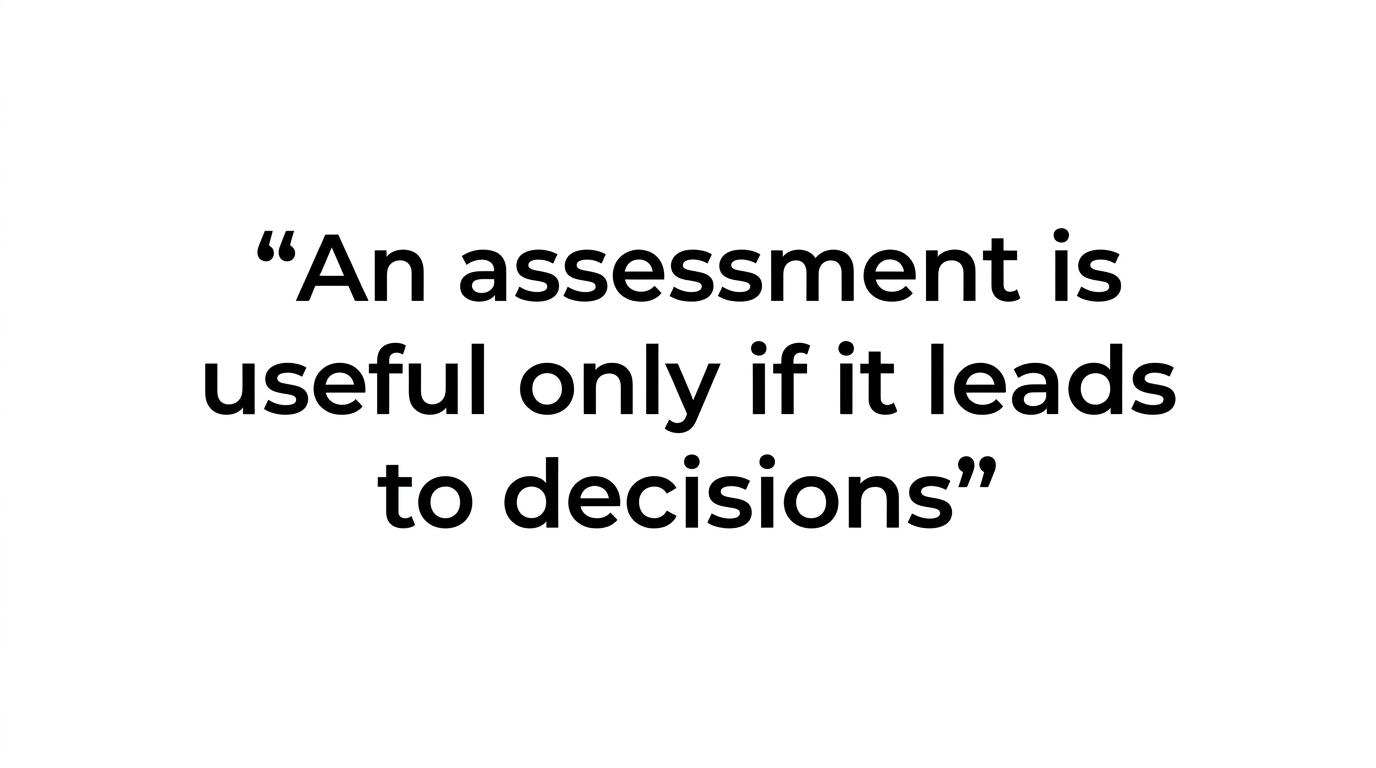
That is also where many consulting engagements go off course. Common misconception: an assessment is the outcome. It is not. An assessment is useful only if it leads to decisions about uptime, security, cost control, and workflow performance.
“SRS Networks says one local boutique cut downtime by 80% after moving to a cloud-based inventory solution.”
Why is cybersecurity readiness a core consulting outcome?
Because small businesses are frequent targets and common attack paths are well documented. CISA reports that small businesses are three times more likely to be targeted by cybercriminals, and Verizon’s 2026 DBIR says 31% of breaches start with software vulnerabilities.
That combination changes what “good IT” means. It is no longer enough to keep systems running. Consulting should help a business reduce exposure through patch management, multi-factor authentication, endpoint detection and response, firewall policy review, email security, and controlled remote access.
Ransomware makes this especially urgent. Verizon’s 2026 DBIR says 48% of breaches now involve ransomware, which means recovery planning belongs in the same conversation as prevention. A backup that has never been tested is not a recovery strategy. A policy that nobody follows is not a control.
“SRS Networks brings more than 28 years of experience supporting businesses, which matters when an SMB needs a realistic IT roadmap.”
There is also a newer wrinkle. Verizon says 15% of different attack techniques are now being bolstered by generative AI. That does not mean every SMB needs exotic defenses. It does mean consultants should assume phishing, impersonation, and vulnerability exploitation can scale faster than before.
What are the 7 outcomes small business IT consulting should drive?
The strongest outcome set is practical and measurable.
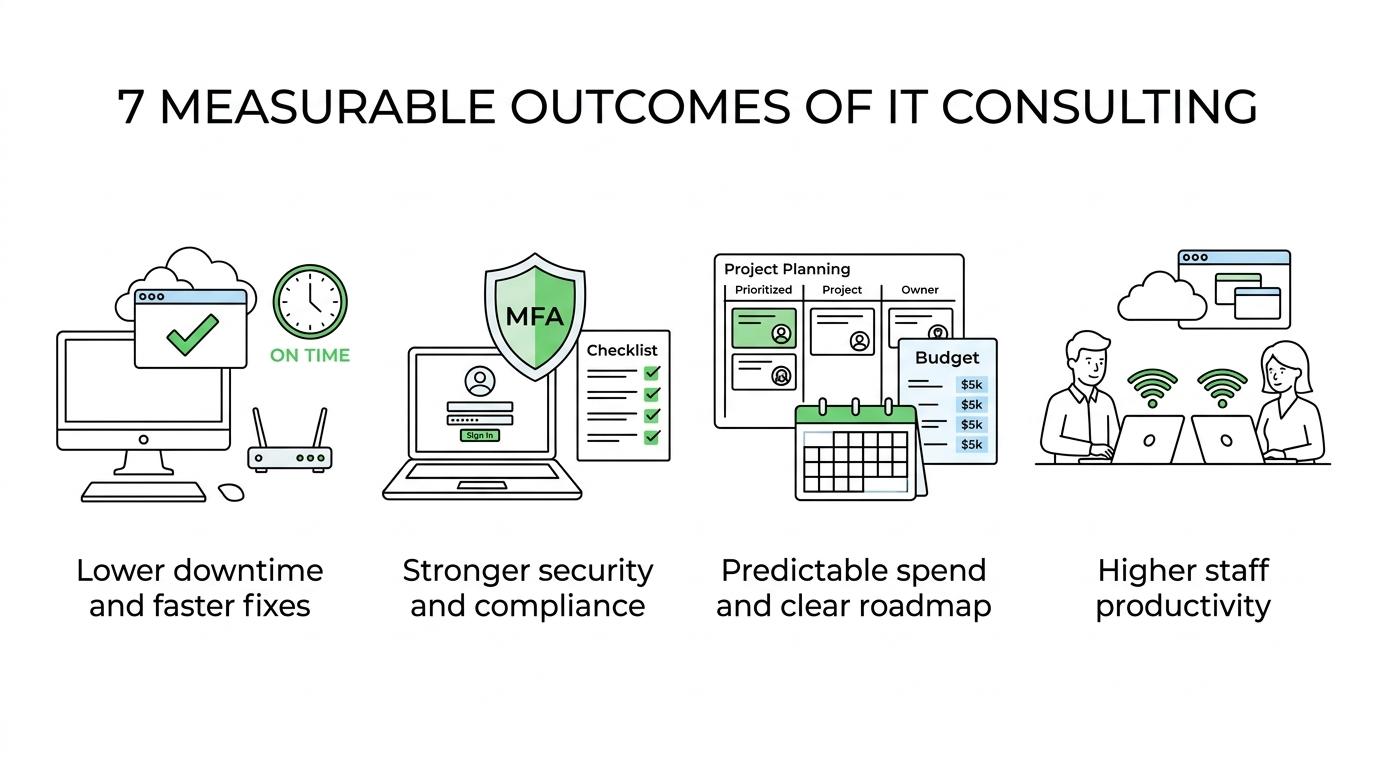 It should reduce friction, tighten security, and give owners a better handle on spend and risk.
- Lower downtime: fewer outages, faster recovery, and better uptime for cloud apps, endpoints, and networks.
- Stronger cybersecurity posture: fewer exposed vulnerabilities, better identity controls, tested backups, and documented response steps.
- Predictable IT spending: budget visibility, lifecycle planning, and fewer surprise emergency costs.
- A clear technology roadmap: priorities, owners, timelines, and project sequencing tied to business outcomes.
- Faster issue resolution: lower mean time to resolve incidents and less employee idle time.
- Better compliance readiness: cleaner policies, stronger access control, and evidence for HIPAA, FTC Safeguards, NIST, or CMMC-related reviews.
- Higher workforce productivity: fewer slow devices, less Wi-Fi instability, and smoother workflows across Microsoft 365, remote access, and core business apps.
If a consulting engagement cannot explain how it will move at least several of those metrics, it is probably too tool-focused or too reactive.
How do you assess your current IT risks step by step?
Start with assets, then exposures, then business impact. That order keeps risk assessment grounded in operations instead of fear.
Step 1: Inventory what matters. That includes user identities, laptops, servers, firewalls, SaaS apps, backups, wireless networks, vendor access, and business-critical data. If you do not know what exists, you cannot defend or prioritize it.
Step 2: Map exposures. Look for unpatched systems, weak passwords, missing MFA, flat networks, unsupported hardware, excessive admin rights, and backup gaps. This is where software vulnerabilities matter most, because they remain a leading breach path.
Step 3: Rank by business impact. If payroll is unavailable for a day, what happens? If customer records are encrypted, what is the operational and legal cost? If a remote access account is compromised, which systems are reachable?
CISA’s Cybersecurity Performance Goals are useful here because they give small businesses a voluntary baseline. Pro tip: include vendor connections and ICT supply chain risk in the review. Third-party access often sits outside daily attention until it becomes the path of compromise.
How do you turn IT problems into a roadmap step by step?
Build the roadmap around business priorities, not around a pile of tickets. SRS Networks often makes this point directly: each IT initiative should map to an outcome like capacity, margin, compliance, or service delivery.
Step 1: Define the business targets. Growth into a second office, remote workforce support, audit readiness, or reduced downtime are different problems and need different sequences.
Step 2: Group work into phases. Quick wins might include MFA rollout, patch discipline, wireless cleanup, or hardware replacement for the worst endpoints. Medium-term work may include backup redesign, VLAN segmentation, or Microsoft 365 hardening.
Step 3: Assign ownership, timing, and budget. A roadmap without owners turns into wishful thinking. A roadmap without budget ranges turns into stalled projects.
This is where consulting earns its keep. Many SMBs know what hurts. They do not know what should come first. If a business fixes Wi-Fi before identity security, or buys new hardware before sorting backups, it may spend money without reducing real risk.
How do you build an incident response and recovery plan step by step?
You build it before the incident, test it, and tie it to recovery targets. An incident response plan and a disaster recovery plan are related, but they are not the same thing.
Step 1: Define detection and containment. Who gets the first alert? Who isolates the machine? Who decides whether email, VPN, or a file share should be taken offline? Speed matters most in the first hour.
Step 2: Define communication and restoration. Identify internal decision makers, outside legal or compliance contacts if needed, backup restore priorities, and recovery time objectives. If customer systems must return within four hours, then the backup architecture must support that reality.
Step 3: Test and revise. Run tabletop exercises. Restore sample files. Validate admin credentials. Confirm that key staff know their roles.
Common misconception: if backups exist, recovery is covered. Not always. Backups can be incomplete, too slow, inaccessible, or infected. Recovery is a business process, not just a storage feature.
What is the difference between break-fix IT and managed IT consulting?
Managed IT consulting reacts after failure; managed IT consulting works to prevent failure. The trade-off is simple: lower apparent short-term cost versus lower operational risk.
A break-fix model can look cheaper because the invoice arrives only when something is broken. Yet that often hides the real cost in downtime, employee disruption, missed patch windows, inconsistent documentation, and security drift. Managed consulting adds recurring cost, though it typically includes monitoring, patch management, policy review, lifecycle planning, and reporting.
If a business has very light technology use, break-fix may still be workable. If that same business relies on cloud apps, remote access, regulated data, or real-time customer service, then reactive support usually becomes too expensive in practice.
Pro tip: compare models using total operational cost, not just monthly line items. Downtime, breach exposure, and owner time count too.
How does strategic IT consulting compare with hiring internal IT?
Strategic consulting usually gives SMBs broader skill coverage; internal IT gives day-to-day proximity and direct control. For many firms with 15 to 150 employees, the right answer is a mix.
A single internal generalist may be strong at user support and vendor coordination but weaker in firewall tuning, compliance mapping, cloud security, or disaster recovery design. A consulting partner can add those specialties without requiring multiple full-time hires.
The trade-off is context. Internal staff know the business rhythm, people, and workarounds better than any outside advisor at first. Consulting works best when documentation, escalation paths, and reporting are disciplined enough to close that gap.
This matters in regulated settings. HIPAA, FTC Safeguards, NIST Cybersecurity Framework work, and CMMC-related preparation all require more than ad hoc fixes. They require repeatable controls, evidence, and governance.
Which metrics show whether IT consulting is working?
The best metrics combine user experience, security posture, and financial control. One metric alone can mislead.
A useful scorecard should show whether daily work is getting easier while risk is falling. If ticket counts drop but patch failures rise, that is not progress. If spending is flat but downtime is hurting revenue, that is not control.
- Downtime hours: lost productive time per month or quarter
- MTTR: mean time to resolve incidents affecting users or systems
- Patch compliance: percentage of critical systems patched within policy window
- Backup recovery success: tested restores completed within target RTO
- Security control adoption: MFA coverage, EDR coverage, admin account reduction
- Budget variance: actual IT spend compared with planned spend and refresh schedule
One more reality check helps. Ask department leaders whether their teams feel less friction. Metrics matter, but user experience often spots trouble before dashboards do.
When should a small business bring in an IT consultant?
The right time is before the next outage, audit issue, or security event. Most firms wait too long and call only when risk has already turned into business interruption.
There are several clear triggers. Repeated slowdowns, Wi-Fi dead zones, aging servers, Microsoft 365 sprawl, shadow IT, failed backups, and inconsistent onboarding all signal a need for outside review. A pending compliance review, office relocation, acquisition, or major cloud migration also raises the stakes.
If your business depends on technology to generate revenue and your current IT approach is mostly reactive, then consulting should be treated as operating infrastructure, not as an optional project. That is especially true when leadership wants predictable costs, fewer surprises, and a roadmap that supports growth instead of chasing problems.