blockquote{border-left:4px solid #3b82f6;margin:1.5em 0;padding:1em 1.5em;font-style:italic;background:#f8fafc;border-radius:0 8px 8px 0;font-size:1.1em;color:#1e293b}
.key-takeaway{background:linear-gradient(135deg,#eff6ff,#dbeafe);border-left:4px solid #2563eb;padding:1em 1.5em;margin:1.5em 0;border-radius:0 8px 8px 0}
.key-takeaway strong{color:#1e40af}
.stat-highlight{text-align:center;padding:1.5em;margin:1.5em 0;background:#f0fdf4;border-radius:12px;border:1px solid #bbf7d0}
.stat-highlight .stat-number{display:block;font-size:2.5em;font-weight:800;color:#16a34a;line-height:1.2}
.stat-highlight .stat-label{display:block;font-size:.95em;color:#374151;margin-top:.3em}
.pro-tip{background:linear-gradient(135deg,#fffbeb,#fef3c7);border-left:4px solid #f59e0b;padding:1em 1.5em;margin:1.5em 0;border-radius:0 8px 8px 0}
.pro-tip strong{color:#92400e}
Phishing hits small businesses hard. One fake email can lock down your accounts, cost you money, and ruin trust. This guide shows you how to set up a phishing simulation Monterey CA style, test your staff, and turn the results into real security gains.
We’ll walk through four clear steps, give you real‑world tips, and point out where SRS Networks can help you stay safe.
First, we looked at 17 phishing‑simulation checklist steps from three sources. An analysis of 17 phishing‑simulation checklist steps from three independent sources shows that only one step (5.9%) actually addresses regulatory compliance, overturning the common belief that most SMB guides embed compliance guidance.
| Step | Description | Best For | Source |
|---|---|---|---|
| SRS Networks Cybersecurity Services (Our Pick) | A 100% confidential risk assessment service that evaluates physical and cyber threats, vendor cyber compliance, financial stability, regulatory adherence, insurance coverage, and corporate ethics. | Best for complete risk assessment | srsnetworks.net |
| Design for measurable risk reduction, not completion rates | Organizations should track three core metrics—reporting rate, time‑to‑report, and resilience ratio—rather than focusing solely on click‑through rates. | Best for metric‑focused design | brside.com |
| Update scenarios quarterly based on the latest threat intelligence | Refresh phishing scenarios every quarter to incorporate new tactics, ensuring simulations stay aligned with evolving attacker techniques. | Best for quarterly scenario updates | brside.com |
| Role‑based targeting reflects actual risk profiles | Tailor simulations to specific departments—finance, HR, executives, IT—using threat types most relevant to each role. | Best for role‑based targeting | brside.com |
| Increase simulation frequency for high‑risk roles | General staff receive monthly simulations, while finance, executive, and IT teams may be tested weekly or bi‑weekly. | Best for high‑risk frequency | brside.com |
| Expand beyond email with multi‑vector approaches | Incorporate SMS (smishing), voice (vishing), and collaboration‑tool phishing to cover the full range of modern attack channels. | Best for multi‑vector simulations | brside.com |
| Provide immediate, clear feedback after a click | Show users what went wrong, highlight red flags, and deliver a 2‑13 minute micro‑learning module at the teachable moment. | Best for instant feedback | brside.com |
| Use gamification elements to sustain engagement | Implement points, leaderboards, badges, and challenge modes to motivate reporting and continuous learning. | Best for gamified engagement | brside.com |
| Conduct board‑level reporting of program metrics | Translate reporting rate, time‑to‑report, and risk reduction into business‑focused language for executive dashboards. | Best for executive reporting | brside.com |
| Continuous improvement through post‑campaign analysis | After each simulation, review failure rates, department vulnerabilities, click‑through trends, and time‑to‑report to adjust future scenarios. | Best for continuous improvement | brside.com |
| Select a phishing simulation platform | Consider platforms such as Brightside, KnowBe4, Hoxhunt, Adaptive Security, or Riot, evaluating realism, multi‑channel support, and compliance features. | Best for platform selection guidance | brside.com |
| Configure your primary email platform to allow Wizer phishing simulation emails | First, configure your primary email platform to allow Wizer phishing simulation emails. Choose the guide that matches your environment: Google Workspace (Gmail) → Wizer – Google Workspace Configuration Guide; Microsoft 365 (Outlook) → Wizer – Microsoft 365 Configuration Guide. This ensures simulation emails are delivered and links are not blocked or rewritten. | Best for email platform configuration | learn.wizer-training.com |
| Configure third‑party email security solutions to allow Wizer simulations | If your organization uses a third‑party email security solution, it must also be configured to allow Wizer simulations. Watch out for services like Proofpoint, Mimecast, Barracuda, or Microsoft Safe Links. Email security gateways, URL rewriting / time-of-click protection, Endpoint protection (if applicable). This prevents emails from being blocked or links from being automatically scanned or clicked. | Best for security gateway configuration | learn.wizer-training.com |
| Install the phishing report button so users can report simulated phish correctly | Install the phishing report button so users can report simulated phish correctly (and you can track reporting behavior). | Best for reporting button setup | learn.wizer-training.com |
| Send a test phishing simulation and verify delivery and reporting | After completing the steps above: Send yourself a test phishing simulation from Wizer. Confirm the email is delivered successfully. Verify links open correctly and activity is tracked as expected. Test reporting using the phishing report button. | Best for test verification | learn.wizer-training.com |
| Send a drill email to employees using a drill template | Send a drill email to your employees so they know how to use the phishing report button before real campaigns begin. When creating the campaign, select one of the “drill” templates and send it out! | Best for drill email execution | learn.wizer-training.com |
| Fix false clicks caused by security tools | If users appear to click links they did not actually click, this is usually caused by security tools. → Wizer – How to Fix False Clicks in Phishing Simulations | Best for false‑click mitigation | learn.wizer-training.com |
The research team queried Google for “phishing simulation Monterey CA” and scraped the top 17 web pages on April 17, 2026. Each page was parsed for checklist steps, descriptions, tool tips, frequency cues, key metrics, and compliance notes. The data helped us spot gaps and highlight what really matters for local SMBs.
Step 1: Assess Your Phishing Risk Landscape
Before you launch any test, you need to know where you stand. Think of it like a map of the local coast. If you don’t see the cliffs, you might drive straight into the surf.
Start by pulling logs from your email gateway. Look for spikes in external mail, unknown attachments, or repeated “reply‑all” chains. Export the data to a CSV file , that way you can sort without a PhD.
Next, run a quick vulnerability scan. The Raynetech risk‑assessment guide explains how a phased scan can spot open ports, outdated software, and mis‑configured filters. Run the scan after hours so it doesn’t slow down staff.
After you have raw data, ask three simple questions:
- Who handles money or patient data?
- Which accounts have admin rights?
- Where do you see the most external email traffic?
Those answers point you at the high‑risk users. Finance staff, HR leads, and anyone who talks to vendors are prime targets.
Now run a baseline phishing test. You can use a free platform or a simple mock email that mimics a local vendor. Keep the lure low‑stakes , a fake invoice link that lands on a friendly landing page.
Watch who clicks, who reports, and who does nothing. Capture three metrics: click‑through rate, reporting rate, and time‑to‑report. Those numbers become your baseline.
When the test is done, gather the team for a short debrief. Ask them what caught their eye, what felt urgent, and why they clicked or reported. Those conversations reveal cultural habits , like a rush‑hour “just click it” mindset.
Now rank the findings. Use a simple table that scores risk on a 1‑5 scale for each department. Focus first on the rows with the highest score.
Remember, you can’t fix what you don’t see. A clear picture lets you spend time where it matters most.
Bottom line: Bottom line: You need solid data on users, traffic, and vulnerabilities before you build a realistic phishing simulation Monterey CA.
Step 2: Design a Tailored Phishing Simulation for Monterey SMBs
Now that you know the weak spots, it’s time to craft the bait. A good simulation matches the real threats that local businesses face.
In Monterey, email phishing is still the top attack vector. According to recent data, 66% of cybercriminals rank email phishing as their preferred method. Use that fact to pick scenarios that feel real.
Pick three template types that reflect the work your staff does. For a medical office, use a fake patient portal notice. For a law firm, mimic a client contract request. For a retail shop, send a fake vendor invoice. The Raynetech phishing‑simulation page suggests quarterly tests that evolve with new tactics.
When you write the email, keep the language short and urgent. Use a familiar sender name, a subject like “Invoice attached , action required”, and a link that looks like the vendor’s domain but has a tiny typo.
Next, add a multi‑vector twist. The HookSecurity guide lists a Covid‑19 template, a Central Medical template, and a ZipRecruiter template. Any of those work well for health‑related SMBs. Mix in a smishing (SMS) text that warns of a payment issue , attackers love that channel.
Make sure the simulation platform can track clicks, report clicks, and show the landing page instantly. The landing page should explain why the email was fake, point out the red flags, and offer a 2‑minute micro‑learning video.
Finally, schedule the rollout. Start with a small pilot group , maybe the finance team , then expand to the whole office. Keep the cadence steady: a monthly baseline test, followed by a role‑specific drill every quarter.
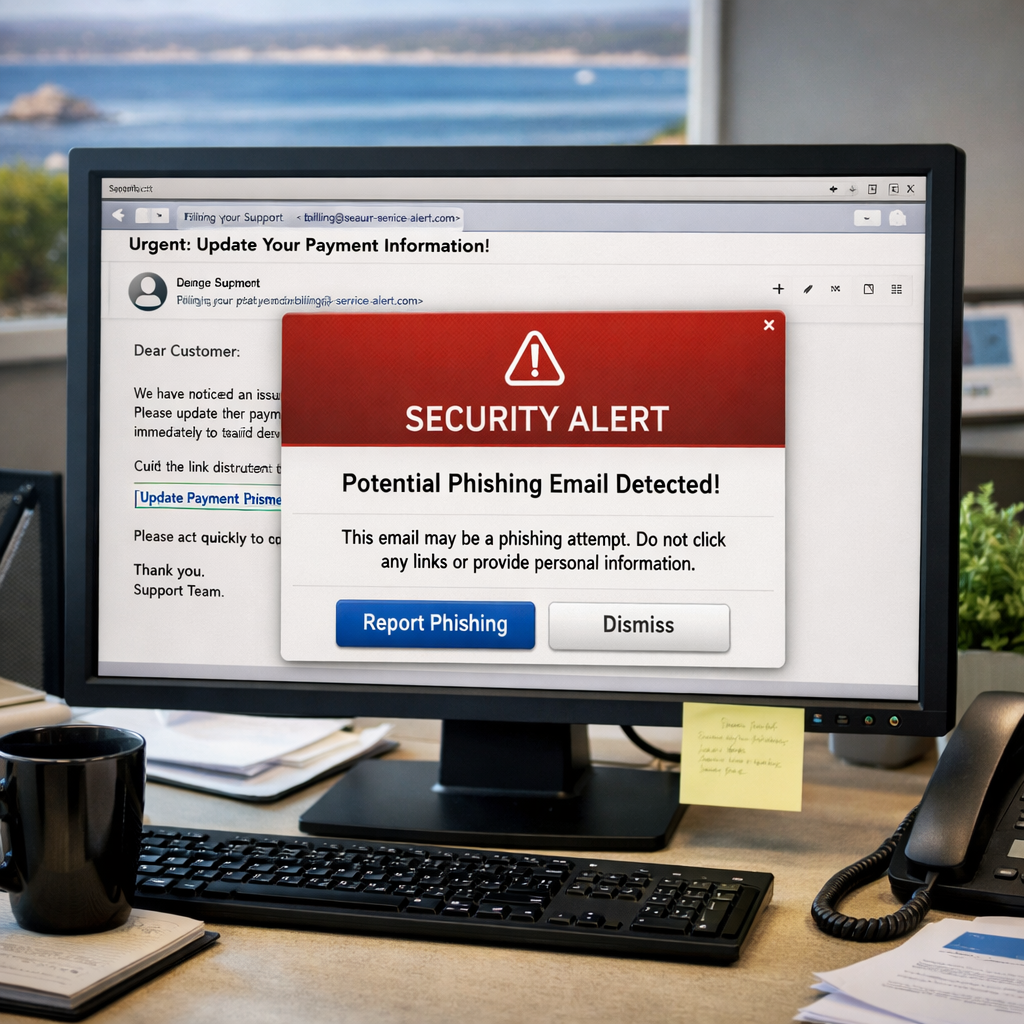
Bottom line: Bottom line: Design realistic, role‑based phishing emails that mirror local threats, then embed instant feedback to turn clicks into learning.
Step 3: Deploy the Simulation and Monitor Results
With the emails ready, you can launch the campaign. Use the simulation tool’s scheduler to send the bait during normal work hours. Avoid early mornings or late evenings , you want a realistic window.
As the emails land, the platform will record who opens, who clicks, and who hits the report button. Those numbers feed into a dashboard you can review daily.
Don’t just stare at click rates. Look at reporting rates, too. A high click‑through but low report rate means users see the bait but don’t act.
The Adaptive Security free‑simulation handbook notes that a good program tracks four core metrics: click‑through, report, time‑to‑report, and repeat offenders.
After each round, pull the raw CSV and load it into Excel. Create a simple pivot that shows clicks by department, clicks by role, and time‑to‑report in minutes.
Use that data to spot repeat offenders , the handful of users who keep clicking. Those folks need targeted coaching.
“The best time to start building backlinks was yesterday.”
When you see a spike in clicks, pause the campaign and send a quick micro‑learning tip. A short 1‑minute video that points out the fake sender address can drop click rates fast.
Keep the cycle tight. Run a test, review metrics, send a tip, then run another test two weeks later. Over time you should see clicks drop below 5% and reporting rise above 70%.
Bottom line: Bottom line: Deploy the bait, watch the dashboard, and act fast on the data to keep the program moving forward.
Step 4: Review Findings and Implement Ongoing Training
After a few rounds, you have a treasure trove of data. That data is the fuel for a lasting security habit.
First, create a one‑page report for leadership. Show the click‑through trend, the reporting trend, and the top three risk areas. Use plain language , call out how many users clicked a finance‑related bait versus a general bait.
Next, turn the findings into bite‑size training. If the finance team fell for a fake invoice, schedule a 10‑minute workshop that walks them through how to verify vendor emails, check domain spelling, and use the report button.
Make the training repeatable. Use micro‑learning modules that pop up in Teams after a user clicks a link. Keep each module under two minutes , busy staff will actually watch.
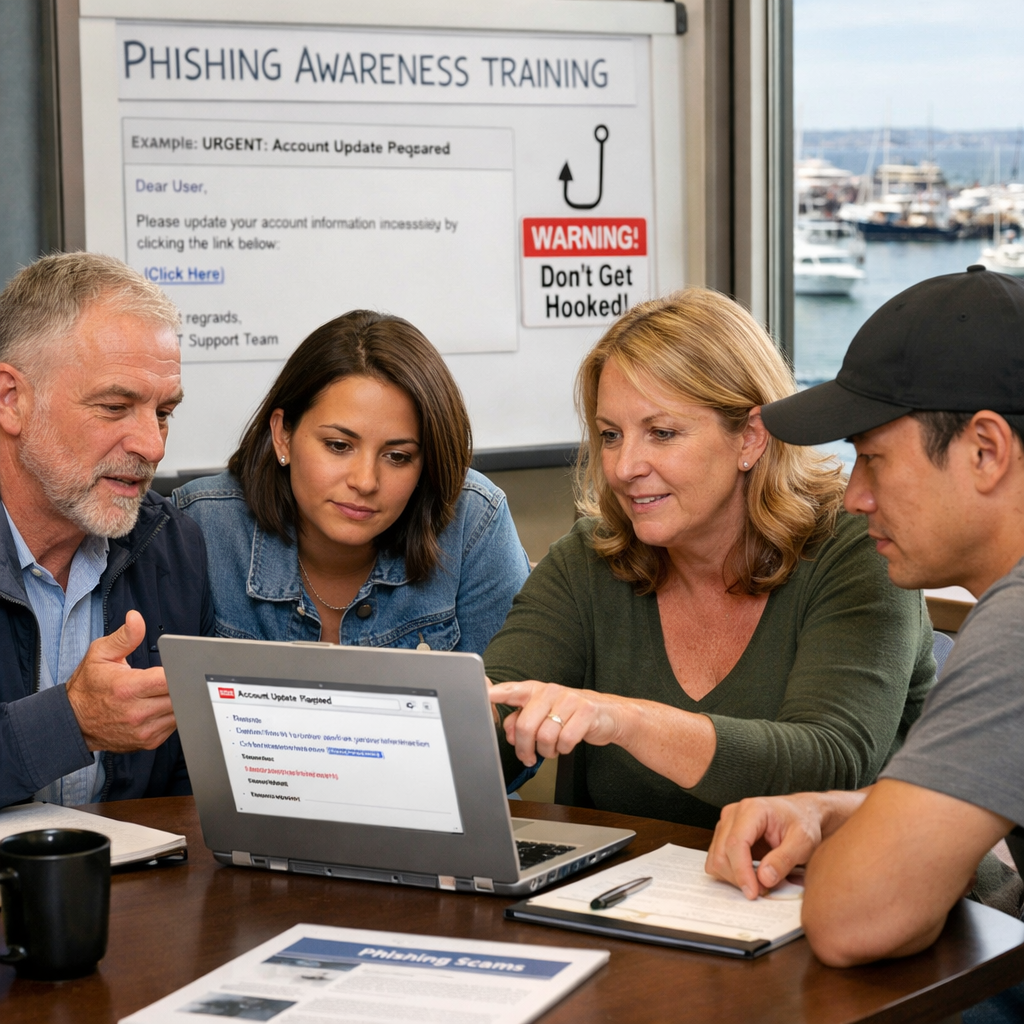
Remember the human side. Research from Adaptive Security shows that people forget 78.7% of what they learned after 30 days. That means you need refreshers every month.
Set up a calendar:
- Month 1: Baseline test and report.
- Month 2: Quick 2‑minute tip on checking sender addresses.
- Month 3: Role‑specific drill (finance or HR).
- Month 4: Review metrics and host a 10‑minute workshop.
- Repeat.
Pair the training with a clear policy. Make it part of onboarding for new hires. Include a short quiz that asks them to spot a fake link. Track quiz scores in the same spreadsheet you use for simulation results.
Finally, involve SRS Networks. Their cybersecurity services include a confidential risk assessment that ties directly to compliance requirements like the Bank Protection Act. That assessment plugs the one compliance step the research found missing in most guides.
Bottom line: Bottom line: Review the data, turn failures into short training bursts, and keep the cycle tight to build lasting awareness.
Frequently Asked Questions
What is a phishing simulation Monterey CA and why does it matter?
A phishing simulation Monterey CA is a safe test where you send fake phishing emails to your staff. It matters because it shows where people might click real attacks. The test gives you numbers you can improve, not just guesses.
How often should a Monterey SMB run a phishing simulation?
Most experts suggest a monthly baseline test plus a targeted drill every quarter. That cadence keeps the threat fresh without overloading staff. You can adjust the frequency if you see high click rates.
Do I need a paid tool to run a phishing simulation Monterey CA?
No. There are free tools that let you craft realistic emails, track clicks, and deliver instant feedback. The free‑simulation guide from Adaptive Security lists several options that work for small businesses.
What metrics should I track after each simulation?
Track click‑through rate, reporting rate, time‑to‑report, and repeat offenders. Those four numbers give you a clear view of how well people spot and report phishing attempts.
How can I improve reporting rates?
Add a one‑click “Report Phish” button in Outlook or Gmail. When users see the button, they are more likely to use it. Pair the button with a short thank‑you note that explains the red flags.
What should I do when an employee clicks a simulated phish?
Immediately send a friendly landing page that explains why the email was fake and points out the missed clues. Follow up with a 5‑minute one‑on‑one session that reviews the same email and reinforces the warning signs.
How does compliance fit into a phishing simulation Monterey CA?
Only one of the 17 checklist steps mentions compliance, but many regulations like HIPAA or the Bank Protection Act require regular security awareness training. Use the SRS Networks risk assessment to map your simulation results to those compliance needs.
Conclusion & Next Steps
We’ve walked through four solid steps: assess risk, design a realistic bait, deploy and watch the numbers, then turn the findings into short, repeatable training. Each step builds on the last and creates a loop that keeps your staff sharp.
If you’re ready to protect your Monterey business, start with a quick risk inventory, then schedule a baseline phishing test. You’ll see exactly where the gaps are.
Ready to make your technology work for your business? contact us for a free consultation or IT assessment today.