Running a Monterey small business means you wear many hats. One of those hats is keeping your data safe and meeting the NIST security rules that many customers and partners expect. It can feel like a maze, but you don’t have to walk it alone. Below you’ll see a short list of local firms that actually help SMBs get NIST‑aligned. We’ll break down what each team does, who they’re best for, and how they price their work.
By the end you’ll know which provider fits your budget, industry, and risk level, and you’ll have a quick checklist to compare them side‑by‑side.
1. SRS Networks , Monterey’s Trusted NIST Compliance Partner
SRS Networks has been a staple in the Monterey Bay tech scene for almost three decades. Their flat‑rate monthly model covers remote monitoring, on‑site help, and a full suite of security tools. That means you won’t get hit with surprise per‑incident fees, which is a big relief for a cash‑flow‑tight SMB.
What sets them apart is the way they blend managed IT services with NIST guidance. They start with a NIST CSF alignment service that maps your current controls to the five framework functions (Identify, Protect, Detect, Respond, Recover). From there they build a roadmap that fits your budget and staff capacity.
Because they’re local, the team can pop over for a quick check‑up or a deeper dive whenever you need it. They know the agricultural and healthcare players in Salinas and Monterey, so they can tailor controls to the data you actually hold.
Clients often appreciate the single‑point‑of‑contact model. Your account manager knows the whole picture, network, cloud, backup, and compliance, so you don’t have to chase multiple specialists.
Pricing is a flat monthly fee that covers most of the work. If you need extra services like advanced penetration testing, they bill it as an add‑on, but the base fee stays predictable.
For more background on why NIST is a good fit for SMBs, the federal NIST Small Business Cybersecurity Corner outlines resources and best practices.
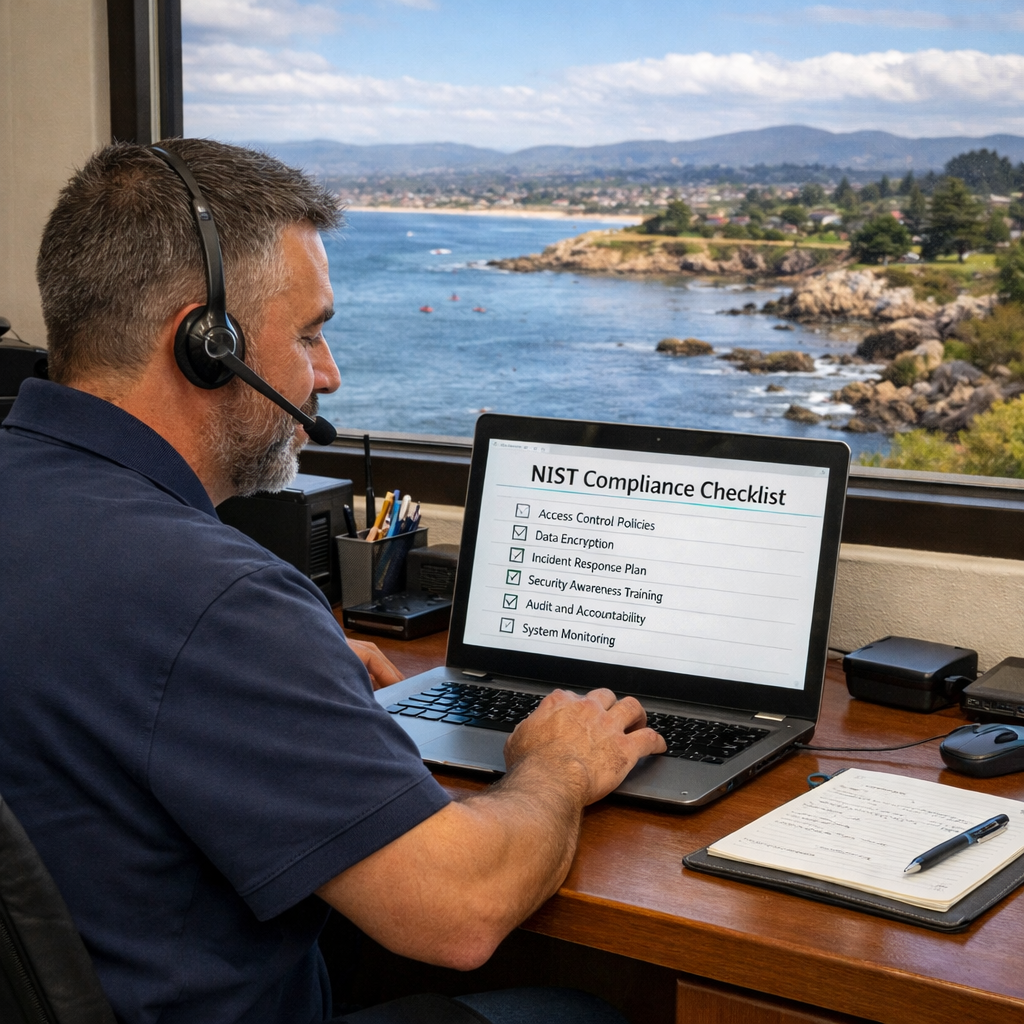
2. SecureTech Solutions , Specialized NIST 800‑53 Expertise
SecureTech focuses on the NIST 800‑53 control catalog, which is the deep‑dive set of security requirements many federal contractors need. Their engineers have certifications in federal risk management, so they know the exact language the auditors look for.
The firm works on a project‑based model. They’ll run a full gap analysis, then hand you a remediation plan with clear milestones. This approach works well if you have a specific deadline, such as an upcoming contract bid.
Because they specialize in 800‑53, they can help you translate those controls into practical steps for a small business, like configuring Windows policies, setting up log aggregation, and building MFA flows without over‑engineering.
One thing to watch: the project pricing can be higher than a flat‑rate MSP because the work is more granular. But the upside is a very detailed compliance package that can be reused for future audits.
SecureTech also offers a “quick‑start” audit for businesses that just need a snapshot of where they stand. It’s a good way to test the waters before committing to a full engagement.
And remember, the NIST 800‑53 catalog is openly listed on Wikipedia’s NIST 800‑53 page, which can help you understand the control families before you talk to a consultant.
3. CyberGuard Monterey , Full‑Service Risk Management
CyberGuard offers a full suite of risk‑management services that go beyond pure compliance. They combine vulnerability scanning, threat hunting, and policy creation into one contract. For SMBs that want a “set it and forget it” vibe, they handle everything from the first scan to the final audit report.
Their process starts with an automated asset inventory. Every device, cloud instance, and third‑party app gets logged, then mapped to the relevant NIST controls. After that they run a pen test and produce a risk‑ranking that ties directly to the NIST framework.
What makes them stand out is the ongoing monitoring. They keep an eye on your environment 24/7 and alert you if a control drifts out of compliance. That means you stay “audit ready” all year, not just before a review.
The pricing model is a blended monthly fee plus a one‑time setup cost. It’s a bit higher than a pure MSP, but the added risk‑management features can lower your insurance premiums.
CyberGuard also provides a playbook for incident response that aligns with NIST’s Respond function. If a breach happens, you already have a tested process.
4. Pacific IT Advisors , Cloud‑Focused NIST Integration
Pacific IT Advisors leans heavily on cloud platforms like Azure and AWS. They help SMBs move workloads to the cloud while keeping NIST controls intact. Their expertise is useful if you’re already in the cloud or planning a migration.
They start by reviewing your existing cloud architecture, then map each service (VMs, storage buckets, IAM roles) to the relevant NIST CSF functions. Their team can set up automated compliance checks using native cloud tools, so you get real‑time alerts when a misconfiguration pops up.
Because they work with both public and hybrid clouds, they can advise on data residency, encryption, and access‑control policies that match NIST recommendations.
Here’s a quick look at how they do it:
- Assess current cloud services and data flow.
- Map services to NIST CSF categories.
- Implement automated compliance rules (e.g., Azure Policy, AWS Config).
- Run continuous scans and generate quarterly reports.
They also embed a short video that walks through a typical cloud‑compliance dashboard. Watch it below.
5. Harbor Compliance Group , Affordable Packages for SMBs
Harbor Compliance Group targets the budget‑conscious side of the market. Their packages start at a low monthly rate and include a basic NIST readiness assessment, a policy template library, and quarterly check‑ins.
The idea is to give you the core documents you need, like an incident‑response plan, access‑control policy, and backup procedure, without a heavy consulting bill. They use a “template‑first” approach, then customize the docs to your environment.
Because the service is mostly off‑the‑shelf, the turnaround is fast. You can have a compliance‑ready policy set within a few weeks, which is great if you need to show proof of effort quickly.
The downside is less hands‑on technical work. If you need deep network segmentation or custom code reviews, you’ll likely need a supplemental provider.
Overall, Harbor is a solid choice for businesses that already have some security basics in place and just need the paperwork to match NIST expectations.

6. Apex Security Consulting , Enterprise‑Grade Framework Implementation
Apex Security Consulting brings a large‑enterprise playbook to Monterey SMBs. They focus on implementing the full NIST framework, including the less‑talked‑about RMF (Risk Management Framework) steps, for companies that need to meet strict insurance or government contract requirements.
Their team runs a complete assessment that covers people, processes, and technology. They then build a phased implementation plan that rolls out controls in bite‑size pieces, so you don’t have to overhaul everything at once.
What’s unique is their “control‑as‑a‑service” model. Instead of just telling you what to buy, they provision and manage tools like endpoint detection and response (EDR), security information and event management (SIEM), and automated patching, all under a single contract.
Because Apex has been in Monterey Park for 27 years, they know the local regulatory quirks, especially for health‑care and legal firms that handle sensitive data.
If you’re looking for a partner that can take a small business from “no controls” to “enterprise‑grade compliance” without hiring a full‑time security team, Apex fits the bill.
7. Redwood IT Services , Tailored NIST 800‑171 for Contractors
Redwood IT Services zeroes in on NIST 800‑171, the standard many defense contractors must follow. If you work with the Department of Defense or other federal agencies, you’ll need to protect Controlled Unclassified Information (CUI) the right way.
Redwood starts with a CUI inventory, then maps each data element to the 14 control families in 800‑171. They provide a gap‑analysis report that shows exactly where you fall short.
After the analysis, Redwood helps you implement the missing controls, like encryption at rest, multi‑factor authentication, and audit logging, using a mix of on‑prem and cloud solutions. They also assist with the final self‑assessment report that you’ll submit to the agency.
The pricing is a fixed‑price project plus a modest annual maintenance fee. It’s transparent, which is useful when you need to include compliance costs in a grant or contract budget.
Redwood’s local presence means they can do on‑site walkthroughs of your facility, which many larger consultancies won’t do for a small business.
8. Coastal Cyber Solutions , Ongoing Monitoring & Incident Response
Coastal Cyber focuses on the “Detect” and “Respond” parts of the NIST CSF. They set up 24/7 security operations centers (SOCs) that watch your network for threats and jump in when an alarm sounds.
Their service includes continuous endpoint monitoring, threat‑intel feeds, and a playbook that aligns with NIST’s Respond function. If a ransomware hit occurs, they can isolate the infected machine, roll back from backups, and produce a post‑mortem report that satisfies auditors.
Coastal also offers a “managed detection and response” (MDR) bundle that bundles SIEM licensing, rule tuning, and analyst time into a single fee.
The downside is the monthly cost can be higher than a basic MSP, but the trade‑off is faster detection and less downtime.
For businesses that can’t afford a full‑time security team, Coastal gives you the expertise of a SOC without the overhead of hiring analysts.
How to Choose the Right NIST Consulting Partner
Picking a partner isn’t just about price. Think about the specific NIST framework you need, CSF, 800‑53, or 800‑171. Ask each firm for a sample roadmap and a clear list of deliverables.
Look for transparency: a flat‑rate or clearly itemized quote beats vague “we’ll work out a price later.” Also, check if they have local experience. A firm that knows Monterey’s agricultural and health sectors can map controls to real‑world processes.
Don’t forget to verify certifications. Many providers list ISO 27001 or FedRAMP, but for NIST you’ll want staff with CISA‑approved training or NIST‑specific certifications.
Finally, test their communication style. You’ll be asking them tough security questions, so you need a partner who answers in plain language, not jargon.
And remember, the best fit aligns with your risk tolerance, industry requirements, and budget constraints.
Comparison Table: Quick Look at the 8 Providers
Use this table to spot the firm that matches your core need, whether it’s a full‑scale framework rollout or just a policy pack.
For a deeper look at the NIST CSF and how it can map to your business, check out SRS Networks’ CSF alignment guide. It shows real‑world steps and examples.
FAQ
What is the difference between NIST CSF and NIST 800‑53?
The CSF is a high‑level, flexible framework that groups security work into five core functions: Identify, Protect, Detect, Respond, and Recover. It’s great for SMBs that need a roadmap without too much detail. NIST 800‑53 is a catalog of specific security controls, over 1,000 of them, used mainly by federal agencies and contractors who need a granular, auditable set of requirements. Choose CSF for broad guidance, and 800‑53 if you must meet contract‑level detail.
Do I need a full‑time security team to follow NIST?
No. Many of the providers on this list act as your outsourced security team. They handle the day‑to‑day tasks, monitoring, policy writing, and control testing, so you can focus on your core business. Look for a partner that offers a managed service model if you lack internal staff.
How long does a typical NIST compliance project take?
Timing varies by scope. A basic policy package can be delivered in 4, 6 weeks. A full‑scale 800‑53 implementation may take 3, 6 months, especially if you need to upgrade hardware or re‑architect networks. Most firms will give you a roadmap with milestones so you can track progress.
Can I do NIST compliance myself?
You could, but it’s risky. The frameworks are detailed, and missing a single control can cause audit failure. A consultant brings expertise, tools, and templates that speed up the process and reduce errors. For most SMBs, the cost of a mis‑step is higher than hiring help.
What are the ongoing costs after the initial assessment?
Most firms charge a recurring fee for monitoring, policy updates, and annual re‑assessments. Expect a monthly retainer that covers continuous compliance work. Some providers, like Harbor, offer low‑cost annual renewals if you only need document updates.
How does NIST compliance help with insurance?
Insurance carriers often ask for proof of security controls. A NIST‑aligned program shows you’ve identified risks, applied safeguards, and have an incident response plan. That can lower premiums and make claim processing smoother if a breach occurs.
Is NIST compliance required for all Monterey businesses?
Not by law, but many industries, healthcare, finance, and contractors, must meet it to satisfy HIPAA, PCI, or federal contract rules. Even if it’s not mandatory, following NIST can improve your security posture and win customer trust.
What should I ask a consultant during the first call?
Ask about their experience with SMBs, how they price their services, and whether they provide a clear deliverable list. Request examples of past work, especially any that match your industry. Also, confirm they have local staff who can visit your site if needed.
Choosing the right NIST partner can feel like a big decision, but you now have a clear shortlist and a way to compare them. Whether you need a flat‑rate managed service, deep 800‑53 expertise, or a 24/7 SOC, there’s a local firm ready to help your Monterey business stay secure and compliant.
Ready to make your tech work for you? Contact us for a free consultation and see how we can align your security program with NIST standards.