Network monitoring sounds like a technical chore reserved for IT departments, but its impact stretches far beyond server rooms. Think about this for a second. Downtime costs businesses an average of $5,600 every single minute, and that’s just the beginning. Most people assume monitoring only catches problems after they happen, but the reality is it acts like a digital security guard that can stop disasters before they ever make a dent.
Table of Contents
- What Is Network Monitoring And Its Key Concepts?
- Why Network Monitoring Matters For Businesses
- How Network Monitoring Works: Processes And Technologies
- Real-World Applications Of Network Monitoring In Different Sectors
- Challenges In Network Monitoring And Best Practices
Quick Summary
| Takeaway | Explanation |
|---|---|
| Network monitoring enhances operational efficiency. | Proactively identifying issues minimizes downtime and optimizes resource allocation, directly impacting business operations. |
| Robust monitoring reduces financial losses. | Effective network monitoring can save businesses significant amounts by preventing disruptions that cost substantial revenue. |
| Security is bolstered through real-time monitoring. | Continuous observation helps detect security threats immediately, lowering the risk of data breaches and cyber attacks. |
| Tailored strategies are essential across industries. | Different sectors require personalized approaches to network monitoring to address specific challenges and compliance needs. |
| Stay updated with advanced monitoring technologies. | Utilizing the latest tools, like machine learning, enables better data analysis, alert prioritization, and overall network management. |
What is Network Monitoring and Its Key Concepts?
Network monitoring represents a critical process where organizations systematically track, analyzing, and managing their digital infrastructure’s performance, health, and security. By continuously observing network components like servers, routers, switches, and connections, businesses can proactively identify potential issues before they escalate into significant disruptions.
Understanding Network Monitoring Fundamentals
At its core, network monitoring involves collecting real-time data about network traffic, bandwidth usage, device status, and performance metrics. Gartner Research indicates that effective network monitoring helps organizations maintain operational efficiency, prevent downtime, and optimize technological resources.
Key components of network monitoring include:
- Performance tracking of network devices and connections
- Traffic analysis to understand data flow and potential bottlenecks
- Security surveillance to detect unusual activities or potential breaches
Essential Network Monitoring Technologies
Modern network monitoring leverages sophisticated technologies like packet analysis, SNMP protocols, and real-time dashboards. These tools enable IT professionals to gain comprehensive insights into network infrastructure, allowing for immediate response to emerging challenges. IEEE Communications Society highlights that advanced monitoring solutions can reduce network-related incidents by up to 60% through proactive management.
Network monitoring transforms raw data into actionable intelligence, helping businesses maintain robust, secure, and efficient digital ecosystems. By understanding network performance holistically, organizations can make informed decisions, minimize risks, and ensure seamless technological operations.
The following table summarizes the key components and technologies essential to network monitoring, helping clarify their individual roles in maintaining network health and security.
| Component / Technology | Description |
|---|---|
| Performance Tracking | Monitors network devices and connection efficiency |
| Traffic Analysis | Analyzes data flow and detects bottlenecks |
| Security Surveillance | Observes unusual activity and potential security breaches |
| Packet Analysis | Examines data packets for detailed information and threats |
| SNMP Protocols | Enables standardized device communication and management |
| Real-Time Dashboards | Provides live visual insight into network performance |
Why Network Monitoring Matters for Businesses
Network monitoring transforms from a technical necessity into a strategic business asset, providing organizations with critical insights that directly impact operational efficiency, security, and financial performance. By implementing robust network monitoring strategies, businesses can protect their digital infrastructure and maintain competitive advantage.
Financial and Operational Impact
The economic implications of network monitoring are substantial.
IMAGE:descriptive_key_1] [Gartner Research reveals that downtime can cost businesses an average of $5,600 per minute, making proactive network monitoring a crucial investment. Effective monitoring helps prevent expensive disruptions by identifying potential issues before they escalate.
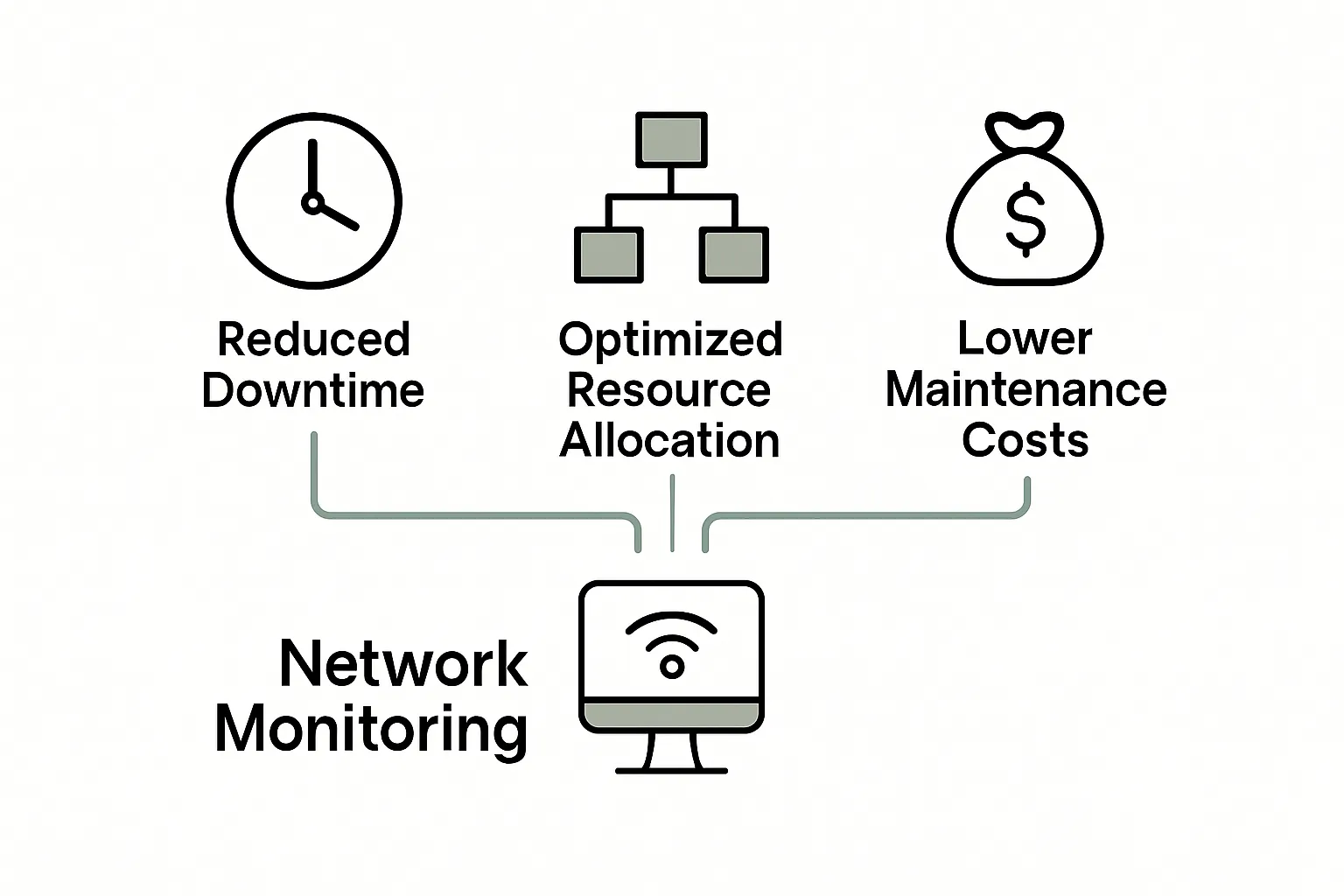
Key financial benefits include:
- Reduced downtime preventing revenue losses
- Optimized resource allocation by understanding network performance
- Lower maintenance costs through predictive problem detection
Security and Compliance Considerations
In an era of increasing cybersecurity threats, network monitoring serves as a critical defense mechanism. Real-time monitoring enables businesses to detect unusual traffic patterns, potential breaches, and unauthorized access attempts. NIST Cybersecurity Framework emphasizes that continuous network monitoring is essential for maintaining robust security protocols and meeting regulatory compliance requirements.
Businesses that implement comprehensive network monitoring can significantly mitigate risks, protect sensitive data, and demonstrate commitment to maintaining a secure technological ecosystem. The ability to quickly identify and respond to potential security incidents can mean the difference between a minor disruption and a catastrophic data breach.
How Network Monitoring Works: Processes and Technologies
Network monitoring operates through a sophisticated ecosystem of interconnected technologies and methodologies that continuously collect, analyze, and interpret complex digital signals across technological infrastructures. By employing advanced tools and strategic approaches, organizations can gain comprehensive visibility into their network’s performance and potential vulnerabilities.
Data Collection and Metrics
The foundation of network monitoring lies in comprehensive data collection. Specialized monitoring tools utilize multiple protocols and techniques to gather real-time information about network performance. IEEE Communications Society highlights that these systems simultaneously track numerous critical metrics including bandwidth utilization, latency, packet loss, and device status.
Key metrics monitored include:
- Network traffic volume and patterns
- Device response times
- Error rates and connection stability
- Resource consumption levels
Advanced Monitoring Technologies
Modern network monitoring leverages sophisticated technologies that transform raw data into actionable intelligence. Packet analysis allows deep inspection of data transmission, while SNMP (Simple Network Management Protocol) enables standardized communication between network devices and monitoring systems. Real-time dashboards provide visual representations of network health, allowing IT professionals to quickly identify and respond to potential issues.
These technologies work synergistically to create a dynamic, responsive monitoring environment that goes beyond simple data collection. By integrating machine learning and predictive analytics, network monitoring systems can now anticipate potential problems, recommend optimization strategies, and provide strategic insights into technological infrastructure performance.
Real-World Applications of Network Monitoring in Different Sectors
Network monitoring transcends technological boundaries, providing critical insights and protection across diverse industries. By adapting monitoring strategies to specific sector requirements, organizations can address unique challenges and optimize their technological infrastructure.
Healthcare and Medical Networks
In healthcare environments, network monitoring plays a crucial role in maintaining patient safety and regulatory compliance. Healthcare IT Security emphasizes that medical networks require specialized monitoring to protect sensitive patient data, ensure medical device connectivity, and prevent potential security breaches.
Key healthcare network monitoring priorities include:
- Patient data protection
- Medical device performance tracking
- HIPAA compliance verification
- Secure telemedicine infrastructure
Financial and Manufacturing Sector Applications
Financial institutions and manufacturing companies rely on network monitoring to maintain operational integrity and protect critical infrastructure. Real-time monitoring enables these sectors to detect potential security threats, optimize system performance, and ensure continuous operational efficiency.
In financial services, network monitoring helps prevent unauthorized transactions and protect against cyber threats. Manufacturing environments use advanced monitoring to track complex industrial systems, predict equipment failures, and maintain seamless production processes. By implementing comprehensive network monitoring, these industries can minimize downtime, reduce financial risks, and maintain competitive advantages.
This table presents a comparison of network monitoring applications and priorities in different industries, making it easy to understand how each sector leverages network monitoring for specific outcomes.
| Sector | Primary Applications | Key Priorities |
|---|---|---|
| Healthcare | Patient data protection, device monitoring | Maintain HIPAA compliance, ensure secure telemedicine infrastructure |
| Financial | Transaction monitoring, security threats | Prevent unauthorized access, protect sensitive financial data |
| Manufacturing | System performance, production monitoring | Predict equipment failure, optimize production uptime |
Challenges in Network Monitoring and Best Practices
Network monitoring presents complex challenges that require sophisticated strategies, technological expertise, and continuous adaptation. Organizations must navigate intricate technological landscapes while maintaining robust security, performance, and operational efficiency.
Technological Complexity and Alert Management
One of the primary challenges in network monitoring involves managing the overwhelming volume of data and potential alerts. Modern networks generate massive amounts of information, making it difficult to distinguish between critical issues and routine events. Intelligent filtering and machine learning algorithms have become essential in helping IT professionals prioritize and respond to genuine threats.
Key challenges in network monitoring include:
- Data volume and information overload
- False positive alert management
- Rapidly evolving technological infrastructures
- Increasing complexity of cybersecurity threats
Strategic Monitoring Best Practices
NIST Cybersecurity Framework recommends a comprehensive approach to network monitoring that emphasizes continuous assessment, automation, and strategic alert prioritization. By implementing intelligent monitoring strategies, organizations can transform potential challenges into opportunities for enhanced technological resilience.
Successful network monitoring requires a proactive approach that combines advanced technological tools with human expertise. This involves developing comprehensive monitoring strategies that adapt to changing technological landscapes, integrating artificial intelligence for more intelligent threat detection, and maintaining a holistic view of an organization’s digital ecosystem.
Take Control of Your Network Before Problems Escalate
If the thought of costly downtime or unexpected network issues keeps you up at night, you are not alone. The article uncovered how overwhelmed IT teams struggle to spot real threats among a flood of alerts, and how even small businesses face big risks from security breaches and performance drops. If you want peace of mind, implementing proactive, real-time network monitoring is key to securing your operations and stopping issues in their tracks. SRS Networks specializes in transforming raw network data into actionable intelligence, helping you protect your business and avoid expensive disruptions.
Ready to safeguard your entire network with solutions designed for local businesses? Let SRS Networks become your trusted IT partner. Visit our main website to discover how we deliver tailored support and continuous monitoring, or contact us for a free consultation. Start building a more secure and efficient network environment today before risks become reality.
Frequently Asked Questions
What is network monitoring and its importance?
Network monitoring is the process of tracking and managing the performance, health, and security of an organization’s digital infrastructure. It helps identify potential issues before they lead to significant disruptions, thus maintaining operational efficiency and security.
How does network monitoring improve security?
Network monitoring enhances security by enabling real-time surveillance that can detect unusual activities or potential breaches. This proactive approach helps organizations to quickly identify and respond to threats, protecting sensitive data and ensuring compliance with regulatory requirements.
What are the key technologies used in network monitoring?
Key technologies employed in network monitoring include packet analysis, SNMP protocols, and real-time dashboards. These tools provide comprehensive insights into network performance and security, allowing IT professionals to respond promptly to emerging challenges.
What challenges do organizations face in network monitoring?
Organizations face challenges such as data volume and information overload, false positive alert management, and the complexity of evolving cybersecurity threats. To overcome these challenges, intelligent filtering and machine learning algorithms are essential for prioritizing genuine threats.