Technology issues can slow a business down long before they turn into full outages. For companies in Campbell, CA, managed IT services offer a better model: steady performance, stronger security, predictable costs, and a clear plan for growth.
SRS Networks provides managed IT services built for organizations that depend on reliable systems every day. That includes professional offices, healthcare practices, manufacturers, dealerships, and multi-location teams that need proactive support, layered cybersecurity, cloud management, and practical compliance guidance without building a large internal IT department.
Managed IT Services for Campbell, CA Businesses
A managed IT services model replaces scattered, reactive fixes with ongoing oversight. Instead of waiting for a server failure, a phishing incident, or a failed backup, systems are monitored, maintained, and reviewed as part of a monthly service plan.
That approach matters in Campbell, where many businesses rely on Microsoft 365, cloud applications, secure remote access, and always-on connectivity. When technology is central to daily operations, downtime affects productivity, customer service, revenue, and trust.
Managed services can support either a fully outsourced IT environment or a co-managed arrangement that works alongside an in-house team.
| IT Approach | Typical Result | Managed IT Result |
|---|---|---|
| Break-fix support | Problems addressed after disruption | Issues found and corrected earlier |
| Unplanned IT spending | Variable invoices and surprise costs | Predictable monthly budgeting |
| Basic security tools | Gaps between systems and users | Layered protection across network, email, endpoints, and cloud |
| Infrequent reviews | Aging hardware and unclear priorities | Ongoing planning, lifecycle management, and strategic guidance |
| Manual backup oversight | Missed failures and uncertain recovery | Monitored backups and tested recovery readiness |
A strong managed services plan is not only about fixing tickets. It is about building an IT environment that stays stable, secure, and ready for change.
Proactive IT Support and 24/7 Monitoring
Proactive support is one of the biggest reasons businesses move away from reactive IT. Continuous monitoring helps identify warning signs early, whether the issue is storage capacity, failed hardware, patch status, suspicious activity, or degraded network performance.
SRS Networks uses a preventive service model designed to reduce interruptions before employees feel them. Routine maintenance, patch deployment, system checks, and vendor coordination can be handled behind the scenes, often outside business hours, so teams can stay focused on work instead of troubleshooting.
That difference shows up in day-to-day operations: fewer recurring issues, faster response times, and less disruption to staff.
After a proactive support framework is in place, businesses typically benefit from:
- 24/7 monitoring: Servers, workstations, network devices, and key infrastructure watched for performance and risk signals
- Patch management: Operating systems and business applications updated on a planned schedule
- Help desk support: User issues triaged quickly so small problems do not turn into larger ones
- Vendor coordination: Internet providers, software vendors, and hardware suppliers managed through one IT partner
- Lifecycle planning: Aging equipment identified before it becomes a business risk
For growing companies, this model also creates better visibility. Leadership gets a clearer view of where money is being spent, which systems are under strain, and what upgrades should come next.
Cybersecurity Services for Campbell Companies
Cybersecurity is now part of core operations, not a side project. A single missed patch, weak password, exposed remote access point, or successful phishing email can interrupt business quickly.
Managed cybersecurity services help close those gaps with layered protection. Instead of depending on a single antivirus tool, businesses can combine endpoint defense, firewall management, email security, identity controls, threat monitoring, and user training into one coordinated strategy.
Campbell organizations in legal, healthcare, finance, manufacturing, and other data-sensitive sectors often need stronger controls around access, encryption, backup integrity, and audit readiness. A managed provider helps bring those controls together in a way that is practical for daily operations.
Common security elements may include:
- Managed firewall security
- Endpoint detection and response
- Email filtering and anti-phishing protection
- Multi-factor authentication
- Vulnerability scanning
- Security awareness training
- Secure VPN and remote access controls
- Continuous threat monitoring
Security works best when it is tied directly to business risk. That means reviewing who has access to sensitive data, how remote users connect, where backups are stored, and how quickly systems can be restored after an incident.
Cloud Services, Microsoft 365, and Backup Management
Cloud platforms can improve flexibility, support hybrid work, and reduce dependence on aging on-premise systems. They also create new administrative and security demands. Misconfigured identities, weak sharing settings, and unmonitored third-party apps can introduce risk even when the platform itself is strong.
SRS Networks supports cloud environments with planning, migration, administration, and security oversight. That can include Microsoft 365 management, Azure integration, identity and access controls, SharePoint and Teams configuration, and secure remote workforce support.
Some businesses need a full cloud move. Others do better with a hybrid model that keeps certain applications or data on-site while moving collaboration, file access, and backup functions to the cloud. The right answer depends on workflow, compliance needs, performance demands, and budget.
Backup and disaster recovery are part of this picture, not separate from it. Cloud adoption does not remove the need for backup strategy, recovery testing, and clear recovery time objectives. Businesses still need to know what gets backed up, how often, where copies are stored, and how fast systems can be restored after ransomware, accidental deletion, or infrastructure failure.
Compliance-Focused IT Services for Regulated Industries
For many Campbell businesses, IT decisions are tied to compliance as much as convenience. Healthcare organizations may need support around HIPAA safeguards. Financial and automotive businesses may need to address FTC Safeguards requirements. Government contractors may need controls that support NIST or CMMC expectations. Legal and professional services firms often need stronger protection for confidential data and client communications.
Compliance-focused IT services help turn those requirements into everyday technical controls and documented processes. That may include access policies, encrypted systems, secure email, audit logs, backup retention, vulnerability management, and business continuity planning.
SRS Networks works with businesses that need both practical support and executive-level direction. A virtual CIO or strategic advisor can help connect compliance needs to budgeting, infrastructure planning, vendor choices, and long-term IT priorities.
A compliance-aware managed services plan often addresses areas like:
- Access control: Role-based permissions, MFA, account review, and identity governance
- Data protection: Encryption, secure storage, backup integrity, and retention policies
- Documentation: Asset records, policies, recovery procedures, and audit support
- Risk reduction: Vulnerability scans, remediation planning, and security awareness efforts
- Business continuity: Recovery planning built around operational impact and downtime tolerance
Good compliance support should make operations more disciplined, not more complicated.
Network Infrastructure and Business Continuity Services
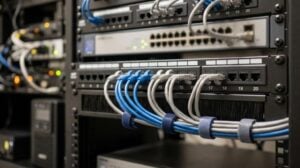
Reliable infrastructure is still the foundation of managed IT. Even the best cloud stack depends on stable networks, secure edge protection, and well-planned connectivity between users, devices, and applications.
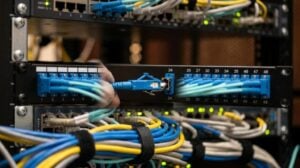
That is why many managed service relationships include network architecture, firewall deployment, switching, wireless optimization, VPN setup, and multi-site connectivity. In offices with growth plans, relocations, or new construction, structured cabling and MDF/IDF design may also be part of the work.
Business continuity depends on this foundation. If internet failover is missing, backups are not tested, or remote access is poorly designed, a disruption can ripple through the business quickly. Strong planning reduces that exposure.
What a Managed IT Services Plan Can Include
The right service plan depends on business size, internal resources, risk profile, and industry requirements. Some organizations want full IT outsourcing. Others need a partner to strengthen cybersecurity, cover after-hours support, or provide strategic guidance for an internal team.
A well-structured plan may include help desk support, proactive monitoring, cloud administration, cybersecurity management, backup oversight, compliance support, vendor coordination, hardware lifecycle planning, and vCIO services under predictable monthly pricing. That kind of model gives leaders a clearer way to control cost while improving service quality.
For Campbell businesses that want fewer disruptions, better protection, and stronger accountability from their technology environment, managed IT services create a more stable path forward. SRS Networks delivers that with proactive support, enterprise-level security practices, cloud expertise, and planning that helps technology support real business goals.