Medical offices depend on technology for almost everything and the pressure is huge when patient safety is on the line. Healthcare systems experience over 87 percent of all ransomware attacks on critical infrastructure in the United States. Most people think IT support is just about fixing broken computers or resetting passwords. Yet in healthcare, the real story is far bigger. IT support is the invisible force that shields patient data, keeps life-saving equipment connected, and makes sure doctors can deliver care when every second counts.
Healthcare IT Support Table of Contents
- What Is IT Support For Healthcare?
- Why IT Support Is Critical In Healthcare Settings
- How IT Support Functions In Healthcare Organizations
- Key Components Of IT Support For Healthcare Providers
- Real-World Applications And Challenges In Healthcare IT Support
Quick Summary
| Takeaway | Explanation |
|---|---|
| Healthcare IT support is specialized. | It requires unique knowledge to manage sensitive patient data and complex regulatory requirements in medical settings. |
| Security is a top priority. | Strong cybersecurity measures are crucial to protect patient information and ensure operational continuity in healthcare environments. |
| Compliance with regulations is essential. | IT support teams must adhere to strict guidelines like HIPAA to safeguard patient data and avoid legal issues. |
| Collaboration enhances IT support effectiveness. | IT professionals should work closely with healthcare staff to develop tailored technological solutions that improve patient care delivery. |
| Evolving technologies present challenges. | IT support must continuously adapt to new technologies and address operational challenges to maintain effective healthcare systems. |
What is IT Support for Healthcare?
IT support for healthcare represents a specialized technological service designed to maintain, optimize, and secure digital systems within medical environments. Unlike standard IT support, healthcare technology management requires extraordinary precision, compliance awareness, and understanding of unique industry challenges.
The Core Components of Healthcare IT Support
Healthcare IT support encompasses a comprehensive range of technological services specifically tailored to medical institutions. These services ensure that critical digital infrastructure remains operational, secure, and aligned with strict regulatory requirements. Key components include:
- Network infrastructure management
- Electronic health record (EHR) system maintenance
- Cybersecurity protection
- Compliance monitoring and reporting
- Medical device integration and support
According to the CDC’s National Healthcare Safety Network, technological infrastructure plays a crucial role in modern healthcare delivery, enabling better patient tracking, safety protocols, and data management.
Why Healthcare Requires Specialized IT Support
Healthcare organizations operate under unique technological constraints that demand more than standard IT services. Medical facilities handle sensitive patient information, complex regulatory environments, and mission-critical systems where downtime could potentially impact patient care.
Specialized IT support ensures that:
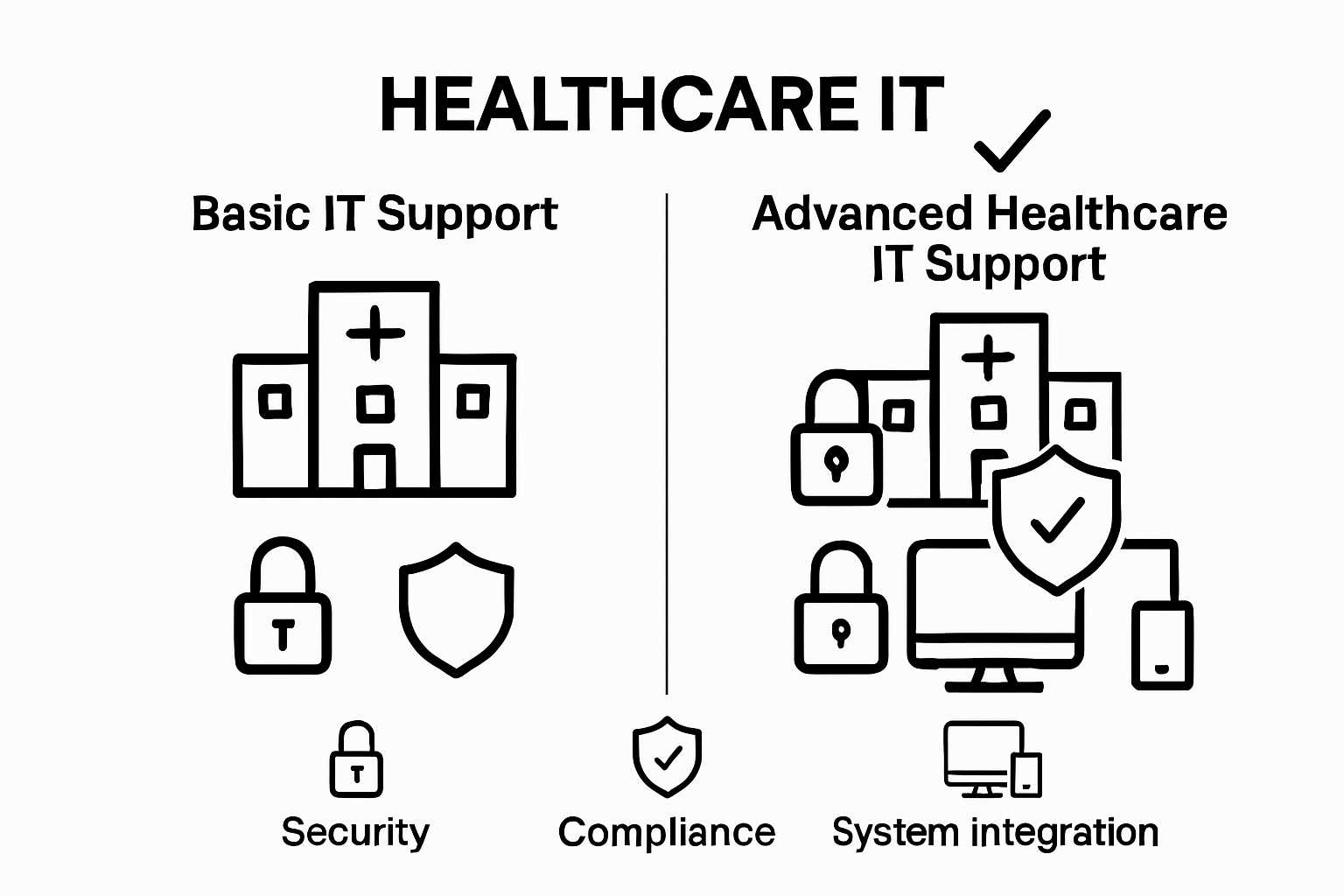
- Patient data remains confidential and secure
- Medical systems operate with minimal interruption
- Technology aligns with HIPAA and other healthcare regulations
- Advanced medical technologies integrate seamlessly
Professional IT support transforms technological infrastructure from a potential liability into a strategic advantage, enabling healthcare providers to focus on delivering exceptional patient care while maintaining robust digital systems.
The table below provides a summary comparison between standard IT support and specialized healthcare IT support, highlighting their distinctive requirements and responsibilities:
| Aspect | Standard IT Support | Healthcare IT Support |
|---|---|---|
| Data Sensitivity | General business or user data | Highly sensitive patient medical data |
| Regulatory Environment | Few or industry-specific | Stringent (e.g., HIPAA, healthcare laws) |
| Impact of Downtime | Productivity loss | Patient safety and care quality at risk |
| System Complexity | Standard business systems | EHRs, integrated medical devices, diagnostic equipment |
| Security Priority | Important | Critical |
| Operational Environment | Office/enterprise settings | Clinical, hospital, and multi-site medical settings |
| Required Expertise | IT generalist | IT with healthcare compliance and workflow knowledge |
Why IT Support is Critical in Healthcare Settings
Healthcare settings represent complex technological ecosystems where digital infrastructure directly impacts patient safety and medical outcomes. Robust IT support becomes not just a technological necessity but a critical component of quality healthcare delivery.
Patient Safety and Data Protection
In healthcare environments, IT support serves as a fundamental guardian of patient information and operational continuity. Medical systems manage extraordinarily sensitive data that requires stringent protection and precise management. A single technological failure could potentially compromise patient records, disrupt treatment protocols, or create significant legal and ethical challenges.
According to research from the National Center for Biotechnology Information, proper IT infrastructure can significantly reduce healthcare costs while improving overall service quality by providing detailed insights into healthcare utilization and access.
Essential Technological Functions in Healthcare
Healthcare IT support manages several mission-critical technological functions:
- Maintaining electronic health record (EHR) systems
- Ensuring secure data transmission between medical departments
- Protecting patient privacy through advanced cybersecurity measures
- Supporting telemedicine and remote consultation platforms
- Managing complex medical diagnostic and treatment equipment
These functions require specialized knowledge that goes beyond standard IT support. Healthcare technology professionals must understand intricate medical workflows, compliance requirements, and the potential real-world consequences of technological interruptions.
Regulatory Compliance and Risk Management
Healthcare organizations operate under strict regulatory frameworks like HIPAA, which mandate precise technological standards for patient data protection. IT support teams play a crucial role in:
- Implementing security protocols
- Conducting regular system audits
By proactively managing technological infrastructure, healthcare IT support transforms potential risks into reliable, secure systems that enable medical professionals to focus entirely on patient care.
How IT Support Functions in Healthcare Organizations
IT support in healthcare organizations operates as a complex, multifaceted system designed to maintain technological infrastructure while ensuring patient safety, data security, and operational efficiency. These specialized teams function far beyond traditional technical troubleshooting, serving as critical guardians of medical digital ecosystems.
Strategic Infrastructure Management
Healthcare IT support teams develop comprehensive technological strategies that align digital systems with medical operational requirements. This involves creating robust network architectures capable of handling sensitive medical data, supporting sophisticated medical equipment, and maintaining seamless communication channels across various healthcare departments.
According to research from the University of Missouri Health Sciences Center, effective IT support requires integrating multiple organizational components including academic research, hospital information services, and clinical practice data management into a unified technological framework.
Key Operational Responsibilities
Healthcare IT support professionals manage a wide range of critical technological functions:
- Monitoring and maintaining electronic health record (EHR) systems
- Implementing advanced cybersecurity protocols
- Ensuring regulatory compliance with HIPAA standards
- Supporting telemedicine infrastructure
- Managing medical device network integrations
- Providing rapid technical troubleshooting for mission-critical systems
These responsibilities demand a unique blend of technical expertise, medical system understanding, and commitment to patient data protection.
To help clarify the main tasks managed by IT support in healthcare environments, the following table outlines key operational responsibilities and their primary purposes:
| Operational Responsibility | Purpose |
|---|---|
| Electronic Health Record (EHR) Maintenance | Ensure accurate, accessible, and up-to-date patient records |
| Advanced Cybersecurity Protocols | Protect against cyberattacks and safeguard sensitive patient data |
| Regulatory Compliance (HIPAA) | Maintain adherence to laws governing health information security and privacy |
| Telemedicine Infrastructure Support | Enable secure and reliable remote consultations for patient care |
| Medical Device Network Integration | Ensure medical equipment functions seamlessly with clinical digital systems |
| Rapid Technical Troubleshooting | Minimize system downtime and disruptions to critical healthcare operations |
Collaborative Technology Support Model
Modern healthcare IT support operates through a collaborative approach that transcends traditional technical service models. Technology professionals work directly with medical staff, understanding workflow complexities and developing customized technological solutions that enhance patient care delivery.
This collaborative model ensures that technological systems are not just maintained, but strategically aligned with evolving medical practices, research requirements, and patient care innovations. By bridging technological capabilities with medical expertise, IT support transforms from a backend service to a critical enabler of advanced healthcare delivery.
Key Components of IT Support for Healthcare Providers
Healthcare IT support represents a sophisticated technological ecosystem designed to address the unique challenges of medical digital infrastructure. Unlike standard technological services, healthcare IT support requires extraordinary precision, comprehensive understanding of medical workflows, and unwavering commitment to patient data protection.
Infrastructure and Systems Management
At the core of healthcare IT support lies complex infrastructure management that encompasses multiple interconnected technological systems. This includes maintaining robust network architectures, managing electronic health record (EHR) platforms, and ensuring seamless integration of medical diagnostic technologies.
Healthcare providers require technological solutions that can:
- Handle massive volumes of sensitive patient data
- Provide real-time access to critical medical information
- Support complex medical diagnostic equipment
- Ensure uninterrupted operational continuity
- Maintain strict regulatory compliance standards
According to research from the National Institutes of Health, effective IT support systems are fundamental to maintaining clinical workflow efficiency and patient safety.
Cybersecurity and Compliance Protocols
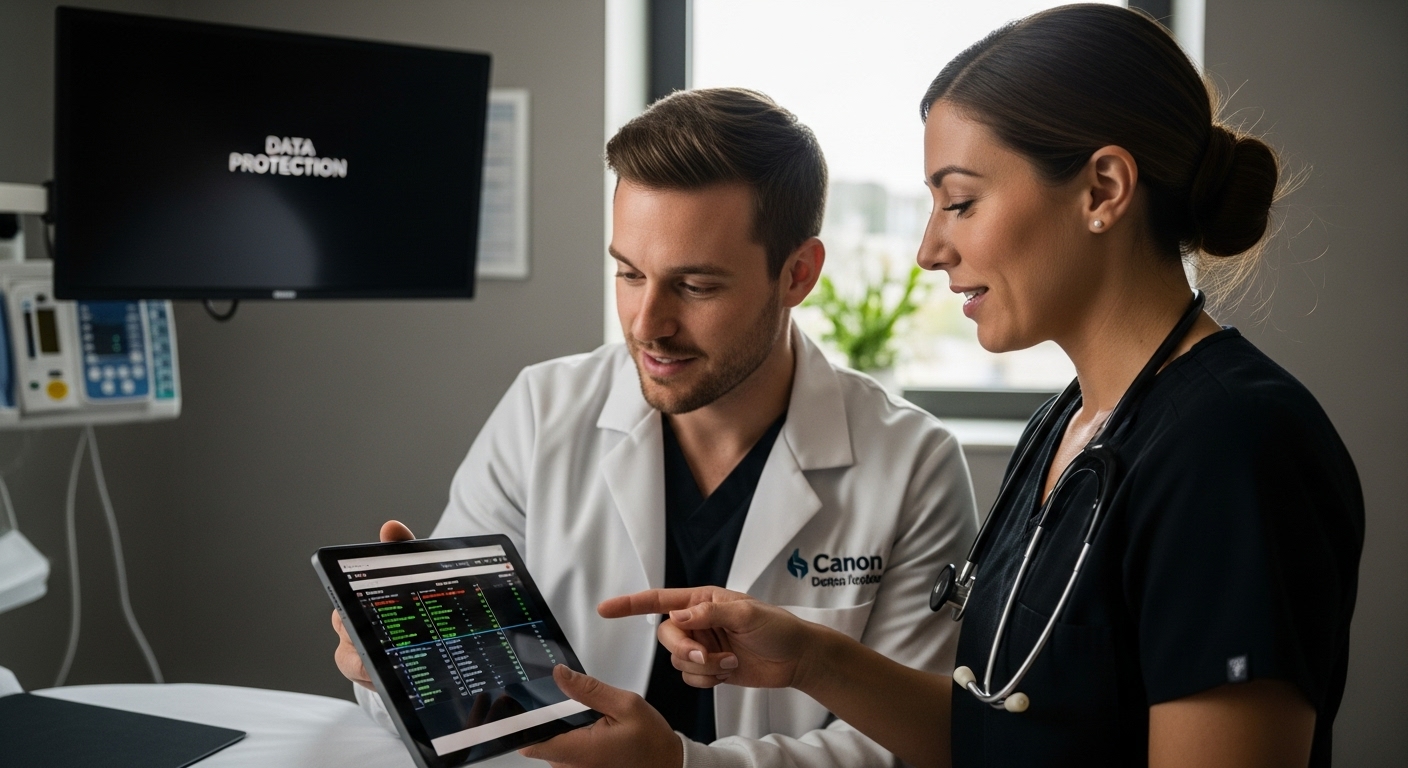
Protecting patient information becomes a paramount responsibility for healthcare IT support teams. This involves implementing advanced cybersecurity measures that safeguard sensitive medical data against potential breaches, unauthorized access, and technological vulnerabilities.
Key cybersecurity components include:
- Multi-factor authentication systems
- Advanced encryption technologies
- Regular security vulnerability assessments
- Comprehensive staff training on data protection protocols
- Continuous monitoring of network access points
Strategic Technology Integration
Modern healthcare IT support transcends traditional technical maintenance. These specialized teams function as strategic technology partners, working closely with medical professionals to develop innovative digital solutions that enhance patient care, streamline medical processes, and support emerging healthcare technologies.
By combining deep technological expertise with a nuanced understanding of medical workflows, healthcare IT support transforms technological infrastructure from a potential operational challenge into a powerful tool for improving patient outcomes and organizational efficiency.
Real-World Applications and Challenges in Healthcare IT Support
Healthcare IT support represents a dynamic landscape of technological innovation and complex problem-solving. As medical technologies rapidly evolve, IT support professionals navigate intricate challenges while implementing cutting-edge solutions that directly impact patient care and organizational efficiency.
Technological Implementation Scenarios
Real-world healthcare IT support encompasses diverse technological deployment scenarios that require strategic planning and precise execution. These scenarios range from small medical practices implementing electronic health records to large hospital systems integrating advanced telemedicine platforms.
Typical implementation scenarios include:
- Transitioning from paper-based to digital medical records
- Implementing secure patient communication platforms
- Integrating artificial intelligence diagnostic tools
- Developing interoperable healthcare information systems
- Creating comprehensive data analytics infrastructures
According to research from the Agency for Healthcare Research and Quality, successful technological integration demands comprehensive understanding of both medical workflows and technological capabilities.
Critical Operational Challenges
Healthcare IT support confronts multifaceted challenges that extend beyond traditional technological troubleshooting. These challenges involve complex regulatory requirements, data security concerns, and the need for seamless technological integration across diverse medical environments.
Key operational challenges include:
- Maintaining patient data privacy
- Ensuring system compatibility across different medical platforms
- Managing rapid technological changes
- Training medical staff on new technological systems
- Balancing technological innovation with budget constraints
Emerging Technological Solutions
Healthcare IT support continuously evolves, developing innovative solutions that address complex medical technological needs. Modern support teams leverage advanced technologies like artificial intelligence, machine learning, and sophisticated cybersecurity protocols to create more resilient and efficient healthcare technological ecosystems.
By combining deep technological expertise with a nuanced understanding of medical requirements, healthcare IT support transforms potential technological obstacles into strategic opportunities for improving patient care and organizational effectiveness.
Protect Your Patients and Streamline Your Healthcare IT Today
Healthcare providers face mounting pressure to keep sensitive patient data safe, maintain compliance, and ensure medical systems never miss a beat. After reading about the complexities of healthcare IT support—like EHR management, cybersecurity, and meeting strict HIPAA standards—you know every minute of downtime risks both care quality and compliance. At SRS Networks, we understand the emotional weight of safeguarding patient trust and the operational stress that comes with IT disruptions. That is why our healthcare-focused IT support services deliver peace of mind, fast resolutions, and local expertise you can count on.
Ready to bridge the gap between best-in-class technology and compassionate patient care? Explore how our team can help you secure your data, maintain compliance, and remove IT headaches for good. Visit SRS Networks to discover tailored IT solutions for healthcare or reach out now to book a free consultation. The next step toward reliable, compliant, and stress-free healthcare IT is just one click away.
Frequently Asked Questions
What is IT support for healthcare services?
IT support for healthcare services refers to specialized technological services designed to maintain, optimize, and secure digital systems within medical environments, ensuring compliance with healthcare regulations and protecting sensitive patient information.
Why is specialized IT support necessary for healthcare organizations?
Specialized IT support is essential for healthcare organizations because they handle sensitive patient data, must comply with strict regulations like HIPAA, and rely on mission-critical systems where downtime can directly impact patient care and safety.
What are the key components of healthcare IT support?
Key components of healthcare IT support include network infrastructure management, electronic health record (EHR) system maintenance, cybersecurity protection, compliance monitoring, and support for medical device integration.
How does IT support enhance patient safety in healthcare settings?
IT support enhances patient safety by ensuring secure management of sensitive data, maintaining operational continuity of medical systems, and implementing advanced cybersecurity measures that protect patient privacy and mitigate risks associated with technological failures.