Cybersecurity shapes the way we protect everything from our emails to the backbone of global finance. Every 39 seconds, a new cyber attack strikes somewhere in the world and businesses lose billions every year. Yet most people still think of cybersecurity as just a set of passwords or a pop-up warning on their laptop. That simple view is dangerously outdated and the real story behind cybersecurity is both much bigger and far more surprising than most expect.
Cybersecurity Guide: Overview of Key Topics
- Understanding Cybersecurity: A Definition And Its Purpose
- The Importance Of Cybersecurity In Today’s Digital World
- Key Concepts And Components Of Cybersecurity Explained
- How Cybersecurity Works: Mechanisms And Strategies
- Real-World Implications Of Cybersecurity For Businesses
Quick Summary
| Takeaway | Explanation |
|---|---|
| Cybersecurity is essential for safeguarding digital assets. | It protects sensitive information, operational continuity, and user privacy from malicious attacks and data breaches. |
| Adopt a proactive approach to cybersecurity. | Regular monitoring, threat detection, and adaptive strategies are crucial to stay ahead of evolving digital threats. |
| Implement the CIA Triad principles. | Focus on Confidentiality, Integrity, and Availability to create a solid foundation for protecting digital information and systems. |
| Training is vital for effective cybersecurity. | Comprehensive employee training helps recognize and mitigate human vulnerabilities, which are often targeted by cybercriminals. |
| Invest in layered security strategies. | Utilize multiple defense layers to strengthen protections and ensure that breach of one layer does not compromise overall security. |
Understanding Cybersecurity: A Definition and Its Purpose
Cybersecurity is the comprehensive strategy and practice of protecting digital systems, networks, devices, and data from malicious attacks, unauthorized access, and potential breaches. At its core, cybersecurity represents a critical shield defending organizations and individuals against sophisticated digital threats that can compromise sensitive information, disrupt operations, and cause significant financial and reputational damage.
The Fundamental Scope of Cybersecurity
Cybersecurity extends far beyond simple password protection or antivirus software. It encompasses a holistic approach to digital defense that involves multiple layers of technological, procedural, and human elements. The primary objectives of cybersecurity include:
- Preventing unauthorized access to digital resources
- Protecting the confidentiality of sensitive information
- Maintaining the integrity of data and systems
- Ensuring the continuous availability of critical digital infrastructure
Protecting Digital Ecosystems
In our increasingly interconnected world, cybersecurity has become an essential component of modern technological infrastructure. Every digital interaction – from personal emails and online banking to complex enterprise network systems – requires robust protective mechanisms. According to NIST, cybersecurity aims to safeguard information systems by implementing comprehensive strategies that address potential vulnerabilities across technological landscapes.
The scope of cybersecurity is dynamic and multifaceted, involving continuous monitoring, rapid threat detection, and adaptive response mechanisms. Effective cybersecurity requires a proactive approach, anticipating potential risks and developing sophisticated defense strategies that can evolve alongside emerging technological challenges. Organizations and individuals must recognize that cybersecurity is not a one-time implementation but an ongoing process of assessment, improvement, and vigilance.
Understanding cybersecurity means acknowledging that digital threats are increasingly complex, targeting not just technological systems but also exploiting human behaviors and organizational vulnerabilities. The most advanced cybersecurity strategies integrate technological solutions with comprehensive training, awareness programs, and adaptive security protocols.
The Importance of Cybersecurity in Today’s Digital World
The digital landscape has fundamentally transformed how businesses, governments, and individuals operate, creating unprecedented connectivity while simultaneously exposing critical vulnerabilities. Cybersecurity has evolved from a technical afterthought to a critical strategic imperative that directly impacts organizational survival, economic stability, and personal privacy.
The Economic and Operational Stakes
Cyber incidents can cause catastrophic financial damage. A single data breach can result in millions of dollars of direct losses, including regulatory fines, system recovery costs, legal expenses, and reputational harm. Small and medium-sized businesses are particularly vulnerable, with many lacking robust defensive infrastructure. The potential consequences extend far beyond immediate monetary losses, potentially threatening an organization’s entire operational continuity.
The table below summarizes common financial and reputational risks faced by businesses as a result of cyber incidents, highlighting both direct and indirect impacts referenced in the article.
| Risk Category | Examples of Impact |
|---|---|
| Financial | Direct monetary losses, system recovery costs, legal penalties |
| Operational | Disrupted productivity, loss of operational continuity |
| Reputational | Loss of customer trust, negative media coverage, long-term brand damage |
| Regulatory | Financial penalties for non-compliance, potential legal challenges |
Key economic risks include:
- Potential bankruptcy from extensive cyber attack damages
- Loss of customer trust and market reputation
- Significant operational disruptions
- Substantial financial penalties from regulatory non-compliance
Digital Threat Landscape
Modern cyber threats have become increasingly sophisticated, targeting not just technological systems but exploiting human psychology and organizational vulnerabilities. According to the FBI, cybercriminals continuously develop more complex attack strategies that can penetrate traditional security measures. These threats range from ransomware and phishing schemes to advanced persistent threats that can remain undetected within networks for extended periods.
Understanding the importance of cybersecurity requires recognizing that digital protection is no longer optional but a fundamental requirement for survival in an interconnected world. Proactive defense strategies are essential, involving continuous monitoring, employee training, technological upgrades, and adaptive security protocols.
The most effective cybersecurity approaches integrate technological solutions with human awareness, creating a comprehensive shield that addresses both technical vulnerabilities and potential human error. As digital technologies continue to advance, the role of cybersecurity will only become more critical in protecting individual privacy, organizational assets, and broader societal infrastructure.
Key Concepts and Components of Cybersecurity Explained
Cybersecurity is a complex ecosystem of interconnected strategies, technologies, and practices designed to protect digital assets from unauthorized access, potential breaches, and malicious activities. Understanding its fundamental components is crucial for developing comprehensive defense mechanisms that can adapt to evolving technological landscapes.
The CIA Triad: Foundation of Cybersecurity
Confidentiality, Integrity, and Availability represent the core principles that guide cybersecurity strategy. According to California State University San Marcos, these three elements form the foundational framework for protecting digital information and systems:
The following table organizes the main components of the CIA Triad, providing clear definitions for each principle as discussed in the context of cybersecurity.
| Principle | Definition |
|---|---|
| Confidentiality | Ensuring that sensitive data is accessible only to authorized individuals |
| Integrity | Maintaining and verifying the accuracy and completeness of data throughout its lifecycle |
| Availability | Guaranteeing that information and resources remain accessible to authorized users when needed |
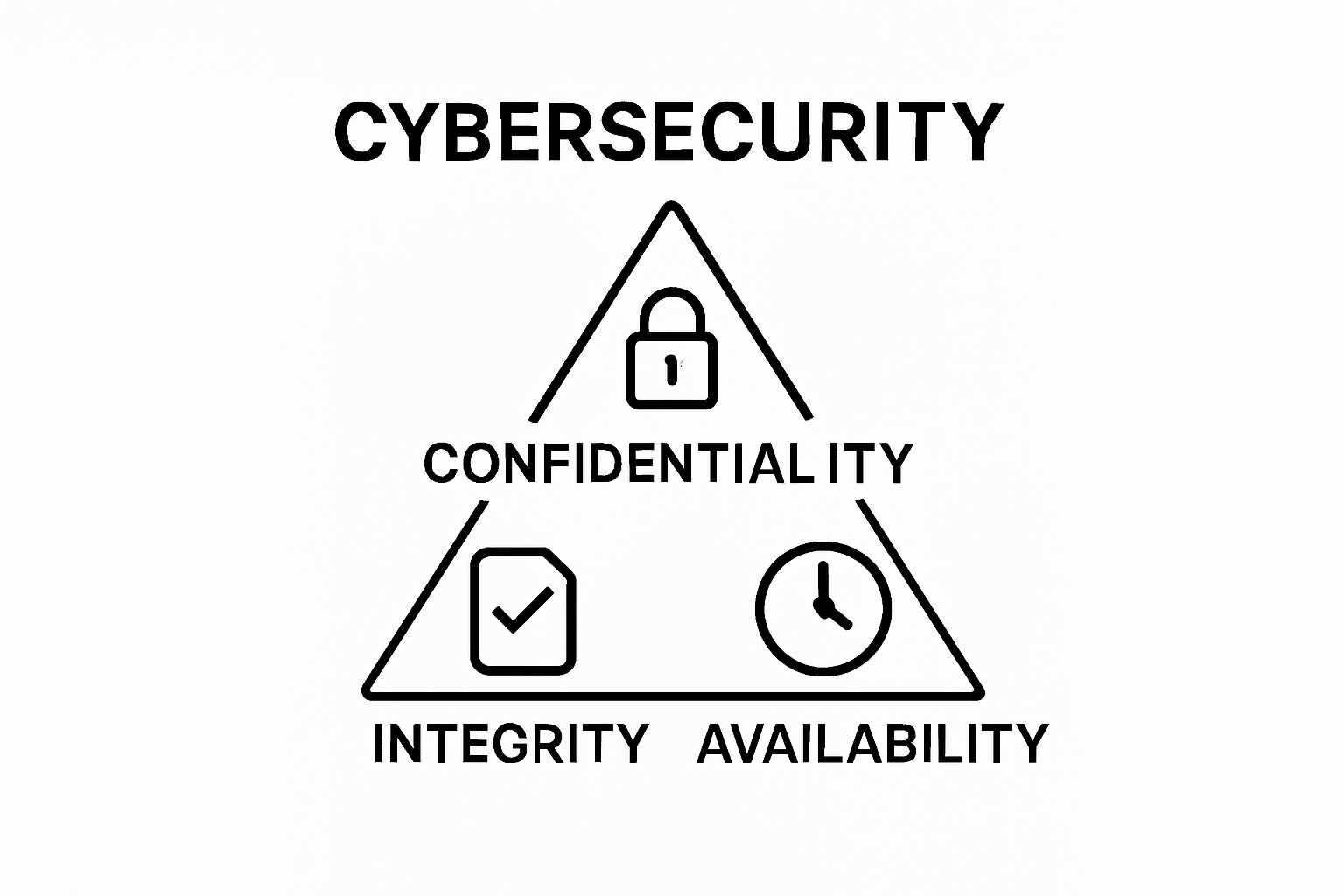
- Confidentiality: Ensuring that sensitive data is accessible only to authorized individuals
- Integrity: Maintaining and verifying the accuracy and completeness of data throughout its lifecycle
- Availability: Guaranteeing that information and resources remain accessible to authorized users when needed
Comprehensive Defense Mechanisms
Effective cybersecurity goes beyond simple technological solutions. It requires a multifaceted approach that integrates technological tools, human awareness, and strategic policies. Threat detection and prevention involve multiple layers of protection, including:
- Advanced monitoring systems
- Regular security audits
- Comprehensive employee training programs
- Adaptive response protocols
The landscape of cyber threats is continuously evolving, with attackers developing increasingly sophisticated methods to exploit vulnerabilities. According to the American Military University, modern cybersecurity must address a wide range of potential threats, from malware and phishing attempts to complex social engineering tactics.
Ultimately, cybersecurity is not a static concept but a dynamic, ongoing process of assessment, adaptation, and improvement. Organizations must develop flexible strategies that can quickly respond to emerging threats while maintaining robust protective mechanisms across their entire digital infrastructure.
How Cybersecurity Works: Mechanisms and Strategies
Cybersecurity operates through a complex network of technological defenses, strategic protocols, and proactive monitoring designed to anticipate, detect, and neutralize potential digital threats. These mechanisms work in concert to create multiple layers of protection that safeguard digital assets across various technological environments.
Layered Defense Architecture
Multilayered security strategies are fundamental to effective cybersecurity. This approach creates redundant protective barriers that make it increasingly difficult for malicious actors to penetrate digital systems. Each layer provides a unique form of defense, ensuring that even if one barrier is compromised, additional protections remain active.
Key components of the layered defense architecture include:
- Perimeter security systems like firewalls and network monitoring
- Endpoint protection for individual devices
- User authentication and access control mechanisms
- Encryption technologies for data protection
- Continuous threat detection and response systems
Threat Detection and Response Mechanisms
Modern cybersecurity relies on sophisticated technologies that can proactively identify and mitigate potential risks. Advanced monitoring systems continuously scan digital environments, analyzing network traffic, user behaviors, and system activities to detect anomalies that might indicate a potential security breach.
Intrusion detection systems employ machine learning and artificial intelligence to recognize patterns associated with cyber attacks. These systems can:
- Identify unusual network behavior
- Flag potential security vulnerabilities
- Generate real-time alerts for security teams
- Automatically initiate protective responses
According to the National Institute of Standards and Technology, effective cybersecurity requires a dynamic approach that adapts to evolving technological landscapes. This means continuously updating defense mechanisms, conducting regular security assessments, and maintaining a comprehensive understanding of emerging digital threats.
Ultimately, cybersecurity is not just about technological solutions but about creating a holistic strategy that integrates human expertise, technological innovation, and proactive risk management. Organizations must develop flexible, adaptive approaches that can quickly respond to the constantly changing digital threat environment.
Real-World Implications of Cybersecurity for Businesses
Cybersecurity has transformed from a technical consideration to a critical business imperative that directly impacts organizational survival, financial stability, and long-term competitiveness. For modern businesses, understanding and implementing robust cybersecurity measures is no longer optional but an essential strategy for protecting digital assets and maintaining stakeholder trust.
Financial and Operational Risks
Cyber incidents can create catastrophic financial consequences for businesses of all sizes. According to the U.S. Small Business Administration, small businesses face significant economic threats from digital vulnerabilities. The potential financial impacts include:
- Direct monetary losses from stolen funds
- Costs of system recovery and restoration
- Potential legal and regulatory penalties
- Lost productivity during system disruptions
- Permanent damage to brand reputation
Reputation and Trust Management
Beyond immediate financial losses, cybersecurity breaches can cause profound and lasting damage to an organization’s reputation. Customer confidence can be irreparably undermined when sensitive data is compromised, leading to potential client exodus and long-term brand erosion. Businesses must recognize that their digital security directly reflects their commitment to protecting stakeholder interests.

Key reputation risks include:
- Loss of customer trust
- Negative media coverage
- Reduced market valuation
- Potential legal challenges from affected parties
In an increasingly interconnected digital ecosystem, businesses must view cybersecurity as a strategic investment rather than a mere technical expense. Organizations that proactively develop comprehensive security strategies can transform potential vulnerabilities into competitive advantages, demonstrating their commitment to technological resilience and client protection.
Take Control of Your Cybersecurity—Protect What Matters Most
You have read about the growing risks and complex threats facing organizations in today’s digital world. The article highlighted how breaches can cost your business not just money but also your reputation and operational continuity. If the stakes make you uneasy or you worry your defenses might not be strong enough, now is the moment to act. SRS Networks offers specialized cybersecurity solutions and managed IT support designed specifically for small and medium-sized businesses in our region. We focus on layered defense strategies, real-time monitoring, and ongoing employee education to help you bridge the technology gap and keep your business running smoothly.

Do not wait until threats become real losses. Start building your shield of protection today. Visit SRS Networks to learn more about how our proactive security and hands-on support can help your business stay safe, compliant, and resilient. Contact us now to schedule a free consultation and discover the peace of mind that comes from working with a dedicated local partner.
Frequently Asked Questions
What is the primary purpose of cybersecurity?
Cybersecurity aims to protect digital systems, networks, devices, and data from unauthorized access, malicious attacks, and potential breaches to safeguard sensitive information and ensure operational continuity.
What are the key components of cybersecurity?
The key components of cybersecurity include the CIA triad, which stands for Confidentiality, Integrity, and Availability, along with advanced monitoring systems, user authentication, encryption, and continuous threat detection.
Why is cybersecurity important for businesses?
Cybersecurity is crucial for businesses as it helps prevent financial losses, protects sensitive data, maintains customer trust, and ensures compliance with regulatory requirements, thereby safeguarding the organization’s reputation and operational efficiency.
How do businesses implement effective cybersecurity measures?
Businesses implement effective cybersecurity measures by developing comprehensive strategies involving layered defenses, employee training, regular security audits, and adaptive response protocols to respond to evolving threats.