Cybersecurity sounds complicated, but every business faces its impact every single day. A single cyber breach can wipe out a company’s finances or crush its reputation overnight. Most people focus on fancy software and strong passwords when they hear cybersecurity. The reality is, your biggest risk might come from places you would never expect.
Table of Contents
- Defining Cybersecurity: What Is It?
- The Importance Of Cybersecurity: Why It Matters
- How Cybersecurity Works: Key Principles Explained
- Cyber Threats And Vulnerabilities: Understanding The Risks
- The Impact Of Cybersecurity On Business Success
Contents: Navigate Key Business Cybersecurity Topics
| Takeaway | Explanation |
|---|---|
| Cybersecurity is a strategic necessity | Organizations must view cybersecurity as essential for protecting digital assets and ensuring business continuity. |
| Adaptation is key to protection | Cybersecurity strategies should continuously evolve to address emerging threats and vulnerabilities in the digital landscape. |
| Holistic defense combines tech with human elements | Effective cybersecurity includes both technological measures and employee training to create a resilient defense system. |
| Financial impact of breaches is severe | Cyber incidents can lead to significant financial losses, operational disruptions, and damage to reputation and trust. |
| Cybersecurity enhances competitive advantage | A strong cybersecurity framework helps organizations build customer trust, protect assets, and promote sustainable growth. |
Defining Cybersecurity: What Is It?
Cybersecurity represents a critical digital shield protecting organizations from malicious digital threats and unauthorized access to critical systems and data. In an increasingly interconnected world, understanding what cybersecurity entails becomes paramount for businesses seeking to protect their digital assets.
The Core Concept of Digital Protection
At its fundamental level, cybersecurity is a comprehensive approach to safeguarding computer systems, networks, programs, and data from digital attacks. According to the National Institute of Standards and Technology (NIST), these attacks typically aim to access, change, manipulate, or destroy sensitive information, extort financial resources, or disrupt normal operational processes.
Cybersecurity isn’t just about installing software or creating complex passwords. It encompasses a strategic framework involving multiple layers of technological and human-centered protection:
- Technological defenses like firewalls and encryption
- Human awareness and training programs
- Continuous monitoring and threat detection systems
- Incident response and recovery protocols
Types of Digital Threats Businesses Face
Businesses encounter numerous cybersecurity challenges that can compromise their digital infrastructure. These threats range from relatively simple phishing attempts to sophisticated ransomware attacks designed to paralyze entire organizational systems. Potential risks include:
- Unauthorized data breaches
- Malware infections
- Social engineering attacks
- Insider threats from current or former employees
- Advanced persistent threats from organized cybercriminal groups
Understanding these potential vulnerabilities helps organizations develop robust, proactive cybersecurity strategies that protect their most valuable digital assets.
The table below organizes common cyber threats faced by businesses and explains the impact or method behind each threat. This helps readers quickly compare the different risks discussed in the article.
| Cyber Threat | Description/Impact |
|---|---|
| Phishing Attacks | Attempts to deceive employees to disclose sensitive information |
| Ransomware | Malicious code that encrypts data and demands payment for release |
| Insider Threats | Malicious or negligent actions by current or former employees |
| Malware Infections | Software designed to damage, disrupt, or gain unauthorized access |
| Advanced Persistent Threats | Prolonged, targeted cyberattacks often from organized groups |
| Social Engineering | Manipulation tactics exploiting human trust for access or information |
By recognizing the multifaceted nature of digital threats, businesses can implement comprehensive security measures that go beyond basic technological solutions.
Cybersecurity is not a one-time implementation but an ongoing process of assessment, adaptation, and continuous improvement. As digital technologies evolve, so too must the strategies designed to protect against emerging threats.
The Importance of Cybersecurity: Why It Matters
In today’s digital ecosystem, cybersecurity transcends technical jargon and becomes a critical business survival strategy. Organizations across industries face unprecedented digital risks that can potentially destroy their operational capabilities, reputation, and financial stability.
The Financial Impact of Cyber Threats
Cybersecurity breaches can devastate businesses financially. According to research from the National Institute of Standards and Technology, cyber incidents can result in substantial monetary losses beyond immediate damage. The financial consequences extend far beyond initial attack remediation, encompassing:
- Direct monetary theft or ransom payments
- Operational disruption and productivity losses
- Potential legal penalties and compliance fines
- Long-term reputation damage and customer trust erosion
- Increased insurance and security infrastructure costs
Small and medium-sized businesses are particularly vulnerable, with many lacking robust cyber defense mechanisms.
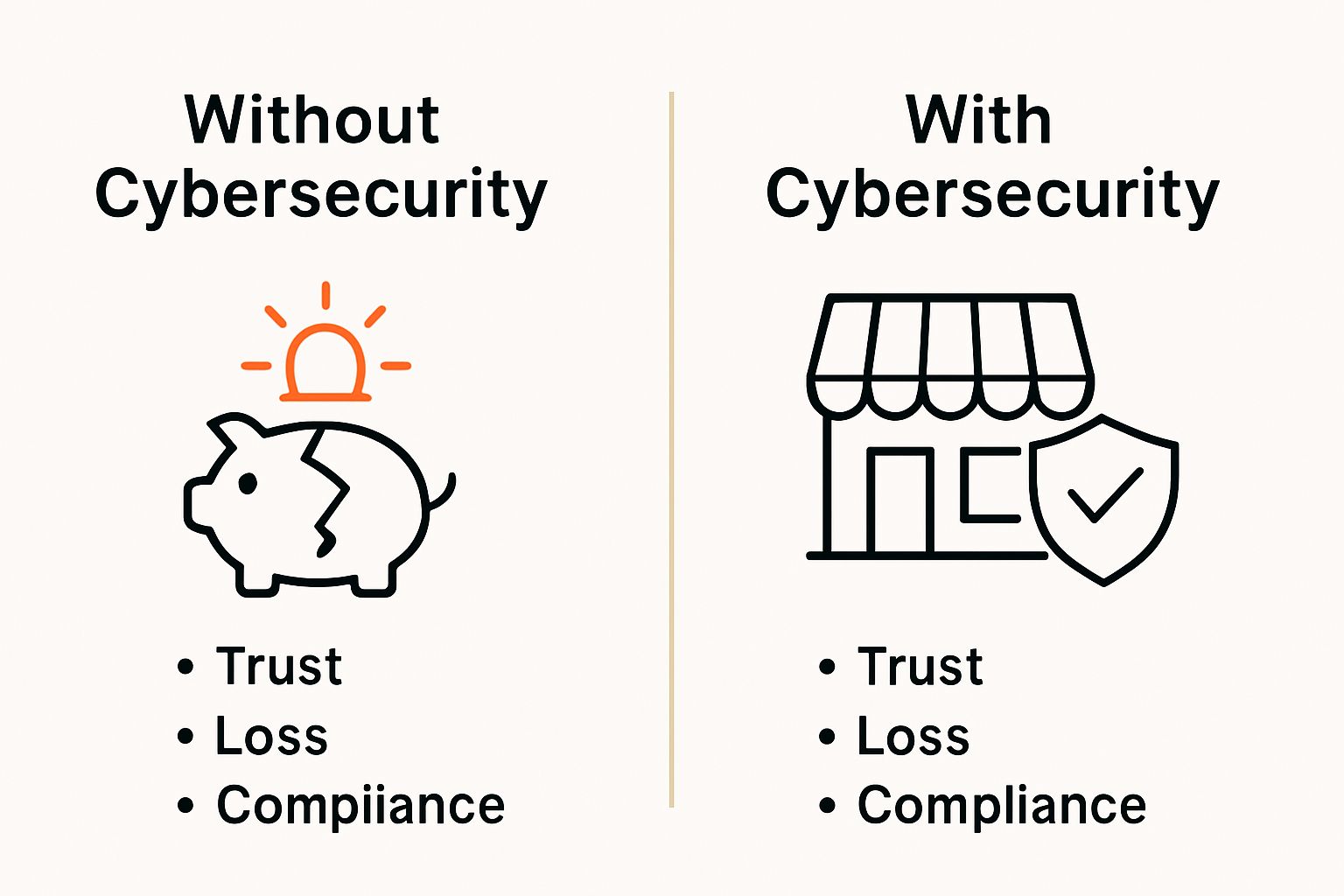 A single significant breach can potentially bankrupt an unprepared organization.
Protecting Organizational Assets and Reputation
Cybersecurity is fundamentally about protecting an organization’s most valuable assets: its data, intellectual property, customer information, and operational integrity. Successful cyber defense involves more than technological solutions – it requires a comprehensive approach integrating technology, human awareness, and strategic planning.
Businesses must recognize that cyber threats are not just technical challenges but strategic business risks. Every digital interaction, transaction, and communication represents a potential vulnerability that malicious actors could exploit.
Effective cybersecurity strategies create resilient organizational ecosystems that can detect, prevent, and rapidly respond to potential digital threats. By investing in comprehensive security frameworks, businesses protect not just their technological infrastructure, but their entire operational ecosystem.
How Cybersecurity Works: Key Principles Explained
Cybersecurity operates as a complex, multilayered defense system designed to protect digital environments from sophisticated and evolving threats. Understanding its fundamental mechanisms provides businesses with critical insights into creating robust protective strategies.
The Defensive Architecture of Cybersecurity
According to the National Institute of Standards and Technology, cybersecurity functions through a comprehensive framework that encompasses several critical stages:
- Identification: Mapping and understanding organizational digital assets
- Protection: Implementing safeguards to limit potential vulnerabilities
- Detection: Developing systems to recognize potential security incidents
- Response: Creating protocols to address and mitigate active threats
- Recovery: Establishing procedures to restore systems after an incident
These interconnected stages form a dynamic, adaptive approach to digital defense that goes beyond simple technological solutions.
The following table summarizes the five key stages of the cybersecurity defensive architecture, providing a concise explanation of each step as referenced in the article.
| Defensive Stage | Purpose/Description |
|---|---|
| Identification | Map and understand digital assets and potential vulnerabilities |
| Protection | Implement safeguards to limit exposure to known threats |
| Detection | Monitor systems to identify suspicious or malicious activity |
| Response | Take action to contain and mitigate active threats |
| Recovery | Restore normal operations and repair any damage after an incident |
Technological and Human Elements of Cyber Defense
Effective cybersecurity integrates sophisticated technological tools with human intelligence. This approach recognizes that technological defenses alone cannot provide complete protection. Modern cybersecurity strategies rely on a combination of:
- Advanced technological infrastructure like firewalls and encryption
- Continuous employee training and awareness programs
- Regular system audits and vulnerability assessments
- Adaptive threat detection and machine learning algorithms
- Comprehensive incident response planning
By blending technological sophistication with human understanding, organizations can create more resilient and responsive cybersecurity environments. The goal is not just to prevent attacks but to develop an adaptive ecosystem capable of identifying, responding to, and recovering from potential digital threats.
Cybersecurity is an ongoing process of assessment, learning, and adaptation. As digital technologies continue to evolve, so must the strategies designed to protect them.
Cyber Threats and Vulnerabilities: Understanding the Risks
In the complex digital landscape, cyber threats represent sophisticated and constantly evolving challenges that target organizational weaknesses. Understanding these potential vulnerabilities becomes crucial for businesses seeking to protect their digital infrastructure and sensitive information.
Types of Cyber Vulnerabilities
According to the National Cyber Security Centre, organizational vulnerabilities often emerge from seemingly mundane technological gaps that cybercriminals strategically exploit. Critical vulnerability sources include:
- Outdated software and unpatched systems
- Weak or reused password configurations
- Inadequate access control mechanisms
- Unprotected network endpoints
- Insufficient employee cybersecurity awareness
These vulnerabilities create potential entry points that malicious actors can leverage to infiltrate organizational digital ecosystems, compromising data integrity and operational continuity.
Sophisticated Threat Landscape
Cybercriminals employ increasingly complex strategies to breach organizational defenses. Modern cyber threats are not random but highly targeted, strategic attempts to exploit specific systemic weaknesses. The threat landscape includes:
- Ransomware attacks targeting critical infrastructure
- Phishing campaigns designed to manipulate human psychology
- Advanced persistent threats from state-sponsored groups
- Social engineering techniques exploiting human trust
- Credential theft and unauthorized system access
Businesses must recognize that cyber threats represent dynamic, intelligent challenges requiring continuous adaptation and proactive defense strategies. Each vulnerability represents a potential gateway for sophisticated digital intrusions that can cause significant operational, financial, and reputational damage.
Effective cyber risk management demands a holistic approach that combines technological solutions, human awareness, and continuous learning. Organizations must view cybersecurity not as a static defense mechanism but as an adaptive, evolving strategy responsive to emerging digital threats.
The Impact of Cybersecurity on Business Success
Cybersecurity has transformed from a technical necessity to a critical strategic component that directly influences organizational performance, reputation, and competitive positioning. Businesses now recognize that robust digital protection is not just an operational expense but a fundamental driver of sustainable success.
Strategic Business Advantage
According to Gartner Research, effective cybersecurity provides organizations with significant competitive advantages. Comprehensive digital defense strategies deliver tangible business benefits by:
- Enhancing customer trust and confidence
- Protecting critical intellectual property
- Reducing potential financial losses from breaches
- Ensuring regulatory compliance
- Enabling secure digital transformation initiatives
Companies with mature cybersecurity frameworks can differentiate themselves in competitive markets, demonstrating their commitment to protecting stakeholder interests and maintaining operational integrity.
Financial and Operational Implications
Cybersecurity directly impacts an organization’s bottom line. Beyond preventing potential monetary losses from digital attacks, robust security measures enable businesses to:
- Minimize operational disruptions
- Reduce insurance and compliance costs
- Attract and retain security-conscious clients
- Support seamless digital innovation
- Build organizational resilience against emerging threats
Businesses that view cybersecurity as a strategic investment rather than a reactive expense position themselves to navigate increasingly complex digital landscapes. By integrating comprehensive security strategies, organizations can transform potential vulnerabilities into opportunities for growth, innovation, and competitive differentiation.
Ultimately, cybersecurity is no longer just about protecting technology—it’s about safeguarding an organization’s most valuable assets: its reputation, customer relationships, and future potential.

Transform Cybersecurity Into a Business Strength With SRS Networks
Are you worried that a single cyberattack could cost your business its reputation, customers, and years of hard work? The article outlined how evolving digital threats and unpatched vulnerabilities can quickly disrupt your operations or lead to devastating financial losses. Many local companies struggle to keep up with complex cybersecurity best practices while trying to run their core business. At SRS Networks, we understand why cybersecurity matters for every modern organization. We help you turn digital protection into a competitive advantage by combining proactive defense strategies and personalized guidance tailored specifically for small to medium-sized businesses.

If you want to safeguard client data, achieve regulatory compliance, and prevent costly downtime, now is the time to act. Connect directly with our expert team and see why so many businesses across the Monterey Bay Area choose SRS Networks as their trusted IT and cybersecurity partner. Visit our homepage to explore how our managed IT and cybersecurity solutions keep you protected. Let us help you create a more resilient and successful future for your organization today.
Frequently Asked Questions
What is cybersecurity and why is it important for businesses?
Cybersecurity refers to the practices and technologies used to protect computer systems, networks, and data from digital attacks. It is important for businesses to safeguard their valuable information, prevent financial losses, and maintain customer trust.
What are some common types of cyber threats faced by businesses?
Businesses face various cyber threats, including phishing attacks, ransomware, insider threats, malware infections, and advanced persistent threats. Understanding these threats is essential for developing effective cybersecurity strategies.
How can businesses improve their cybersecurity measures?
Businesses can enhance cybersecurity by implementing robust technological defenses, creating employee awareness programs, conducting regular system audits, and establishing incident response protocols. This comprehensive approach helps in mitigating risks effectively.
What are the financial impacts of a cybersecurity breach on a business?
A cybersecurity breach can lead to significant financial losses, including direct theft, operational disruptions, legal penalties, and damage to reputation. Preparing for such incidents is crucial as the costs can extend beyond immediate remediation efforts.