Every day, businesses send mountains of vital data through the airwaves. It all feels effortless and invisible. Yet, behind these instant connections lies a hidden war against cyber threats. Shockingly, the average data breach cost hit $4.35 million in 2022, making network security much more than a technical upgrade. The real surprise is that the most advanced secure wireless networks do not just protect passwords or Wi-Fi. They defend the very foundation of business trust and survival.
Table of Contents: Your Guide to Secure Wireless Networks
- What Are Secure Wireless Networks?
- Why Secure Wireless Networks Matter For Businesses
- How Secure Wireless Networks Operate
- Key Concepts In Wireless Network Security
- Real-World Applications Of Secure Wireless Networks
Quick Summary
| Takeaway | Explanation |
|---|---|
| Implement robust encryption protocols | Use encryption to protect sensitive data during transmission, keeping information secure from unauthorized access. |
| Utilize multi-factor authentication | Require additional verification steps for network access to enhance security and prevent unauthorized entries. |
| Recognize financial risks of unsecured networks | Understand that inadequate security could lead to significant financial losses and damage to reputation. |
| Adopt comprehensive network strategies | Develop complete security strategies to safeguard digital assets against evolving cyber threats and vulnerabilities. |
| Leverage secure networks in all industries | Implement secure wireless networks to support critical operations in sectors like healthcare and business communications. |
What Are Secure Wireless Networks?
Secure wireless networks represent sophisticated digital communication infrastructures designed to protect data transmission between devices while preventing unauthorized access. Unlike traditional open networks, these systems implement multiple layers of protection to ensure that sensitive business information remains confidential and integrity is maintained throughout network interactions.
Core Components of Network Security
A secure wireless network consists of several critical technological elements working together to create a robust defense mechanism. These components work synergistically to monitor, filter, and protect data streams across your organization’s digital ecosystem.
To help clarify the essential building blocks of a secure wireless network, the following table summarizes the key components and their main functions as described in the article.
| Component | Primary Function | Example Technologies |
|---|---|---|
| Encryption Protocols | Protect data during transmission | WPA3, TLS, End-to-End Encryption |
| Authentication Mechanisms | Verify user and device identities | Multi-factor authentication, Biometrics, Digital Certificates |
| Firewall Technologies | Block intrusion attempts and restrict unauthorized traffic | Network firewalls, Intrusion Prevention Systems |
| Access Control Strategies | Limit permissions and manage network entry | Role-based access control |
Key foundational elements include:
- Encryption protocols that scramble data during transmission
- Authentication mechanisms verifying user and device identities
- Firewall technologies blocking potential intrusion attempts
Understanding Network Vulnerability
Businesses are increasingly vulnerable to cyber threats, making secure wireless networks essential. Cybersecurity Ventures reports that global cybercrime damages are projected to reach astronomical levels, underscoring the critical need for robust network security strategies.
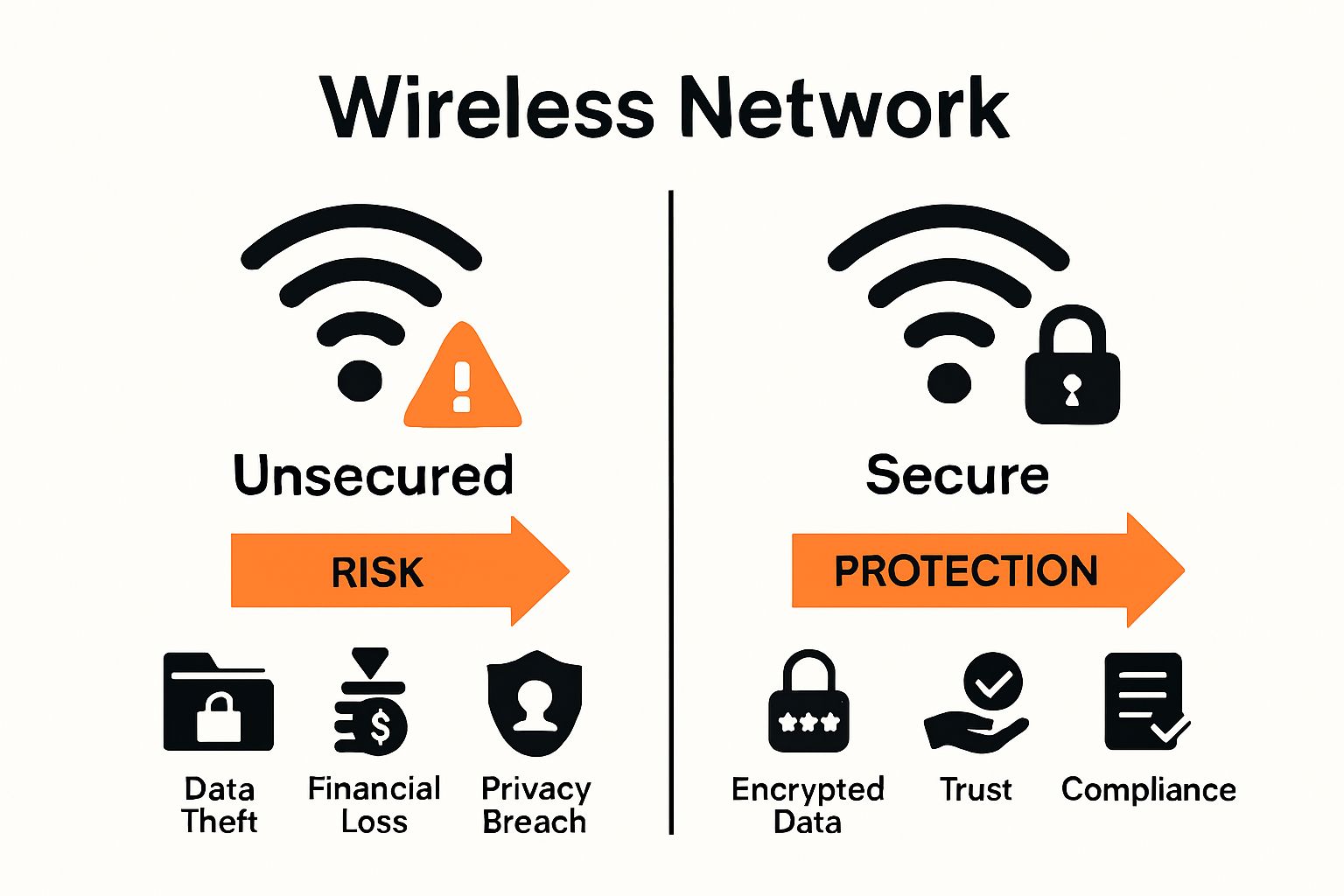
When wireless networks lack proper security, organizations expose themselves to significant risks such as:
- Data theft and unauthorized information access
- Potential financial losses from security breaches
- Compromised client and employee personal information
By implementing comprehensive secure wireless network strategies, businesses can create resilient communication infrastructures that protect digital assets while enabling seamless technological collaboration.
Why Secure Wireless Networks Matter for Businesses
Secure wireless networks have transformed from optional technological enhancements to critical business infrastructure. In an era where digital communication drives organizational success, protecting network integrity becomes paramount for maintaining competitive advantage, client trust, and operational resilience.
Financial and Operational Risks of Unsecured Networks
Business leaders must recognize that network vulnerabilities can lead to catastrophic financial consequences. IBM’s Cost of Data Breach Report reveals that the average total cost of a data breach in 2022 was $4.35 million, highlighting the substantial economic impact of inadequate network security.
Potential risks for businesses with unsecured wireless networks include:
The next table highlights the key risks faced by businesses with unsecured wireless networks, organizing potential impacts into financial, operational, and legal categories for easier comparison.
| Risk Category | Description of Risk |
|---|---|
| Financial | Immediate monetary losses due to cyber attacks and data breaches |
| Operational | Service disruption, loss of client trust, and damage to business reputation |
| Legal | Liability for data loss and potential regulatory compliance violations |
- Immediate financial losses from potential cyber attacks
- Long-term reputation damage and client trust erosion
- Potential legal liabilities and regulatory compliance violations
Protecting Organizational Digital Assets
Secure wireless networks serve as critical defensive mechanisms that protect an organization’s most valuable digital assets. By implementing robust security protocols, businesses can:
- Safeguard sensitive corporate information
- Prevent unauthorized data access
- Maintain continuous operational integrity
Beyond technical protection, secure wireless networks demonstrate a commitment to professional responsibility and client confidentiality. They represent a strategic investment in organizational resilience, ensuring that businesses can operate confidently in an increasingly complex digital landscape.
How Secure Wireless Networks Operate
Secure wireless networks function through sophisticated technological frameworks designed to protect data transmission and prevent unauthorized network access. These complex systems employ multiple integrated security mechanisms that work simultaneously to create a comprehensive defense strategy for digital communication infrastructures.
Network Authentication and Access Control
The first critical layer of secure wireless network operation involves robust authentication processes.
National Institute of Standards and Technology (NIST) guidelines emphasize the importance of verifying user and device identities before granting network access.
Key authentication mechanisms include:
- Multi-factor authentication requiring multiple verification steps
- Digital certificates validating device and user credentials
- Biometric verification utilizing unique personal identifiers
Data Encryption and Protection Protocols
Once authentication occurs, secure wireless networks employ advanced encryption techniques to protect data during transmission. These protocols transform sensitive information into complex coded messages that remain unreadable to unauthorized interceptors.
Advanced encryption strategies involve:
- Symmetric encryption using shared secret keys
- Asymmetric encryption utilizing public and private key pairs
- Transport layer security creating secure communication channels
By implementing these sophisticated technological defenses, secure wireless networks create resilient communication environments that dynamically protect organizational digital assets against evolving cyber threats.
Key Concepts in Wireless Network Security
Wireless network security represents a comprehensive approach to protecting digital communication infrastructure through strategic technological interventions. These sophisticated defense mechanisms go beyond simple password protection, encompassing multiple layers of technological safeguards designed to prevent unauthorized access and data breaches.
Authentication and Access Control Mechanisms
Authentication serves as the foundational layer of wireless network security, functioning as a critical gatekeeper that verifies user and device identities before network entry. The Cybersecurity and Infrastructure Security Agency (CISA) emphasizes the importance of robust access control strategies that limit potential security vulnerabilities.
Key authentication strategies include:
- Role-based access control that restricts network permissions based on user responsibilities
- Multi-factor authentication requiring multiple verification steps
- Continuous identity verification monitoring user activities in real-time
Encryption and Data Protection Protocols
Encryption technologies transform sensitive information into unreadable code, creating an additional protective barrier against potential cyber intrusions. Advanced encryption methods ensure that even if unauthorized parties intercept network transmissions, the data remains incomprehensible and secure.
Critical encryption approaches encompass:
- WPA3 wireless security protocols providing enhanced cryptographic strength
- End-to-end encryption protecting data throughout transmission
- Advanced cryptographic algorithms that continuously evolve against emerging threats
By implementing these sophisticated security concepts, organizations can create resilient wireless network infrastructures that dynamically adapt to the complex and ever-changing cybersecurity landscape.
Real-World Applications of Secure Wireless Networks
Secure wireless networks have become integral technological solutions across diverse industries, transforming operational capabilities and enabling sophisticated digital communication strategies. These advanced network infrastructures support critical business functions by providing robust, flexible, and protected digital communication environments.
Healthcare and Medical Technology
The Healthcare Information and Management Systems Society highlights the critical role of secure wireless networks in modern medical settings. Healthcare organizations rely on these networks to transmit sensitive patient data, support telemedicine platforms, and maintain complex medical record management systems.
Key healthcare network applications include:

- Secure transmission of electronic medical records
- Real-time patient monitoring systems
- Encrypted communication between medical professionals
Enterprise and Business Communication
Modern businesses leverage secure wireless networks to create dynamic, interconnected workplace environments that support remote work, collaborative technologies, and distributed team communications. These networks enable seamless digital interactions while maintaining stringent security protocols.
Critical business network applications encompass:
- Cloud-based collaboration platforms
- Secure video conferencing systems
- Encrypted enterprise communication channels
By implementing comprehensive secure wireless network strategies, organizations across multiple sectors can create resilient digital infrastructures that protect sensitive information while enabling innovative technological solutions.
Protect Your Business With Reliable Wireless Network Security
Are you concerned about critical data breaches or the complexity of safeguarding your business network? The article explained how modern organizations face real risks like cybercrime, unauthorized access, and the high costs of unsecured wireless networks. If your business needs stronger encryption, secure authentication, and ongoing network defense, SRS Networks offers proven solutions tailored for small and mid-sized organizations in California.

Your information and reputation cannot wait. Discover why leading regional businesses choose us for advanced network infrastructure and security that covers everything from monitoring to rapid response. Visit SRS Networks today to schedule a no-pressure consultation about closing gaps in your wireless security. Act now to protect sensitive assets and build the confidence your clients expect.
Frequently Asked Questions
What are the key components of a secure wireless network for businesses?
A secure wireless network typically includes encryption protocols, authentication mechanisms, and firewall technologies. Implementing these components can significantly enhance your network’s protection against unauthorized access and data breaches.
How can I protect sensitive data during transmission on my wireless network?
Utilize advanced encryption techniques to scramble sensitive information before it’s transmitted. Consider implementing protocols like WPA3, which enhances cryptographic strength and ensures data remains unreadable to unauthorized parties.
What are the financial risks associated with not having a secure wireless network?
Businesses without secure wireless networks can face significant financial losses, with average data breach costs reaching millions. To mitigate these risks, prioritize network security investments and regularly assess your security protocols to prevent breaches.
How can I implement multi-factor authentication in my secure wireless network?
To implement multi-factor authentication, require multiple forms of verification for users accessing your network. Begin by integrating methods like temporary codes sent to mobile devices or using biometric verification to strengthen your access control.
What steps can I take to ensure continuous monitoring of my wireless network?
Establish a routine for continuous monitoring by deploying network security tools that track unusual activity. Setting up alerts for suspicious access attempts can help you respond quickly to potential threats and maintain network integrity.
How often should I update the security protocols for my wireless network?
Regularly review and update your security protocols at least every 6 to 12 months. By staying current with cybersecurity trends and emerging threats, you can better protect your business’s digital assets from evolving risks.