Secure remote access is shaping the way companies keep their data safe while teams work from anywhere. Here is something you might not expect. Over 80 percent of businesses now rely on secure network tunnels and multi-factor authentication to protect critical data beyond office walls. But most organizations still miss one major vulnerability that sophisticated cyber threats keep targeting every day.
Table of Contents
- What Is Secure Remote Access And Why Is It Essential?
- The Importance Of Secure Remote Access For Businesses
- How Secure Remote Access Works: Key Technologies Involved
- Critical Components Of A Secure Remote Access Strategy
- The Future Of Secure Remote Access In A Changing Workplace
Quick Summary
| Takeaway | Explanation |
|---|---|
| Implement multi-factor authentication. | Use multiple verification methods to enhance user identity security against unauthorized access. |
| Adopt a zero trust architecture. | Continuously verify user identities and device integrity to minimize security risks regardless of network location. |
| Invest in advanced endpoint protection. | Protect devices connected to your network by using software that safeguards against vulnerabilities and potential attacks. |
| Create comprehensive security policies. | Establish clear guidelines for user access, responsibilities, and incident response to strengthen organizational security. |
| Focus on ongoing cybersecurity training. | Provide regular training for employees to develop security awareness and ensure they understand best practices. |
What is Secure Remote Access and Why is it Essential?
Secure remote access represents a critical technology strategy that enables employees, partners, and authorized users to connect to an organization’s network, systems, and resources from outside physical office locations while maintaining robust cybersecurity protections. This approach has become increasingly vital in modern work environments characterized by distributed teams, flexible work arrangements, and growing digital transformation.
Understanding the Core Concept
At its fundamental level, secure remote access involves creating encrypted, authenticated pathways that allow users to interact with company infrastructure safely from any geographical location. Unlike traditional network access limited to physical office spaces, this technology creates secure digital tunnels that protect sensitive information during transmission.
The Cybersecurity and Infrastructure Security Agency (CISA) notes that while remote access tools offer tremendous organizational flexibility, they can also introduce significant cybersecurity risks if not properly implemented. Key components of secure remote access typically include:
- Virtual Private Network (VPN) technologies
- Multi-factor authentication mechanisms
- Endpoint security protocols
- Encrypted communication channels
Critical Business Implications
Businesses implementing secure remote access solutions gain substantial operational advantages. These technologies enable workforce mobility, support business continuity during disruptions, and provide scalable access management strategies. By creating controlled, monitored entry points to organizational networks, companies can simultaneously expand workforce capabilities and maintain rigorous security standards.
The technology addresses multiple critical business needs:
- Protecting sensitive corporate data from unauthorized access
- Enabling seamless collaboration across distributed teams
- Maintaining compliance with industry security regulations
- Reducing infrastructure and physical office space costs
Understanding and implementing secure remote access is no longer optional but a fundamental requirement for organizations seeking to thrive in an increasingly digital and interconnected business landscape.
The Importance of Secure Remote Access for Businesses
Secure remote access has transformed from a convenient option to a critical business necessity, particularly in an era of distributed workforces and increasing cybersecurity threats. Organizations now recognize that robust remote access strategies are fundamental to maintaining operational continuity, protecting sensitive data, and enabling flexible work environments.
Strategic Business Resilience
Businesses implementing secure remote access create strategic technology infrastructure that allows seamless workforce connectivity while maintaining rigorous security standards. This approach enables companies to adapt quickly to unexpected disruptions, such as natural disasters, pandemic-related challenges, or sudden workplace changes.
According to the Federal Trade Commission, implementing secure remote access requires comprehensive security protocols that protect organizational networks from potential vulnerabilities. Key strategic advantages include:
- Maintaining continuous business operations during external disruptions
- Enabling workforce flexibility and global talent recruitment
- Reducing physical infrastructure and office space expenses
- Supporting diverse work arrangement models
Cybersecurity and Risk Management
Secure remote access directly impacts an organization’s overall cybersecurity posture. By establishing controlled, encrypted pathways for network access, businesses can significantly reduce potential entry points for cyber threats. This approach goes beyond traditional security measures by integrating multiple layers of authentication, monitoring, and access control.
Companies must consider comprehensive risk management strategies that include:
- Implementing multi-factor authentication protocols
- Regularly updating and patching remote access software
- Conducting ongoing security awareness training for employees
- Monitoring and logging remote access activities
Effective secure remote access is not merely a technological solution but a holistic approach to protecting an organization’s digital ecosystem. By prioritizing secure, flexible network access, businesses can create resilient, adaptive technology infrastructures that support growth and innovation.
How Secure Remote Access Works: Key Technologies Involved
Secure remote access combines multiple sophisticated technologies that create controlled, encrypted pathways for users to interact with organizational networks from external locations. These interconnected technologies work together to establish a comprehensive security framework that protects sensitive information while enabling flexible workforce connectivity.
Foundational Authentication Technologies
Authentication mechanisms form the critical first line of defense in secure remote access strategies. These technologies verify user identities through multiple layers of validation, ensuring that only authorized personnel can access specific network resources. Modern authentication approaches go far beyond traditional username and password combinations.
According to the Federal Trade Commission, robust remote access security requires implementing comprehensive authentication protocols. Advanced authentication technologies typically include:
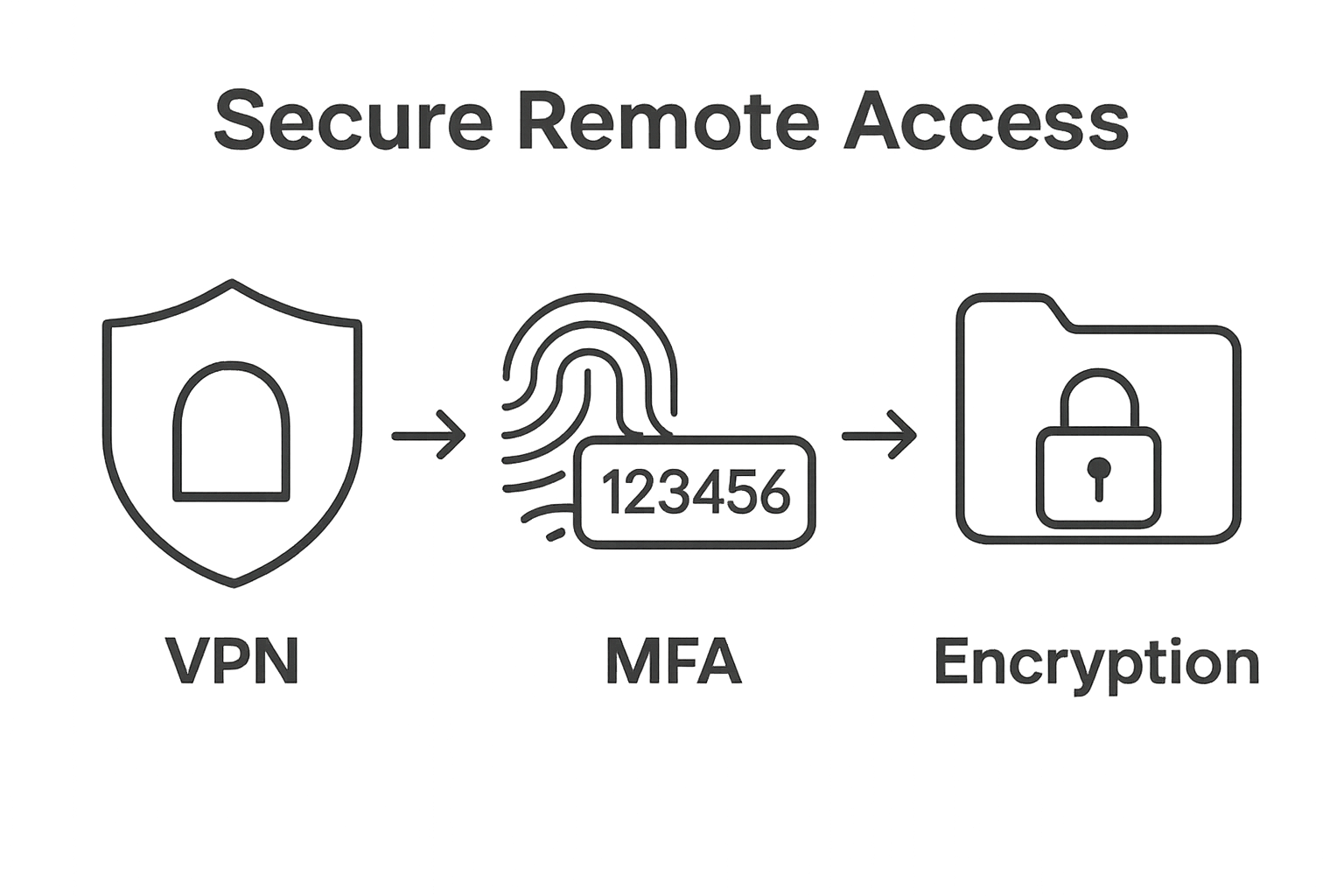
- Multi-factor authentication requiring two or more verification methods
- Biometric identification using fingerprint or facial recognition
- Hardware security tokens generating time-sensitive access codes
- Risk-based authentication analyzing user behavior patterns
Network Protection and Encryption Protocols
Secure remote access relies heavily on sophisticated network protection technologies that create encrypted communication tunnels between user devices and organizational infrastructure. These technologies prevent unauthorized interception and ensure data remains confidential during transmission.
Key network protection technologies encompass:
- Virtual Private Network (VPN) technologies creating secure, encrypted connections
- Endpoint security software monitoring device-level vulnerabilities
- Secure Socket Layer (SSL) and Transport Layer Security (TLS) encryption protocols
- Network segmentation strategies limiting potential breach impacts
By integrating these advanced technologies, organizations can create robust secure remote access frameworks that balance operational flexibility with stringent cybersecurity requirements. The goal is not just preventing unauthorized access but creating intelligent, adaptive security ecosystems that can respond dynamically to emerging technological challenges.
Critical Components of a Secure Remote Access Strategy
Developing a comprehensive secure remote access strategy requires a holistic approach that integrates multiple technological, procedural, and human-centric elements. Organizations must create a multilayered defense framework that addresses potential vulnerabilities across different dimensions of network access and user interaction.
Technological Infrastructure Components
The technological foundation of a secure remote access strategy involves implementing robust, interconnected security technologies that create multiple protective barriers. These technologies work synergistically to prevent unauthorized access, monitor network activities, and respond to potential security incidents in real time.
According to the Federal Trade Commission, organizations should prioritize the following technological components:
- Advanced endpoint protection software
- Centralized network monitoring systems
- Comprehensive encryption protocols
- Intelligent threat detection mechanisms
- Automated security patch management
Policy and Governance Framework
Beyond technological solutions, a robust secure remote access strategy requires well-defined policies and governance structures that establish clear guidelines for network access, user responsibilities, and security protocols. Organizational policies provide the framework within which technological solutions operate, creating a comprehensive approach to cybersecurity.
Key policy considerations include:
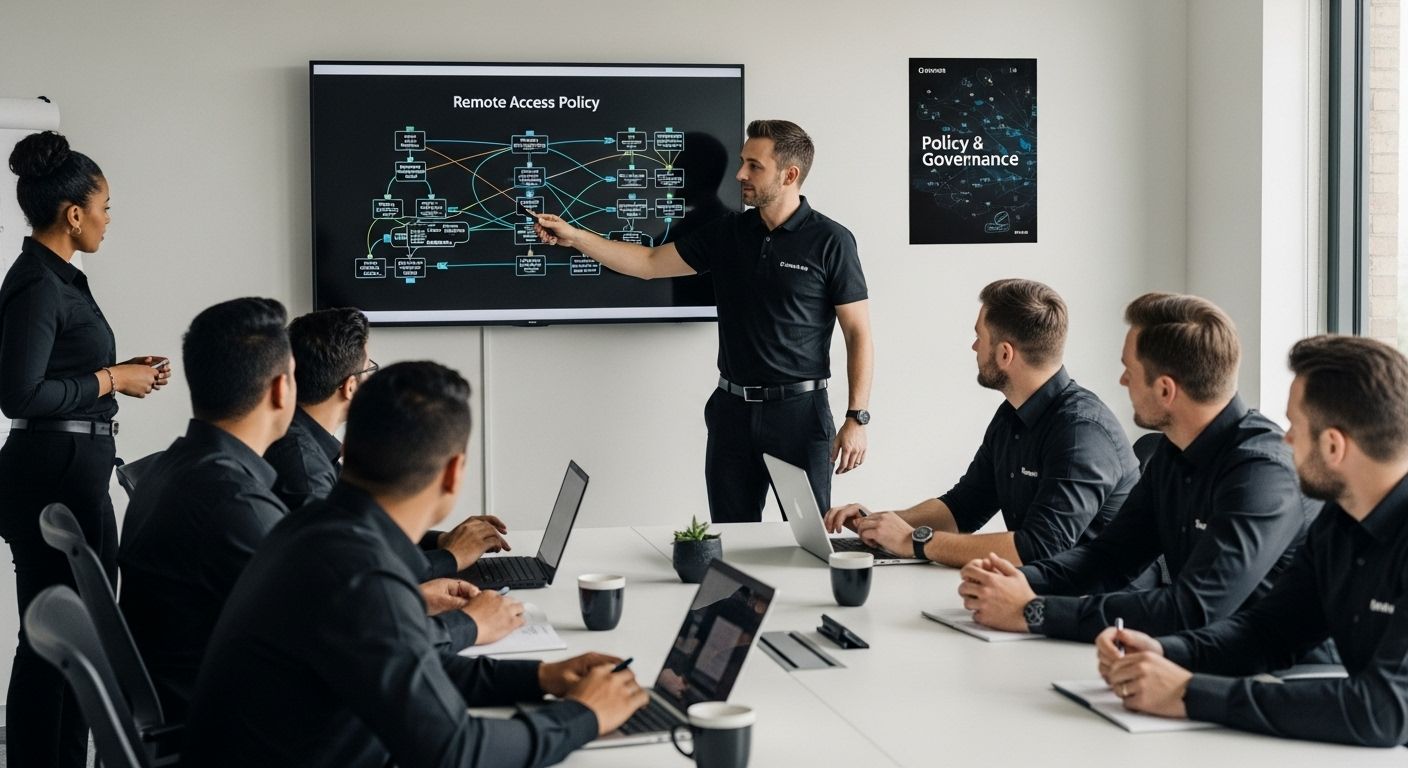
- Defining precise access control mechanisms
- Establishing clear user authentication requirements
- Creating incident response and breach notification protocols
- Implementing regular security awareness training programs
- Developing comprehensive device and network usage guidelines
Effective secure remote access strategies recognize that technology, policy, and human behavior are deeply interconnected. By developing a nuanced, adaptive approach that addresses technological, procedural, and human factors, organizations can create resilient network access frameworks that protect sensitive information while supporting operational flexibility and innovation.
The table below summarizes the critical technological and policy components highlighted in the article for building a secure remote access strategy.
| Component Type | Key Elements / Examples | Purpose |
|---|---|---|
| Technology Infrastructure | Endpoint protection, network monitoring, encryption, threat detection | Mitigate cyber risks, monitor, respond |
| Authentication | Multi-factor, biometric, hardware tokens, risk-based | Ensure only authorized access |
| Encryption Protocols | VPN, SSL/TLS, secure tunnels | Secure data during transmission |
| Policy & Governance | Access control, incident response, user guidelines, training | Guide behavior, enforce best practices |
| Human Factor | Security awareness, ongoing training | Reduce risk caused by user error |
The Future of Secure Remote Access in a Changing Workplace
The landscape of work is undergoing a profound transformation, with secure remote access emerging as a critical enabler of modern organizational flexibility and resilience. As businesses reimagine traditional workplace models, technological innovation and cybersecurity convergence will play increasingly pivotal roles in defining how organizations operate and protect their digital assets.
Emerging Technological Paradigms
Advanced secure remote access technologies are evolving beyond traditional perimeter-based security models. Organizations are transitioning toward zero trust architectures that continuously verify user identities, device integrity, and access permissions, regardless of network location. This approach represents a fundamental shift from assuming trust to demanding continuous authentication and validation.
According to CyberSeek, the cybersecurity workforce is experiencing significant transformations driven by remote access technologies. Key emerging technological trends include:
- Artificial intelligence driven threat detection systems
- Contextual and behavioral authentication mechanisms
- Quantum encryption technologies
- Advanced machine learning security algorithms
- Decentralized identity management platforms
Human-Centric Security Strategies
The future of secure remote access transcends technological solutions, emphasizing human behavior and organizational culture. Companies are recognizing that effective security strategies must integrate robust technological infrastructure with comprehensive employee training and awareness programs.
Critical human-centric security considerations will include:
- Continuous cybersecurity skills development
- Adaptive security awareness training
- Cultural transformation toward security consciousness
- Empowering employees as active security participants
- Developing resilient, flexible work practices
As workplace dynamics continue to evolve, secure remote access will become less of a technical solution and more of a strategic organizational capability. Businesses that successfully integrate advanced technologies, adaptive policies, and human-focused approaches will position themselves to thrive in an increasingly digital, distributed work environment.
Ready to Make Secure Remote Access Work for You?
If safeguarding sensitive data while supporting a flexible, remote workforce is keeping you up at night, you are not alone. Juggling VPNs, multi-factor authentication, and endpoint security can feel overwhelming. But with threats constantly evolving, letting any gap go unaddressed could put your entire business at risk. The good news is that robust secure remote access does not have to be complicated or costly. SRS Networks is your trusted partner, blending local expertise with top-tier technology so you can empower your team and protect your operations.
Discover how our tailored Cybersecurity Solutions and Managed IT Services help companies like yours implement strong, simple secure remote access frameworks. Visit SRS Networks for a no-obligation consultation. Act now to close your security gaps and set your business up for growth.
Frequently Asked Questions
What is secure remote access?
Secure remote access refers to technology strategies that allow employees, partners, and authorized users to connect to an organization’s network, systems, and resources securely from locations outside of physical office spaces. It involves creating encrypted pathways to protect sensitive information.
Why is secure remote access essential for businesses?
Secure remote access is essential for businesses as it enables operational continuity, protects sensitive data, facilitates workforce mobility, and supports compliance with industry regulations. It has become a crucial aspect of modern work environments especially with the increase in distributed teams.
What technologies are commonly used in secure remote access?
Common technologies for secure remote access include Virtual Private Networks (VPNs), multi-factor authentication mechanisms, endpoint security protocols, and encrypted communication channels that collectively create a secure access environment.
How can businesses implement a secure remote access strategy?
Businesses can implement a secure remote access strategy by integrating advanced endpoint protection, establishing clear policies regarding access control and user responsibilities, regularly updating remote access software, and providing ongoing security awareness training for employees.