Businesses are under constant threat as cyberattacks and data breaches grab headlines nearly every day. Data breaches cost companies an average of $4.35 million per incident, putting reputation and client trust on the line. Most people assume these attacks target obscure loopholes, but the real gateway is often unsecured daily communication. Secure communication tools are no longer niche software. They are now the backbone that decides whether sensitive information stays safe or ends up in the wrong hands.
Quick Guide to Secure Communication Tools for Businesses
- Defining Secure Communication Tools And Their Purpose
- The Importance Of Secure Communication In Business
- How Secure Communication Tools Protect Information
- Key Features To Look For In Secure Communication Tools
- Real-World Applications Of Secure Communication Tools
Quick Summary
| Takeaway | Explanation |
|---|---|
| Implement secure communication tools for data protection. | Businesses must use tools that encrypt communications to safeguard sensitive information from unauthorized access and breaches. |
| Maintain compliance with industry regulations. | Different sectors have specific security mandates; secure tools help ensure adherence to these legal requirements. |
| Invest in advanced encryption technologies. | Utilizing strong encryption mechanisms is essential for protecting data integrity and confidentiality during transmission. |
| Employ multi-factor authentication for security. | Adding layers of verification significantly reduces the risk of unauthorized access to secure communication systems. |
| Adopt threat detection technologies in communication tools. | Integrating intelligent systems helps monitor for vulnerabilities and respond proactively to potential security threats. |
Defining Secure Communication Tools and Their Purpose
Secure communication tools are specialized technologies designed to protect sensitive business information during digital interactions. These sophisticated platforms ensure that data remains confidential, integrity is maintained, and unauthorized access is prevented across various communication channels.
What Are Secure Communication Tools?
Secure communication tools are software solutions that encrypt and protect digital communications between individuals, teams, and organizations. According to the National Institute of Standards and Technology, these tools serve critical functions in safeguarding organizational data transmission.
Key characteristics of secure communication tools include:
- End-to-end encryption that prevents unauthorized interception
- Multi-factor authentication mechanisms
- Secure file sharing capabilities
- Compliance with industry-specific security regulations
Core Purposes of Secure Communication Platforms
Businesses implement secure communication tools to address several fundamental security objectives. Data protection remains the primary motivation, with tools designed to shield sensitive information from potential cyber threats and unauthorized access.
These platforms provide comprehensive protection by:
- Preventing data breaches and unauthorized information disclosure
- Ensuring regulatory compliance across different industries
- Maintaining communication integrity and confidentiality
Technical Foundations of Secure Communication
At their core, secure communication tools leverage advanced encryption protocols that transform readable data into complex coded messages. Only authorized recipients possessing specific decryption keys can access the original communication, creating a robust security barrier against potential cyber intrusions.
By implementing sophisticated security frameworks, these tools help businesses maintain professional communication standards while mitigating risks associated with digital information exchange.
The Importance of Secure Communication in Business
Secure communication has evolved from an optional technology enhancement to a critical business necessity in the digital age. Organizations across industries now recognize that protecting information exchanges is fundamental to maintaining operational integrity, client trust, and competitive advantage.
Protecting Business Reputation and Client Confidence
In an era of increasing cyber threats, businesses must demonstrate robust communication security to maintain stakeholder trust. Cybersecurity Ventures reports that data breaches can cost companies significant financial and reputational damage, underscoring the critical nature of secure communication strategies.
Business reputation relies on several key factors related to communication security:
- Demonstrating commitment to data protection
- Preventing unauthorized information disclosure
- Maintaining transparent and trustworthy communication channels
- Protecting sensitive client and organizational information
Regulatory Compliance and Legal Implications
Regulatory frameworks increasingly mandate stringent communication security standards across various industries. Different sectors face unique compliance requirements that necessitate advanced secure communication tools:
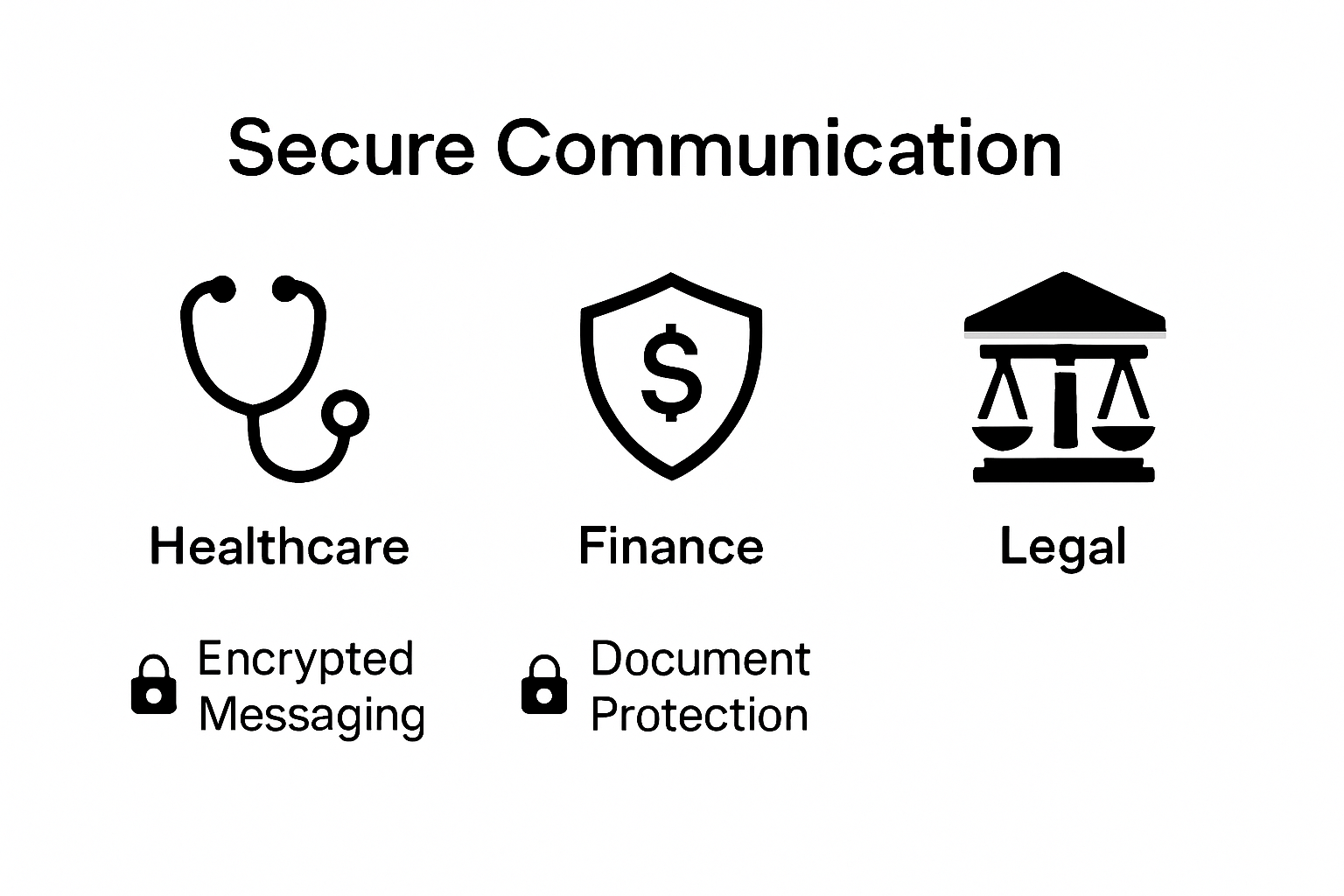
- Healthcare organizations must comply with HIPAA privacy regulations
- Financial institutions require SEC and FINRA communication monitoring
- Technology companies need robust intellectual property protection
- Legal firms must ensure attorney client privilege
Financial and Operational Risk Mitigation
Secure communication tools represent a strategic investment in organizational risk management. By implementing comprehensive communication security protocols, businesses can prevent potential financial losses associated with data breaches, intellectual property theft, and unauthorized information access.
Effective secure communication strategies help organizations:
- Reduce potential financial losses from cyber incidents
- Protect intellectual property and trade secrets
- Maintain continuous and uninterrupted business operations
- Build trust with clients and stakeholders
Businesses that prioritize secure communication position themselves as responsible, forward thinking organizations capable of protecting critical information assets in an increasingly complex digital landscape.

How Secure Communication Tools Protect Information
Secure communication tools employ sophisticated technological mechanisms to safeguard digital information from potential threats and unauthorized access. These advanced systems create multiple layers of protection that work collectively to ensure data confidentiality and integrity.
Encryption Techniques
At the core of secure communication protection are advanced encryption protocols that transform readable data into complex, unreadable code. According to NIST Cybersecurity Framework, encryption serves as the primary defense mechanism against unauthorized data interception.
Key encryption strategies include:
- Symmetric encryption using shared secret keys
- Asymmetric encryption with public and private key pairs
- End-to-end encryption for complete communication protection
- Multi-layered encryption protocols
Authentication and Access Control
Secure communication tools implement robust authentication mechanisms that verify user identities and restrict unauthorized system access. Multifactor authentication adds additional security layers by requiring multiple verification methods before granting communication privileges.
Authentication methods encompass:
- Biometric verification
- Hardware security tokens
- Complex password requirements
- Role-based access controls
- Real-time login monitoring
Threat Detection and Prevention
Modern secure communication platforms integrate advanced threat detection technologies that continuously monitor communication channels for potential security breaches. These intelligent systems analyze communication patterns, identify suspicious activities, and automatically implement protective measures.
Threat prevention capabilities include:
- Automated malware scanning
- Intrusion detection systems
- Anomaly recognition algorithms
- Instant security alerts
- Automatic communication isolation during potential threat scenarios
By combining these sophisticated protection strategies, secure communication tools create comprehensive defense mechanisms that adapt to evolving cybersecurity challenges and protect sensitive business information from potential digital threats.
Key Features to Look for in Secure Communication Tools
Selecting the right secure communication tools requires a comprehensive understanding of critical features that ensure robust protection and seamless organizational communication. Businesses must evaluate potential solutions based on sophisticated security capabilities and operational requirements.
Advanced Encryption and Security Protocols
The foundational requirement for secure communication tools is powerful encryption technology. According to Gartner’s Cybersecurity Research, organizations should prioritize tools offering comprehensive encryption mechanisms that protect data across multiple communication channels.
Key encryption features to consider include:
- End-to-end encryption capabilities
- Support for multiple encryption standards
- Robust key management infrastructure
- Transparent encryption processes
- Compatibility with various communication platforms
Comprehensive Authentication and Access Management
Effective secure communication tools must provide sophisticated authentication mechanisms that verify user identities and control system access. Multifactor authentication represents a critical security layer that significantly reduces unauthorized access risks.
Authentication features businesses should evaluate:
- Biometric verification options
- Role-based access controls
- Real-time login monitoring
- Adaptive authentication mechanisms
- Secure password management protocols
Compliance and Reporting Capabilities
Modern secure communication tools must offer robust compliance tracking and reporting functionalities. These features help organizations demonstrate regulatory adherence and maintain comprehensive communication audit trails.
Critical compliance-related features include:
- Automated compliance reporting
- Configurable security policy enforcement
- Detailed communication logs
- Regulatory standard compatibility
- Customizable security monitoring dashboards
By carefully evaluating these essential features, businesses can select secure communication tools that provide comprehensive protection, operational flexibility, and alignment with organizational security requirements.
Below is a summary table outlining the main features to look for in secure communication tools, helping you evaluate which solutions best meet your business needs.
| Feature Category | Key Attributes | Why It Matters |
|---|---|---|
| Advanced Encryption Protocols | End-to-end encryption, multi-standard support, robust key management | Protects data in transit and at rest |
| Authentication and Access Management | Biometric options, role-based controls, real-time monitoring | Reduces unauthorized access risks |
| Compliance and Reporting Capabilities | Automated reporting, detailed logs, regulatory compatibility | Ensures legal compliance and auditability |
Real-World Applications of Secure Communication Tools
Secure communication tools have transformed how businesses across diverse industries manage sensitive information and protect critical digital interactions. These sophisticated technologies provide targeted solutions that address unique security challenges in various professional contexts.
Healthcare Communication Protection
In healthcare settings, secure communication tools play a pivotal role in maintaining patient confidentiality and regulatory compliance. HIPAA Journal highlights the critical importance of protecting patient information through advanced communication technologies.
Healthcare communication security applications include:
- Encrypted patient record transmissions
- Secure telemedicine consultation platforms
- Protected communication between healthcare professionals
- Compliant messaging systems for medical teams
- Secure storage of sensitive medical documentation
Financial Services and Confidential Transactions
Financial institutions rely extensively on secure communication tools to protect sensitive client information and maintain regulatory compliance. These tools enable secure transactions, confidential client communications, and robust fraud prevention mechanisms.
Key financial communication security applications involve:
- Encrypted client portfolio discussions
- Secure transaction documentation
- Protected inter-bank communication channels
- Confidential investment strategy exchanges
- Compliance monitoring for financial conversations
Legal and Professional Services Communication
Law firms and professional service providers utilize secure communication tools to maintain attorney-client privilege, protect intellectual property, and ensure confidential information remains strictly controlled.
Critical communication security applications in legal contexts include:
-
Encrypted document sharing platforms
-
Secure client consultation channels
-
Confidential case management systems
-
Protected internal legal team communications
-
Compliance-focused communication tracking
These real-world applications demonstrate how secure communication tools have become essential infrastructure for protecting sensitive information across different professional domains, enabling organizations to communicate effectively while maintaining robust security standards.
The following table categorizes how different industries apply secure communication tools, highlighting unique security needs and real-world examples.
| Industry | Primary Security Needs | Example Applications |
|---|---|---|
| Healthcare | Patient confidentiality, HIPAA compliance | Encrypted patient records, secure telemedicine |
| Financial Services | Regulatory compliance, fraud prevention | Secure transactions, confidential client communications |
| Legal/Professional | Attorney-client privilege, information control | Encrypted document sharing, secure case management |
Bring Enterprise-Grade Secure Communication to Your Local Business
Are you concerned that a single unsecured message could jeopardize your reputation or regulatory standing? As highlighted in our article, today’s businesses are under constant pressure to keep client conversations confidential, protect operational data, and comply with strict industry regulations—from healthcare to finance and beyond. Secure communication tools are not just a luxury, but a vital necessity for any business wanting to prevent data breaches and inspire client confidence. If these challenges sound familiar, you need a trusted technology partner who truly understands your industry and your local environment.
Experience tailored protection, compliance, and support with SRS Networks. We offer customized cybersecurity solutions built specifically for small and mid-sized businesses in Central California. Our local team will help you implement robust secure communication platforms, ensure end-to-end encryption, and meet your unique compliance needs. Do not leave your business exposed in this digital age—contact us today to learn how our managed IT and cybersecurity services can safeguard your information, keep your business running, and set you up for success right now.
Frequently Asked Questions
What are secure communication tools?
Secure communication tools are software solutions that encrypt and protect digital communications between individuals, teams, and organizations, ensuring data confidentiality and preventing unauthorized access.
Why is secure communication important for businesses?
Secure communication is vital for protecting sensitive information, maintaining client trust, demonstrating regulatory compliance, and mitigating financial and operational risks associated with data breaches.
What features should I look for in secure communication tools?
Look for features such as advanced encryption protocols, multifactor authentication, robust access management, compliance tracking, and reporting capabilities to ensure comprehensive protection and security.
How do encryption techniques work in secure communication tools?
Encryption techniques transform readable data into complex codes that only authorized recipients can decrypt. This process prevents unauthorized interception and maintains the confidentiality of digital communications.