Mobile device management sounds like a technical handful and it is now woven into nearly every modern business. Most people are surprised to learn that over 80 percent of organizations use some form of MDM to protect sensitive data. But even with all this tech in place, the real change is not just about control or security. It is about transforming how people work, making flexibility and protection move together at a speed hardly anyone expected.
Table of Contents: Comprehensive Mobile Device Management Guide
- Defining Mobile Device Management: Key Concepts And Features
- The Importance Of Mobile Device Management For Businesses
- How Mobile Device Management Functions: Tools And Techniques
- Practical Applications Of Mobile Device Management In Various Sectors
- Future Trends In Mobile Device Management: What To Expect
Quick Summary
| Takeaway | Explanation |
|---|---|
| Implement MDM for remote device management | Centralized control allows IT to manage devices without physical access, enhancing operational efficiency. |
| Secure sensitive data with MDM strategies | MDM helps protect corporate information from unauthorized access and potential security breaches, crucial for data integrity. |
| Facilitate compliance with industry regulations | MDM assists organizations in adhering to regulatory requirements, minimizing the risk of legal violations. |
| Leverage AI for predictive device management | Integrating AI can transform MDM into a proactive security system, improving threat detection and risk assessment. |
| Customize MDM solutions for specific sectors | Tailoring MDM strategies to industry needs enhances efficiency and security, addressing unique operational challenges. |
Defining Mobile Device Management: Key Concepts and Features
Mobile Device Management (MDM) represents a critical technological framework that enables organizations to secure, monitor, and manage mobile devices across their enterprise networks. By providing comprehensive control mechanisms, MDM solutions help businesses protect sensitive data, ensure regulatory compliance, and optimize device performance.
Understanding the Core Principles of MDM
At its fundamental level, mobile device management is a centralized system that allows IT administrators to control and configure mobile devices remotely. The National Institute of Standards and Technology defines MDM as a comprehensive administrative approach for managing smartphones, tablets, laptops, and other portable computing devices within an organizational ecosystem.
Key principles of MDM include:
- Centralized device enrollment and configuration
- Secure data access and network connection controls
- Remote device tracking and management
- Application distribution and management
- Security policy enforcement
Technological Framework and Implementation
MDM solutions operate through specialized software platforms that create a secure bridge between organizational IT infrastructure and mobile devices. These platforms utilize advanced technologies like mobile device profiles, containerization, and remote wipe capabilities to provide granular control over device functionality.
By implementing MDM, organizations can:
- Protect corporate data from unauthorized access
- Standardize device configurations across different hardware
- Quickly respond to security threats or device loss
- Simplify device onboarding and offboarding processes
- Maintain compliance with industry security regulations
The strategic implementation of mobile device management transforms how businesses approach device security, offering a proactive solution to the complex challenges of modern digital workplaces.
The Importance of Mobile Device Management for Businesses
In an increasingly digital workplace, mobile device management has transformed from an optional strategy to a critical business necessity. Organizations face unprecedented challenges in securing and managing the growing number of mobile devices accessing sensitive corporate networks and data.
Below is a table summarizing the key risks that Mobile Device Management helps address for businesses, providing a clear reference for understanding security and compliance concerns.
| Risk Factor | Description |
|---|---|
| Unauthorized data access | Prevents unapproved persons from accessing sensitive business information. |
| Potential security breaches | Reduces risk of cyberattacks and malware infiltrating organizational devices. |
| Compliance violations | Helps maintain adherence to legal and industry regulations and standards. |
| Loss or theft of corporate info | Protects company data if a device is lost or stolen by enabling remote tools. |
| Uncontrolled device usage | Limits use of non-compliant or unsafe applications and actions on devices. |
Protecting Business Assets and Information
The National Cybersecurity Center of Excellence emphasizes that mobile devices represent significant potential security vulnerabilities for businesses. With employees using smartphones, tablets, and laptops for work purposes, organizations must implement robust mobile device management strategies to mitigate risks.
Key risks that MDM helps address include:
- Unauthorized data access
- Potential security breaches
- Compliance violations
- Loss or theft of corporate information
- Uncontrolled device usage
Strategic Business Advantages of MDM
Beyond security, mobile device management offers substantial strategic advantages for businesses. Dive deeper into mobile security practices to understand how comprehensive MDM solutions can transform organizational technology management.
Business benefits of implementing MDM include:
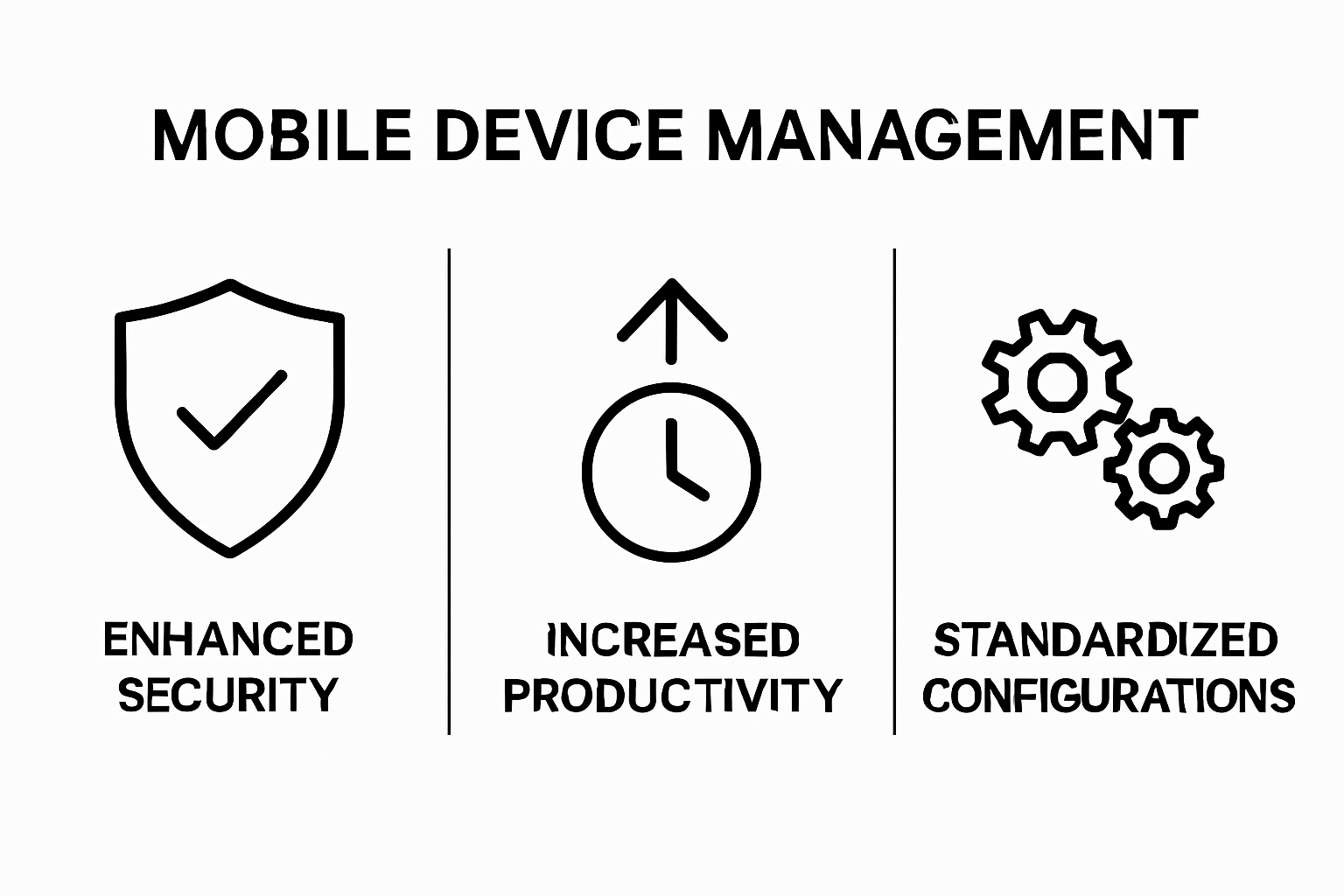
- Enhanced operational efficiency
- Standardized device configurations
- Improved regulatory compliance
- Reduced IT support costs
- Increased employee productivity
By providing centralized control and comprehensive security measures, mobile device management enables businesses to embrace mobile technologies while maintaining robust protective frameworks. The ability to remotely configure, monitor, and secure devices ensures that organizations can confidently support flexible work environments without compromising critical technological infrastructure.
How Mobile Device Management Functions: Tools and Techniques
Mobile Device Management (MDM) represents a sophisticated technological ecosystem that enables organizations to control, secure, and optimize mobile device usage across complex enterprise environments. By implementing advanced software platforms and strategic techniques, businesses can effectively manage the intricate landscape of mobile device interactions.
Core Technological Mechanisms
The National Cybersecurity Center of Excellence explains that MDM functions through comprehensive software platforms that provide centralized control and monitoring capabilities. These platforms create a secure infrastructure allowing IT administrators to interact with mobile devices remotely and comprehensively.
Key technological mechanisms include:
- Device enrollment and registration
- Configuration profile deployment
- Network access control
- Security policy enforcement
- Remote monitoring and tracking
Advanced Management Techniques
MDM solutions utilize sophisticated techniques to ensure comprehensive device management. Containerization technology allows organizations to create secure, isolated environments on mobile devices, separating personal and corporate data while maintaining strict access controls.
Advanced MDM management techniques encompass:
- Automated software and security updates
- Geofencing and location-based controls
- Application whitelisting and blacklisting
- Secure email and communication management
- Comprehensive device inventory tracking
Learn more about advanced mobile security strategies to understand the nuanced approaches businesses can adopt. By integrating these sophisticated tools and techniques, organizations can transform mobile device management from a reactive security measure into a proactive technological strategy that enhances operational efficiency and protects critical business assets.
The following table compares fundamental and advanced features and technologies of Mobile Device Management to highlight how the approach evolves with added sophistication.
| Feature/Technique | Basic MDM Functions | Advanced MDM Techniques |
|---|---|---|
| Device enrollment/registration | Yes | Yes |
| Configuration management | Standard profile deployment | Geofencing, dynamic configuration |
| Security enforcement | Policy setup, remote wipe | Automated updates, behavioral anomaly detection |
| Application management | Distribution and control | Whitelisting/blacklisting, secure containerization |
| Monitoring and tracking | Location and status monitoring | Real-time inventory, detailed usage analytics |
| Access controls | Network access setup | Dynamic, context-aware access management |
Practical Applications of Mobile Device Management in Various Sectors
Mobile Device Management (MDM) has evolved from a generic technological solution to a sector-specific strategic tool that addresses unique operational challenges across diverse industries. By providing tailored technological frameworks, MDM enables organizations to optimize device usage, enhance security, and maintain regulatory compliance.
Healthcare and Medical Sector Implementation
Researchers examining information security risks highlight the critical importance of MDM in healthcare environments. Medical institutions require robust mobile management strategies to protect patient confidentiality, ensure secure communication, and maintain compliance with stringent healthcare regulations like HIPAA.
Key MDM applications in healthcare include:

- Secure patient record access
- Encrypted communication channels
- Device tracking for medical equipment
- Compliance with privacy regulations
- Controlled application distribution
Enterprise and Professional Services Applications
In professional service environments, MDM transforms how organizations manage technological resources. Comprehensive device control enables businesses to standardize technological infrastructure, reduce security risks, and support flexible working arrangements.
Cross-sector MDM benefits encompass:
- Centralized device configuration
- Remote work support
- Cybersecurity risk mitigation
- Cost-effective technology management
- Standardized operational protocols
Explore advanced mobile security strategies to understand how different sectors can customize mobile device management approaches. By recognizing the unique technological requirements of each industry, organizations can develop targeted MDM strategies that balance operational efficiency with robust security protocols.
Future Trends in Mobile Device Management: What to Expect
The landscape of Mobile Device Management (MDM) is rapidly evolving, driven by technological advancements, changing workplace dynamics, and increasingly sophisticated cybersecurity challenges. Organizations must stay ahead of emerging trends to maintain robust, adaptive mobile device strategies that protect critical business assets.
Artificial Intelligence and Machine Learning Integration
The National Institute of Standards and Technology highlights the growing importance of intelligent mobile device management technologies. Artificial Intelligence and Machine Learning are transforming MDM from a reactive security approach to a predictive, proactive technological ecosystem.
Emerging AI-driven MDM capabilities include:
- Automated threat detection
- Predictive security risk assessment
- Intelligent device configuration
- Behavioral anomaly identification
- Dynamic access control mechanisms
Evolving Security and Compliance Frameworks
Modern MDM solutions are transitioning towards more comprehensive, context-aware security frameworks. These advanced systems move beyond traditional device-level controls to provide nuanced, intelligent management that adapts to changing organizational requirements and technological landscapes.
Future MDM security trends encompass:
- Zero trust security architectures
- Enhanced privacy protection protocols
- Granular access management
- Cross-platform device integration
- Real-time compliance monitoring
Learn more about advanced mobile security strategies to understand the sophisticated approaches businesses can adopt. As mobile technologies continue to advance, organizations must embrace flexible, intelligent MDM solutions that balance robust security with operational efficiency, ensuring their technological infrastructure remains resilient and adaptive.
Ready to Take Control of Your Mobile Devices and Protect Your Business?
Mobile Device Management is more than a buzzword. As highlighted in our article on MDM, businesses today face the ongoing threat of data breaches, compliance risks, and the need for consistent security policies across every mobile device. If you are struggling with unauthorized access, inconsistent device configurations, or the fear of losing sensitive information, you are not alone. SRS Networks understands the pressure to maintain a secure, productive, and compliant mobile ecosystem—especially when your business depends on it.
Do not let unmanaged devices put your business at risk. Our team specializes in tailored Mobile Device Management strategies and cybersecurity solutions so you can focus on growth with confidence. Visit SRS Networks to see how our Cybersecurity Solutions and Managed IT Services help businesses like yours secure every tablet, phone, and laptop. Act now to protect your data and keep your business running smoothly—reach out to our experts today.
Frequently Asked Questions
What is Mobile Device Management (MDM)?
Mobile Device Management (MDM) is a technology framework that allows organizations to secure, monitor, and manage mobile devices such as smartphones, tablets, and laptops, ensuring data protection and compliance with regulations.
How does MDM enhance data security for businesses?
MDM enhances data security by enabling remote tracking, data access control, application management, and security policy enforcement, helping organizations prevent unauthorized data access and security breaches.
What are the core features of an effective MDM solution?
Core features of an effective MDM solution include centralized device enrollment, configuration profile deployment, secure data access controls, remote wiping capabilities, and application distribution management.
In which sectors is Mobile Device Management particularly important?
MDM is particularly important in sectors such as healthcare, where it protects patient information, and professional services, where it standardizes device management to improve operational efficiency and security.