Businesses deal with more cyber threats every year, and US companies lose billions to cyberattacks annually. Most assume standard antivirus software can keep up. The real shift happens when you bring in managed antivirus solutions that work together across every device and let your IT team see and stop problems before they wreak havoc.
Quick Navigation for Managed Antivirus Solutions
- What Are Managed Antivirus Solutions And How Do They Function?
- Why Managed Antivirus Solutions Matter For Businesses Today
- Key Components Of Effective Managed Antivirus Solutions
- Real-World Applications Of Managed Antivirus Solutions In Various Industries
Quick Summary
| Takeaway | Explanation |
|---|---|
| Centralized control enhances cybersecurity | Managed antivirus allows one interface to manage security across all devices, ensuring consistent protection. |
| Proactive threat detection reduces risks | Continuous monitoring and real-time updates help identify and neutralize threats before they escalate. |
| Industry-specific strategies optimize security | Tailored antivirus solutions address unique cybersecurity challenges for various sectors, enhancing overall effectiveness. |
| Comprehensive protection supports business continuity | These solutions prevent disruptions, enabling businesses to focus on growth without constant cybersecurity concerns. |
| Continuous updates keep defenses strong | Automatic deployment of security patches ensures that protections are always current against evolving threats. |
What Are Managed Antivirus Solutions and How Do They Function?
Managed antivirus solutions represent a comprehensive approach to cybersecurity that goes beyond traditional standalone antivirus software. These advanced systems provide businesses with centralized, proactive protection against digital threats through continuous monitoring, automatic updates, and unified management across multiple devices and networks.
Understanding the Core Mechanism
Unlike traditional antivirus programs that operate independently on each computer, managed antivirus solutions function through a centralized platform that allows IT professionals to monitor, configure, and respond to security threats from a single dashboard. According to Harvard T.H. Chan School of Public Health, this approach enables organizations to implement consistent security policies and rapidly address potential vulnerabilities.
To help clarify how managed antivirus solutions compare with traditional antivirus software, the following table summarizes the core differences between these two approaches.
| Feature/Approach | Traditional Antivirus | Managed Antivirus Solution |
|---|---|---|
| Management | Individual device management | Centralized dashboard |
| Updates | Manual or scheduled per device | Automatic, real-time, system-wide |
| Threat Detection | Independent, local | Proactive, real-time monitoring |
| Reporting & Analytics | Limited, device-level | Unified, organization-wide |
| Consistency of Security Policies | Varies across devices | Standardized across all endpoints |
| Response Speed | May be delayed by user/inactivity | Instant response from IT professionals |
Key characteristics of managed antivirus solutions include:
- Centralized Control: One administrative interface manages security across all connected devices
- Real-time Monitoring: Continuous scanning and threat detection
- Automatic Updates: Instant deployment of latest security patches and virus definitions
Benefits for Business Security
Businesses gain significant advantages by implementing managed antivirus solutions. These systems provide comprehensive protection that adapts quickly to emerging cyber threats. The centralized nature allows for immediate identification and neutralization of potential security risks before they can compromise critical business data.
The integrated approach means that security professionals can track potential vulnerabilities, generate detailed reports, and implement strategic defenses across entire organizational networks. This proactive method significantly reduces the likelihood of successful cyberattacks and minimizes potential downtime or data loss associated with security breaches.
Why Managed Antivirus Solutions Matter for Businesses Today
In an increasingly digital business landscape, cybersecurity has become a critical concern for organizations of all sizes. Managed antivirus solutions provide a robust defense mechanism against the growing complexity and frequency of cyber threats that can potentially devastate business operations.
The Rising Cybersecurity Threat Landscape
Cyber threats are evolving at an unprecedented rate, targeting businesses with sophisticated attack strategies designed to exploit vulnerabilities. According to the U.S. Small Business Administration, cyberattacks cost the U.S. economy billions annually, making robust digital protection not just a recommendation but a business necessity.
Key cybersecurity challenges businesses face include:
- Data Breaches: Unauthorized access to sensitive business information
- Financial Losses: Potential monetary damages from cyber incidents
- Reputation Damage: Long-term impact on customer trust and business credibility
Strategic Protection and Business Continuity
Managed antivirus solutions transform cybersecurity from a reactive to a proactive approach. By implementing comprehensive monitoring and instant threat detection, businesses can prevent potential disruptions before they escalate. These solutions provide continuous protection that adapts to emerging digital risks, ensuring that organizations remain resilient against sophisticated cyber threats.
The strategic value extends beyond mere protection. Managed antivirus solutions offer businesses a structured approach to maintaining digital hygiene, reducing operational risks, and maintaining consistent security standards across entire networks. This comprehensive protection helps businesses focus on growth and innovation without constant worry about potential cyber vulnerabilities.
Key Components of Effective Managed Antivirus Solutions
Managed antivirus solutions are complex cybersecurity systems composed of multiple interconnected components designed to provide comprehensive digital protection. Understanding these key elements helps businesses implement robust defense strategies against evolving cyber threats.
Advanced Threat Detection Mechanisms
Effective managed antivirus solutions leverage sophisticated detection technologies that go beyond traditional signature-based scanning. According to the National Cybersecurity Alliance, modern security programs integrate multiple layers of protection to detect and block a wide range of potential threats.
Critical threat detection components include:
- Behavior-Based Analysis: Identifying suspicious system activities and potential malware
- Machine Learning Algorithms: Predicting and detecting previously unknown threats
- Real-Time Scanning: Continuous monitoring of system files and network traffic
Comprehensive Security Architecture
A well-designed managed antivirus solution encompasses more than just virus protection. It provides a holistic security framework that includes multiple defensive layers to safeguard business digital assets. Endpoint detection and response (EDR) tools play a crucial role in this architecture, enabling rapid identification and mitigation of potential security incidents.
The security architecture typically integrates:
- Network-level protection mechanisms
- Device-specific security configurations
- Centralized management and monitoring systems
By combining these elements, businesses can create a resilient digital defense system that adapts to emerging cyber risks and provides comprehensive protection across their entire technological ecosystem.
The table below outlines key components and characteristics that define effective managed antivirus solutions for businesses.
| Component | Description |
|---|---|
| Centralized Control | Manages security policies across all devices from one interface |
| Real-Time Monitoring | Ongoing scanning to detect and respond to threats instantly |
| Automatic Updates | Deploys security patches and virus definitions automatically |
| Behavior-Based Analysis | Identifies suspicious activities beyond known virus signatures |
| Machine Learning Algorithms | Predicts and detects new or unknown threats |
| Endpoint Detection & Response | Monitors and mitigates incidents at device level |
| Network-Level Protection | Safeguards against threats entering through business networks |
Real-World Applications of Managed Antivirus Solutions in Various Industries
Managed antivirus solutions are not one-size-fits-all technologies but sophisticated, adaptable security systems designed to meet the unique cybersecurity challenges of different industries. By tailoring protection strategies to specific sector requirements, businesses can effectively mitigate digital risks and safeguard critical operational infrastructure.
Industry-Specific Cybersecurity Challenges
Each industry faces distinct digital threats that demand specialized security approaches. According to the New York State Comptroller’s Office, centralized management of antivirus software is crucial for maintaining consistent protection across diverse technological environments.
Industries with particularly complex cybersecurity needs include:
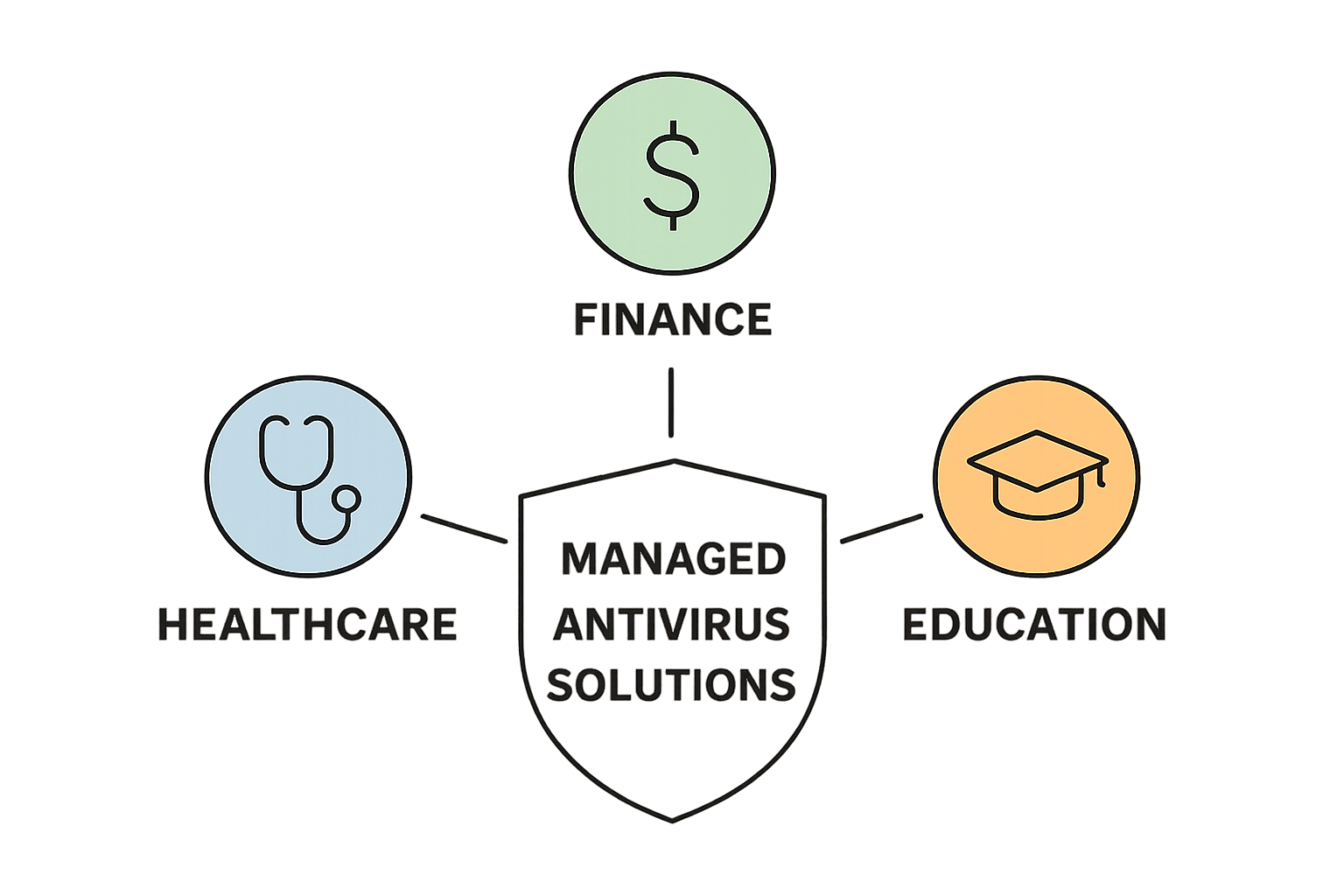
- Healthcare: Protecting sensitive patient data and complying with HIPAA regulations
- Finance: Preventing unauthorized access to financial records and transaction systems
- Education: Securing student information and research databases
Customized Protection Strategies
Effective managed antivirus solutions recognize that different sectors require nuanced security frameworks. For instance, a healthcare organization might prioritize patient data protection, while a manufacturing firm focuses on preventing industrial espionage and protecting proprietary design information.
Key considerations for industry-specific antivirus implementations include:
- Compliance with sector-specific regulatory requirements
- Integration with existing technological infrastructure
- Scalability to accommodate future growth and emerging threats
By developing targeted security strategies, businesses can create robust digital defense systems that not only protect against current threats but also anticipate potential future vulnerabilities across their unique operational landscape.
Ready to Take Control of Your Business Security?
Traditional antivirus programs often leave critical gaps that put your business data and reputation at risk. The article explained how managed antivirus solutions offer a robust, proactive approach with centralized control, real-time monitoring, and adaptive defenses. If you worry about data breaches, compliance issues, or keeping up with evolving cyber threats, your security needs more than just basic protection.
Imagine a partner who delivers the enterprise-grade security described in the article but with the local expertise and fast response your business deserves. At SRS Networks, we specialize in tailored managed antivirus and cybersecurity solutions that secure your devices, protect compliance in sensitive industries, and deliver peace of mind. Visit our main site now to see how you can prevent downtime and stay ahead of the latest cyber risks. Connect with us today and empower your business with proactive protection that grows as you do.
Frequently Asked Questions
What are managed antivirus solutions?
Managed antivirus solutions are comprehensive cybersecurity systems that provide centralized, proactive protection against digital threats through continuous monitoring, automatic updates, and unified management across multiple devices and networks.
How do managed antivirus solutions differ from traditional antivirus software?
Unlike traditional antivirus software that operates independently on individual devices, managed antivirus solutions use a centralized platform for monitoring and responding to security threats from a single dashboard, enhancing consistency and speed in addressing vulnerabilities.
What are the key benefits of implementing managed antivirus solutions for businesses?
Managed antivirus solutions offer several advantages including real-time threat detection, automatic updates for security patches, centralized control for security management, and a proactive approach that significantly reduces the risk of successful cyberattacks and potential downtime.
Why are managed antivirus solutions important for today’s businesses?
As cyber threats continue to evolve and become more sophisticated, managed antivirus solutions are crucial for protecting sensitive data and maintaining business continuity. They help organizations mitigate risks associated with data breaches, financial losses, and damage to reputation.