Schools and universities are investing in technology at numbers like never before. Over 90 percent of American classrooms now use some form of digital learning tool. Many people think it just means putting laptops and tablets in students’ hands. The surprise is that the real power of these IT solutions goes way beyond hardware. The biggest shift is how they quietly reinvent everything from lesson plans to administrative operations and even how students connect and learn together.
Table of Contents
- What Are IT Solutions For Education And Their Purpose?
- Why IT Solutions Matter In The Educational Landscape
- How IT Solutions Facilitate Learning And Teaching
- Key Concepts In IT Solutions For Education Explained
On This Page: IT Solutions for Education Topics
| Takeaway | Explanation |
|---|---|
| IT solutions enhance educational experiences | Specialized tools support personalized learning, engagement, and resource accessibility. |
| Technological integration improves operational efficiency | Comprehensive systems streamline administration, enabling better decision-making and resource management. |
| Personalized learning pathways cater to individual needs | Adaptive technology creates tailored experiences, tracking performance and suggesting optimizations. |
| Collaboration tools foster interactive learning | Digital platforms allow real-time engagement and resource sharing among students and educators. |
| Robust infrastructure is crucial for success | A sound technological framework supports all digital processes and ensures seamless educational experiences. |
What are IT Solutions for Education and Their Purpose?
IT solutions for education represent specialized technological tools and systems designed to enhance learning experiences, administrative efficiency, and educational management across academic institutions. These comprehensive digital platforms transform traditional educational processes by integrating advanced technologies that support both teaching and administrative functions.
Core Components of Educational IT Solutions
Educational IT solutions encompass a wide range of technological applications that address multiple institutional needs. According to the National Center for Education Statistics, these solutions typically include:
The table below breaks down the core components of educational IT solutions, providing a concise overview of each key system and its primary purpose within an academic environment.
| Component | Description |
|---|---|
| Student Information Management | Manages student records, grades, and enrollment data |
| Learning Management Platforms | Delivers and organizes educational content and courses |
| Digital Assessment Tools | Facilitates testing, performance tracking, and feedback |
| Network Infrastructure | Provides connectivity and supports access to digital systems |
| Cybersecurity Protection | Safeguards sensitive data and digital resources |
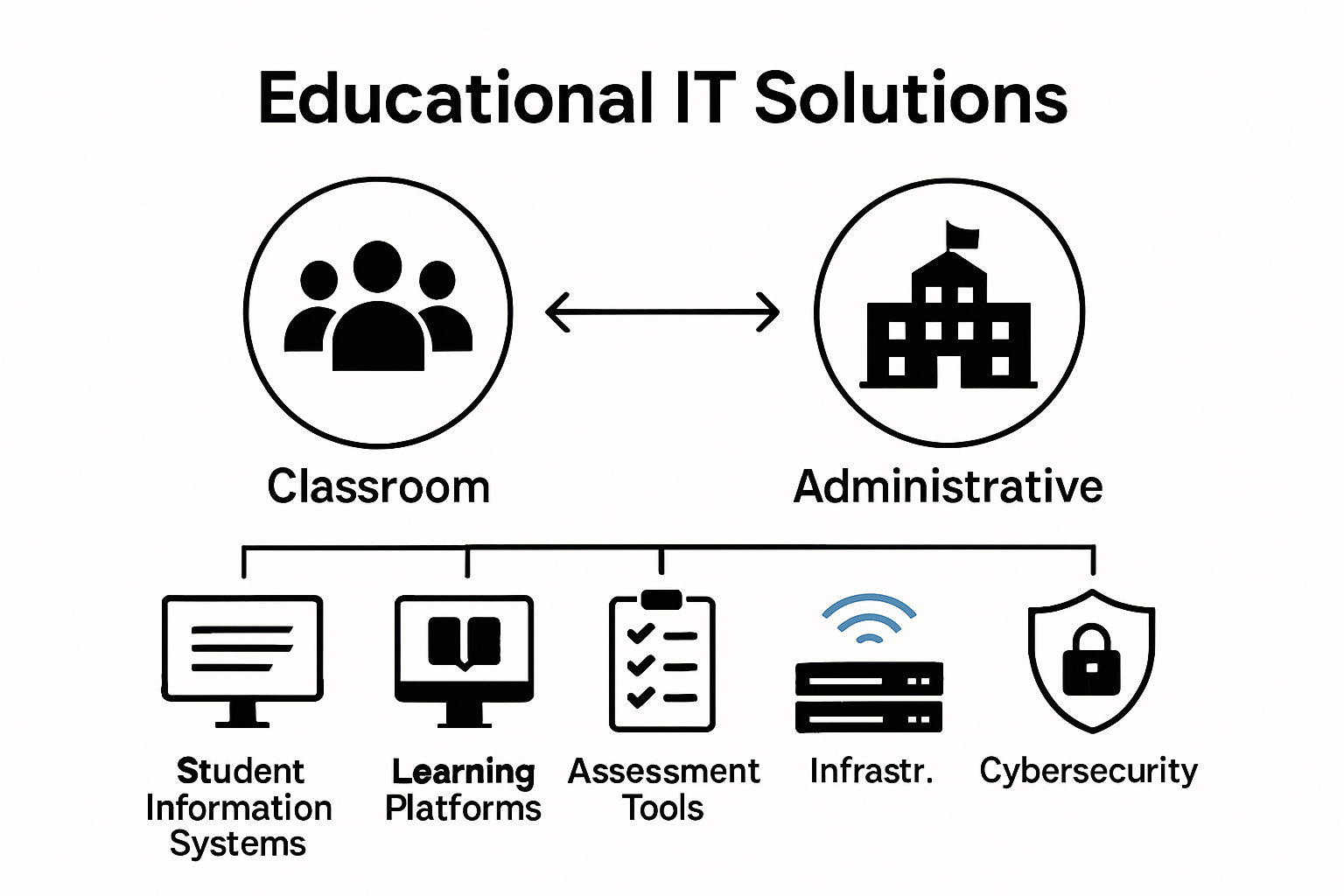
- Student information management systems
- Learning management platforms
- Digital assessment and tracking tools
- Network infrastructure and connectivity solutions
- Cybersecurity protection for educational data
These integrated systems work collaboratively to create a seamless technological ecosystem that supports educational institutions in delivering high-quality, efficient, and secure learning environments.
Transformative Impact on Educational Processes
Modern IT solutions go beyond simple technological implementations. They fundamentally reshape how educational institutions operate, learn, and interact. Technology enables personalized learning experiences, allowing educators to customize curriculum, track student progress, and provide targeted interventions.
This table summarizes some of the major benefits and impacts of IT solutions on both the learning experience and school operations, helping readers quickly grasp where these technologies make a difference.
| Area | Key Benefits and Impacts |
|---|---|
| Learning | Personalized pathways, engagement, real-time feedback |
| Student Engagement | Interactive environments, adaptive to learning styles |
| Administrative Efficiency | Streamlined workflows, improved data tracking |
| Strategic Decisions | Data-driven insights, better resource and budget allocation |
| Collaboration | Real-time communication and global knowledge exchange |
The Institute of Education Sciences highlights that these solutions provide critical advantages such as:
- Expanding access to educational resources
- Supporting remote and hybrid learning models
- Enabling real-time collaboration and communication
- Facilitating data-driven decision making
By leveraging advanced technologies, educational institutions can create more adaptive, responsive, and engaging learning environments that prepare students for an increasingly digital world.
Why IT Solutions Matter in the Educational Landscape
In today’s rapidly evolving digital world, IT solutions have become fundamental to transforming educational experiences and operational effectiveness. Educational institutions are no longer just centers of learning but dynamic technological ecosystems that require sophisticated digital infrastructures to meet modern educational challenges.
Enhancing Learning and Student Engagement
According to research from American University, technology integration dramatically improves student engagement and learning outcomes. Digital tools create interactive and personalized learning environments that adapt to individual student needs, making education more accessible and compelling.
Key benefits of technological integration include:
- Enabling personalized learning pathways
- Supporting diverse learning styles
- Providing real-time feedback mechanisms
- Creating immersive educational experiences
By leveraging adaptive learning technologies, schools can create more responsive and inclusive educational environments that cater to students’ unique learning requirements.
Operational Efficiency and Strategic Decision Making
Beyond classroom experiences, IT solutions provide critical support for administrative and management processes. These technological systems enable educational leaders to make data-driven decisions, optimize resource allocation, and streamline complex institutional operations.
The strategic advantages of comprehensive IT solutions include:
- Improved resource management
- Enhanced data tracking and analysis
- Simplified administrative workflows
- Better budget allocation strategies
Educational institutions can transform their operational models by implementing robust information systems that provide actionable insights and support strategic planning. These technological investments ultimately contribute to creating more effective and efficient learning environments.

How IT Solutions Facilitate Learning and Teaching
Information technology has revolutionized educational methodologies, providing unprecedented tools that transform traditional teaching and learning approaches. Modern IT solutions create dynamic, interactive, and personalized educational experiences that transcend conventional classroom limitations.
Personalized Learning Experiences
According to Louisiana State University, instructional technology enables educators to design highly customized learning pathways that adapt to individual student needs, learning styles, and pace. Adaptive learning platforms provide targeted interventions, allowing students to progress through material based on their unique comprehension levels.
Key advantages of personalized technological learning include:
- Real-time performance tracking
- Individualized curriculum recommendations
- Immediate feedback mechanisms
- Targeted skill development support
These intelligent systems analyze student interactions, identifying knowledge gaps and suggesting tailored educational resources to optimize learning outcomes.
Collaborative and Interactive Learning Environments
IT solutions break traditional classroom boundaries by creating interconnected learning spaces. Digital platforms enable students to collaborate, share resources, and engage with educational content through multiple interactive channels. Virtual classrooms, discussion forums, and collaborative project tools transform learning from a passive to an active, participatory experience.
Technological collaboration features support:
- Global knowledge exchange
- Peer-to-peer learning opportunities
- Cross-cultural educational interactions
- Flexible learning time and space
By integrating these technological tools, educators can create engaging, inclusive learning environments that prepare students for a digitally connected world.
Key Concepts in IT Solutions for Education Explained
IT solutions for education represent complex technological ecosystems that integrate multiple sophisticated components to transform learning and administrative processes. Understanding these fundamental concepts helps educational institutions strategically implement and leverage technology effectively.
Technology Integration and Governance
According to the National Center for Education Statistics, successful technology implementation requires comprehensive planning and strategic governance. Effective IT solutions demand a holistic approach that encompasses infrastructure, policy development, and continuous technological adaptation.
Key technological governance principles include:
- Establishing clear technological vision
- Creating comprehensive implementation strategies
- Developing robust cybersecurity protocols
- Ensuring equitable technological access
- Maintaining ongoing technological assessment
Educational institutions must approach technology not as isolated tools but as integrated systems that support broader educational objectives and student learning outcomes.
Essential Technological Infrastructure Components
Technological infrastructure forms the backbone of modern educational IT solutions. These systems encompass hardware, software, network capabilities, and support mechanisms that enable seamless digital learning experiences.
Critical infrastructure components include:
- Learning management platforms
- Cloud-based storage and collaboration tools
- Network security systems
- Data analytics and reporting mechanisms
- Scalable digital communication frameworks
By understanding these foundational elements, educational leaders can make informed decisions about technological investments and implementation strategies that align with institutional goals and student needs.
Turn Educational IT Challenges Into Opportunities With SRS Networks
Traditional learning environments are rapidly changing and so are the demands on your technology. The article above highlights how educational institutions often struggle with complex IT systems, outdated infrastructure, and the need for reliable cybersecurity. If you are feeling frustrated by limited resources, increased security risks, or the pressure to deliver seamless online experiences, you are not alone. Many schools and educational organizations want personalized technology roadmaps and proactive support that keep pace with their evolving needs.
Ready to transform your educational IT? Trust SRS Networks for managed IT services, cybersecurity solutions, and cloud computing that empower your school or institution.
Connect today for a free consultation. See how our local team can design and support a secure, scalable technological ecosystem that drives learning outcomes and maximizes administrative efficiency. The sooner you act, the faster you can provide a better learning experience for your students and staff.
Frequently Asked Questions
What are IT solutions for education?
IT solutions for education are specialized technological tools and systems designed to enhance learning experiences and administrative efficiency in academic institutions. They include systems like student information management, learning management platforms, and digital assessment tools.
How do IT solutions impact student learning?
IT solutions fundamentally reshape student learning by providing personalized learning experiences, improving engagement, and facilitating real-time feedback. Technologies allow educators to adapt curricula to individual student needs and learning styles.
What are the key components of educational IT solutions?
Key components of educational IT solutions include student information management systems, learning management platforms, digital assessment tools, network infrastructure, and cybersecurity measures that work together to optimize educational processes.
Why is technology integration important in education?
Technology integration is essential in education as it enhances operational efficiency, enables data-driven decision making, and creates a more engaging and inclusive learning environment. It allows educational institutions to meet modern educational challenges effectively.