Cloud migration sounds like a smooth leap into the future as more companies swap old servers for high-powered cloud environments every year. Yet for many organizations, the move is shockingly tough. Unexpected migration costs can spiral and legacy systems can clash with modern cloud setups, costing companies far more than planned. Most surprising, though, is that the greatest hurdle often has nothing to do with tech at all. It’s the people and the process behind the move that trip up even the most prepared teams.
On This Page: Navigate Cloud Migration Challenges & Solutions
- What Are Cloud Migration Challenges?
- The Importance Of Addressing Cloud Migration Challenges
- How Cloud Migration Challenges Affect Different Industries
- Key Concepts In Navigating Cloud Migration Challenges
- Strategies For Overcoming Cloud Migration Challenges
Quick Summary
| Takeaway | Explanation |
|---|---|
| Cloud migration is complex, not simple | Organizations face multifaceted challenges that can hinder operational effectiveness during migration to cloud systems. |
| Strategic planning is essential for success | Comprehensive assessments, risk evaluations, and detailed timelines help ensure smooth transitions to cloud environments. |
| Financial implications can emerge unexpectedly | Businesses must budget for not only transition costs but also potential productivity disruptions and retraining expenses. |
| Industry-specific challenges require tailored strategies | Different sectors, like healthcare and finance, face unique obstacles that necessitate customized migration approaches. |
| Develop skills and establish partnerships | Investing in workforce capabilities and leveraging external expertise can effectively overcome migration challenges. |
What Are Cloud Migration Challenges?
Cloud migration represents a complex technological transition where businesses transfer their digital infrastructure, applications, and data from traditional on-premises systems to cloud-based environments. Understanding these migration challenges is crucial for organizations seeking seamless digital transformation.
Understanding Core Migration Complexity
Cloud migration is not a simple “lift and shift” process. Businesses encounter multifaceted challenges that can significantly impact their operational effectiveness. The U.S. Government Accountability Office has highlighted several critical obstacles organizations face during cloud transitions.
Key challenges include:
- Technical Compatibility: Legacy systems often struggle to integrate with modern cloud architectures
- Performance Limitations: Existing applications might require substantial redesign to function effectively in cloud environments
- Data Security Concerns: Transferring sensitive information across platforms introduces potential vulnerabilities
Strategic Considerations for Migration
Successful cloud migration demands comprehensive strategic planning. Organizations must carefully evaluate their existing technological infrastructure, understand potential risks, and develop robust migration roadmaps. This involves:
- Conducting thorough infrastructure assessments
- Identifying potential performance bottlenecks
- Developing comprehensive security protocols
- Creating detailed migration timelines
Financial and Operational Implications
Cloud migration involves more than technological challenges. Financial implications play a significant role in migration strategies. Unexpected costs can emerge during transition periods, requiring businesses to maintain flexible budgetary approaches. Comprehensive cloud migration research suggests that organizations must factor in not just direct migration expenses, but also potential productivity disruptions and retraining costs.
Understanding these challenges allows businesses to develop proactive strategies, mitigating risks and maximizing the transformative potential of cloud technologies.
The Importance of Addressing Cloud Migration Challenges
Effective cloud migration is not merely a technological upgrade but a strategic transformation that requires comprehensive planning and proactive problem solving. Organizations that recognize and systematically address potential challenges can unlock significant operational advantages and minimize potential risks.
Risk Mitigation and Strategic Alignment
Addressing cloud migration challenges goes beyond technical considerations. It represents a critical approach to organizational resilience. By anticipating potential disruptions, businesses can develop robust strategies that protect their digital assets and maintain operational continuity. Research from the National Institutes of Health emphasizes the importance of strategic planning in successful technology transitions.
Key risk mitigation strategies include:
- Comprehensive infrastructure vulnerability assessment
- Developing multi-layered security protocols
- Creating flexible contingency plans
- Establishing clear migration governance frameworks
Financial and Operational Optimization
Proactive challenge management directly impacts an organization’s financial health and operational efficiency. Unaddressed migration challenges can lead to:
- Unexpected cost overruns
- Extended system downtime
- Reduced employee productivity
- Compromised data integrity
By systematically identifying and resolving potential obstacles, businesses can transform cloud migration from a potential risk into a strategic opportunity for digital transformation.
Long-Term Technological Sustainability
Addressing cloud migration challenges is fundamentally about building a sustainable technological ecosystem. Organizations that invest time and resources in understanding potential complexities position themselves to:
- Implement more scalable infrastructure
- Enhance system interoperability
- Improve overall technological adaptability
- Reduce long-term technological debt
Comprehensive challenge management ensures that cloud migration is not just a temporary technological shift, but a foundational strategy for future digital innovation and competitive advantage.
How Cloud Migration Challenges Affect Different Industries
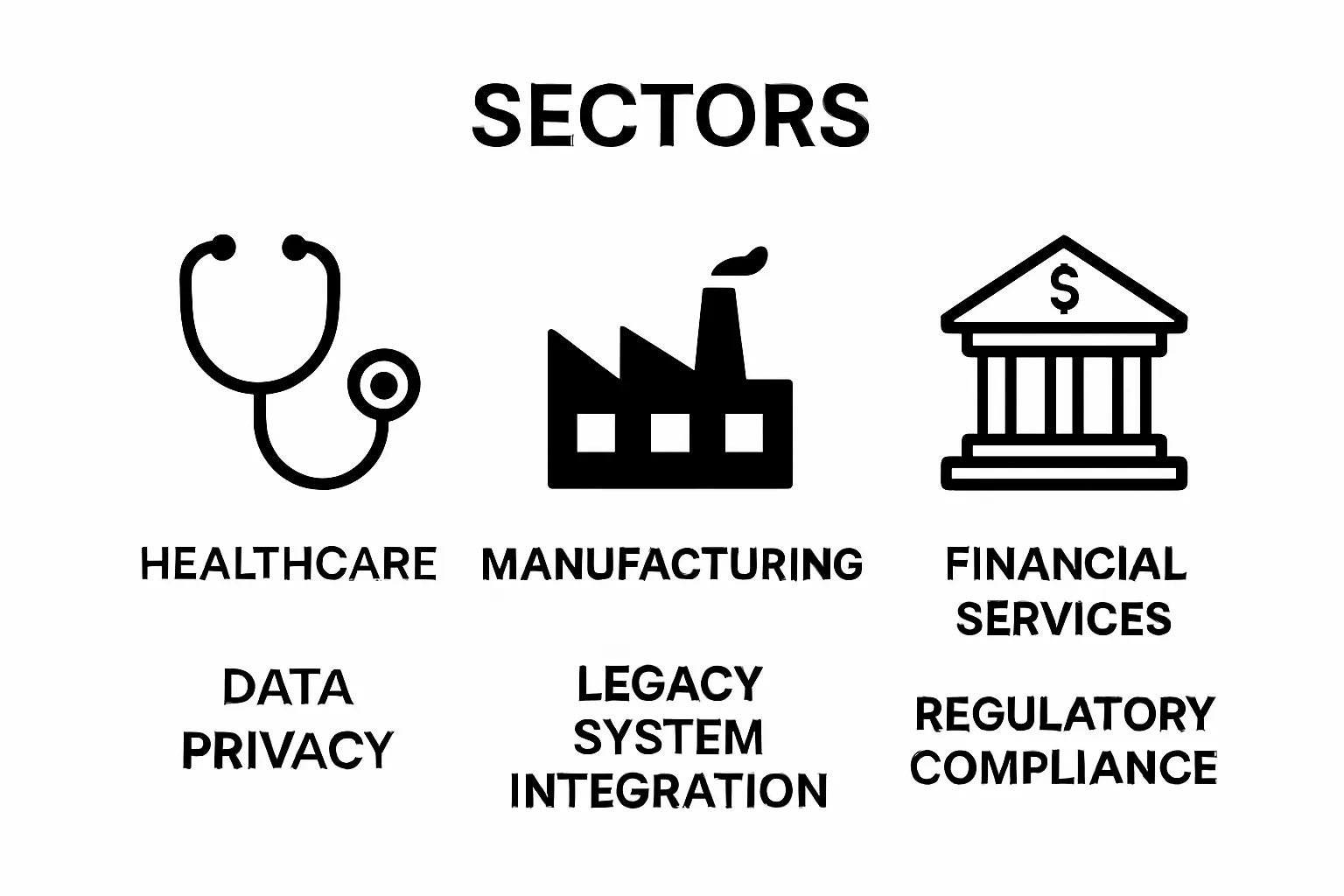
Cloud migration challenges are not uniform across industries. Each sector encounters unique technological, regulatory, and operational barriers that require specialized approaches to successful digital transformation.
Healthcare and Medical Services
Healthcare organizations face particularly complex cloud migration challenges due to stringent regulatory requirements and sensitive patient data management. Compliance and data privacy emerge as critical considerations in this sector.
Key healthcare migration challenges include:
- Maintaining HIPAA compliance during data transfer
- Protecting patient confidentiality across cloud platforms
- Ensuring uninterrupted access to critical medical records
- Managing integration with existing electronic health record systems
Manufacturing and Industrial Sectors
Manufacturing industries confront significant cloud migration obstacles related to legacy system integration and operational technology infrastructures. These challenges often require comprehensive technological restructuring and strategic planning.
Critical challenges for manufacturing include:
- Compatibility issues with specialized industrial control systems
- Ensuring real-time data processing and minimal operational disruption
- Protecting proprietary design and production data
- Managing complex interconnected technological ecosystems
Financial Services and Banking
Financial institutions encounter cloud migration challenges that revolve around security, regulatory compliance, and risk management. The highly sensitive nature of financial data demands meticulous migration strategies that prioritize data protection and operational continuity.
Unique financial sector migration considerations include:
- Meeting strict financial regulatory requirements
- Implementing advanced cybersecurity protocols
- Maintaining transaction processing reliability
- Protecting customer financial information
By understanding industry-specific challenges, organizations can develop targeted migration strategies that address their unique technological and operational requirements, transforming potential obstacles into opportunities for digital innovation.
The table below compares the unique cloud migration challenges faced by the healthcare, manufacturing, and financial services sectors.
| Industry | Key Challenges | Regulatory Concerns | Operational Considerations |
|---|---|---|---|
| Healthcare and Medical | Patient data privacy, integration with EHR systems | HIPAA, data privacy | Continuous access to records, compliance |
| Manufacturing & Industrial | Legacy system compatibility, real-time data processing | Intellectual property | Operational disruption, tech ecosystem |
| Financial Services & Banking | Security, transaction reliability, advanced cybersecurity | Financial regulations, audits | Data protection, system uptime |
Key Concepts in Navigating Cloud Migration Challenges
Navigating cloud migration challenges requires a comprehensive understanding of critical technological and strategic principles. Organizations must develop nuanced approaches that balance technical implementation with strategic organizational objectives.
Security and Risk Management Framework
National Institute of Standards and Technology guidelines emphasize the critical importance of establishing robust security and risk management frameworks during cloud migration. These frameworks serve as foundational mechanisms for protecting digital assets and maintaining operational integrity.
Key security considerations include:
- Implementing multi-layered authentication protocols
- Developing comprehensive data encryption strategies
- Creating granular access control mechanisms
- Establishing continuous monitoring systems
Data Governance and Compliance
Successful cloud migration demands sophisticated data governance strategies that transcend traditional technological boundaries. Organizations must develop holistic approaches that address regulatory requirements, data privacy, and organizational integrity.
Critical data governance principles involve:
- Mapping data ownership and accountability
- Defining clear data classification standards
- Implementing robust data retention policies
- Ensuring transparent data processing procedures
Architectural Flexibility and Scalability
Technological adaptability represents a fundamental concept in cloud migration. Organizations must design migration strategies that allow for future technological evolution and organizational growth. This requires creating flexible architectural models that can accommodate emerging technological innovations.
Key architectural considerations include:
- Developing modular cloud infrastructure designs
- Supporting hybrid and multi-cloud environments
- Creating seamless integration capabilities
- Enabling dynamic resource allocation
By understanding and implementing these key concepts, organizations can transform cloud migration from a potential challenge into a strategic opportunity for digital transformation and technological innovation.
Strategies for Overcoming Cloud Migration Challenges
Overcoming cloud migration challenges requires a strategic and comprehensive approach that addresses technological, organizational, and human factors. Organizations must develop multifaceted strategies that go beyond technical solutions and encompass broader transformation objectives.
Skills Development and Knowledge Acquisition
Government Accountability Office research emphasizes the critical role of workforce capabilities in successful cloud migration. Investing in technical skills and organizational knowledge becomes a fundamental strategy for navigating complex digital transformations.
Key skills development strategies include:
- Implementing comprehensive cloud technology training programs
- Creating cross-functional migration teams
- Developing internal cloud expertise and certifications
- Establishing continuous learning frameworks
Phased Migration and Incremental Implementation
A strategic approach to cloud migration involves breaking down the transformation process into manageable, incremental phases.
This methodology allows organizations to mitigate risks, evaluate performance, and adjust strategies dynamically.
Effective phased migration approaches involve:
- Starting with less critical systems and applications
- Conducting thorough pilot testing
- Implementing gradual workload transitions
- Maintaining parallel legacy and cloud systems during initial stages
Strategic Partnerships and External Support
Collaborative migration strategies can significantly enhance an organization’s ability to overcome complex cloud migration challenges. By leveraging external expertise and strategic partnerships, businesses can access specialized knowledge and advanced technological resources.
Key partnership strategies include:
- Engaging specialized cloud migration consultants
- Collaborating with experienced cloud service providers
- Participating in industry knowledge exchange networks
- Developing strategic vendor relationships
Successful cloud migration is not about technological replacement but about creating a transformative strategy that aligns technological capabilities with organizational objectives.
This table summarizes the core concepts organizations should prioritize to successfully navigate cloud migration challenges.
| Key Concept | Focus Area | Example Practices |
|---|---|---|
| Security & Risk Management | Protection of digital assets | Multi-layered authentication, continuous monitoring |
| Data Governance & Compliance | Regulatory and data management | Data classification, ownership mapping |
| Architectural Flexibility | Adaptability and future readiness | Modular design, hybrid/multi-cloud support |
| Skills Development | Workforce capability | Cloud training, cross-functional teams |
| Phased Implementation | Gradual migration process | Pilot testing, parallel system operation |
| Strategic Partnerships | External and expert support | Consultants, cloud service provider collaboration |
Ready to Tackle Your Cloud Migration Challenges with Confidence?
Are you worried about technical compatibility, unexpected costs, or potential downtime during cloud migration? Now is the moment to take action and secure your digital future. With so many potential pitfalls—from data security concerns to compliance issues across healthcare, finance, and manufacturing—it is essential to have an expert local partner guiding your transition. At SRS Networks, our dedicated team specializes in addressing the specific pain points highlighted in the article, such as infrastructure assessments, phased migration, and regulatory compliance for Monterey Bay businesses. Let us help you transform complex migration challenges into strategic growth opportunities.
Stop letting uncertainty slow down your digital transformation. Partner with SRS Networks and gain proven expertise in cloud migration and management solutions, end-to-end cybersecurity, and ongoing technical support designed for your industry. Explore how your business can migrate to the cloud securely and without disruption. Visit SRS Networks today or schedule a free consultation to get started right now.
Frequently Asked Questions
What are the common challenges faced during cloud migration?
Common challenges during cloud migration include technical compatibility with legacy systems, performance limitations of existing applications, and data security concerns when transferring sensitive information.
How can organizations mitigate risks associated with cloud migration?
Organizations can mitigate risks by conducting comprehensive infrastructure assessments, developing multi-layered security protocols, and creating flexible contingency plans that ensure operational continuity.
Why is financial planning important for cloud migration?
Financial planning is crucial because unexpected costs can arise during the migration process. Organizations need to prepare for not only direct migration expenses but also potential productivity disruptions and retraining costs.
What strategies can businesses use to successfully navigate cloud migration challenges?
Businesses can adopt a phased migration approach, invest in workforce skills development, and engage strategic partnerships or external support to enhance their cloud migration strategies.