Network attacks are hitting Bay Area businesses harder every year, with 41 percent of small businesses suffering cyberattacks in 2023 and average losses reaching $8,300 per incident. Most owners think bigger companies are juicier targets and feel safe behind a smaller profile. That belief is proving dangerous because cybercriminals are now zeroing in on local organizations, knowing they often have weaker defenses and more to lose if breached.
Table of Contents
- Why Network Security Matters For Local Organizations
- Common Threats Facing Bay Area Industries
- Key Benefits Of Strong Network Security
- Steps To Improve Network Security In 2025
Quick Summary
| Takeaway | Explanation |
|---|---|
| Invest in Comprehensive Network Security | Strong network security is essential for business survival and safeguarding data and reputation in a cyber threat landscape. |
| Recognize Financial Risks of Breaches | Cyberattacks can cost small businesses an average of $8,300, impacting their budget and potential for growth. |
| Implement Employee Training Programs | Regular cybersecurity training transforms employees into key defenders against attacks, minimizing human error vulnerabilities. |
| Adopt Advanced Threat Detection | Utilize AI-powered systems that proactively identify and respond to threats, enhancing overall security posture. |
| Develop a Holistic Security Approach | Integrate multiple layers of security measures, including regular audits and Zero Trust architecture, for maximum protection. |
Why Network Security Matters for Local Organizations
Local organizations face an increasingly complex digital threat landscape that demands strategic network security approaches. The stakes are high: businesses cannot afford to ignore the potential devastating consequences of cybersecurity vulnerabilities.
The Financial Impact of Network Breaches
Cybersecurity is no longer just an IT concern but a critical business survival strategy. According to the U.S. Small Business Administration, a staggering 41% of small businesses experienced cyberattacks in 2023, with median costs reaching $8,300 per incident. These financial implications can be catastrophic for local organizations operating on tight budgets.
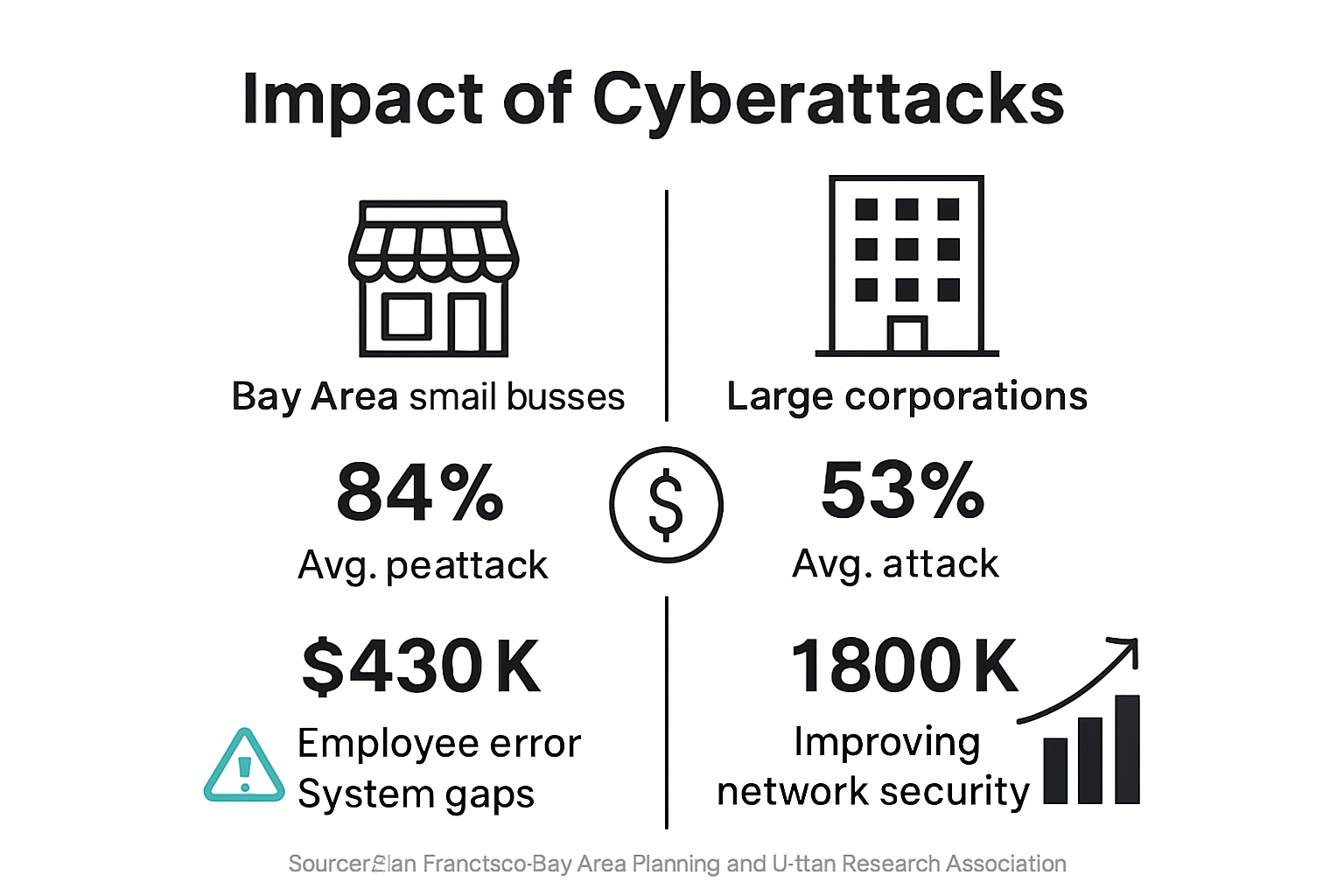
The following table summarizes key statistics relating to recent network security breaches affecting Bay Area small businesses.
| Statistic | Value |
|---|---|
| Small businesses hit by cyberattacks (2023) | 41% |
| Average loss per incident | $8,300 |
| Percent of SMBs proactively updating cybersecurity (2025) | 47% |
The potential damage extends beyond immediate monetary losses. A single network breach can erode customer trust, damage reputation, and potentially lead to permanent business closure. Local businesses must recognize that cybersecurity is an investment in long-term sustainability, not just an optional expense.
Evolving Threat Landscape for Regional Businesses
Verizon Business survey data from 2025 reveals that 47% of small and medium-sized businesses have proactively updated their cybersecurity solutions. This statistic demonstrates a growing awareness of network security’s critical importance.
Local organizations face unique challenges, including limited resources, less sophisticated IT infrastructure, and potentially less comprehensive security protocols compared to larger enterprises. Cybercriminals often view smaller businesses as easier targets, making robust network security not just recommended but essential.
Comprehensive Protection Strategy
Effective network security for local organizations requires a multi-layered approach. This means implementing not just technological solutions but developing a holistic security culture. Key components include:
- Employee Training: Human error remains a significant vulnerability. Regular cybersecurity awareness programs can dramatically reduce risk.
- Advanced Monitoring: Continuous network monitoring helps detect and respond to potential threats in real time.
- Regular Updates: Keeping software, systems, and security protocols current is crucial in staying ahead of emerging cyber threats.
Local businesses must view network security as a dynamic, ongoing process rather than a one-time implementation. The digital threat landscape continuously evolves, and so must organizational defense strategies. By investing in comprehensive network security, local organizations can protect their most valuable assets: data, reputation, and customer trust.
The message is clear: network security is not optional. It is a fundamental requirement for business survival and success in the digital age.
Common Threats Facing Bay Area Industries
The Bay Area’s dynamic technological ecosystem presents unique cybersecurity challenges across multiple industries. Understanding these specific threats is crucial for organizations to develop targeted defense strategies.
Sophisticated Phishing and Social Engineering Attacks
Cybercriminals increasingly target Bay Area businesses with highly personalized phishing campaigns that exploit local industry knowledge. According to a 2024 Cybersecurity Ventures report, social engineering attacks in technology-dense regions like Silicon Valley have increased by 67% compared to previous years.
These attacks often leverage intricate details about company structures, recent news, and professional networks to create convincing deception. For tech startups, financial institutions, and healthcare providers, the risk is particularly acute. Attackers craft emails and communication that appear legitimate, tricking employees into revealing sensitive information or granting unauthorized system access.
Ransomware and Data Compromise Risks
Research from the Cybersecurity and Infrastructure Security Agency (CISA) highlights that industries in technology-rich regions face unprecedented ransomware threats. Manufacturing, biotechnology, and healthcare sectors are prime targets due to their reliance on complex digital infrastructure and the potential for significant operational disruption.
Ransomware attacks in the Bay Area have evolved from simple data encryption to more sophisticated approaches. Cybercriminals now employ multi-stage strategies that include data theft, public exposure threats, and prolonged system infiltration. This approach increases pressure on organizations to meet ransom demands, knowing that data leakage could cause irreparable reputational damage.
Emerging Technological Vulnerabilities
The Bay Area’s cutting-edge technological landscape introduces unique security challenges. Cloud computing, artificial intelligence implementations, and interconnected IoT systems create complex attack surfaces that traditional security models struggle to protect.
Key vulnerabilities include:
- API Security Gaps: Interconnected systems create potential entry points for sophisticated cyber intrusions.
- Machine Learning Model Manipulation: Advanced attackers can potentially exploit AI training data and algorithmic vulnerabilities.
- Supply Chain Compromise: Technology firms with intricate vendor networks face increased risks of indirect security breaches.
The table below provides an overview of major cyber threats Bay Area industries currently face and the sectors most at risk.
| Threat Type | Description | Most Affected Industries |
|---|---|---|
| Phishing & Social Engineering | Tailored deception attacks exploiting human error | Tech, Finance, Healthcare |
| Ransomware & Data Compromise | Encrypting data, extortion, and threats of public exposure | Manufacturing, Biotechnology, Healthcare |
| Emerging Tech Vulnerabilities | Weaknesses in AI, IoT, APIs, and supply chains | Technology Firms, Startups, BioTech |
Local industries must adopt a proactive, adaptive approach to cybersecurity. This means continuously updating defense mechanisms, conducting regular vulnerability assessments, and developing organizational cultures of security awareness.
The Bay Area’s technological leadership demands equally advanced cybersecurity strategies. Organizations that recognize and address these complex threat landscapes will not only protect their assets but also maintain the region’s reputation for technological innovation and resilience.
Key Benefits of Strong Network Security
Strong network security is not merely a technological necessity but a strategic business imperative that provides comprehensive protection and significant organizational advantages. For Bay Area businesses operating in a highly competitive and digitally interconnected environment, implementing robust security measures delivers multifaceted benefits.
Protecting Business Continuity and Financial Stability
According to the U.S. Small Business Administration, cyberattacks pose substantial economic risks that can dramatically impact business operations. A comprehensive network security strategy helps organizations maintain operational consistency, prevent costly disruptions, and safeguard critical financial resources.
By proactively defending against potential cyber threats, businesses can avoid unexpected downtime, data loss, and the significant expenses associated with recovery and remediation. This approach transforms network security from a cost center into a strategic investment that directly supports long-term business resilience and financial health.

Enhancing Data Privacy and Regulatory Compliance
Research from the University of Phoenix underscores the critical role of network security in ensuring data privacy, consistency, and availability. For industries handling sensitive information such as healthcare, finance, and technology, maintaining strict data protection standards is not just recommended but legally mandated.
Strong network security frameworks help organizations:
- Protect Sensitive Information: Prevent unauthorized access to confidential data
- Ensure Regulatory Compliance: Meet industry-specific security standards
- Maintain Customer Trust: Demonstrate commitment to data protection
Building Competitive Advantage and Organizational Reputation
In the Bay Area’s competitive business ecosystem, network security serves as a powerful differentiator. Organizations that demonstrate robust cybersecurity practices signal professionalism, reliability, and technological sophistication to potential clients, partners, and investors.
Beyond technical protection, comprehensive network security strategies communicate an organization’s commitment to responsible business practices. This approach can attract high-quality talent, foster stronger client relationships, and position a company as a trustworthy technology partner.
Moreover, businesses with advanced security infrastructures are better positioned to quickly adapt to emerging technological challenges. By continuously evolving their security protocols, organizations can remain agile, innovative, and resilient in an increasingly complex digital landscape.
Ultimately, strong network security is not an optional add-on but a fundamental component of modern business strategy. It represents a holistic approach to protecting an organization’s most valuable assets: its data, reputation, and future potential. Bay Area businesses that recognize and invest in comprehensive network security will be well-equipped to navigate the complex, ever-changing digital terrain.
Steps to Improve Network Security in 2025
As cyber threats continue to evolve, organizations must adopt a proactive and comprehensive approach to network security. The year 2025 demands sophisticated, adaptive strategies that go beyond traditional defensive measures.
Implement Advanced Threat Detection Systems
Gartner’s 2025 Cybersecurity Forecast highlights the critical importance of implementing AI-powered threat detection mechanisms. Modern network security requires intelligent systems that can identify and respond to potential threats in real-time, using machine learning and predictive analytics.
Key components of advanced threat detection include:
- Behavioral Analysis: Monitoring user and system behaviors to identify anomalous activities
- Predictive Threat Intelligence: Using AI to anticipate potential security breaches before they occur
- Automated Response Protocols: Implementing instant mitigation strategies for detected threats
Organizations must move beyond reactive security models, embracing proactive, intelligent systems that can adapt to the rapidly changing cybersecurity landscape.
Comprehensive Employee Security Training
The National Institute of Standards and Technology (NIST) emphasizes that human factors remain the most significant vulnerability in network security. Developing a robust security culture requires more than traditional awareness programs.
Effective security training in 2025 should include:
- Immersive Simulation Experiences: Realistic cybersecurity scenario training
- Continuous Learning Platforms: Regular updates on emerging threats
- Personal Device Security Education: Addressing risks associated with remote and hybrid work environments
By transforming employees from potential security weak points to active defenders, organizations can significantly reduce their overall security risk.
Holistic Security Infrastructure Optimization
Network security in 2025 demands a comprehensive approach that integrates multiple layers of protection. This means moving beyond traditional perimeter defenses to create a dynamic, adaptive security ecosystem.
Critical optimization strategies include:
- Zero Trust Architecture: Implementing strict access controls and continuous verification
- Cloud Security Integration: Developing robust security protocols for distributed computing environments
- Regular Security Audits: Conducting comprehensive assessments of existing security infrastructure
Businesses must view network security as a dynamic, ongoing process. The most effective approach combines cutting-edge technology, comprehensive training, and a proactive organizational mindset.
The future of network security is not about building impenetrable walls, but creating intelligent, adaptive systems that can quickly detect, respond to, and mitigate potential threats. Organizations that embrace this holistic approach will be best positioned to protect their digital assets in an increasingly complex technological landscape.
Successful network security in 2025 requires a strategic, multi-dimensional approach that combines advanced technology, human expertise, and continuous adaptation.
Frequently Asked Questions
What are the financial risks associated with network security breaches for Bay Area businesses?
Cyberattacks can cost small businesses in the Bay Area an average of $8,300 per incident. This significant financial burden can severely impact budgets and hinder potential growth, making effective cybersecurity essential for survival.
Why should local organizations prioritize employee training in cybersecurity?
Regular employee training helps reduce vulnerabilities caused by human error. By educating staff on the latest threats and security protocols, organizations turn employees into active defenders against cyberattacks, minimizing overall risk.
How can businesses improve their network security in 2025?
To enhance network security, businesses should implement advanced threat detection systems using AI, provide comprehensive employee security training, and adopt a holistic security infrastructure that includes regular audits and Zero Trust architecture.
What emerging threats are Bay Area industries facing in terms of cybersecurity?
Bay Area businesses are increasingly targeted by sophisticated phishing attacks, ransomware threats, and vulnerabilities related to emerging technologies such as AI and IoT. Understanding these threats allows organizations to develop targeted defense strategies.
Take Control of Your Bay Area Network Security—Your Business Depends on It
The rise in targeted network attacks in the Bay Area, as detailed above, shows that traditional IT security is no longer enough. If you worry about losing thousands to a single breach, or you struggle to keep up with compliance and evolving threats, SRS Networks can help. Our experts understand the need for holistic protection, employee training, and advanced threat detection discussed in the article. We design security solutions for local businesses that go beyond reactive measures and deliver peace of mind—no matter your industry.
Do not wait until your company becomes another local statistic. See how our cybersecurity solutions and tailored IT partnerships will help safeguard your data and reputation. Visit SRS Networks today and request a free assessment from a local team that truly cares about your growth and security.