Small businesses might think hackers only target the big guys, but local companies face just as much risk every single day. Surprisingly, 94% of IT leaders have already experienced a significant cyber attack and many of these strike organizations with fewer resources. It is not the complex digital tools that tend to make or break security for local firms, but whether employees are actively trained and the basics are in place—that is what separates sitting ducks from the businesses that stay safe.
Table of Contents
- Why Network Security Basics Matter For Local Businesses
- Top Threats Facing Salinas And Monterey Organizations
- Simple Best Practices To Protect Your Business Network
- Finding Reliable It Support In Salinas, Monterey, And Gilroy
Quick Summary
| Takeaway | Explanation |
|---|---|
| Network security is essential for SMBs | Small and medium-sized businesses must prioritize cybersecurity to protect their operations from threats and breaches. |
| Ransomware is a significant threat | Ransomware attacks can cripple businesses, making regular backups and strong security measures crucial for protection. |
| Implement ongoing employee training | Continuous training helps employees identify threats like phishing, reducing human error in security practices. |
| Choose IT support wisely | Selecting a knowledgeable IT provider ensures tailored cybersecurity solutions that align with business needs and challenges. |
| Adopt a multi-layered security approach | A combination of technical safeguards and employee awareness is key to effectively mitigating cybersecurity risks. |
Why Network Security Basics Matter for Local Businesses
Local businesses are under constant digital threat, making network security basics more critical than ever. Small and medium-sized businesses in the Monterey Bay Area face unique cybersecurity challenges that can potentially derail their entire operation with a single security breach.
The Stark Reality of Cyber Vulnerabilities
According to the U.S. Small Business Administration, small businesses are prime targets for cybercriminals precisely because they often lack robust security infrastructure. These attackers recognize that smaller organizations typically have fewer resources to invest in comprehensive digital protection, making them attractive and relatively easy prey.
The economic impact is staggering. The National Institute of Standards and Technology reports that cybersecurity breaches cost businesses billions in lost revenue and productivity. Beyond immediate financial losses, a single breach can obliterate customer trust and potentially destroy a company’s reputation permanently.
Protecting Your Most Valuable Assets
Network security basics are not just about preventing unauthorized access. They represent a comprehensive strategy to safeguard critical business information. This includes protecting employee and customer data, financial records, intellectual property, and operational systems that keep your business running smoothly.
For local businesses in sectors like healthcare, manufacturing, retail, and professional services, the stakes are particularly high. A breach could mean exposing sensitive patient information, disrupting production lines, compromising customer payment details, or leaking confidential legal documents. These scenarios aren’t hypothetical risks but real threats that can emerge from inadequate network security practices.
Building a Culture of Cybersecurity
Effective network security goes beyond technical solutions. It requires creating an organizational culture where every team member understands their role in maintaining digital safety. This means implementing regular training, establishing clear protocols, and developing a proactive approach to identifying and mitigating potential security risks.
Local businesses must recognize that network security is not a one-time investment but an ongoing commitment. Cybercriminals continuously evolve their tactics, which means your security strategies must remain equally dynamic and adaptive. By prioritizing network security basics, businesses can protect their operations, maintain customer trust, and create a resilient digital environment that supports sustainable growth.
The message is clear: network security is no longer optional. It’s a fundamental requirement for any business hoping to thrive in today’s interconnected digital world.
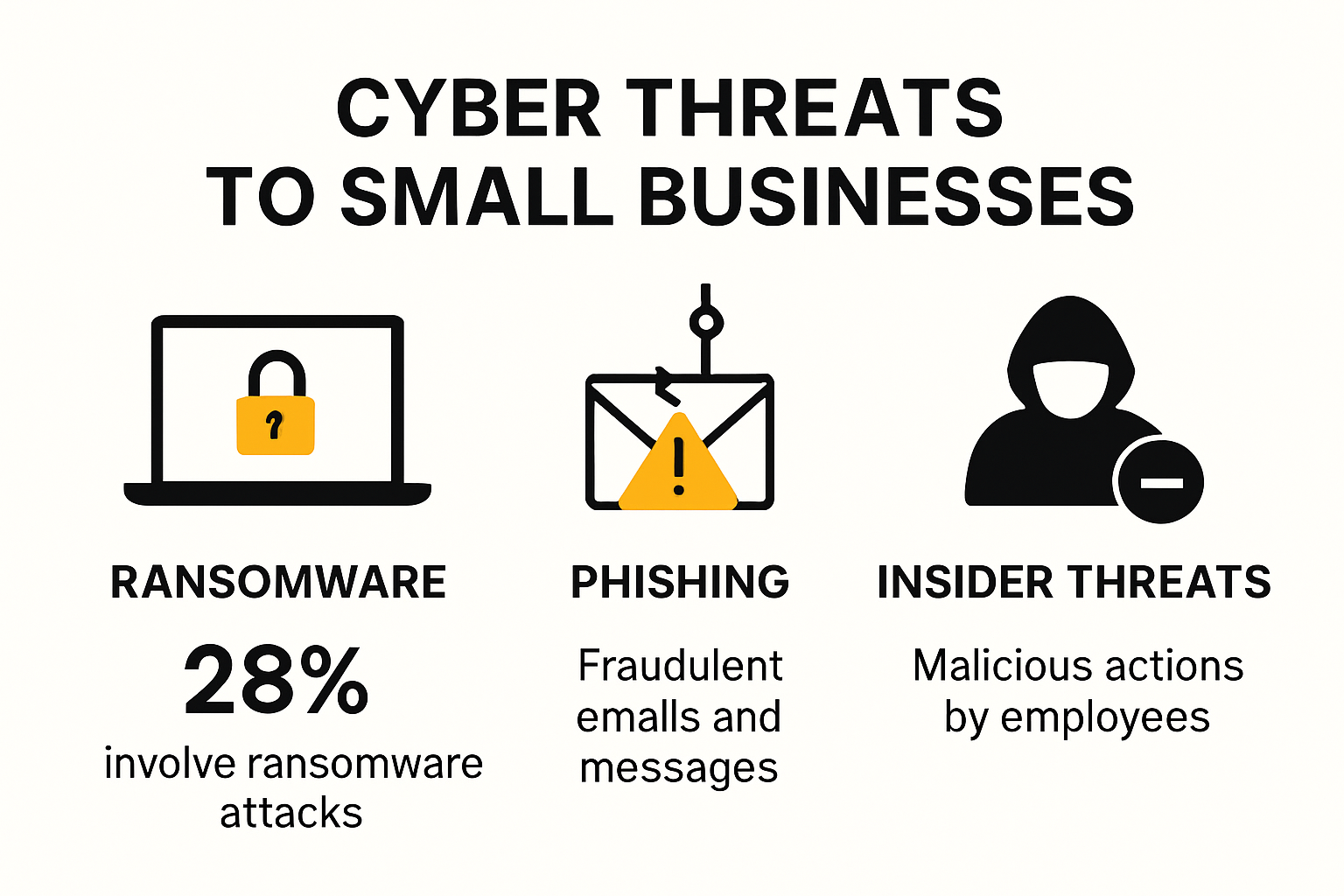
Top Threats Facing Salinas and Monterey Organizations
Cybersecurity threats are evolving rapidly, presenting significant challenges for local businesses in the Monterey Bay Area. Organizations across healthcare, manufacturing, retail, and professional services face a complex landscape of digital risks that require immediate and strategic attention.
Ransomware and Data Extortion Attacks
Financial Times reporting reveals that 94% of IT leaders have experienced significant cyber attacks, with ransomware emerging as a particularly devastating threat. These attacks can cripple local businesses by encrypting critical data and demanding substantial payments for restoration. For Salinas and Monterey organizations, the potential consequences extend beyond immediate financial loss to include operational disruption, reputational damage, and potential permanent data loss.
Ransomware attackers typically target businesses with perceived vulnerabilities, including outdated systems, insufficient backup protocols, and limited employee cybersecurity training. Small to medium-sized businesses are especially attractive targets due to their often less sophisticated security infrastructure.
Social Engineering and Phishing Schemes
According to Axios research, cybersecurity has become the primary concern for small business owners. Social engineering attacks represent a critical threat, exploiting human psychology rather than technical vulnerabilities. These sophisticated schemes involve manipulating employees into revealing sensitive information or granting unauthorized access.
Phishing emails, designed to appear legitimate, can trick staff into clicking malicious links or providing login credentials. Professional services and businesses with 20-500 employees are particularly vulnerable, with 74% expressing significant cybersecurity concerns. Local organizations must implement comprehensive training programs that help employees recognize and respond to these increasingly complex manipulation tactics.
Insider Threats and Technological Vulnerabilities
Internal risks pose an often-overlooked challenge for Monterey Bay Area businesses. Employees with access to critical systems can inadvertently or intentionally compromise network security. This might involve accidentally sharing sensitive information, using weak passwords, or deliberately misusing access privileges.
Technological vulnerabilities continue to emerge, with outdated software, unpatched systems, and inadequate network segmentation creating potential entry points for cybercriminals. Local organizations must adopt a proactive approach, regularly updating systems, implementing strict access controls, and developing comprehensive incident response strategies.
The cybersecurity landscape demands constant vigilance. For Salinas and Monterey businesses, understanding these threats is the first step toward building a robust defense strategy that protects critical assets, maintains operational continuity, and preserves hard-earned customer trust.
To help clarify the main cyber threats facing organizations in the region, here’s a summary table outlining each threat, its primary impact, and typical business vulnerabilities:
| Threat Type | Primary Impact | Typical Vulnerabilities |
|---|---|---|
| Ransomware & Data Extortion | Financial loss, data loss, reputational harm | Outdated systems, poor backups, limited employee training |
| Social Engineering & Phishing | Data theft, unauthorized access | Employee susceptibility, lack of security awareness |
| Insider Threats | Data leaks, sabotage, credential misuse | Weak access controls, poor password practices |
| Technological Vulnerabilities | System compromise, unauthorized entry | Unpatched software, inadequate network segmentation |
Simple Best Practices to Protect Your Business Network
Protecting your business network requires a strategic and comprehensive approach that goes beyond basic technical solutions. Local organizations in the Monterey Bay Area must implement a multi-layered defense strategy that addresses both technological and human factors in network security.
Strong Authentication and Access Controls
The Federal Trade Commission emphasizes the critical importance of robust authentication mechanisms. This means moving beyond simple password systems to implement more advanced security measures. Multi-factor authentication becomes a fundamental requirement for protecting sensitive business systems.
Key strategies include:
- Password Management: Implement complex password requirements with regular rotation
- Role-Based Access: Limit system access based on specific job responsibilities
- Regular Access Audits: Continuously review and update user permissions
Businesses should create a systematic approach to controlling who can access critical network resources. This involves creating clear protocols for granting and revoking access, ensuring that employees only have the minimum necessary permissions to complete their work.
Continuous Training and Security Awareness
Human error remains one of the most significant vulnerabilities in network security. Developing a comprehensive training program that educates employees about potential threats is crucial. This goes beyond annual compliance training to creating a continuous learning environment where staff understand their role in maintaining network security.
Effective training should cover:
- Identifying Phishing Attempts: Teaching employees to recognize suspicious emails and communications
- Safe Internet Practices: Guidelines for secure browsing and data handling
- Incident Reporting: Clear protocols for reporting potential security threats
Organizations must foster a culture of security awareness where every team member understands their responsibility in protecting the business network. This means creating an environment where employees feel comfortable reporting potential security issues without fear of punishment.
Technical Safeguards and Ongoing Maintenance
Technical protection involves a comprehensive approach to network security. This includes implementing robust firewall protections, ensuring regular system updates, and developing a systematic approach to network monitoring and threat detection.
Critical technical safeguards include:
- Regular Software Updates: Consistently patch and update all systems and applications
- Advanced Endpoint Protection: Implement comprehensive antivirus and anti-malware solutions
- Network Segmentation: Divide network into secure zones to limit potential breach impacts
Businesses must view network security as an ongoing process rather than a one-time implementation. This means developing a proactive approach that anticipates potential vulnerabilities and addresses them before they can be exploited.
Implementing these best practices requires commitment and resources. However, the cost of prevention is always significantly lower than the potential damage from a significant security breach. For local businesses in the Monterey Bay Area, network security is not just a technical challenge but a critical business strategy that protects their most valuable assets.
Below is a summary table outlining the core best practices, their objectives, and examples, to help businesses quickly visualize critical actions for securing their network:
| Best Practice Area | Objective | Example Action |
|---|---|---|
| Strong Authentication & Access | Prevent unauthorized access | Use multi-factor authentication, role-based access |
| Continuous Training | Reduce human error in security | Regular phishing awareness workshops |
| Technical Safeguards & Maintenance | Detect, prevent, and respond to threats | Firewall, antivirus, patch management |
Finding Reliable IT Support in Salinas, Monterey, and Gilroy
Choosing the right IT support is a critical decision for businesses in the Monterey Bay Area. Local organizations need a technology partner who understands their unique challenges and can provide responsive, customized cybersecurity solutions that protect their digital infrastructure.
Key Criteria for Selecting IT Support
The U.S. Small Business Administration recommends a comprehensive approach to evaluating potential IT support providers. For businesses in Salinas, Monterey, and Gilroy, this means looking beyond basic technical capabilities to find a partner who offers strategic, proactive cybersecurity management.
Critical factors to consider include:
- Local Expertise: Providers with deep understanding of regional business challenges
- Industry-Specific Knowledge: Experience serving healthcare, manufacturing, retail, and professional services
- Rapid Response Capabilities: Ability to provide immediate support during critical incidents
Businesses should seek IT support that goes beyond reactive problem-solving and offers strategic technology planning that aligns with their specific operational goals.
Evaluating Technical Capabilities and Security Credentials
Effective IT support requires more than technical skills. Local businesses need a partner who can demonstrate a comprehensive approach to network security, risk management, and technology strategy. This means looking for providers with proven credentials, including:
- Cybersecurity Certifications: Verifiable professional credentials in network security
- Compliance Understanding: Knowledge of industry-specific regulatory requirements
- Comprehensive Service Offerings: Ability to provide end-to-end technology support
Local businesses should request detailed information about a provider’s security protocols, incident response strategies, and approach to ongoing technology management. This includes understanding their methodology for threat detection, prevention, and rapid resolution.
Building a Long-Term Technology Partnership
The right IT support provider becomes more than a vendor they become a strategic technology partner. For businesses in the Monterey Bay Area, this means finding a local team that understands the unique challenges of regional organizations and can provide personalized, responsive support.
Key considerations for building a successful partnership include:
- Cultural Alignment: Shared commitment to business goals and technology innovation
- Scalability: Ability to support business growth and evolving technology needs
- Transparent Communication: Clear reporting and proactive technology recommendations
Businesses should view IT support as a critical investment in their operational efficiency and security. The goal is not just to resolve technical issues but to develop a forward-thinking technology strategy that supports business growth and innovation.
In the Salinas, Monterey, and Gilroy business community, choosing the right IT support is about finding a trusted partner who can navigate the complex digital landscape while protecting your most valuable assets. The ideal provider combines technical expertise, local understanding, and a commitment to your organization’s long-term success.

Frequently Asked Questions
What are the basic network security practices for small businesses?
Basic network security practices include strong authentication and access controls, continuous employee training, and implementing technical safeguards like firewalls and regular software updates.
Why are small businesses targeted by cybercriminals?
Small businesses are often targeted because they typically have fewer resources to invest in robust security measures, making them attractive and vulnerable targets for cybercriminals.
How can employee training improve cybersecurity?
Continuous employee training enhances cybersecurity by educating staff on identifying potential threats, such as phishing attempts, and establishing a culture of security awareness within the organization.
What should I look for when selecting IT support for network security?
When selecting IT support, look for local expertise, industry-specific knowledge, and the ability to provide rapid response and comprehensive service offerings tailored to your business’s unique challenges.
Ready to Secure Your Monterey Bay Business Against Cyber Threats?
Most small and medium businesses in the Monterey Bay Area underestimate how fast cyber threats can turn into costly downtime and reputational damage. As outlined in our Network Security Basics guide, critical pain points include gaps in employee training, outdated systems, and inadequate backup or response planning. Worrying about ransomware, phishing, or insider vulnerabilities should not distract you from your daily work. Our local expertise and rapid response ensure you are never left unprotected or uncertain.
SRS Networks specializes in proactive managed IT and network security solutions tailored for Salinas, Monterey, Gilroy, and surrounding communities. We deliver real results, not just technology buzzwords. From custom cybersecurity training to enterprise-grade firewalls and business continuity planning, our team helps you turn best practices into business advantages. Eliminate your fears about compliance gaps or disruptive attacks with a reliable partner who treats your business like their own. Take the next step and see how our personalized services can help you thrive – not just survive – in today’s digital landscape. Schedule a free security assessment at SRS Networks IT Support today and experience true peace of mind for your business.