Businesses in Morgan Hill depend on technology for far more than email and file storage. It supports scheduling, billing, collaboration, customer service, production, remote access, and compliance. When systems are slow, unstable, or exposed to risk, the disruption reaches every department.
SRS Networks provides business IT support built for organizations that need reliability, security, and room to grow. With more than 28 years of experience, the focus is on proactive service, predictable monthly costs, and enterprise-grade guidance for small to mid-sized businesses that want a trusted technology partner rather than a break-fix vendor.
A more stable way to manage IT
Reactive support often costs more than it appears. A short outage can interrupt sales, delay projects, frustrate employees, and expose weak points in security. Many businesses in Morgan Hill have reached a point where waiting for something to fail no longer makes sense.
That is why managed IT services matter. Instead of treating support as a series of emergencies, the environment is monitored, maintained, patched, and reviewed on an ongoing basis. Problems are addressed early. Systems stay more consistent. Teams spend less time working around technology issues and more time getting real work done.
A strong support model usually includes the essentials that keep a business running day after day:
- 24/7 monitoring
- Help desk support
- Patch management
- Server and workstation maintenance
- Vendor coordination
- Strategic IT planning
Managed IT services designed for growing organizations
For many Morgan Hill businesses, hiring a full internal IT department is difficult to justify. The need is still there, though. Users need support, networks need maintenance, software needs oversight, and leadership needs guidance on budgeting, risk, and future upgrades.
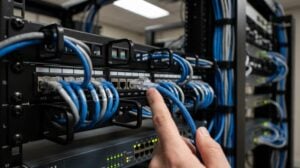
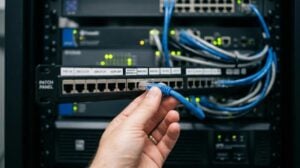
SRS Networks fills that gap with fully managed or co-managed IT services. That can include day-to-day user support, network monitoring, server management, Microsoft 365 administration, hardware lifecycle planning, and coordination with third-party vendors. The result is a single source of accountability across the technology environment.
This approach works especially well for organizations with 15 to 150 employees, where technology is mission-critical but internal bandwidth is limited. A growing firm may need support for a hybrid workforce, new office space, compliance requirements, or a cloud transition, all while keeping costs predictable.
After the initial review of systems, support often centers on a few practical priorities:
- User support: Fast assistance for login problems, software issues, printing, connectivity, and day-to-day troubleshooting.
- Preventive maintenance: Routine updates, patching, system checks, and remediation designed to reduce outages.
- Infrastructure oversight: Monitoring of servers, networks, firewalls, wireless systems, and connected business devices.
- Technology planning: Budgeting, roadmaps, hardware refresh cycles, and guidance for future projects.
- Vendor management: Coordination with internet providers, phone vendors, software publishers, and line-of-business application providers.
Cybersecurity built into everyday operations
Cybersecurity cannot sit off to the side as a separate concern. It needs to be part of how the business operates every day. That is especially true for firms handling financial records, patient data, legal files, customer information, or regulated communications.
Morgan Hill businesses face the same threats seen across the region: phishing, ransomware, credential theft, business email compromise, unpatched systems, and risky remote access practices. A single missed update or compromised password can create a costly chain reaction.
SRS Networks addresses that risk with layered protection. Services may include endpoint detection and response, managed detection and response, firewall administration, email security, multi-factor authentication, vulnerability scanning, encrypted communications, and continuous threat monitoring. Security awareness training also supports the human side of risk, since many incidents start with an employee clicking the wrong link or trusting the wrong message.
Compliance needs are part of that conversation as well. Healthcare organizations may need support around HIPAA safeguards. Financial and professional service firms may need stronger controls for client data, documented processes, and audit readiness. Businesses working with government supply chains may need guidance tied to NIST or CMMC requirements. Security is not just about blocking attacks. It is also about building a defensible, well-documented environment.
Cloud support that fits the business, not the other way around
Cloud adoption should make work easier, more secure, and easier to scale. It should not create confusion, duplicate tools, or rising costs with no clear return.
SRS Networks supports cloud environments with planning, migration, configuration, and long-term management. That includes Microsoft 365, Azure, remote access tools, SharePoint, Teams, cloud storage, identity and access controls, and hybrid environments that combine on-premises systems with cloud platforms. For many businesses, the right answer is not all cloud or all on-premises. It is a practical mix based on workflow, security, and compliance needs.
Cloud support is also closely tied to resilience. Backups, recovery planning, and business continuity matter just as much as email and file access. If a ransomware event, hardware failure, or site outage occurs, the ability to restore operations quickly can protect revenue and client trust.
| Service area | What it can include | Why it matters |
|---|---|---|
| Managed IT | Monitoring, help desk, patching, device support, vendor coordination | Reduces downtime and keeps daily operations consistent |
| Cybersecurity | EDR/MDR, firewall management, MFA, email protection, vulnerability scans | Lowers risk from ransomware, phishing, and account compromise |
| Cloud support | Microsoft 365, Azure, migrations, SharePoint, Teams, identity management | Supports collaboration, remote work, and scalable growth |
| Backup and recovery | Local and cloud backups, disaster recovery planning, recovery testing | Improves business continuity after outages or cyber incidents |
| Network infrastructure | Firewall deployment, switching, wireless, VPNs, SD-WAN | Supports performance, secure connectivity, and multi-site operations |
A good fit for Morgan Hill industries
Not every business uses technology in the same way, and support should reflect that. A medical office has different priorities than a law firm. A manufacturer has different infrastructure needs than a multi-location dealership. A professional services company may depend heavily on Microsoft 365, secure remote access, and document management, while a warehouse or production environment may need stronger network design, wireless coverage, and system uptime.
SRS Networks supports a range of industries, including healthcare, legal, manufacturing, automotive, retail, and other professional service organizations. That matters because industry context shapes security controls, user workflows, compliance expectations, and the urgency of support.
The best IT support is not generic.
What businesses gain from proactive support
When technology is managed with care, the benefits show up across the business. Staff can work with fewer interruptions. Leadership gets clearer visibility into costs and risks. Security controls become more consistent. Growth plans become easier to support.
For many organizations, the biggest gains include:
- Predictable monthly IT costs
- Fewer outages and emergency fixes
- Better support for hybrid and remote teams
- Stronger cybersecurity posture
- Clearer planning for future upgrades
Those outcomes are especially valuable for businesses that are growing, opening new locations, adding staff, or modernizing older systems.
What working with SRS Networks looks like
A productive IT partnership starts with a clear picture of the current environment. That means reviewing infrastructure, users, devices, cloud platforms, backup status, security controls, and any recurring issues that are slowing the business down. From there, priorities can be set based on operational needs, risk level, and budget.
Once support is in place, the work continues behind the scenes through monitoring, maintenance, patching, documentation, and strategic guidance. Issues are addressed before they become larger disruptions. Projects are planned with a long-term view. Leadership gets support that is practical, responsive, and grounded in business goals rather than short-term fixes.
For Morgan Hill companies that want dependable managed IT, stronger cybersecurity, and cloud support that actually supports the way people work, that kind of structure can make all the difference.