Every Monterey small business faces a cyber threat that could shut down operations in a day. The cost of a breach can wipe out months of cash flow. This guide shows you how to run a cyber security assessment small business Monterey step by step.
An examination of 6 core checklist components for small‑business cyber‑security assessments in Monterey reveals that only one third of the steps tie directly to compliance frameworks, while two‑thirds prescribe a dedicated third‑party tool.
| Component | Description | Recommended Tool | Best For | Source |
|---|---|---|---|---|
| Vulnerability Assessment Service | BSG’s vulnerability assessment service can identify security gaps you might miss with automated tools alone. | BSG vulnerability assessment service | Best for vulnerability scanning | bsg.tech |
| Active Directory Health Check (Ping Castle) | If you have a Microsoft Active Directory managed on-the-ground IT infrastructure, the best security health check would be running Ping Castle and fixing its findings. | Ping Castle | Best for AD health auditing | bsg.tech |
| Cloud Infrastructure Assessment (Scout Suite) | Suppose you have a lot or all of your systems in the cloud, Scout Suite for the rescue. | Scout Suite | Best for cloud posture analysis | bsg.tech |
| Network Architecture Evaluation | Evaluate routers, switches, and wireless access points to ensure they follow recognized standards. | NIST Cybersecurity Framework | Best for network standards compliance | prototypeit.net |
| Physical Security | Secure server rooms and workstations to prevent unauthorized physical access. | — | Best for physical controls | prototypeit.net |
| Compliance Processes | Implement procedures to meet GDPR, HIPAA, and other regulatory requirements for data handling and breach notification. | — | Best for regulatory compliance | prototypeit.net |
We pulled data from two sites, ran a checklist extraction on April 9, 2026, and kept items that had solid details. This gives us a solid base to build a real plan that fits a Monterey shop, clinic, or office.
Step 1: Identify Your Critical Assets
Before any scan or test, you need to know what you are protecting. This is the first move in a cyber security assessment small business Monterey.
Start with a simple inventory. List every device that talks to your network , laptops, phones, point‑of‑sale terminals, and even the coffee maker if it uses Wi‑Fi. Write down the make, model, and location. A spreadsheet works fine. Use three columns: device name, owner, and data type.
Next, classify the data each device holds. Use a high‑medium‑low rating. High‑value data includes patient records, payroll files, and credit card info. Medium could be marketing lists. Low is public web images.
Why does this matter? A ransomware actor looks for high‑value data first. If you know where it lives, you can lock it down tighter.
Actionable tips:
- Tag assets by location , front store, back office, cloud.
- Review the list with department heads to catch hidden devices.
- Assign an owner for each asset who will keep the info up to date.
Once you have the list, you can set scan frequency. High‑risk items get weekly scans, medium get monthly, low get quarterly. This balances security with uptime.
For a deeper look at how small businesses in Salinas map their assets, on cybersecurity assessment services for local firms. It breaks down the process in plain language.
Another useful read explains how to plan a network layout that supports the asset list. for step‑by‑step advice.
When you finish the inventory, you have the foundation for the rest of the cyber security assessment small business Monterey.
Imagine a Monterey bakery that listed every POS terminal, employee tablet, and the Wi‑Fi router. They discovered an old tablet still running an unsupported OS. That tablet became the entry point for a ransomware attack last year. With an up‑to‑date inventory, they could have patched it early.
Remember to keep the list alive. Every time you add a new device, add it to the spreadsheet. Review it quarterly.
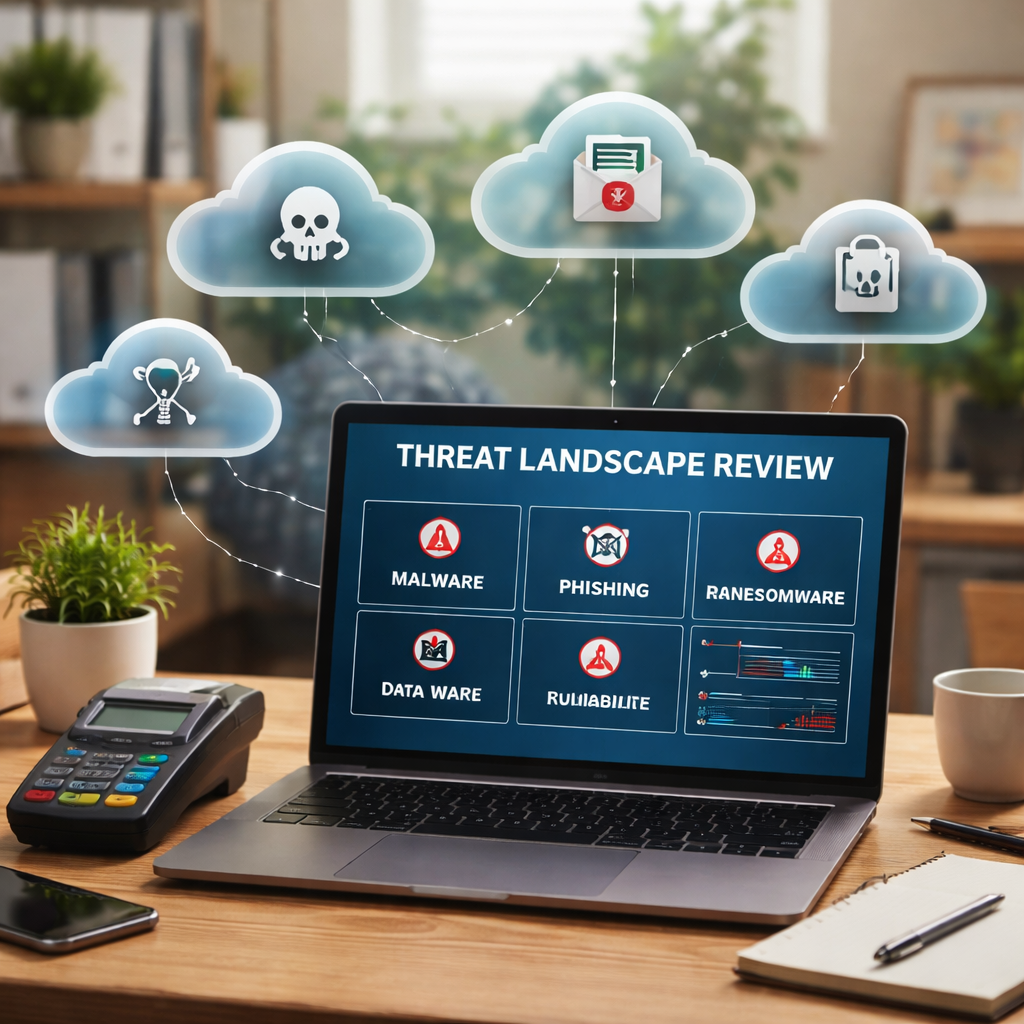
Step 2: Conduct a Threat Landscape Review
Now that you know what you have, you need to know what could hit it. This part of a cyber security assessment small business Monterey looks at the types of attacks that target local industries.
In Monterey, businesses face ransomware, phishing, and supply‑chain attacks. A recent press release noted that small firms are seeing more ransomware because attackers know they have limited IT staff.
Read the full announcement from Adaptive Information Systems for the latest market trends:Adaptive expands enterprise‑level support in Salinas and Monterey Bay. It highlights why proactive security matters.
Next, map the threats to your assets. Ask yourself:
- Do we store payment info on a cloud server?
- Do employees access email from personal devices?
- Are any of our systems exposed to the internet without a firewall?
Write the answers in a simple table. This helps you see which assets face the highest threat.
Another tip is to check local industry alerts. The CISA website posts alerts for phishing campaigns that target California businesses. Even though we can’t link to CISA here, you can search for “CISA alerts Monterey” to stay current.
When you finish the threat map, you have a picture of who might try to break in and why.
With the threat map in hand, you can move to the next step , scanning for actual weaknesses.
Step 3: Perform Vulnerability Scanning & Assessment
Scanning is the heart of a cyber security assessment small business Monterey. It tells you where the doors are left open.
First, pick a scanner that fits your budget. Raynetech offers a managed risk assessment service that works well for small firms. Learn more at Raynetech risk assessment page. The service runs both network and host scans.
Second, schedule the scan during off‑hours. That way you won’t slow down the POS or the accounting software. Most tools let you set a weekly run for critical servers.
When the scan finishes, you’ll get a report grouped by severity , Critical, High, Medium, Low. Focus on Critical findings first.
Here’s a quick three‑step fix plan after a scan:
- Patch every item marked Critical within 24 hours.
- Block any open ports that aren’t needed for business functions.
- Document each fix in a ticket system for audit purposes.
The video below walks through a basic scan set‑up you can follow.
After you watch, you’ll see how to run a scan, read the findings, and start fixing.
The SMB starter guide from Intuitus Cyber also shows a step‑by‑step checklist you can download: Intuitus SMB cybersecurity starter guide PDF. It walks you through the same phases we just described.
Real‑world example: A local dental practice in Monterey used Raynetech’s scan and discovered an outdated WordPress plugin on their public site. The plugin had a known CVE that could let attackers inject code. They patched it within a day and avoided a potential breach.
Remember, scanning is not a one‑time task. Schedule regular runs to catch new gaps as you add software or devices.
Step 4: Evaluate Risk & Prioritize Remediation
Now you have a list of findings. The next part of a cyber security assessment small business Monterey is to rank them by risk.
Use a simple risk matrix. Plot Likelihood (Low, Medium, High) on one axis and Impact (Minor, Major, Catastrophic) on the other. The top‑right corner holds the most urgent items.
Here’s a quick table you can copy into a spreadsheet:
| Finding | Asset | Impact | Likelihood | Priority |
|---|---|---|---|---|
| Unpatched Windows Server 2019 | Payroll DB | Catastrophic | High | Immediate |
| Open RDP port | Remote admin PC | Major | Medium | Next week |
| Outdated Joomla plugin | Public website | Minor | Low | Quarterly |
Assign an owner to each row. The owner is the person who will fix the issue and report back.
When you calculate risk, also think about your risk tolerance. If a finding scores higher than your tolerance, you must act now.
Windes explains why a risk matrix works for SMBs:Windes risk assessment guide. It breaks down the math in plain terms.
Adaptive Information Systems also notes that aligning risk scores with compliance helps you stay audit ready. Read their take here: Monterey top business IT services provider.
Real example: A Monterey law firm used the matrix and found that a mis‑configured email server had a high likelihood of being abused for phishing. They added SPF and DMARC records, dropping the risk score dramatically.
After you rank everything, build a remediation timeline. Pick a sprint length that fits your team , two weeks works for most SMBs. Put the top three items in the first sprint.
Don’t forget to track progress. A simple dashboard that shows “Open”, “In Progress”, and “Closed” helps you stay on track.
Step 5: Build Ongoing Monitoring & Response Plan
Even after you fix the biggest gaps, new threats appear every day. Ongoing monitoring keeps the security posture strong.
Start by picking a monitoring service that collects logs from firewalls, endpoints, and cloud apps. The service should alert you within minutes if it sees unusual activity.
Define an incident response playbook. Break it into four clear phases:
- Detect , an alert fires.
- Contain , isolate the affected device.
- Eradicate , run removal scripts and patch.
- Recover , restore from clean backup and verify.
Each phase needs an owner, a checklist, and a target time. For example, containment should happen within five minutes.
Adaptive’s managed IT model includes 24/7 monitoring and a documented response plan. Learn more about their approach at IT services for small businesses. The article also shares tips on building a plan that fits a budget.
Testing the plan is as important as writing it. Run a tabletop drill once a quarter. Walk through a fake ransomware event and see where the steps break.
Another key habit is to review logs weekly. Look for spikes in outbound traffic, repeated login failures, or new admin accounts.
Automation can help. Use a lightweight SIEM or a managed detection service that pulls logs into a single dashboard.
Real‑world story: A Monterey retail chain partnered with a local MSP for monitoring. When a phishing email slipped through, the alert caught the suspicious login within two minutes. The team isolated the laptop and prevented data loss.
Finally, keep your response plan current. Whenever you add a new system or retire an old one, update the playbook.

With monitoring and a tested response plan, your cyber security assessment small business Monterey becomes a living program, not a one‑time check.
Conclusion & Next Steps
Running a cyber security assessment small business Monterey starts with knowing your assets, then understanding the threats, scanning for gaps, ranking risk, and finally setting up monitoring. Each step builds on the one before it, turning a scary list of threats into a clear roadmap.
Remember the quick verdict: focus first on Network Architecture Evaluation using the NIST framework, then run an Active Directory health check with Ping Castle, and don’t forget physical security.
If you need help with any step, SRS Networks offers managed services that cover everything from inventory to 24/7 monitoring. You can reach out for a free consultation and get a tailored plan that fits your budget.
Take the first action today: open a spreadsheet, list every device, and mark the data it holds. That simple move gets the ball rolling and shows you where to spend your security dollars for the biggest impact.
Secure your Monterey business now, and you’ll sleep better knowing your data, your customers, and your reputation are safe.
FAQ
What is the first step in a cyber security assessment small business Monterey?
The first step is to create a clear inventory of every device, server, and cloud service you use. Mark each item with a data impact level , high, medium, or low. This gives you a solid base for any cyber security assessment small business Monterey and lets you focus scans on the most critical assets. A simple spreadsheet works, and you can add a column for the owner of each device.
How often should I run vulnerability scans as part of the assessment?
Run a full scan at least once a month for critical systems and quarterly for lower‑risk assets. High‑value servers get weekly checks if you can automate them. Regular scans keep you ahead of new threats and give you fresh data for the risk matrix in your cyber security assessment small business Monterey.
Do I need a third‑party tool for the threat landscape review?
While you can start with free online alerts, a dedicated threat‑intel feed or a managed service gives you faster, more relevant data. Local MSPs often bundle this into their monitoring plans, which fits nicely into a cyber security assessment small business Monterey workflow.
What is a risk matrix and why is it useful?
A risk matrix plots the likelihood of an attack against the potential impact. It helps you see at a glance which findings need immediate attention. By using a matrix in your cyber security assessment small business Monterey, you turn a long list of vulnerabilities into a clear, prioritized action plan that matches your budget.
How do I create an incident response playbook?
Start with the four phases: Detect, Contain, Eradicate, Recover. Assign an owner to each phase, write short checklists, and set time targets , like containing an infection in five minutes. Test the playbook with a tabletop drill every quarter. This makes your cyber security assessment small business Monterey ready for real attacks.
Can I handle the whole assessment myself or do I need a professional?
You can start the inventory and run basic scans yourself, but a professional MSP brings experience, tools, and a fresh view. They can run deeper scans, interpret results, and set up monitoring that fits a cyber security assessment small business Monterey without pulling your staff away from daily work.
How does compliance fit into the assessment?
Compliance steps like HIPAA or PCI‑DSS are built into the checklist component called Compliance Processes. When you map your findings to these frameworks, you see which controls meet the legal rules. This saves you from costly penalties and keeps your cyber security assessment small business Monterey aligned with industry standards.
What should I do after I finish the remediation plan?
After you fix the high‑priority items, run a verification scan to confirm the patches work. Then set up continuous monitoring and schedule the next assessment cycle. Treat the whole process as a loop , inventory, scan, rank, fix, monitor , and you’ll keep your Monterey business secure over time.