Earthquakes, wildfires, and tech outages threaten Bay Area businesses at any moment. Most organizations believe they are prepared, yet studies show that 40 percent of small businesses never reopen after a disaster. This means that the real risk is not just the disaster itself but failing to plan for the unexpected—and the difference between survival and closure comes down to more than just luck.
Table of Contents
- Understanding Business Continuity Basics
- Why Business Continuity Matters For Bay Area Organizations
- Key Elements Of An Effective Continuity Plan
- Steps To Build Your Own Business Continuity Strategy
Quick Summary
| Takeaway | Explanation |
|---|---|
| Implement a Risk Assessment | Identify potential threats to minimize operational disruption. Regular risk assessments highlight vulnerabilities and enable focused preparedness strategies. |
| Develop Recovery Strategies | Establish clear protocols for restoring critical business functions. This ensures rapid responses to various disruption scenarios, maintaining operational stability. |
| Engage Leadership in Planning | Involve executives in identifying essential business functions and allocating resources. Leadership commitment is crucial for an effective business continuity strategy. |
| Continuously Test and Update Plans | Regular simulations and updates keep continuity plans relevant. Ongoing training ensures that employees are prepared and responsive during emergencies. |
| Document Critical Functions | Map out essential processes that must continue during disruptions. Understanding these functions aids in prioritizing recovery efforts and resource allocation. |

|
Understanding Business Continuity Basics
Business continuity represents a critical strategic approach that enables organizations to maintain essential functions during and after unexpected disruptions. At its core, business continuity is about organizational resilience and preparedness. Learn more about our disaster recovery strategies that help businesses stay operational under challenging circumstances.
What Exactly is Business Continuity?
Business continuity goes beyond simple emergency response. According to Ready.gov, it is the capability of an organization to continue delivering products or services at acceptable predefined levels following a disruptive incident. This comprehensive approach involves identifying potential threats, understanding their potential impacts, and developing strategic plans to ensure minimal operational interruption.
The primary goal of business continuity is not just survival but maintaining critical business functions during unexpected events. This might include natural disasters, cybersecurity incidents, technological failures, or global pandemics. Organizations must create robust frameworks that allow them to quickly adapt and respond to various scenarios that could potentially halt their operations.
Key Components of a Business Continuity Plan
Effective business continuity planning involves several critical components. The US Small Business Administration emphasizes the importance of a comprehensive approach that includes:
Below is a table summarizing the key components of a business continuity plan, as outlined in the article. This helps readers quickly identify essential elements to include in their own continuity planning process.
| Component | Description |
|---|---|
| Risk Assessment | Identify potential threats and organizational vulnerabilities |
| Critical Function Mapping | Document essential business processes to maintain during disruptions |
| Recovery Strategies | Develop clear protocols to restore key operational capabilities |
| Communication Protocols | Establish internal and external communication channels for emergencies |
- Risk Assessment: Systematically identifying potential threats and vulnerabilities specific to your organization
- Critical Function Mapping: Documenting essential business processes that must continue during disruptions
- Recovery Strategies: Developing clear protocols for maintaining or rapidly restoring key operational capabilities
- Communication Protocols: Establishing reliable communication channels for employees, stakeholders, and customers during emergencies
For Bay Area organizations, business continuity planning is not just a theoretical exercise but a practical necessity. The region’s unique geographic and technological landscape presents specific challenges that require tailored, proactive strategies. Businesses must consider potential disruptions ranging from seismic activities to technological infrastructure failures.
The complexity of modern business environments demands a dynamic and flexible approach to continuity planning. It is no longer sufficient to have a static document that sits on a shelf. Instead, organizations need living, adaptable plans that can be quickly modified as business landscapes and potential risks evolve.
Implementing a robust business continuity strategy requires commitment from leadership, investment in appropriate technologies, and ongoing training and simulation exercises. By prioritizing preparedness and resilience, businesses can transform potential vulnerabilities into opportunities for demonstrating organizational strength and adaptability.
Why Business Continuity Matters for Bay Area Organizations
Bay Area organizations operate in a complex and dynamic environment that demands exceptional resilience and strategic preparedness. The unique geographical, technological, and economic landscape of this region creates distinctive challenges that make business continuity not just a recommendation, but a critical survival strategy. Learn more about our disaster recovery strategies to understand how local businesses can protect their operations.
Geographic and Environmental Risks
The Bay Area’s distinctive geological characteristics present significant operational challenges. Located in a seismically active region, organizations must contend with the constant potential for earthquake disruptions. According to the U.S. Geological Survey, the San Francisco Bay Area sits near multiple active fault lines, including the notorious San Andreas Fault, which increases the likelihood of sudden, potentially catastrophic seismic events.
Beyond earthquakes, the region also faces additional environmental risks such as wildfires, periodic drought conditions, and potential flooding. These natural phenomena can rapidly interrupt business operations, making comprehensive continuity planning not just prudent, but essential for organizational survival. Companies must develop robust strategies that account for these environmental uncertainties.
Economic and Technological Implications
For Bay Area organizations, particularly those in technology and innovation sectors, operational interruptions can have cascading economic consequences. The Small Business Administration emphasizes that business continuity planning helps minimize downtime, protect critical assets, and maintain competitive positioning.
In a region known for its rapid technological innovation and competitive business ecosystem, even short-term disruptions can result in significant financial losses and potential long-term reputation damage. Investors, partners, and clients expect sophisticated risk management approaches that demonstrate organizational resilience and strategic foresight.
Technology startups, established tech firms, healthcare providers, and financial institutions in the Bay Area must recognize that business continuity is more than a contingency plan—it is a fundamental component of strategic business management. The ability to quickly adapt, recover, and maintain critical functions during unexpected events separates successful organizations from those that struggle to survive.
The economic stakes are particularly high in this region. With venture capital investments, complex supply chains, and a workforce that depends on seamless technological infrastructure, organizations cannot afford prolonged operational disruptions. Business continuity planning becomes a critical mechanism for protecting human capital, technological investments, and organizational momentum.
Moreover, regulatory environments in sectors like healthcare, finance, and technology demand rigorous continuity strategies. Compliance requirements often mandate comprehensive risk assessment and recovery protocols, making business continuity not just a strategic choice but a legal necessity.
By investing in robust business continuity frameworks, Bay Area organizations can transform potential vulnerabilities into opportunities for demonstrating operational excellence, building stakeholder confidence, and maintaining competitive advantage in an increasingly unpredictable business landscape.
Key Elements of an Effective Continuity Plan
Developing a comprehensive business continuity plan requires strategic thinking, meticulous planning, and a holistic approach to organizational resilience. Explore our approach to disaster recovery to understand how technology supports effective continuity strategies.
Risk Assessment and Functional Analysis
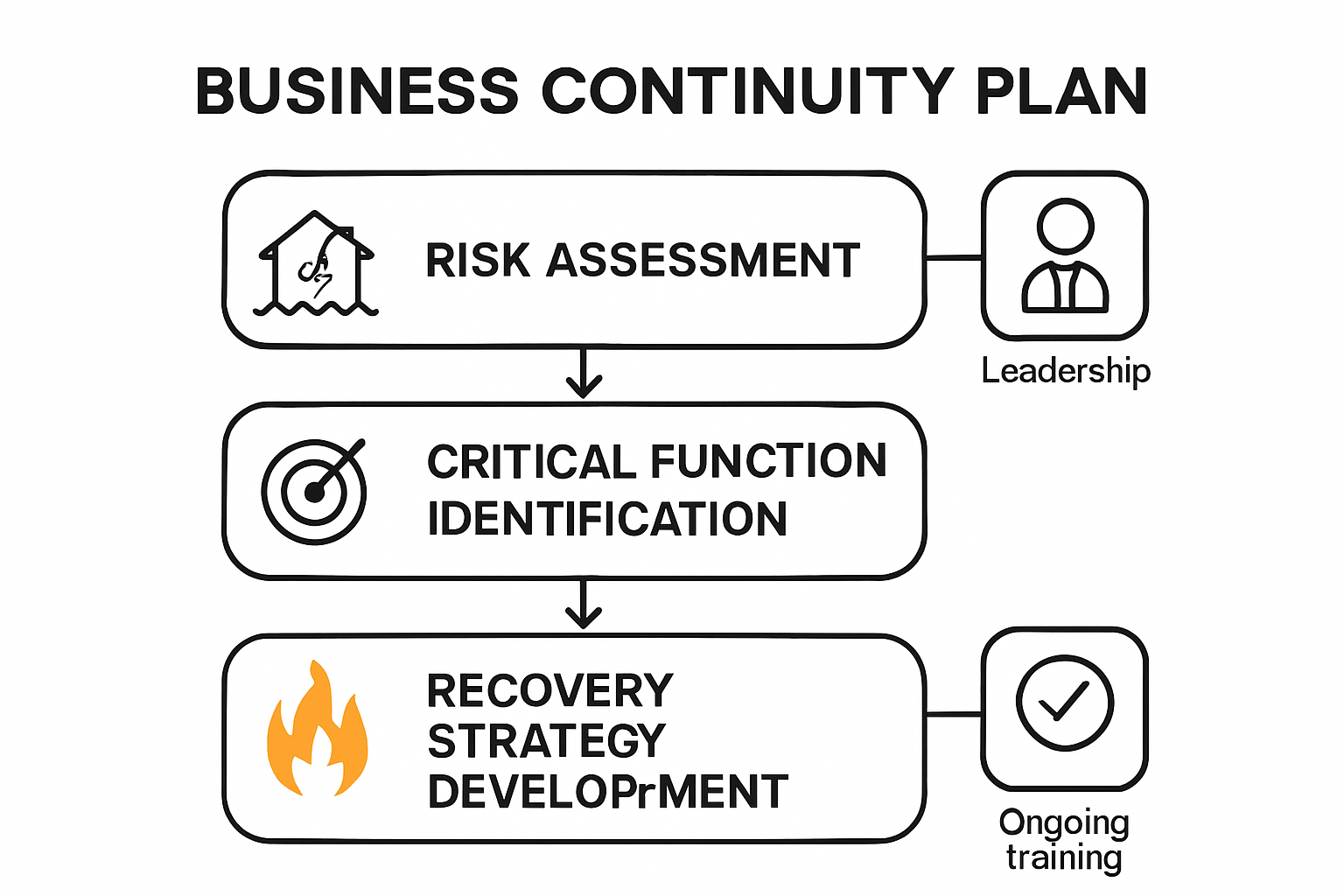
A robust business continuity plan begins with thorough risk assessment. According to the Utah Department of Public Safety, organizations must systematically identify potential threats and vulnerabilities that could disrupt operations. This process involves comprehensive analysis of internal and external risks, ranging from natural disasters to technological failures and cybersecurity threats.
Critical function mapping is a crucial component of this assessment. Organizations must carefully document and prioritize essential business processes that must continue during disruptions. This involves conducting a detailed business impact analysis that examines the potential consequences of operational interruptions and determines the minimum acceptable level of service delivery.
Comprehensive Planning and Resource Allocation
The Government Finance Officers Association emphasizes the importance of developing a multi-layered continuity strategy that goes beyond simple emergency response. Effective plans must include:
- Personnel Assignments: Clearly defined roles and responsibilities during emergency scenarios
- Communication Protocols: Robust communication channels for internal and external stakeholders
- Technology Backup: Comprehensive data protection and system recovery strategies
- Alternative Operations: Predetermined backup locations and alternative operational methods
Resource allocation is a critical aspect of continuity planning. Organizations must invest in technologies, training, and infrastructure that support rapid response and recovery. This includes maintaining emergency supplies, protecting vital records, and ensuring financial resilience to weather unexpected disruptions.
Testing, Training, and Continuous Improvement
A continuity plan is only as effective as its implementation. Vermont Emergency Management recommends regular testing and evaluation of continuity strategies. This involves conducting periodic simulation exercises, training employees, and continuously refining the plan based on lessons learned and emerging technological capabilities.
Organizations should develop a culture of preparedness that extends beyond documentation. This means regular training sessions, scenario planning, and creating a flexible framework that can adapt to changing business environments and emerging risks.
Cybersecurity plays an increasingly critical role in business continuity planning. Modern continuity strategies must incorporate robust digital protection mechanisms, including data backup systems, secure communication channels, and comprehensive incident response protocols.
For Bay Area organizations, particularly those in technology and innovation sectors, business continuity planning is not a static process but a dynamic, ongoing commitment to organizational resilience. By developing comprehensive, adaptable strategies that address technological, environmental, and operational risks, businesses can transform potential vulnerabilities into opportunities for demonstrating strategic excellence and maintaining competitive advantage.
Steps to Build Your Own Business Continuity Strategy
Building a comprehensive business continuity strategy requires a systematic and strategic approach that addresses the unique challenges of your organization. Learn about our comprehensive disaster recovery solutions to understand how professional support can enhance your planning process.
The following table outlines the main steps to build a business continuity strategy, providing a structured overview for organizations starting their planning journey.
| Step | Main Activities |
|---|---|
| Initial Assessment and Preparation | Identify critical functions, map processes, assess vulnerabilities, involve leadership |
| Developing Recovery Strategies | Create recovery procedures, establish backup systems, set roles during emergencies |
| Implementation and Continuous Improvement | Conduct training, test plans, review and update strategies, develop feedback loops |
Initial Assessment and Preparation
The foundation of an effective business continuity strategy begins with a thorough organizational assessment. According to Ready.gov, the first critical step is identifying and documenting your organization’s most critical business functions. This involves conducting a comprehensive business impact analysis that examines which processes are essential for maintaining core operations during potential disruptions.
Key activities in this initial phase include:
- Mapping out all organizational processes and their interdependencies
- Determining the minimum acceptable level of service for each critical function
- Identifying potential vulnerabilities and single points of failure
- Assessing the potential financial and operational impacts of potential disruptions
Leadership engagement is crucial during this initial assessment. Executives and department heads must provide insights into the most critical operational aspects and commit resources to developing a robust continuity strategy.
Developing Comprehensive Recovery Strategies
Once critical functions are identified, organizations must develop detailed recovery strategies. This involves creating specific protocols for maintaining or rapidly restoring essential business operations under various potential scenarios. Effective strategies should address multiple potential disruption types, including technological failures, natural disasters, cybersecurity incidents, and unexpected market changes.
Key components of recovery strategy development include:
- Creating detailed step-by-step recovery procedures
- Establishing alternative work locations and communication channels
- Developing data backup and system restoration protocols
- Creating redundant technological infrastructure
- Establishing clear roles and responsibilities during emergency scenarios
Technology plays a critical role in modern continuity strategies. Organizations must invest in flexible technological solutions that support remote work, data protection, and rapid system recovery. This includes cloud-based systems, secure communication platforms, and comprehensive data backup solutions.
Implementation and Continuous Improvement
A business continuity strategy is not a one-time document but a living framework that requires ongoing attention and refinement. Organizations must implement a continuous improvement process that includes regular training, periodic plan testing, and systematic updates based on changing business environments and emerging risks.
Critical implementation steps include:
- Conducting regular training sessions for employees
- Performing periodic simulation exercises
- Developing a culture of preparedness and risk awareness
- Establishing mechanisms for ongoing plan review and update
- Creating feedback loops to incorporate lessons learned from each training or actual emergency scenario
For Bay Area organizations, especially those in technology and innovation sectors, business continuity strategy development is not just about risk mitigation but about building organizational resilience. By approaching continuity planning as a strategic opportunity rather than a compliance requirement, businesses can transform potential vulnerabilities into competitive advantages.
Successful business continuity strategies require a holistic approach that balances technological solutions, human preparedness, and adaptive thinking. Organizations that view continuity planning as an ongoing process of organizational learning and improvement will be best positioned to navigate unexpected challenges and maintain operational excellence.
Frequently Asked Questions
What is business continuity?
Business continuity refers to the capacity of an organization to maintain essential functions during and after unexpected disruptions, ensuring minimal operational interruption.
Why is business continuity important for Bay Area organizations?
Given the Bay Area’s unique geographic risks, such as earthquakes and wildfires, business continuity planning is crucial for organizations to survive and maintain operations during adverse events.
What are the key components of a business continuity plan?
Key components include risk assessment, critical function mapping, recovery strategies, and communication protocols to ensure effective operations during disruptions.
How can organizations effectively test their business continuity plans?
Organizations can test their plans through regular simulation exercises, training sessions, and systematic evaluations, incorporating feedback to continuously improve their strategies.
Secure Your Bay Area Business With Local IT Experts Who Understand Business Continuity
Realizing that 40 percent of small businesses never reopen after a disaster is eye-opening. The article highlights how operational interruptions, whether from earthquakes, fires, or tech outages, can put not only your data but your future at risk. You need a true partner who knows local challenges and can protect what matters most.
If you are serious about building a business continuity plan that goes beyond paperwork and actually keeps your doors open no matter what, SRS Networks delivers what Bay Area organizations need. Our tailored data backup and business continuity solutions are designed for the real threats you face every day. We help you identify critical processes, establish flexible recovery plans, and provide hands-on support so your business never skips a beat. Expert guidance is just around the corner.
Ready to see where your organization stands? Connect with us at SRS Networks to schedule a business continuity assessment today. Protect your growth, reputation, and peace of mind with a local IT partner who puts your business first. Do not let a single moment of downtime put everything you have built at risk. Act now.