Cyber attacks are hitting businesses harder than ever and small companies are now three times more likely to be targeted by online criminals. That sounds shocking when most people assume cyber threats only happen to big corporations. The real surprise is weak cyber hygiene can cost a single business over $200,000 with just one breach and many never fully recover.
Table of Contents
- What Are Cyber Hygiene Best Practices?
- Why Cyber Hygiene Matters For Your Business
- How Cyber Hygiene Practices Protect Against Threats
- Key Concepts For Effective Cyber Hygiene
- Real-World Implications Of Strong Cyber Hygiene
Quick Summary
| Takeaway | Explanation |
|---|---|
| Continuous Cyber Hygiene is Essential | Cyber hygiene is an ongoing process, not a one-time task. Regular assessments and updates are necessary to protect digital systems effectively. |
| Employee Training Is Crucial | Consistent training ensures that employees recognize threats and understand their role in maintaining security, fostering a culture of awareness and responsibility. |
| Implement Robust Security Protocols | Establish clear protocols for access control, password management, and threat reporting to create multiple layers of defense against potential cyber threats. |
| Understand Economic Impacts of Breaches | Poor cyber hygiene can lead to financial losses over $200,000 and harm customer trust, making it vital to prioritize effective practices now. |
| Develop a Security-Centric Culture | Cultivating an organizational mindset focused on security promotes proactive behaviors and equips employees to mitigate risks effectively. |
What are Cyber Hygiene Best Practices?
Cyber hygiene represents a comprehensive approach to maintaining and protecting digital systems, networks, and data from potential security threats. Similar to personal hygiene practices that prevent illness, cyber hygiene involves consistent, proactive measures designed to safeguard an organization’s technological infrastructure.
Understanding the Core Principles
At its foundation, cyber hygiene encompasses systematic practices that reduce vulnerability and minimize potential security risks. These practices involve regular assessment, maintenance, and protection of digital assets. Organizations must recognize that cyber hygiene is not a one-time event but an ongoing process requiring continuous attention and adaptation.
According to NIST Guidelines, effective cyber hygiene involves several critical components:
- Identifying and classifying sensitive data
- Implementing robust access controls
- Maintaining updated software and hardware systems
- Conducting regular security assessments
- Training employees on potential digital threats
Key Strategic Approaches
Successful cyber hygiene strategies require a holistic approach that integrates technological solutions with human awareness. This means developing comprehensive policies that address technical vulnerabilities while simultaneously educating team members about potential risks.
Businesses must focus on creating a security-conscious culture where every employee understands their role in protecting digital assets. This involves implementing clear protocols for password management, recognizing potential phishing attempts, and understanding the importance of reporting suspicious activities.
By treating cyber hygiene as a fundamental aspect of organizational strategy, companies can significantly reduce their exposure to potential security breaches and maintain the integrity of their digital ecosystems.
Below is a table summarizing the core principles and strategic approaches that define effective cyber hygiene, helping to clarify how each element contributes to a secure business environment.
| Principle/Approach | Description |
|---|---|
| Identifying and Classifying Data | Determining which data is sensitive and needs special protection. |
| Access Controls | Restricting access to digital resources based on user roles and necessity. |
| System Updates | Keeping software and hardware up to date to minimize vulnerabilities. |
| Security Assessments | Regularly evaluating systems and processes to identify and address potential risks. |
| Employee Training | Educating staff on recognizing threats and following secure practices. |
| Culture of Security | Building an organizational mindset where security is a shared responsibility across all teams. |
Why Cyber Hygiene Matters for Your Business
In today’s interconnected digital landscape, cyber hygiene has transformed from an optional strategy to an essential business survival skill. Small and medium-sized businesses face unprecedented cybersecurity challenges that can potentially compromise their entire operational infrastructure.
The Real Economic Impact of Cyber Vulnerabilities
Businesses are increasingly becoming prime targets for cybercriminals seeking to exploit technological weaknesses. According to CISA, small businesses are three times more likely to be targeted by online criminals, with potential financial losses that can critically damage or completely destroy an organization.
The economic consequences of poor cyber hygiene are substantial:
- Average cost of a single data breach can exceed $200,000
- Potential permanent loss of customer trust
- Significant disruption to business operations
- Potential legal and regulatory penalties
- Long-term reputational damage
Protecting Your Digital Ecosystem
Cyber hygiene is not merely about implementing technological solutions but creating a comprehensive security culture. This involves understanding that every digital interaction represents a potential entry point for malicious actors. Businesses must develop proactive strategies that address technological vulnerabilities while simultaneously cultivating employee awareness and responsible digital behavior.
By investing in robust cyber hygiene practices, organizations can create resilient digital environments that protect critical assets, maintain customer confidence, and demonstrate a commitment to technological responsibility. The goal is not just preventing attacks but building a adaptive security framework that evolves with emerging digital threats.
How Cyber Hygiene Practices Protect Against Threats
Cyber hygiene practices serve as a comprehensive defense mechanism designed to protect digital assets from an increasingly sophisticated landscape of cyber threats. By implementing strategic protocols and proactive monitoring, businesses can create multiple layers of protection that significantly reduce their vulnerability to potential security breaches.
Understanding Threat Mitigation Strategies
Effective cyber hygiene goes beyond simple protective measures. It involves creating a dynamic, adaptive security environment that anticipates and neutralizes potential risks before they can cause significant damage. This requires a multifaceted approach that addresses both technological vulnerabilities and human factors.
According to NIST Guidelines, comprehensive cyber hygiene involves several critical defensive strategies:
- Implementing robust access control mechanisms
- Conducting regular vulnerability assessments
- Maintaining updated software and security patches
- Encrypting sensitive data transmission
- Establishing clear incident response protocols
Layered Defense Mechanisms
Cyber hygiene functions like a sophisticated security system, creating multiple barriers that make unauthorized access increasingly difficult. Each layer represents a different defensive strategy, working together to provide comprehensive protection. These layers include network security, endpoint protection, user authentication, and continuous monitoring systems.
By treating cybersecurity as an integrated ecosystem rather than isolated components, businesses can develop a more resilient and adaptive defense strategy. This approach recognizes that threats are constantly evolving and requires continuous learning, updating, and refinement of security protocols.
The ultimate goal of cyber hygiene is not just preventing attacks but creating a proactive security environment that can quickly identify, isolate, and neutralize potential threats before they can cause significant operational or financial damage.
Key Concepts for Effective Cyber Hygiene
Cyber hygiene represents a sophisticated approach to digital security that goes beyond traditional protective measures. It requires a comprehensive understanding of interconnected technological and human factors that collectively contribute to robust organizational defense strategies.
Fundamental Security Principles
Establishing effective cyber hygiene demands a holistic perspective that integrates technological solutions with strategic human behavior. Organizations must develop a nuanced framework that addresses potential vulnerabilities across multiple dimensions of digital interaction.
According to U.S. Small Business Administration, critical cyber hygiene concepts include:
- Comprehensive employee training programs
- Robust authentication mechanisms
- Systematic software and hardware updates
- Regular security vulnerability assessments
- Proactive threat monitoring and response protocols
Developing a Security-Conscious Culture
Successful cyber hygiene transcends technological implementations and requires cultivating a organizational mindset where every team member understands their role in maintaining digital security. This means creating an environment where security awareness becomes an intrinsic part of daily operational processes.
Effective cyber hygiene strategies demand continuous education, adaptive thinking, and a commitment to understanding emerging digital risks. By transforming security from a technical requirement into a shared organizational responsibility, businesses can develop more resilient and responsive defense mechanisms that anticipate and neutralize potential threats before they can cause significant damage.

Real-World Implications of Strong Cyber Hygiene
Cyber hygiene is not merely a theoretical concept but a critical business survival strategy with tangible, far-reaching consequences. Organizations that implement robust digital protection mechanisms can significantly mitigate risks and protect their operational integrity against increasingly sophisticated cyber threats.
Financial and Operational Consequences
The financial impact of poor cyber hygiene can be devastating for businesses. Cyber incidents can result in substantial monetary losses, including direct expenses related to breach recovery, potential legal penalties, and long-term reputational damage. Small businesses are particularly vulnerable, with potential losses that could potentially bankrupt an organization.
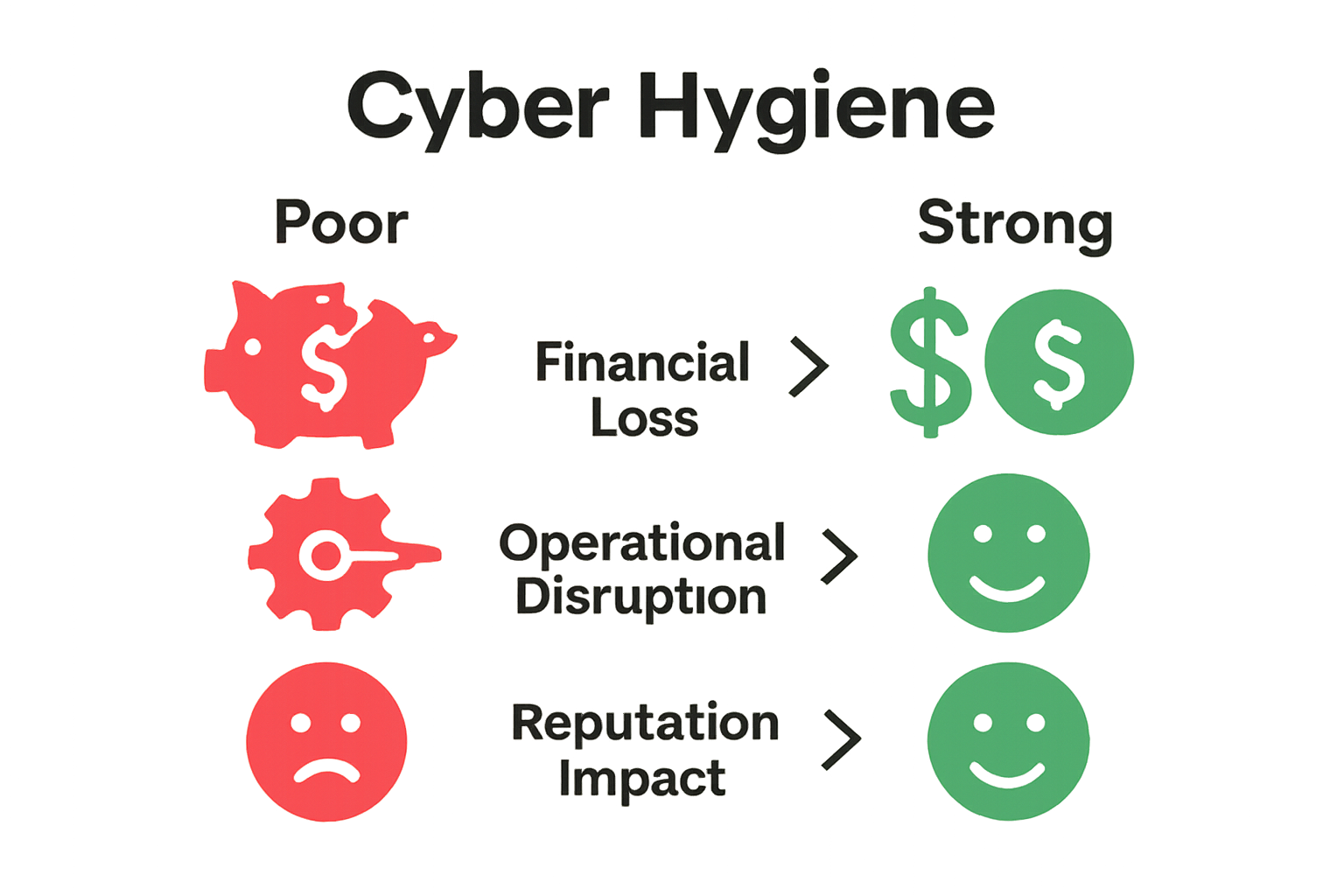
According to CISA, the real-world implications of cyber incidents include:
- Potential financial losses exceeding $200,000 per incident
- Significant operational disruption
- Permanent loss of customer trust
- Potential legal and regulatory penalties
- Risk of permanent business closure
Reputation and Trust Management
Strong cyber hygiene extends beyond technical protection. It represents a commitment to maintaining customer confidence and demonstrating organizational responsibility. Businesses that prioritize digital security signal to clients, partners, and stakeholders that they take data protection seriously.
Moreover, in an era of increased digital transparency, a single significant cyber incident can irreparably damage an organization’s reputation. Customers expect businesses to protect their sensitive information, and failure to do so can lead to immediate and lasting erosion of trust.
The following table presents key statistics and real-world impacts of poor versus strong cyber hygiene based on the article’s information, to highlight the importance of effective security practices for businesses.
| Impact Area | Poor Cyber Hygiene Outcome | Strong Cyber Hygiene Outcome |
|---|---|---|
| Financial Losses | Can exceed $200,000 per breach | Financial risk significantly reduced |
| Customer Trust | Potential permanent loss of trust | Maintained or improved trust |
| Business Operations | Significant disruption, possible closure | Resilient, continued operations |
| Legal/Regulatory Penalties | Higher risk due to non-compliance | Reduced legal and regulatory exposure |
| Reputation | Long-term or permanent damage | Reputation protected and enhanced |
Level Up Your Business with Trusted Cyber Hygiene Experts in Central California
Digital threats are always evolving. You know that simply reading about cyber hygiene best practices is not enough. If you are worried about data breaches, financial loss, or losing customer trust, you are not alone. Many local organizations feel the rising pressure to stay secure while still focusing on business growth. It can be tough to handle regular security assessments, software patching, and employee training all at once. Letting gaps exist could mean exposing your business to real-world risks, just like those outlined in this article. Protecting your digital assets and reputation starts with the right partner.
Partner with SRS Networks for customized, affordable IT solutions that put security first. Experience reliable Cybersecurity Solutions designed for businesses in Salinas, Monterey, Hollister, and beyond. Whether you need proactive threat monitoring, employee awareness training, or a full technology roadmap, SRS Networks makes it simple and scalable. Act now to build a more resilient business and secure your future. Ready to get started? Visit our main site to reach out for a tailored consultation.
Frequently Asked Questions
What is cyber hygiene?
Cyber hygiene refers to a comprehensive approach to maintaining and protecting digital systems, networks, and data from security threats through consistent and proactive measures.
Why is cyber hygiene important for businesses?
Cyber hygiene is crucial for businesses, particularly small and medium-sized ones, as it helps protect against cyber threats that could lead to substantial financial losses and reputational damage.
What are some key cyber hygiene practices?
Key practices include identifying and classifying sensitive data, implementing robust access controls, maintaining updated software and hardware, conducting regular security assessments, and training employees on digital threats.
How can businesses create a culture of cyber hygiene?
Businesses can foster a culture of cyber hygiene by educating employees on their security roles, creating clear protocols for cybersecurity practices, and promoting awareness of potential threats like phishing attempts.