Cloud computing is reshaping healthcare and now even the most sensitive patient data can be accessed and shared securely from anywhere. This shift is not just about convenience. Hospitals using cloud solutions can cut IT costs by up to 30 percent and still manage enormous streams of medical information in real time. Most people expect high technology to make hospitals colder and more complex but the real surprise is how cloud computing has made healthcare more personal, more accessible, and safer for patients than ever before.
Table of Contents
- What Is Cloud Computing And Its Role In Healthcare?
- Why Cloud Computing Matters For Healthcare Providers
- How Cloud Computing Operates In Health Systems
- Key Concepts Of Cloud Technology In Healthcare
- Real-World Applications Of Cloud Computing In Healthcare
Quick Summary
| Takeaway | Explanation |
|---|---|
| Cloud computing increases healthcare efficiency | By utilizing remote servers, healthcare organizations enhance data access and reduce operational complexities. |
| It offers significant cost savings | Transitioning to cloud solutions minimizes upfront IT expenses and provides predictable monthly costs. |
| Advanced security measures are crucial | Cloud systems employ robust encryption and compliance protocols to protect sensitive patient information. |
| Promotes collaboration in medical research | Cloud technologies facilitate sharing and processing of large datasets, enhancing scientific collaboration and innovation. |
| Scalability is a key advantage | Healthcare providers can adjust resources in real-time to meet changing demands without significant investments. |
What is Cloud Computing and Its Role in Healthcare?
Cloud computing represents a revolutionary technological approach that transforms how healthcare organizations store, process, and share critical medical information. At its core, cloud computing involves using remote internet-hosted servers to manage and process digital data, offering healthcare providers unprecedented flexibility and efficiency in handling complex medical systems.
Understanding Cloud Computing Fundamentals
Cloud computing in healthcare enables medical professionals to access, store, and share patient information through secure, scalable digital platforms. According to the National Institutes of Health, this technology provides on-demand access to health resources, reducing the need for expensive onsite IT infrastructure.
Key characteristics of cloud computing in healthcare include:
- Scalability: Rapidly expand or contract digital storage and computational resources
- Cost-effectiveness: Reduce hardware investments and maintenance expenses
- Enhanced collaboration: Enable seamless information sharing across medical teams and institutions
Technical Architecture and Benefits
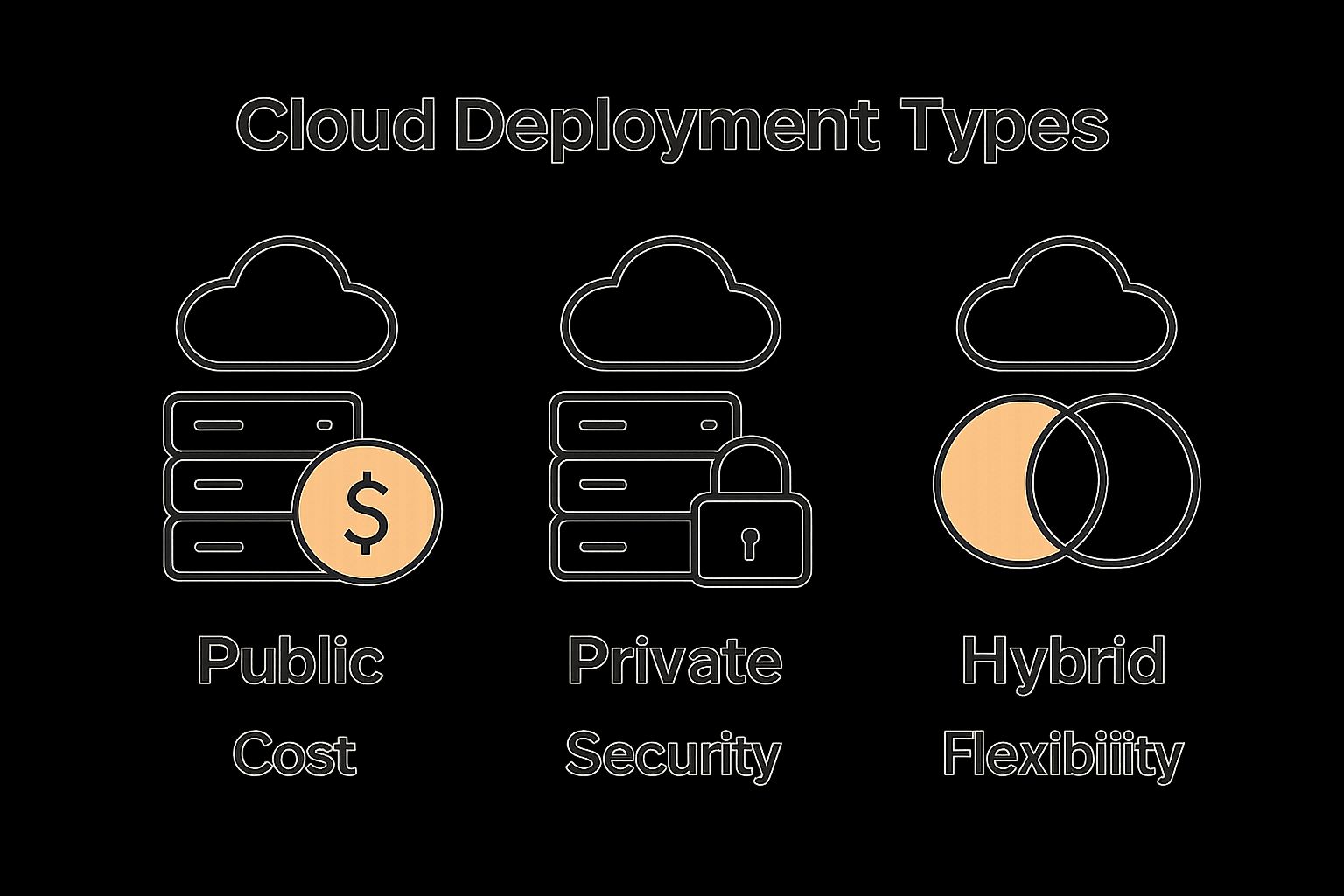
Healthcare cloud computing utilizes three primary deployment models: public, private, and hybrid cloud systems. Each model offers unique advantages for medical organizations. Public clouds provide shared resources with lower costs, private clouds ensure maximum security for sensitive patient data, and hybrid clouds combine the strengths of both approaches.
Below is a comparison of the three main cloud deployment models used in healthcare, highlighting their core characteristics and ideal use cases.
| Deployment Model | Key Characteristics | Best For |
|---|---|---|
| Public Cloud | Shared resources, lower cost, less control | Organizations with less stringent security needs |
| Private Cloud | Exclusive access, maximum security, higher cost | Managing highly sensitive patient or proprietary data |
| Hybrid Cloud | Combines public and private elements, flexible | Balancing security with cost savings |
The technological infrastructure supports critical functions such as:
- Electronic health record management
- Medical imaging storage and distribution
- Real-time patient data analysis
- Telehealth service delivery
- Complex medical research data processing
By leveraging cloud computing, healthcare systems can dramatically improve operational efficiency, patient care quality, and scientific research capabilities.
 The technology enables medical professionals to access comprehensive patient information instantly, collaborate across geographical boundaries, and implement advanced data analytics techniques that were previously impossible or prohibitively expensive.
Why Cloud Computing Matters for Healthcare Providers
Cloud computing has become a critical technological solution for healthcare providers seeking to modernize their operational infrastructure, improve patient care, and manage increasingly complex medical data ecosystems. The integration of cloud technologies provides strategic advantages that extend far beyond traditional IT approaches.
Economic and Operational Advantages
Healthcare organizations face mounting pressure to reduce operational costs while maintaining high-quality patient services. According to research from HIMSS, cloud computing offers a transformative approach to managing technological resources more efficiently. By eliminating substantial upfront hardware investments, medical institutions can redirect financial resources toward patient care and medical research.
Key economic benefits include:
- Reduced Capital Expenditure: Minimize expensive server and infrastructure investments
- Predictable Monthly Costs: Transition from unpredictable hardware maintenance to consistent subscription models
- Scalable Resource Allocation: Adjust computational power based on immediate organizational needs
Enhanced Data Management and Security
Modern healthcare generates massive volumes of sensitive patient data, requiring robust, secure, and compliant storage solutions. Cloud computing provides advanced security protocols that often surpass traditional on-premise systems. Encrypted data transmission, multi-factor authentication, and comprehensive backup systems ensure patient information remains protected while remaining accessible to authorized personnel.
Critical security features include:
- Advanced encryption technologies
- Continuous system monitoring
- Automatic compliance updates
- Geographic redundancy for data protection
- Rapid disaster recovery capabilities
Facilitating Medical Innovation and Collaboration
Cloud computing breaks down traditional technological barriers, enabling unprecedented levels of medical research collaboration. Researchers and healthcare professionals can now share complex datasets, collaborate on advanced medical studies, and access powerful computational resources without significant infrastructure investments. This technological approach accelerates medical discoveries, supports telemedicine initiatives, and promotes knowledge sharing across global medical communities.
How Cloud Computing Operates in Health Systems
Cloud computing transforms healthcare technological infrastructure by creating complex, interconnected digital environments that enable efficient data management, secure information exchange, and advanced computational capabilities. These sophisticated systems go far beyond simple data storage, providing dynamic platforms that support comprehensive medical operations.
Infrastructure and Service Models
According to research from the National Institutes of Health, cloud computing in healthcare utilizes three primary service models that determine how technological resources are delivered and managed. These models provide flexible frameworks for medical institutions to customize their digital infrastructure.
The table below summarizes essential cloud service models in healthcare and their primary functions to help you determine which best fits your organization’s needs.
| Service Model | Description | Typical Healthcare Uses |
|---|---|---|
| Infrastructure as a Service (IaaS) | Delivers virtualized computing infrastructure | Hosting EHR systems, disaster recovery infrastructures |
| Platform as a Service (PaaS) | Provides application development environments | Building and deploying healthcare apps |
| Software as a Service (SaaS) | Supplies software applications over the cloud | Cloud EHR, telemedicine applications, analytics tools |
The primary cloud service models include:
- Infrastructure as a Service (IaaS): Provides virtualized computing resources over the internet
- Platform as a Service (PaaS): Offers development and deployment environments for medical applications
- Software as a Service (SaaS): Delivers ready-to-use medical software applications through cloud platforms
Data Processing and Management Mechanisms
Healthcare cloud systems employ advanced technological architectures to process and protect sensitive medical information. These systems use sophisticated encryption protocols, distributed computing techniques, and intelligent data routing mechanisms to ensure rapid, secure information transmission.
Key data management capabilities include:
- Real-time patient record synchronization
- Automated backup and recovery processes
- Intelligent data compression techniques
- Secure multi-tenant environment management
- Compliance-focused access control systems
Computational and Analytical Capabilities
Cloud computing enables healthcare organizations to leverage powerful computational resources that were previously unavailable or prohibitively expensive. By utilizing distributed computing models, medical researchers and clinicians can perform complex data analyses, run sophisticated medical simulations, and process large-scale genomic research with unprecedented speed and accuracy.
These advanced computational capabilities allow healthcare professionals to transform massive medical datasets into actionable insights, supporting more personalized treatment approaches and accelerating medical research across multiple disciplines.
Key Concepts of Cloud Technology in Healthcare
Cloud technology in healthcare represents a sophisticated digital ecosystem that fundamentally transforms how medical organizations manage, process, and protect critical patient information. Understanding its core principles is essential for healthcare professionals seeking to leverage technological innovations effectively.
Data Privacy and Security Foundations
According to the National Institutes of Health, cloud computing in healthcare demands rigorous security frameworks that protect sensitive patient data while enabling seamless information exchange. These systems must comply with stringent regulatory requirements like HIPAA, ensuring patient confidentiality and data integrity.
Critical security considerations include:
- Encryption Protocols: Comprehensive data protection at rest and in transit
- Access Controls: Granular user authentication and permission management
- Audit Trails: Comprehensive logging of all system interactions
Interoperability and Integration Mechanisms
Successful cloud technology implementation requires robust interoperability standards that enable different medical systems and applications to communicate effectively. Healthcare organizations must develop flexible technological architectures that support seamless data sharing across diverse platforms, from electronic health records to specialized diagnostic systems.
Key interoperability principles encompass:
- Standardized data exchange formats
- Application programming interfaces (APIs)
- Cross-platform compatibility
- Seamless system integration capabilities
- Universal medical data standards
Scalability and Adaptive Infrastructure
Cloud technologies provide healthcare organizations with unprecedented flexibility to adapt their computational resources dynamically. Unlike traditional fixed infrastructure, cloud platforms allow medical institutions to scale computational power, storage, and service capabilities in real-time, responding immediately to changing operational requirements.
This adaptive approach enables healthcare providers to optimize technological investments, reduce unnecessary expenses, and maintain cutting-edge digital capabilities without significant upfront capital expenditures. The result is a more agile, responsive technological ecosystem that can evolve alongside emerging medical research and treatment methodologies.
Real-World Applications of Cloud Computing in Healthcare
Cloud computing has transitioned from an emerging technology to a critical infrastructure that enables innovative healthcare solutions across multiple domains. By providing flexible, secure, and scalable digital platforms, cloud technologies are revolutionizing how medical professionals deliver patient care, conduct research, and manage complex healthcare operations.
Telemedicine and Remote Patient Monitoring
According to research published in the Journal of Medical Internet Research, cloud computing has dramatically transformed remote healthcare delivery. Telemedicine platforms leverage cloud infrastructure to enable real-time video consultations, secure medical data transmission, and continuous patient health tracking across geographical boundaries.
Key telemedicine applications include:
- Virtual Patient Consultations: Connect patients with healthcare providers remotely
- Wearable Device Integration: Synchronize health monitoring data in real-time
- Chronic Disease Management: Enable continuous patient health tracking
Medical Imaging and Diagnostic Technologies
Cloud computing provides unprecedented capabilities for storing, processing, and sharing complex medical imaging data. Radiologists and medical specialists can now access high-resolution medical images from multiple devices, collaborate on diagnoses, and leverage advanced computational analysis techniques that were previously impossible.
Advanced medical imaging capabilities encompass:
- Centralized medical image storage
- Rapid image retrieval across healthcare networks
- AI-powered diagnostic analysis
- Cross-institutional image sharing
- Enhanced computational image processing
Medical Research and Data Analytics
Cloud technologies empower medical researchers to process massive datasets, conduct complex computational simulations, and collaborate on groundbreaking scientific investigations. By providing scalable computational resources, cloud platforms enable faster genomic research, epidemiological studies, and personalized medicine development.
Researchers can now perform sophisticated data analyses that integrate multiple research streams, accelerate scientific discoveries, and develop more targeted treatment approaches.
 The cloud’s distributed computing model allows simultaneous processing of complex medical research problems, breaking down traditional technological barriers and fostering global scientific collaboration.
Ready to Modernize Your Healthcare Systems with Secure Cloud Solutions?
Healthcare professionals today face the urgent need to protect sensitive patient data, streamline complex operations, and stay compliant using scalable and secure cloud computing. If handling electronic health records, telemedicine, or data analytics is slowing your team down or putting your compliance at risk, you deserve a technology partner who understands these challenges inside and out. SRS Networks specializes in helping medical and dental practices move to the cloud safely, effortlessly, and affordably.
Do not let outdated technology hold back your patient care or expose your practice to data threats. Discover how our Cloud Computing services can support secure storage, real-time data access, and strong regulatory compliance. The healthcare industry is evolving rapidly. Get ahead and keep your systems robust by partnering with SRS Networks today. Reach out now to start your cloud transformation journey.
Frequently Asked Questions
What is cloud computing in healthcare?
Cloud computing in healthcare refers to the use of remote servers hosted on the internet to store, process, and share medical data. To understand its role, explore how it enhances flexibility, data management, and cost-effectiveness for healthcare providers.
How does cloud computing improve patient data security?
Cloud computing enhances patient data security through advanced encryption, multi-factor authentication, and continuous system monitoring. Implement strong security protocols to protect sensitive information within your healthcare organization.
What are the benefits of using cloud models like IaaS, PaaS, and SaaS in healthcare?
Using IaaS, PaaS, and SaaS can provide scalable resources, reduce capital expenditure, and ensure ease of use with ready-to-use applications. Consider which model aligns best with your organization’s operational needs to optimize infrastructure.
How can healthcare organizations implement cloud computing effectively?
Healthcare organizations can implement cloud computing by assessing their current IT infrastructure, identifying needs, and choosing a suitable cloud service model. Start by conducting a comprehensive needs analysis and engage stakeholders to ensure a smooth transition.
Can cloud computing support telemedicine initiatives?
Yes, cloud computing significantly supports telemedicine by enabling secure video consultations and real-time patient monitoring from different locations. Begin incorporating cloud solutions to streamline telehealth services and improve patient access to care.
How can cloud computing facilitate medical research collaboration?
Cloud computing facilitates medical research collaboration by allowing researchers to share data and tools seamlessly across institutions. Focus on creating interoperable systems that support efficient data exchange to enhance collaborative research efforts.