Auditing your IT systems can feel overwhelming, especially for small businesses that juggle limited resources. Yet studies show that organizations with structured IT audits are up to 40 percent less likely to experience major security incidents. Surprising, right? The real shock comes when you realize that most companies stumble not because of outside threats but because they overlook everyday details hidden inside their own documentation and processes.
Table of Contents
- Step 1: Identify And Gather Necessary Documentation
- Step 2: Assess Current It Infrastructure And Security Policies
- Step 3: Conduct A Comprehensive Risk Assessment
- Step 4: Evaluate Compliance With Relevant Regulations
- Step 5: Test And Validate It Controls And Processes
- Step 6: Document Findings And Create An Action Plan
IT Audit Checklist Overview: 6 Essential Steps for Small Businesses
| Key Point | Explanation |
|---|---|
| 1. Organize critical IT documentation | Gather documents like network diagrams and hardware lists to create a comprehensive overview of your IT environment. |
| 2. Assess IT infrastructure and policies | Evaluate all technological assets and security protocols to identify vulnerabilities and areas for improvement. |
| 3. Conduct a thorough risk assessment | Identify potential risks, categorize them, and prioritize based on impact and likelihood for targeted mitigation. |
| 4. Evaluate regulatory compliance | Review adherence to applicable regulations to minimize legal risks and ensure proper data management practices. |
| 5. Develop an actionable remediation plan | Document findings and create a structured plan to address vulnerabilities with clear responsibilities and timelines. |
Step 1: Identify and Gather Necessary Documentation
Launching a comprehensive IT audit begins with meticulous documentation gathering. This initial step establishes the foundation for a thorough and systematic review of your organization’s technological infrastructure. Small businesses must collect and organize critical documents that provide a complete snapshot of their current IT environment.
Starting your documentation collection requires a strategic approach. Begin by compiling key organizational technology records, focusing on comprehensive and current materials. Your documentation set should include network diagrams, hardware inventories, software licensing agreements, system configuration reports, and access control records. These documents will serve as essential reference points during the audit process.
Prepare a comprehensive document repository that encompasses several critical categories. The U.S. Small Business Administration recommends creating digital and physical backups of these critical records. Your collection should include:
- Network infrastructure documentation
- Current hardware asset lists
- Software licensing agreements
- User access management records
- Historical system configuration reports
- Disaster recovery and business continuity plans
Take time to verify the accuracy and completeness of each document. Outdated or incomplete records can significantly compromise the effectiveness of your IT audit. Work closely with your IT team or managed service provider to ensure you have the most recent versions of all critical documentation.
Digital organization is equally important during this process. Create a secure, centralized digital folder structure that allows easy navigation and quick retrieval of documents. Use clear, consistent naming conventions for files and maintain a master index that tracks all collected documentation. This systematic approach will streamline the audit process and provide auditors with a clear, comprehensive view of your technological ecosystem.
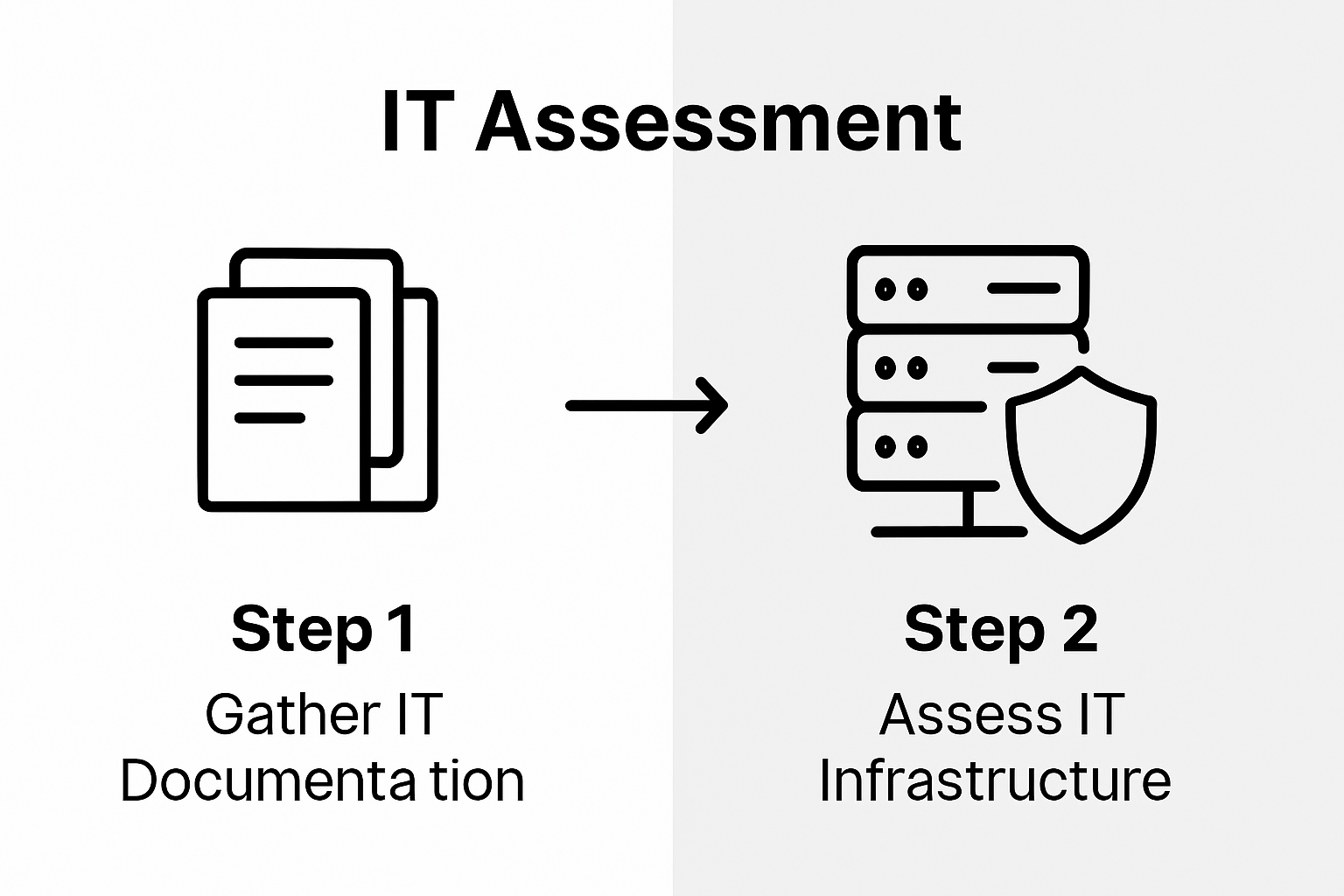
By methodically gathering and organizing your IT documentation, you set the stage for a successful and insightful audit that can reveal critical insights into your organization’s technological health and potential areas for improvement.
Below is a checklist table summarizing critical documents to gather in Step 1. Use this as a quick reference to ensure all essential IT records are collected before beginning your audit.
| Document Type | Purpose | Digital Backup Recommended? |
|---|---|---|
| Network Infrastructure Documentation | Visualize network layout and connectivity | Yes |
| Hardware Asset List | Track all physical devices used in the business | Yes |
| Software Licensing Agreements | Verify software compliance and versioning | Yes |
| User Access Management Records | Monitor and manage user permissions | Yes |
| System Configuration Reports | Reference historical configuration and changes | Yes |
| Disaster Recovery & Continuity Plans | Ensure preparedness for emergencies | Yes |
Step 2: Assess Current IT Infrastructure and Security Policies
Evaluating your organization’s IT infrastructure and security policies represents a critical checkpoint in the audit process. This comprehensive assessment provides a detailed understanding of your technological landscape, identifying potential vulnerabilities and areas for strategic improvement. Small businesses must approach this step with a thorough and systematic methodology.
Begin by conducting a comprehensive network inventory that maps out all technological assets. This involves documenting every hardware component, including servers, workstations, networking equipment, and mobile devices. Your assessment should include detailed specifications such as device age, operating systems, installed software versions, and current patch levels. Pay special attention to legacy systems that might pose significant security risks.
The National Institute of Standards and Technology recommends a multi-layered approach to infrastructure assessment. Examine your network topology, understanding how different systems interconnect and potential points of potential vulnerability. Analyze network access controls, firewall configurations, and external connection points that might represent potential security risks.
Your security policy evaluation should encompass several critical dimensions:
- User authentication protocols
- Data encryption standards
- Remote access management procedures
- Incident response frameworks
- Compliance with industry-specific regulatory requirements
Utilize diagnostic tools and vulnerability scanning software to generate objective assessments of your technological environment. These tools can provide detailed reports highlighting potential weaknesses in your infrastructure, including unpatched software, misconfigured network settings, and potential entry points for cybersecurity threats.
Engaging with your internal IT team or a trusted managed service provider can provide deeper insights during this assessment. They can help interpret technical diagnostics, provide context for existing configurations, and offer recommendations for potential improvements. Look beyond technical specifications and consider how your current infrastructure supports your business objectives and operational workflows.
Successful completion of this step means developing a comprehensive report that details your current technological landscape, identifies potential vulnerabilities, and provides a clear roadmap for future improvements. This assessment serves as a critical foundation for subsequent audit steps and strategic technology planning.
Step 3: Conduct a Comprehensive Risk Assessment
Risk assessment forms the critical backbone of a strategic IT audit, transforming potential technological vulnerabilities into actionable insights. This step goes beyond simple identification, requiring a systematic approach to understanding and prioritizing potential threats to your organization’s technological ecosystem.
Initiate your risk assessment by creating a comprehensive inventory of all potential threat vectors. This involves mapping out every potential point of vulnerability across your technological infrastructure, from external network access points to internal system configurations. Consider both technical vulnerabilities and human factors that might compromise your organization’s technological security.
The National Institute of Standards and Technology emphasizes a structured approach to risk evaluation. Begin by categorizing potential risks based on their potential impact and likelihood of occurrence. This method allows you to create a prioritized strategy for addressing the most critical vulnerabilities first.
Your risk assessment should explore several key dimensions:
- Potential cybersecurity threats
- Data protection vulnerabilities
- Compliance and regulatory risks
- Operational continuity challenges
- Technology infrastructure weaknesses
Utilize both automated scanning tools and manual evaluation techniques to develop a comprehensive risk profile. Professional risk assessment involves more than just technological scanning. Conduct interviews with key personnel, review historical incident reports, and analyze previous security breaches or near-misses within your organization.
Develop a detailed risk matrix that quantifies and prioritizes identified vulnerabilities. This matrix should include a clear assessment of each risk’s potential financial impact, likelihood of occurrence, and potential mitigation strategies. Assign specific risk levels that help your organization understand which vulnerabilities require immediate attention and which can be addressed through long-term strategic planning.
Successful risk assessment culminates in a comprehensive report that provides actionable insights. This document should not only highlight potential vulnerabilities but also offer clear, strategic recommendations for mitigating identified risks. By transforming potential threats into a structured improvement plan, your organization can proactively enhance its technological resilience and protect critical business assets.
Step 4: Evaluate Compliance with Relevant Regulations
Regulatory compliance represents a critical checkpoint in your IT audit, protecting your business from potential legal and financial risks. This step requires a meticulous approach to understanding and verifying your organization’s adherence to industry-specific and general data protection regulations.
Begin by identifying the specific regulatory frameworks that apply to your business. Different industries have unique compliance requirements, ranging from healthcare data protection to financial service regulations. Small businesses must recognize that compliance is not a one-size-fits-all proposition but a nuanced process tailored to your specific operational context.
The Federal Trade Commission emphasizes the importance of comprehensive compliance documentation. Collect and review all existing compliance documentation, including data handling protocols, privacy policies, and security certifications. This documentation serves as a critical reference point during your audit, demonstrating your organization’s commitment to regulatory standards.
Your compliance evaluation should focus on several key regulatory dimensions:
- Data privacy protection requirements
- Information security standards
- Industry-specific regulatory mandates
- Personal information handling protocols
- Cross-border data transfer regulations
Conduct a thorough gap analysis that compares your current practices against established regulatory requirements. This process involves carefully examining your existing policies, technological controls, and operational procedures. Look for potential discrepancies between your current practices and the specific requirements outlined in relevant regulations.
Engage with legal and compliance experts who can provide specialized insights into complex regulatory landscapes. These professionals can help interpret nuanced regulatory requirements and provide guidance on addressing potential compliance gaps. Consider conducting mock audits or compliance simulations to test your organization’s readiness and identify potential areas of improvement.
Successful compliance evaluation results in a comprehensive report that documents your current regulatory status. This report should not only highlight areas of strong compliance but also provide a clear roadmap for addressing any identified gaps. By taking a proactive approach to regulatory compliance, your organization can minimize potential legal risks and demonstrate a commitment to responsible data management.
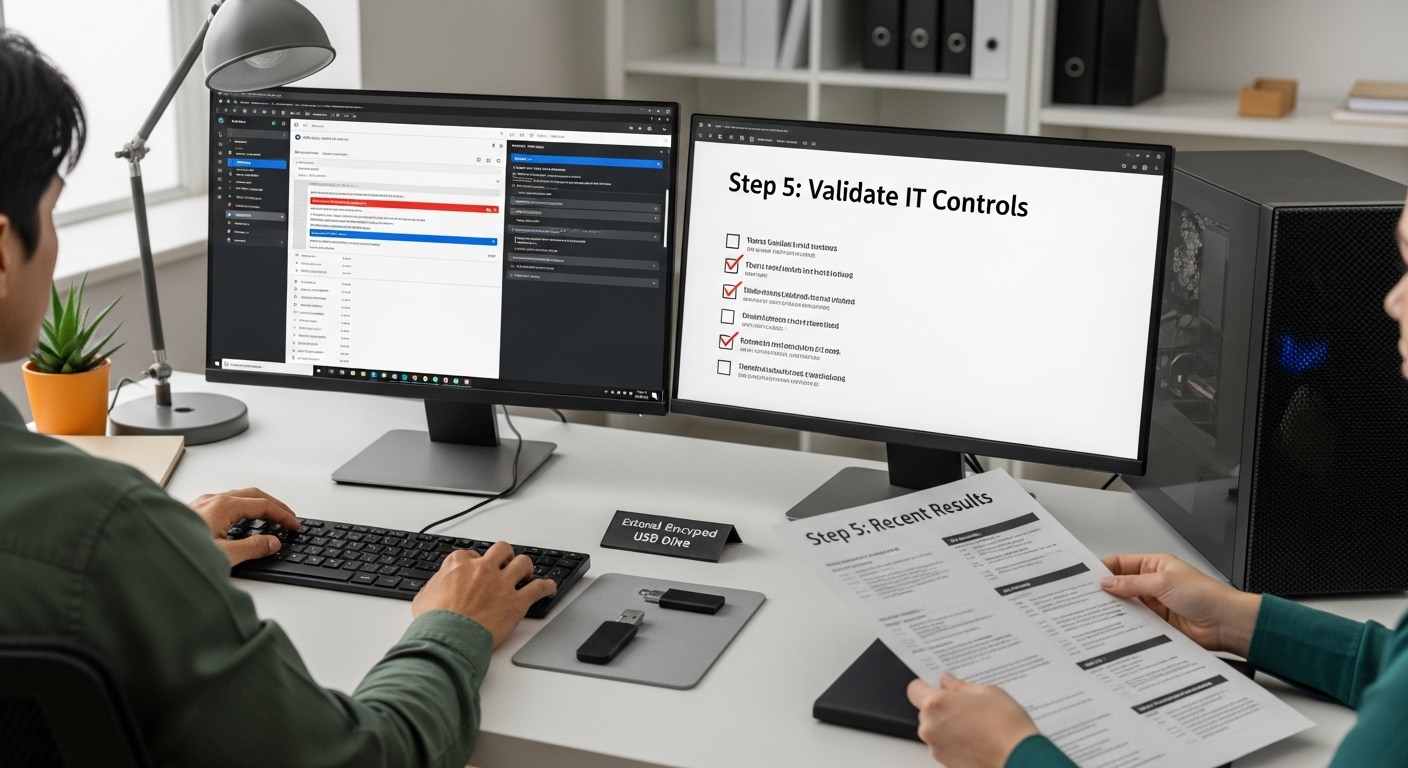
Step 5: Test and Validate IT Controls and Processes
Validating IT controls represents the critical moment when theoretical security measures transform into proven operational safeguards. This step moves beyond documentation, actively testing the effectiveness of your organization’s technological protections and identifying potential vulnerabilities that might have been overlooked during previous assessment stages.
Initiate your testing process by developing a comprehensive validation strategy that covers multiple dimensions of your technological infrastructure. This approach requires a systematic methodology that simulates real-world scenarios and challenges your existing security mechanisms. Focus on creating controlled test environments that allow thorough examination without risking production systems.
The Cybersecurity and Infrastructure Security Agency recommends a multi-layered approach to control validation. Begin with fundamental system tests that evaluate core infrastructure resilience, including network segmentation, access control mechanisms, and incident response protocols.
Your validation process should encompass several critical testing domains:
- Network penetration simulation
- Access control effectiveness testing
- Data recovery and backup system validation
- User authentication protocol verification
- Incident response mechanism assessment
Employ both automated testing tools and manual verification techniques to generate a comprehensive assessment. Professional testing involves more than technical scans. Conduct scenario-based exercises that challenge your organization’s response capabilities, simulating potential security incidents and measuring the effectiveness of your existing protocols.
Pay special attention to potential points of human error and social engineering vulnerabilities. Many sophisticated security breaches occur not through technical vulnerabilities but through human interaction. Design tests that evaluate employee awareness, response protocols, and adherence to established security guidelines.
Successful control validation produces a detailed report documenting test results, identified vulnerabilities, and recommended improvements. This document serves as a critical roadmap for enhancing your organization’s technological resilience. By transforming theoretical security measures into proven, tested protocols, you create a robust defense mechanism that adapts and responds to emerging technological challenges.
Step 6: Document Findings and Create an Action Plan
Transforming audit insights into a strategic roadmap represents the most critical phase of your IT audit process, where discovered vulnerabilities become opportunities for meaningful technological improvement. This step synthesizes all previous audit findings into a comprehensive, actionable strategy that drives your organization toward enhanced technological resilience.
Begin by developing a detailed documentation framework that captures every nuanced finding from previous audit stages. Your documentation should provide a clear, objective narrative that explains discovered vulnerabilities, their potential impact, and their relative priority. Approach this process with precision, ensuring that each identified issue receives thorough and unbiased examination.
The Small Business Administration emphasizes the importance of creating a structured remediation approach. Categorize your findings based on their potential business impact, creating a tiered prioritization system that allows your organization to address the most critical issues first.
Your action plan documentation should include several key components:
- Detailed vulnerability descriptions
- Potential business and operational risks
- Recommended remediation strategies
- Estimated implementation costs
- Proposed timelines for resolution
Work collaboratively with your IT team and key stakeholders to develop realistic, achievable remediation strategies. Each identified issue should be paired with a specific action plan that includes clear responsibilities, expected outcomes, and measurable success criteria. Consider both immediate technical fixes and long-term strategic improvements that can prevent similar vulnerabilities from emerging in the future.
Establish a robust tracking mechanism to monitor the progress of your remediation efforts. This might involve creating a dedicated dashboard, scheduling regular review meetings, or implementing project management tools that provide real-time updates on the status of each identified issue. Transparency and consistent communication are key to successfully implementing your action plan.
Successful documentation and action planning transforms your IT audit from a diagnostic exercise into a strategic improvement initiative.
This table gives an at-a-glance summary of the main steps in the IT audit process, including a brief description and key outcomes for each stage.
| Audit Step | Description | Key Outcome |
|---|---|---|
| 1. Gather Documentation | Collect key IT records and establish document repository | Comprehensive view of IT environment |
| 2. Assess Infrastructure & Policies | Evaluate all assets and security protocols | Identified vulnerabilities and strengths |
| 3. Risk Assessment | Map and prioritize potential threats and weaknesses | Actionable risk matrix and priorities |
| 4. Evaluate Compliance | Review adherence to relevant industry regulations | Gap analysis and compliance status |
| 5. Validate Controls & Processes | Test effectiveness of IT safeguards and response protocols | Documented results and vulnerabilities |
| 6. Document & Plan Actions | Summarize findings and create a strategic roadmap | Action plan with responsibilities & timelines |
Secure Your Business Success With a Tailored IT Audit Partner
You have read about the importance of organizing documentation, assessing your infrastructure, and validating security controls in the IT audit process. But translating these steps into real, actionable protection for your business can feel overwhelming. Small businesses often struggle with limited time, evolving compliance rules, and the real threat of missing critical vulnerabilities. The risk of gaps in your technology environment is real. Tackling compliance, disaster recovery, and cybersecurity by yourself can put your growth and reputation at risk.
Experience locally trusted IT peace of mind with SRS Networks.
Now is the ideal time to bring in expert support. SRS Networks helps Central Coast businesses turn complex IT audit checklists into strategic, affordable improvements. Our team will guide you through every step, ensure your documentation is complete, validate your controls, and provide clear action plans tailored to fit your business. Do not leave your audit to chance. Visit our site to learn how you can secure your business, achieve compliance, and create technology confidence today.
Frequently Asked Questions
What is the first step in conducting an IT audit for small businesses?
The first step involves identifying and gathering necessary documentation, including network diagrams, hardware inventories, and software licensing agreements. This creates a solid foundation for the audit process.
How can small businesses assess their current IT infrastructure?
Small businesses can assess their IT infrastructure by conducting a comprehensive network inventory, which includes documenting every hardware component and evaluating security policies and configuration reports.
What is the purpose of a risk assessment in the IT audit process?
A risk assessment identifies potential vulnerabilities in your technological infrastructure and prioritizes them based on their impact and likelihood of occurrence, enabling targeted remediation efforts.
Why is compliance evaluation important during an IT audit?
Compliance evaluation ensures that your business adheres to relevant industry regulations and standards, helping to mitigate legal and financial risks associated with data protection and security.