Did you know that over 60% of small businesses experience at least one cyberattack every year? Even a single vulnerability in your digital setup can lead to major financial loss or data compromise. Understanding your company’s security gaps is the first step to building a defense that works. By mapping out every device, connection, and system in use, you gain real clarity on where risks hide and how to protect your business from unexpected threats.
Quick Summary
| Key Point | Explanation |
|---|---|
| 1. Assess your cybersecurity landscape | Start by inventorying all digital assets and their security measures to identify vulnerabilities. |
| 2. Implement role-based access controls | Use role-based access control to limit access based on job functions, reducing unauthorized access incidents. |
| 3. Adopt advanced cybersecurity defenses | Deploy behavior-based endpoint protection and real-time monitoring to strengthen your overall security posture. |
| 4. Educate employees on security practices | Provide ongoing security training to help staff recognize threats and respond effectively. |
| 5. Monitor systems for real-time threats | Set up continuous monitoring tools to detect anomalies and respond to potential security events swiftly. |
Key Takeaways: Prevent Data Breaches for Small Businesses
- Step 1: Assess Your Current Security Landscape
- Step 2: Implement Robust Access Controls And Policies
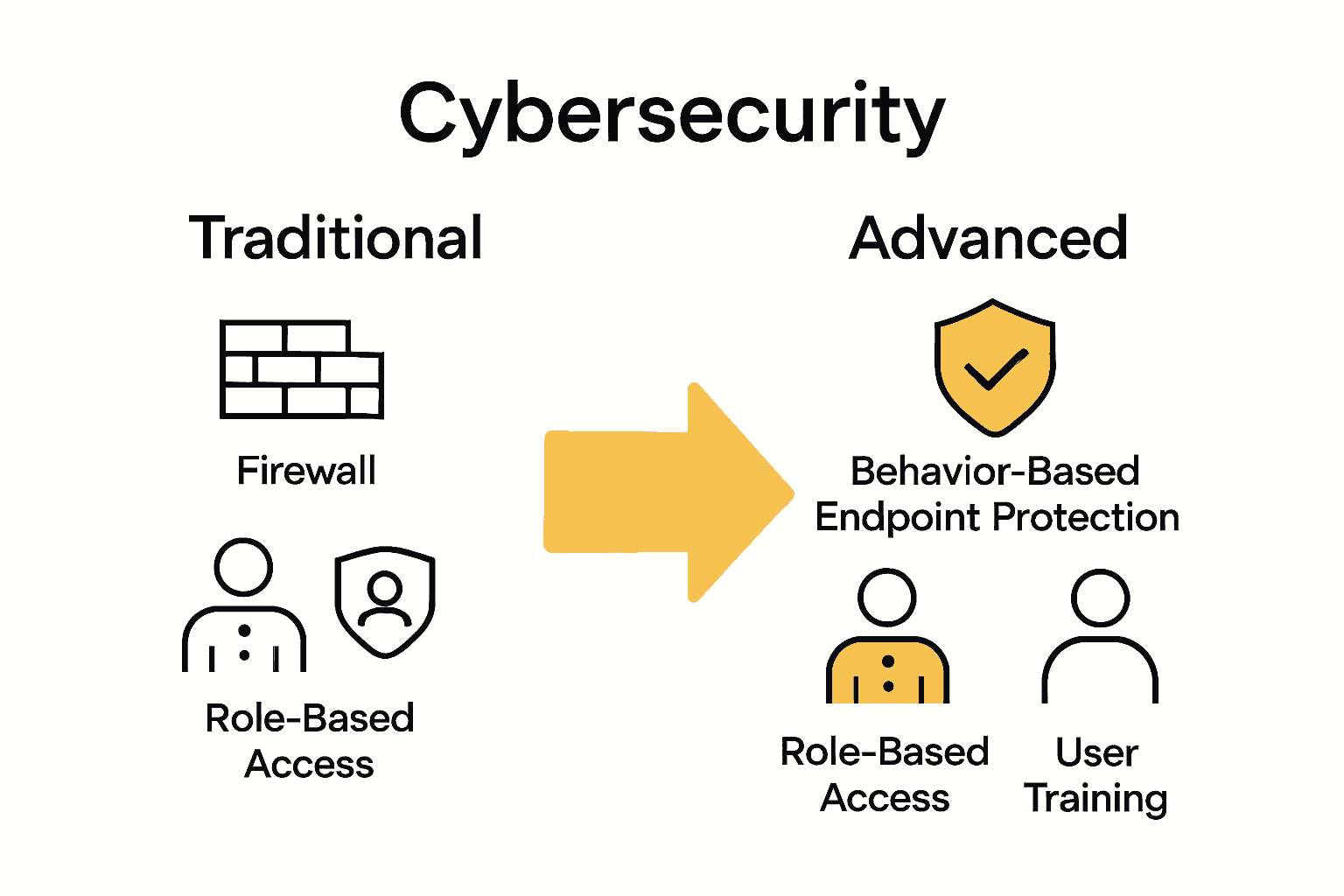
- Step 3: Deploy Advanced Cybersecurity Defenses
- Step 4: Educate Your Team On Security Best Practices
- Step 5: Monitor Systems And Verify Data Protection
Step 1: Assess your current security landscape
This step helps you map out your business’s existing digital vulnerabilities and understand exactly where potential cybersecurity risks lurk. Think of it like a health checkup for your technology infrastructure.
Starting your security assessment means taking a comprehensive snapshot of your current digital environment. According to research from the Brookings Institution, small businesses often underestimate their cybersecurity needs due to limited resources and immediate operational pressures.
Begin by creating an inventory of all digital assets your business uses. This includes:
- Computers and mobile devices
- Network infrastructure
- Cloud storage platforms
- Software applications
- External drives and backup systems
As you compile this list, document not just the hardware and software but also how each asset connects to your broader business operations. A proposed UML-based Small IT Data (SITD) model suggests mapping these assets alongside your business strategies to create a realistic security framework.
Pro Tip: Be brutally honest during this assessment. Overlooking even one vulnerable system can create a potential entry point for cybercriminals.
Next, you’ll want to evaluate the current security measures protecting these assets. This means checking existing antivirus software, firewall configurations, user access controls, and data encryption practices. Pay special attention to how employees interact with these systems and potential human error points.
By the end of this assessment, you’ll have a clear roadmap of your current security landscape and the initial insights needed to develop a robust protection strategy.
Prepare to dive deeper into targeted security improvements in the next step.
Here’s a summary of each key step in building your cybersecurity strategy:
| Step | Main Goal | Key Actions |
|---|---|---|
| Assess Security Landscape | Identify vulnerabilities | Inventory digital assets Map asset roles Review current measures |
| Implement Access Controls | Restrict unauthorized access | Role-based permissions Account audits Remove unused accounts |
| Deploy Cyber Defenses | Strengthen defense layers | Machine learning EPP Intrusion prevention Enable auto-updates |
| Educate Your Team | Reduce human errors | Ongoing training Phishing awareness Written protocols |
| Monitor & Verify | Detect/respond to threats | Real-time monitoring Incident response tests Regular data backups |
Step 2: Implement robust access controls and policies
This step is about creating a fortress around your digital assets by strategically controlling who can access what in your business network. Think of access controls like a bouncer at an exclusive club – only the right people get through at the right times.
According to the Cybersecurity and Infrastructure Security Agency (CISA), adopting a zero-trust model is critical for modern businesses. This means assuming no user or system is automatically trustworthy and requiring verification for every access request.
Start by implementing role-based access control (RBAC). Research shows businesses using RBAC can decrease unauthorized access incidents by up to 45%. This approach means each employee receives precisely the minimum permissions needed to perform their specific job functions.
Here are key steps to build your access control strategy:
- Create detailed user roles with specific access permissions
- Assign access levels based on job responsibilities
- Establish clear documentation for each role’s required access
- Regularly review and update user permissions
- Remove or modify access when employee roles change
Warning: Unused accounts are silent security risks. Delete or disable accounts immediately when employees leave or change positions.
The principle of least privilege is your best defense.
 This means giving employees access only to the systems and data absolutely required for their work. For instance, your marketing team does not need the same network access as your financial department.
As recommended by cybersecurity research, conduct quarterly access audits. These reviews can reduce breach likelihood by 30% by ensuring your permissions remain tight and appropriate.
In the next step, you will learn how to strengthen these controls with advanced authentication methods that make your digital systems even more secure.
Step 3: Deploy advanced cybersecurity defenses
This step transforms your digital defenses from basic protection to a sophisticated security ecosystem. You are about to upgrade your cybersecurity from a simple lock to a state-of-the-art security system with multiple layers of defense.
According to CISA guidelines, small businesses need a comprehensive approach to securing their digital infrastructure. This means combining multiple advanced technologies to create a robust defense mechanism.
Start by implementing behavior-based endpoint protection (EPP) with machine learning capabilities. Research shows these modern solutions can reduce successful malware infections by up to 62%. Unlike traditional antivirus software that only recognizes known threats, these advanced systems learn and adapt to new potential security risks in real time.
Key components of your advanced cybersecurity defense should include:
- Machine learning endpoint protection
- Intrusion detection and prevention systems
- Real-time threat monitoring
- Secure configuration of internet-exposed services
- Automated software update mechanisms
Pro Tip: Treat your cybersecurity like a living organism. It needs constant monitoring, updating, and adaptation to survive in a changing threat landscape.
Ensure you are hardening your network credentials. This means implementing strong password policies, using multi-factor authentication, and creating complex access requirements that make unauthorized entry exponentially more difficult.
Your software update strategy is crucial. Unpatched vulnerabilities are like open doors for cybercriminals. Set up automatic updates for all critical systems and create a process for quickly implementing security patches as they become available.
In the next step, you will learn how to train your team to become an active part of your cybersecurity defense strategy, turning human potential from a potential weakness into a powerful protective shield.
Step 4: Educate your team on security best practices
This step transforms your employees from potential security vulnerabilities into your strongest cyber defense mechanism. You will turn human error from a weakness into an organizational superpower.
According to the Ponemon Institute, human error accounts for approximately 82% of cybersecurity breaches. This means your team is simultaneously your most significant risk and your most powerful protection strategy.
Begin by establishing a consistent monthly training program that covers critical security awareness topics. Research recommends regular sessions focusing on practical skills like identifying phishing attempts, maintaining password hygiene, and practicing safe browsing habits.
Key training topics should include:
- Recognizing sophisticated phishing emails
- Creating strong unique passwords
- Understanding social engineering tactics
- Safely handling sensitive digital information
- Reporting suspicious digital activities
Pro Tip: Make security training interactive and engaging. Use real world examples and simulate potential threat scenarios to help your team learn by experiencing potential risks.
Develop clear written protocols that outline exactly how employees should respond to potential security threats. This means creating straightforward guidelines about what to do if they receive a suspicious email, encounter an unknown link, or notice unusual system behavior.
As recommended by cybersecurity experts, implement ongoing training that keeps security awareness fresh and top of mind. Short monthly sessions are more effective than long annual presentations.
In the next step, you will learn how to create an incident response plan that ensures your team knows exactly what to do if a security breach occurs.
Step 5: Monitor systems and verify data protection
This step transforms your cybersecurity from a passive defense to an active monitoring system. You will learn how to create a real-time surveillance network that catches potential threats before they become full-blown security incidents.
Constant vigilance is your best protection. Implementing comprehensive system monitoring means creating a digital early warning system that tracks every movement and anomaly within your network. This approach allows you to detect and respond to potential security breaches instantly.
Start by setting up continuous monitoring tools that provide real-time insights into your network activities. These tools should track user behaviors, system performance, and potential security vulnerabilities across all your digital platforms. Look for solutions that offer automated alerts and comprehensive reporting.
Key monitoring strategies include:
- Real-time network traffic analysis
- Automated security event logging
- Performance and vulnerability tracking
- User activity monitoring
- Unauthorized access detection
Pro Tip: Treat your monitoring system like a digital immune system. Regular check-ups and immediate response to anomalies are critical for maintaining overall health.
According to business cybersecurity research, businesses should develop and regularly test incident response plans. Conducting tabletop exercises twice a year can help your organization recover 58% faster and at 37% lower cost if a breach occurs.
Establish a routine for regular data backups and verification. This means creating multiple backup copies stored in different locations, regularly testing these backups, and ensuring you can quickly restore systems if needed.
In the final step, you will learn how to create a comprehensive incident response strategy that turns potential disasters into manageable challenges.
Make Data Breach Prevention Effortless with SRS Networks
Protecting your business from data breaches can feel overwhelming. Each step outlined in this article—assessing security gaps, enforcing access controls, deploying advanced defenses, and building a strong team culture—can drain your resources if you go it alone. You want peace of mind, knowing your critical digital assets are not exposed to hidden threats. Most importantly, like so many small businesses in Monterey, Salinas, and throughout the Central Coast, you need practical solutions that actually fit your day-to-day operations.
Ready to take control of your cybersecurity and safeguard your success? With SRS Networks, you get more than just IT support. Our team works side by side with you to reduce vulnerabilities, strengthen defenses, and provide ongoing monitoring using proven, enterprise-grade solutions tailored to your needs. Do not wait for the next attack to discover your weak spots. Visit our main page today and take the first step toward a safer, more resilient business environment.
Frequently Asked Questions
How can I assess my current security landscape to prevent data breaches?
To assess your current security landscape, start by creating a comprehensive inventory of all digital assets, such as computers, networks, and software applications. Evaluate existing security measures like antivirus software and firewalls, focusing on any vulnerabilities that could be exploited.
What access control measures should I implement for my small business?
Implement role-based access control (RBAC) to restrict unauthorized access by ensuring employees receive only the minimum permissions necessary for their job. Regularly review and update user permissions to maintain tight access controls, and remove unused accounts immediately to avoid security risks.
How can I educate my team on best practices to minimize data breaches?
Establish a monthly training program focusing on critical security awareness topics, such as phishing identification and password hygiene. Make the training engaging and practical; for instance, incorporate real-life scenarios to reinforce the skills needed to recognize potential threats.
What monitoring strategies should I use for effective data protection?
Set up continuous monitoring tools to track network activities, user behaviors, and system vulnerabilities in real-time. Monitor for unauthorized access and establish a routine for automated security event logging to detect potential threats early.
How can I create an incident response plan for my small business?
Develop a clear incident response plan that outlines the steps your team should take in the event of a data breach. Conduct regular tabletop exercises to familiarize your team with the plan, aiming to test it at least twice a year to ensure everyone knows how to respond efficiently.