Cyberattacks now cost businesses over $8 trillion each year and the average breach goes undetected for more than 200 days. With stakes this high, securing your systems is no longer just an IT issue. Every overlooked risk, weak password, or neglected device can open the door to costly threats. This practical guide offers clear steps that help protect your data, empower your team, and keep your company’s digital assets safe from ever-evolving risks.
Quick Summary: Essential Steps to Prevent Data Breaches
| Key Point | Explanation |
|---|---|
| 1. Identify and assess security risks | Conduct a thorough evaluation of your digital security landscape to discover vulnerabilities in systems and processes. |
| 2. Implement multi-factor authentication | Enhance security by requiring multiple verification methods for access to sensitive systems and data. |
| 3. Utilize network segmentation for protection | Create isolated security zones within your infrastructure to limit potential damage from breaches. |
| 4. Develop a comprehensive security training program | Transform employees into active defenders by promoting awareness and hands-on learning about cyber threats. |
| 5. Schedule regular audits and penetration testing | Proactively identify and address weaknesses by conducting systematic security assessments and real-world simulations. |
Table of Contents
- Step 1: Assess Current Security Risks and Vulnerabilities
- Step 2: Implement Strong Access Controls and Authentication
- Step 3: Establish Robust Network and Endpoint Protection
- Step 4: Enforce Staff Training and Security Policies
- Step 5: Conduct Regular Security Audits and Penetration Testing
Step 1: Assess Current Security Risks and Vulnerabilities
In this step, you will conduct a comprehensive evaluation of your organization’s digital security landscape. You will identify potential vulnerabilities and understand the unique risks that could compromise your business data.
Starting your security assessment requires a strategic approach that goes beyond simple technical scanning. According to research from the Small IT Data (SITD) model, effective vulnerability detection combines technical indicators with broader organizational factors. This means looking not just at your technology, but how your entire system operates.
Begin by creating an inventory of all digital assets. This includes every computer, server, mobile device, network connection, and cloud service your business uses. For each asset, document its current configuration, access permissions, and last security update. Pay special attention to older systems or equipment that might have outdated security protocols.
Next, conduct a thorough port scan and certificate check across your network. A groundbreaking socio technical predictive model (STRisk) developed for U.S. organizations demonstrates that open ports and expired certificates can be significant breach indicators. Use professional network scanning tools to identify any potential entry points that cybercriminals might exploit.

Pro Tip: Don’t just look at technical vulnerabilities. Consider human factors too. Review employee password practices, training levels, and potential social engineering risks.
Analyze your current security policies and compare them against industry standards. Look for gaps in your incident response plan, access control mechanisms, and data protection strategies. If possible, engage an external cybersecurity consultant who can provide an unbiased assessment of your current security posture.
The next step in your journey will involve prioritizing these discovered vulnerabilities and developing a targeted remediation strategy. By systematically working through your identified risks, you will build a more resilient and secure digital infrastructure for your business.
Step 2: Implement Strong Access Controls and Authentication
In this step, you will design a robust authentication system that protects your organization from unauthorized access while maintaining user convenience. Your goal is to create multiple layers of security that significantly reduce the risk of potential breaches.
According to the latest NIST SP 800-63-4 digital identity guidelines, traditional password systems are becoming obsolete. Modern authentication requires a more sophisticated approach that goes beyond simple username and password combinations. The focus is now on phishing resistant methods that provide stronger protection for your business data.
Start by implementing multi factor authentication across all critical systems. This means requiring at least two different verification methods when someone attempts to access sensitive information. For example, combine something you know (a password) with something you have (a hardware token or mobile authentication app) or something you are (biometric verification like fingerprint or facial recognition).
Consider replacing traditional passwords with more secure alternatives. Hardware security keys and biometric authentication methods offer significantly stronger protection. According to NIST recommendations, these phishing resistant technologies create a much more difficult environment for potential attackers to compromise your systems.
Pro Tip: Implement risk based authentication that adjusts security requirements based on context. Higher risk activities should require more stringent verification compared to routine access.
Establish clear access control policies that follow the principle of least privilege. This means employees should only have access to the specific systems and data required for their job functions. Regularly audit and update these permissions as roles change within your organization.
Create a comprehensive user management process that includes immediate access revocation for departing employees and contractors.
Develop a systematic approach to granting and removing system access that minimizes potential security gaps during personnel transitions.
The next phase of your security journey will involve monitoring and continuously improving these access control mechanisms. By staying proactive and adapting to emerging security technologies, you will build a resilient defense against unauthorized access attempts.
Step 3: Establish Robust Network and Endpoint Protection
In this step, you will create a comprehensive defense strategy that shields your organization’s digital infrastructure from potential cyber threats. Your objective is to implement multilayered protection that secures both your network perimeter and individual devices.
As research indicates, Zero Trust Architecture (ZTA) is becoming the gold standard for modern cybersecurity. Expected to be adopted by over 60% of enterprises by 2025, this approach fundamentally changes how we think about network security. Instead of trusting devices or users by default, ZTA enforces continuous identity verification and applies strict access controls.
Start by implementing network segmentation to create isolated security zones within your infrastructure. This means dividing your network into smaller, controlled segments that limit potential damage if one area becomes compromised. Each segment should have its own access controls and monitoring mechanisms, preventing unauthorized lateral movement across your systems.
Focus on comprehensive endpoint management. According to cybersecurity research, many organizations struggle with ‘ghost devices’ that remain untracked and unprotected. Use unified endpoint management (UEM) tools to maintain a real time inventory of all devices connected to your network. This includes laptops, smartphones, tablets, and any other potential entry points for cybercriminals.
Pro Tip: Implement automated threat response capabilities that can instantly isolate and neutralize suspicious activities across your network and endpoints.
Ensure all devices have up to date antivirus software, intrusion detection systems, and endpoint protection platforms. Configure these tools to provide real time monitoring and automatic updates. Pay special attention to remote and mobile devices, which often represent the most vulnerable access points in modern business networks.
Develop a systematic approach to device de provisioning. When employees leave or change roles, immediately revoke their network access and remove their devices from your system. This prevents potential backdoor entry points that could be exploited by former team members or external threat actors.
The next phase of your security strategy will involve continuous monitoring and refinement of these protective measures. By staying adaptive and proactive, you will create a resilient security environment that can effectively respond to evolving cyber threats.
Step 4: Enforce Staff Training and Security Policies
In this step, you will transform your employees from potential security vulnerabilities into active defenders of your organization’s digital infrastructure. Your goal is to create a security aware culture that understands and actively participates in protecting sensitive business information.
According to recent Zero Trust deployment research, modern cybersecurity requires more than just technological solutions. Employees must become sophisticated participants in your security strategy, understanding dynamic access policies and least privilege principles. This means moving beyond traditional compliance training to developing a genuine security mindset.
Design a comprehensive security awareness program that goes beyond annual mandatory training. Create engaging, interactive modules that simulate real world cyber threats. Use scenario based learning that helps employees recognize phishing attempts, understand social engineering tactics, and learn how to respond to potential security incidents. Make these training sessions frequent, short, and directly relevant to their daily work experiences.
Establish clear and concise security policies that are easy to understand and follow. Document specific guidelines for handling sensitive data, using company devices, accessing networks remotely, and responding to suspicious activities. Ensure these policies are not just written documents but living protocols that are regularly communicated and reinforced.
Pro Tip: Implement a reward system that recognizes and celebrates employees who demonstrate exceptional security awareness and help protect the organization.
Conduct regular security awareness assessments to measure the effectiveness of your training program. Use simulated phishing tests, knowledge quizzes, and practical scenarios to gauge your team’s understanding and readiness. Track progress and continuously adapt your training approach based on these insights.
Create a transparent reporting mechanism that encourages employees to flag potential security risks without fear of punishment. Build a culture where asking questions and seeking clarification about security protocols is viewed as a positive and responsible action.
The next phase of your cybersecurity journey will involve continuous learning and adaptation. By investing in your team’s security knowledge, you are building a human firewall that complements your technological defenses.
Step 5: Conduct Regular Security Audits and Penetration Testing
In this step, you will transform your cybersecurity approach from passive defense to active vulnerability discovery. Your mission is to proactively identify and address potential security weaknesses before malicious actors can exploit them.
According to the MESA Security Model 2.0, modern cybersecurity requires a dynamic framework focused on rapid detection and immediate response. This means moving beyond traditional static perimeter defenses to a more adaptive and resilient approach to security testing.
Schedule comprehensive penetration testing at least twice annually. These simulated cyber attacks will attempt to exploit your systems just as real hackers would. Work with certified ethical hackers who can systematically probe your network, applications, and infrastructure for potential vulnerabilities. Their goal is to find weaknesses before actual cybercriminals can discover and leverage them.
Align your audit process with the latest NIST SP 800-53 revision 5.2 guidelines. This means implementing sophisticated logging syntax, conducting thorough root cause analysis, and designing your systems with cyber resiliency in mind. Pay special attention to forensic logging mechanisms that can help you understand exactly what happens during potential breach attempts.
Pro Tip: Rotate your penetration testing team and methodologies to prevent predictability and ensure a fresh perspective on your security landscape.
Develop a structured approach to documenting and addressing discovered vulnerabilities. Create a risk prioritization matrix that helps you understand which security gaps represent the most significant threats to your organization. Assign clear timelines and responsibilities for addressing each identified weakness.
Ensure your security audits go beyond technical testing. Evaluate your policies, employee practices, and overall security culture. Look for potential human factors that might create unexpected vulnerabilities in your system.
The next phase of your cybersecurity journey involves translating audit findings into actionable improvements. By treating these assessments as opportunities for growth rather than mere compliance exercises, you will continuously strengthen your organization’s digital defenses.
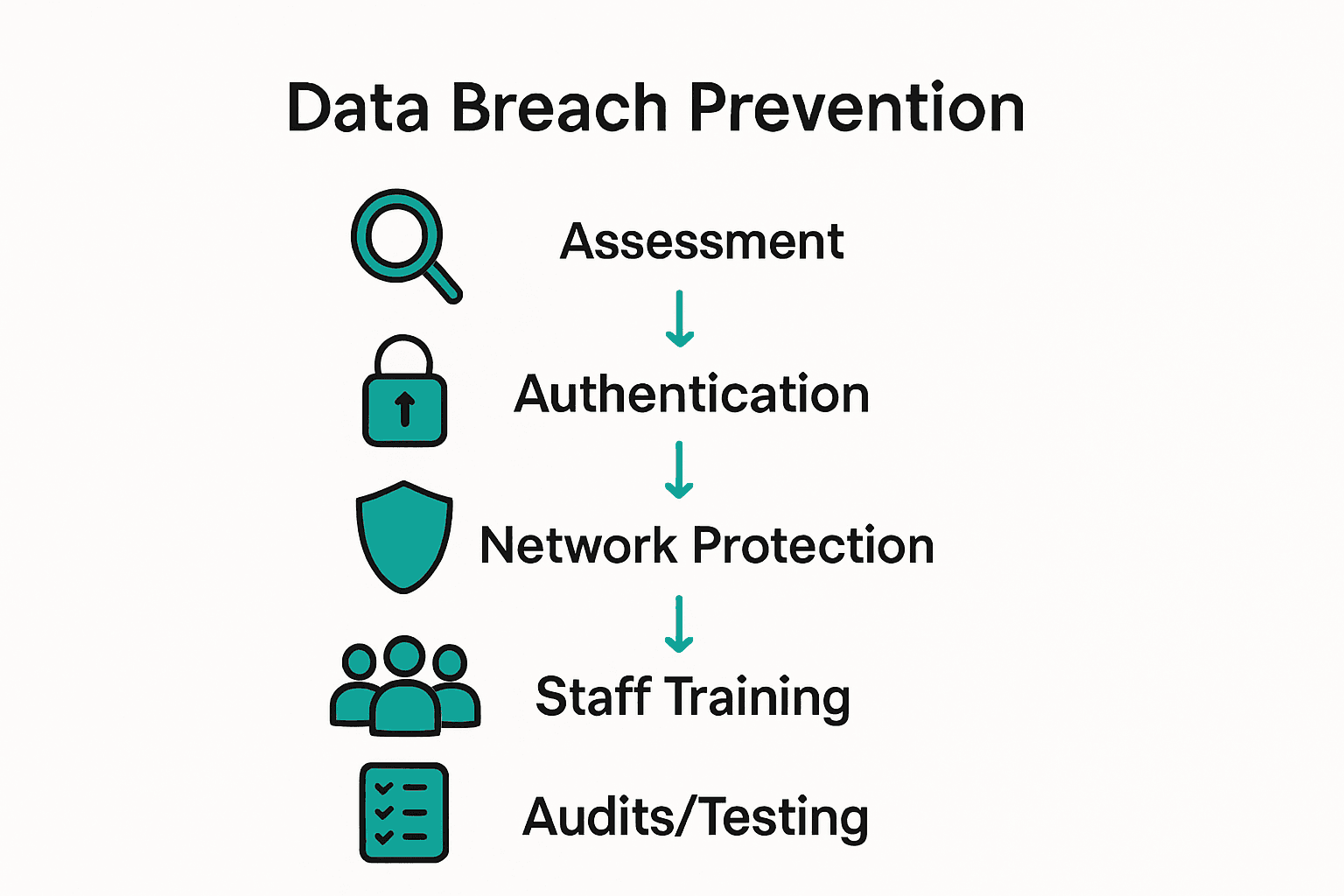
Here’s a summary of key actions and goals for each step:
| Step | Objective | Key Actions |
|---|---|---|
| Step 1: Assess Risks | Identify vulnerabilities | Asset inventory Configuration review Port/cert checks Policy analysis |
| Step 2: Access Controls | Prevent unauthorized access | Multi-factor authentication Least privilege Access audits User management |
| Step 3: Network/Endpoint Protection | Secure all systems/devices | Network segmentation Endpoint management Antivirus/IDS Device removal |
| Step 4: Staff Training | Build security culture | Awareness programs Scenario-based learning Policy communication Reward system |
| Step 5: Audits & Testing | Detect/address weaknesses | Penetration tests Risk prioritization Forensic logging Audit process improvement |
Safeguard Your Business from Data Breaches with a Local IT Partner
Worried about weak access controls, outdated protection, and lack of staff training leaving your business exposed to cyber threats? The article highlights just how critical steps like vulnerability assessments, multi-factor authentication, endpoint management, and continuous auditing are for real, lasting security. You need more than just advice. You need a partner who knows how to translate “Zero Trust Architecture,” “risk prioritization,” and “incident response” plans into hands-on results for your organization.
Take the stress out of cybersecurity. At SRS Networks, we offer managed IT services that address every pain point described in this article. Let us help you assess risks, enforce multi-layered access controls, build a security-first culture, and run regular security audits. Do not wait until a data breach disrupts your operations. Book your free security consultation through our website today and keep your business ahead of evolving threats.
Frequently Asked Questions
How can I assess current security risks to prevent data breaches?
To assess your current security risks, begin by creating an inventory of all digital assets and documenting their configurations. Conduct thorough port scans and evaluate your security policies against industry standards, focusing on potential vulnerabilities and access permissions within the next 30 days.
What steps should I take to implement strong access controls for my business?
To implement strong access controls, adopt multi-factor authentication for all critical systems and establish clear access control policies based on the principle of least privilege. Review and update user permissions regularly to align with each employee’s role, ideally once every quarter.
How can I improve network and endpoint protection against data breaches?
Enhance network and endpoint protection by implementing network segmentation and using comprehensive endpoint management tools to keep track of all connected devices. Ensure all devices are equipped with up-to-date security software and perform regular audits of network access points, aiming for completion every 60 days.
What type of staff training is most effective in preventing data breaches?
Effective staff training should focus on security awareness programs that include interactive modules simulating real-world cyber threats and scenario-based learning. Conduct these training sessions at least twice a year to keep the content fresh and relevant, fostering a culture of security among employees.
How frequently should I conduct security audits and penetration testing?
You should conduct comprehensive security audits and penetration testing at least twice annually to identify potential vulnerabilities proactively. Create a structured schedule for these tests and prioritize addressing the findings within 30 days to reinforce your security posture.
What are the best practices for developing a security policy in my organization?
To develop a robust security policy, document clear guidelines for handling sensitive data, using company devices, and responding to suspicious activities. Review and communicate these policies regularly to ensure understanding and compliance amongst employees, aiming for quarterly updates.