Cyber attacks cost businesses an average of $200,000 per incident, forcing many to shut down entirely. With threats growing more complex every year, it’s no longer enough to rely on basic employee training or outdated security habits. Building a truly resilient organization starts with a focused cybersecurity awareness strategy that adapts to evolving risks and empowers every team member to act as a frontline defender. Discover how a step-by-step approach can improve protection and reduce your exposure to costly breaches.
Table of Contents
- Step 1: Assess Current Cybersecurity Risks And Knowledge
- Step 2: Develop Targeted Cybersecurity Training Programs
- Step 3: Implement Engaging Awareness Campaigns
- Step 4: Enforce Secure Behaviors With Clear Policies
- Step 5: Test And Monitor Employee Cybersecurity Practices
- Step 6: Review And Update Awareness Strategies Regularly
Quick Summary
| Key Point | Explanation |
|---|---|
| 1. Assess cybersecurity risks regularly | Conduct annual risk assessments to identify vulnerabilities and knowledge gaps among employees. This forms the basis for effective training. |
| 2. Develop tailored training programs | Create training modules that address specific threats relevant to your organization, focusing on practical scenarios and varying skill levels. |
| 3. Implement engaging awareness campaigns | Utilize a multi-channel approach to deliver engaging content that emphasizes key cybersecurity topics and encourages participation from all employees. |
| 4. Enforce clear security policies | Draft comprehensive and actionable cybersecurity policies that outline expectations for behavior, handling threats, and reporting incidents. |
| 5. Regularly review and update strategies | Schedule quarterly reviews of awareness strategies to adapt to evolving threats and improve the effectiveness of training and policies. |
Step 1: Assess current cybersecurity risks and knowledge
Establishing a clear understanding of your organization’s current cybersecurity landscape is the critical first step in building robust employee awareness and defense strategies. By systematically evaluating existing risks and knowledge gaps, you can create targeted training programs that address real vulnerabilities.
According to the U.S. Department of Labor, conducting a comprehensive annual risk assessment helps organizations identify, evaluate, and prioritize information system risks. Start by mapping out all digital assets and entry points within your business network. This includes computers, mobile devices, cloud services, email systems, and third party applications. Conduct an inventory that tracks device ownership, access permissions, and current security configurations.
The National Institute of Standards and Technology recommends implementing a structured framework for controlling access to sensitive information. Create a detailed questionnaire for employees to assess their current cybersecurity knowledge. Ask specific questions about recognizing phishing attempts, password management, data handling protocols, and understanding potential security threats. Analyze the results to pinpoint specific areas where your team needs additional training and support.

Pro tip: Consider using anonymous surveys to encourage honest feedback about cybersecurity practices. Employees might reveal knowledge gaps or risky behaviors they would not disclose in direct conversations. This approach provides a more accurate assessment of your organization’s true cybersecurity readiness.
Once you complete this assessment, you will have a clear roadmap for developing targeted cybersecurity awareness training that addresses your specific organizational risks and knowledge deficits. The next step will involve translating these insights into a comprehensive and engaging training program.
Step 2: Develop targeted cybersecurity training programs
With a comprehensive understanding of your organization’s cybersecurity risks, you are now ready to design a tailored training program that addresses specific knowledge gaps and strengthens your team’s defense capabilities. The goal is to transform your employees from potential security vulnerabilities into proactive defenders of your digital infrastructure.
According to Coursera, developing an effective cybersecurity training program requires a structured approach that systematically protects information assets. Begin by segmenting your training content into clear modules that target different skill levels and job roles. Focus on practical scenarios relevant to your specific industry. Your modules should cover critical areas such as recognizing phishing attempts, maintaining strong password practices, understanding data handling protocols, and responding to potential security incidents.
The Center for Secure & Intelligent Critical Systems recommends incorporating diverse training methods to maximize engagement and knowledge retention. Blend instructor-led sessions with interactive multimedia training that includes real-world simulations, video tutorials, and hands-on exercises. Consider creating scenario-based learning experiences that mimic actual cyber threat situations your employees might encounter. This approach helps transform theoretical knowledge into practical skills.
Pro tip: Gamify your cybersecurity training by introducing friendly competitions or rewards for employees who demonstrate strong security awareness. This strategy can transform mandatory training from a tedious requirement into an engaging and motivational experience.
Once your training program is developed, you will be ready to implement and track its effectiveness through ongoing assessments and feedback mechanisms.
The next crucial step involves rolling out the program and creating a culture of continuous cybersecurity learning.
Step 3: Implement engaging awareness campaigns
Now that you have developed a comprehensive cybersecurity training program, it is time to roll out an awareness campaign that captures your employees attention and transforms theoretical knowledge into practical action. The goal is to create a dynamic and interactive learning environment that makes cybersecurity feel relevant and accessible to everyone in your organization.
According to the U.S. Small Business Administration, leveraging Cybersecurity Awareness Month can be an excellent strategy for launching your campaign. Design a month-long program with weekly themes that break down complex security concepts into digestible, engaging content. For instance, one week could focus on password security, another on recognizing phishing attempts, and another on safe internet browsing practices.
The Small Business Administration recommends creating multi-channel communication strategies to maximize impact. Utilize a mix of resources including email newsletters, short video tutorials, interactive online quizzes, posters in common areas, and brief lunch and learn sessions. Each communication should be concise, visually appealing, and include practical takeaways that employees can immediately apply in their daily work routines.
Pro tip: Create a cybersecurity champion program where employees who demonstrate exceptional understanding and practice can be recognized and rewarded. This peer-led approach can help normalize good security practices and make cybersecurity feel less like a top-down mandate and more like a collaborative team effort.
As your awareness campaign unfolds, you will begin to see a cultural shift towards more proactive and mindful cybersecurity practices. The next phase involves continuously measuring and refining your approach to ensure ongoing improvement and adaptation to emerging threats.
Step 4: Enforce secure behaviors with clear policies
Transforming cybersecurity awareness into consistent organizational practice requires establishing and implementing robust security policies that are clear, comprehensive, and actionable. Your goal is to create a framework that guides employee behavior and provides explicit guidelines for maintaining digital safety.
According to the U.S. Department of Labor, developing effective security policies involves conducting thorough risk assessments and implementing targeted security controls. Begin by drafting a comprehensive cybersecurity policy document that outlines specific expectations for password management, device usage, email handling, and internet browsing. Ensure the policy addresses key areas such as acceptable use of company technology, data protection protocols, reporting procedures for potential security incidents, and consequences for policy violations.
The Cybersecurity and Infrastructure Security Agency recommends creating an incident response plan that complements your security policies. This plan should provide clear step by step instructions for employees to follow when they encounter potential security threats. Include specific contact information, escalation procedures, and detailed guidelines for reporting suspicious activities. Make sure the policy is written in straightforward language that is easy for all employees to understand, avoiding technical jargon that might create confusion.
Pro tip: Implement a periodic policy review process where employees can provide feedback and suggestions. This collaborative approach helps ensure your policies remain relevant and adaptable to evolving technological landscapes and emerging security challenges.
By establishing and consistently enforcing clear cybersecurity policies, you create a structured environment that empowers employees to become active participants in your organization’s security strategy. The next phase involves monitoring and continuously improving your approach through regular assessments and updates.
Step 5: Test and monitor employee cybersecurity practices
To truly validate the effectiveness of your cybersecurity training and awareness efforts, you must implement a systematic approach to testing and monitoring employee practices. This critical step transforms theoretical knowledge into measurable security performance and helps identify potential vulnerabilities before they can be exploited.
According to CISA, small businesses should host quarterly tabletop exercises that simulate real world cybersecurity incident scenarios. Design these exercises to test employee responses to various threats such as phishing attempts, social engineering scenarios, and potential data breach situations. Create realistic simulations that challenge employees to identify and respond to potential security risks, tracking their performance and providing immediate feedback on their decision making processes.
The Small Business Association of Michigan highlights the importance of ongoing monitoring, noting that many employees lack basic cybersecurity training. Implement a comprehensive tracking system that records employee performance across different security scenarios. Use metrics such as response time, accuracy of threat identification, and adherence to established security protocols. Develop a scoring mechanism that allows you to quantify individual and team performance, identifying areas that require additional training or support.
Pro tip: Create a confidential and supportive reporting system that encourages employees to self report potential security mistakes or uncertainties. This approach builds trust and helps create a collaborative security culture rather than a punitive environment.
By consistently testing and monitoring employee cybersecurity practices, you transform your organization from a potential target to a proactive defense mechanism.
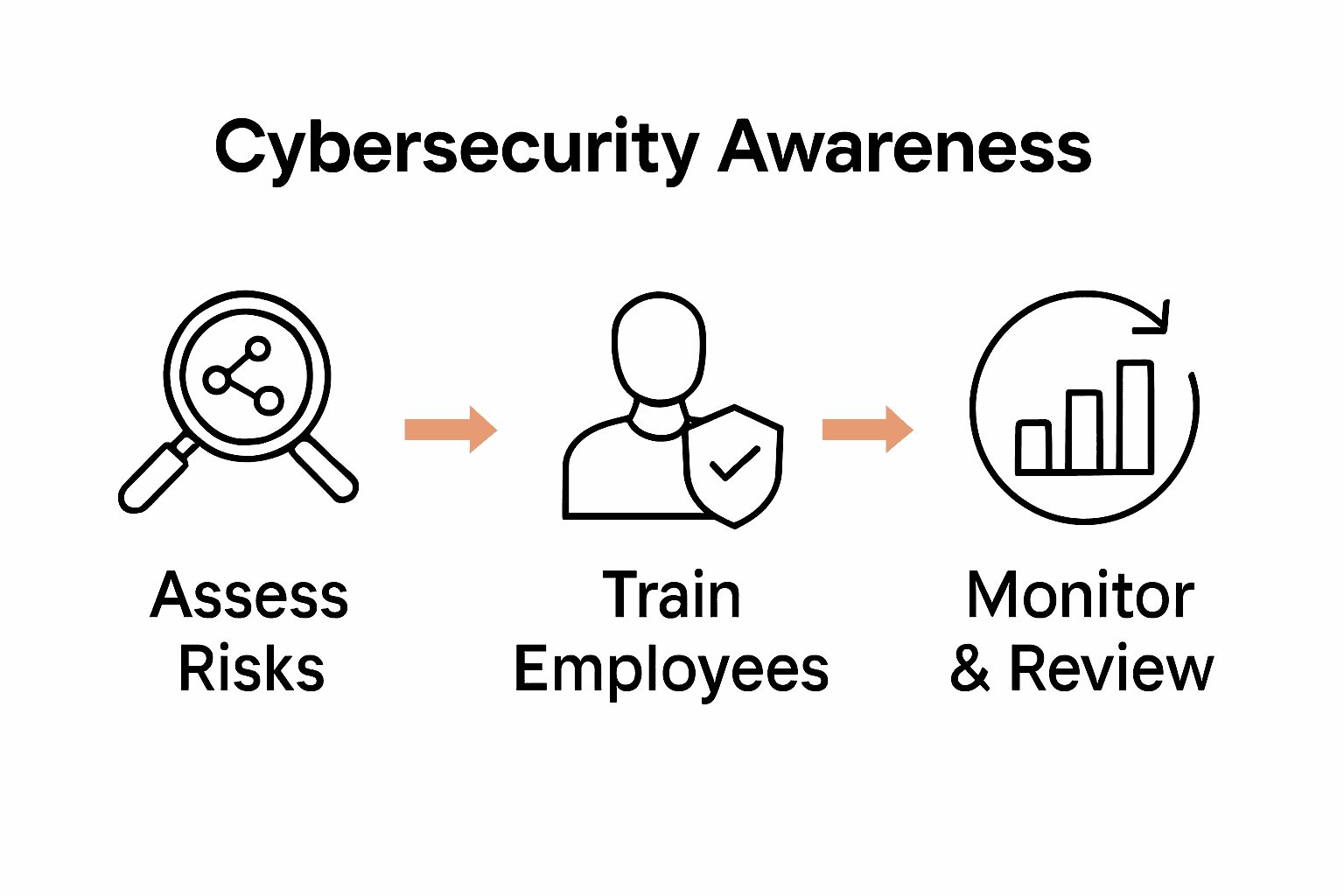 The final stage involves synthesizing your findings and continuously evolving your cybersecurity strategy to stay ahead of emerging threats.
Step 6: Review and update awareness strategies regularly
Cybersecurity is a dynamic landscape where threats continuously evolve, making regular strategy reviews not just a recommendation but a critical necessity for protecting your organization. Your goal is to create a flexible and responsive approach that adapts quickly to emerging digital risks.
According to NIST, small businesses must prioritize continuous improvement in their cybersecurity awareness strategies. Schedule comprehensive quarterly reviews that examine your current training materials, incident response protocols, and employee performance metrics. During these reviews, analyze recent cybersecurity incidents, review employee testing results, and evaluate the effectiveness of your existing awareness programs. Look for patterns in employee behavior, identify recurring vulnerabilities, and assess how well your current strategies mitigate potential risks.
The U.S. Small Business Administration recommends staying informed about the latest cyber threat landscapes. Establish a systematic process for tracking emerging cybersecurity trends by subscribing to industry newsletters, following reputable cybersecurity blogs, and participating in relevant professional networks. Incorporate insights from these sources into your training materials and update your awareness strategies to address new and evolving threat techniques.
Pro tip: Create a dedicated cybersecurity review committee with representatives from different departments. This cross functional approach ensures that your strategies remain comprehensive and consider perspectives from various areas of your organization.
By committing to regular strategy reviews and updates, you transform cybersecurity from a static training program into a dynamic, living defense mechanism that grows stronger and more resilient with each iteration. Your organization becomes not just protected but proactively prepared for the ever changing digital threat landscape.
Strengthen Your SMB’s Cybersecurity with Tailored Solutions from SRS Networks
Many small and medium-sized businesses struggle with boosting employee cybersecurity awareness while managing limited IT resources and evolving threats. This article highlights challenges such as identifying knowledge gaps, developing engaging training programs, enforcing policies, and continuously monitoring your team’s security practices. These pain points often lead to costly security breaches and stress over protecting sensitive data.
At SRS Networks, we understand these concerns deeply. We offer customized cybersecurity solutions designed specifically for SMBs in the Monterey Bay Area. From creating proactive employee training programs to implementing robust security policies and monitoring tools, we empower your workforce to become your strongest defense. Explore our Cybersecurity Solutions to learn how we protect your business with endpoint protection, firewalls, and compliance-focused strategies. Our managed IT services provide continuous support so your team stays informed and alert.
Ready to transform employee awareness into effective security that safeguards your digital assets right now?
Don’t wait until a cyber attack impacts your operations. Visit SRS Networks today to partner with a trusted IT provider that offers personalized, proactive, and affordable technology solutions tailored for your unique needs. Together, let’s build a resilient cybersecurity culture that powers your SMB’s success.
Frequently Asked Questions
How can I assess my team’s current cybersecurity knowledge?
Start by creating a detailed questionnaire that evaluates employees’ understanding of cybersecurity topics, such as recognizing phishing attempts and password management. Analyze the results to identify gaps in knowledge and prioritize training efforts accordingly.
What key topics should be included in a cybersecurity training program?
Focus on practical scenarios relevant to your industry, including recognizing phishing attempts, maintaining strong password practices, and understanding data handling protocols. Structure your training into clear modules and ensure each topic addresses specific knowledge gaps identified in your assessments.
How can I make cybersecurity training more engaging for employees?
Incorporate diverse training methods like interactive multimedia, real-world simulations, and gamified elements to keep employees engaged. Consider introducing friendly competitions or rewards for contributions to elevate interest and participation in the training program.
What policies should be enforced to promote secure cybersecurity practices?
Draft clear policies that outline expectations for password management, device use, and reporting procedures for security incidents. Ensure these policies are written in straightforward language and reviewed regularly, allowing employees to provide input for follow-up revisions.
How often should I review and update my cybersecurity awareness strategies?
Conduct comprehensive quarterly reviews of your training materials, incident response protocols, and employee performance metrics. Use these sessions to identify patterns in behavior and adjust your training strategies to address emerging cybersecurity threats effectively.
How can I test the effectiveness of my cybersecurity awareness programs?
Implement quarterly tabletop exercises that simulate real-world cybersecurity scenarios to evaluate employee responses. Track performance metrics, such as accuracy in threat identification and adherence to protocols, to identify areas needing additional training.
Recommended
- Effective Cybersecurity Training for Employees: A Step-by-Step Guide – SRS Networks
- Understanding Cybersecurity Awareness Training – SRS Networks
- Understanding Cybersecurity for Executives: A Comprehensive Guide – SRS Networks
- Understanding Cybersecurity for Small Business – SRS Networks
- Säkerhetsrutiner vid distansarbete: Skydda ditt företag effektivt – DISTANSUTBILDNING
- 7 Essential Security Job Hunting Tips for 2025 UK Seekers|BM