Phishing emails have surged in recent years, with over 90 percent of cyberattacks now starting with deceptive messages. These emails trick millions of people into revealing passwords, financial details, and sensitive company data. The risk is real for both individuals and organizations, as clever schemes often look almost identical to trusted communications. Grasping the basic tactics behind phishing helps you recognize threats sooner and shield your information from costly breaches.
In This Guide: Phishing Email Detection & Response Overview
- What Are Phishing Emails? Core Concepts
- Common Types of Phishing Attacks Explained
- Key Warning Signs of Phishing Attempts
- Effective Strategies for Identifying Threats
- Mitigating Risk and Responding to Attacks
Key Takeaways
| Point | Details |
|---|---|
| Understanding Phishing | Phishing emails are deceitful communications designed to extract sensitive information by manipulating recipients into unsafe actions. |
| Types of Phishing Attacks | Common forms include Email Phishing, Spear Phishing, and Vishing, each targeting different groups and employing unique deception tactics. |
| Warning Signs | Look for unfamiliar sender addresses, urgency in requests, and poor grammar as indicators of potential phishing attempts. |
| Risk Mitigation | Organizations should implement advanced threat detection systems and conduct regular employee training to effectively respond to phishing threats. |
What Are Phishing Emails? Core Concepts
Phishing emails represent sophisticated digital traps designed to steal sensitive personal and organizational information through psychological manipulation and technical deception. According to research from arXiv, these cyber threats involve attackers masquerading as trustworthy entities to deceive individuals into divulging critical data.
At its core, a phishing email is a fraudulent communication that appears to originate from a legitimate source like a bank, colleague, or trusted organization. The primary goal is to trick recipients into taking actions that compromise their security – such as clicking malicious links, downloading infected attachments, or directly sharing confidential information. As outlined by the Australian Institute of Criminology, these attacks exploit fundamental human psychological vulnerabilities.
Typical phishing techniques include:
- Impersonating well-known brands or institutions
- Creating urgent or threatening language
- Using official-looking logos and email designs
- Mimicking professional communication styles
- Presenting seemingly legitimate hyperlinks that redirect to malicious websites
Understanding these core concepts is the first step in developing robust defense mechanisms against these increasingly sophisticated digital threats. By recognizing the fundamental strategies employed by cybercriminals, individuals and organizations can better protect themselves from potential data breaches and financial losses.
For more detailed insights into identifying phishing attempts, check out our guide on how to spot phishing.
Common Types of Phishing Attacks Explained
Cybercriminals have developed numerous sophisticated phishing attack strategies designed to exploit different technological and psychological vulnerabilities. According to research from the National Cyber Security Authority, these attacks can be categorized into several distinct types, each with unique targeting and deception mechanisms.
Here’s a comparison of common phishing attack types:
| Attack Type | Delivery Method | Primary Target | Key Characteristics |
|---|---|---|---|
| Email Phishing | General Public | Mass emails Urgency Brand logos |
|
| Spear Phishing | Specific Individuals | Customized info Personal details |
|
| Whaling | Executives/Leadership | Targeted content Senior roles |
|
| Vishing | Phone Call | Any User | Voice social engineering Phone scams |
| Smishing | SMS/Text Message | Mobile Users | Short links Urgent messages |
| Clone Phishing | Previous Recipients | Replicated emails Malicious changes |
|
| Angler Phishing | Social Media | Social Media Users | Fake profiles Fraudulent messages |
Email Phishing remains the most prevalent attack type, where attackers send mass emails impersonating legitimate organizations. These messages typically create a sense of urgency, pushing recipients to act quickly without careful examination. Spear Phishing represents a more targeted approach, where criminals customize their communications using specific personal information about the intended victim, making the message appear more credible and increasing the likelihood of successful deception.
More specialized phishing techniques include:
- Whaling: Targeting high-profile executives or senior leadership with personalized attacks
- Vishing: Voice-based phishing using phone calls to extract sensitive information
- Smishing: SMS or text message-based phishing attempts
- Clone Phishing: Replicating legitimate emails with malicious attachments or links
- Angler Phishing: Exploiting social media platforms to distribute fraudulent communications
As outlined by RSIS International, these sophisticated attack methods demonstrate the evolving complexity of cyber threats. Understanding each type’s unique characteristics is crucial for developing robust defense strategies and training employees to recognize potential risks before they become successful breaches.

To learn more about protecting your organization from these threats, explore our guide on how to spot phishing.
Key Warning Signs of Phishing Attempts
Recognizing phishing warning signs is critical for protecting yourself and your organization from potential cyber threats. According to research from the University of Washington, there are several key indicators that can help individuals identify potentially malicious communications before falling victim to an attack.
Emotional Manipulation Tactics are among the most common red flags in phishing attempts. Attackers frequently use urgent, threatening, or highly emotional language designed to trigger an immediate response without careful consideration. These messages often create a sense of panic by suggesting imminent consequences like account suspension, legal action, or financial penalties. Unexpected Requests for sensitive information are another critical warning sign – legitimate organizations rarely ask for passwords, social security numbers, or financial details via email.
Key warning signs to watch for include:
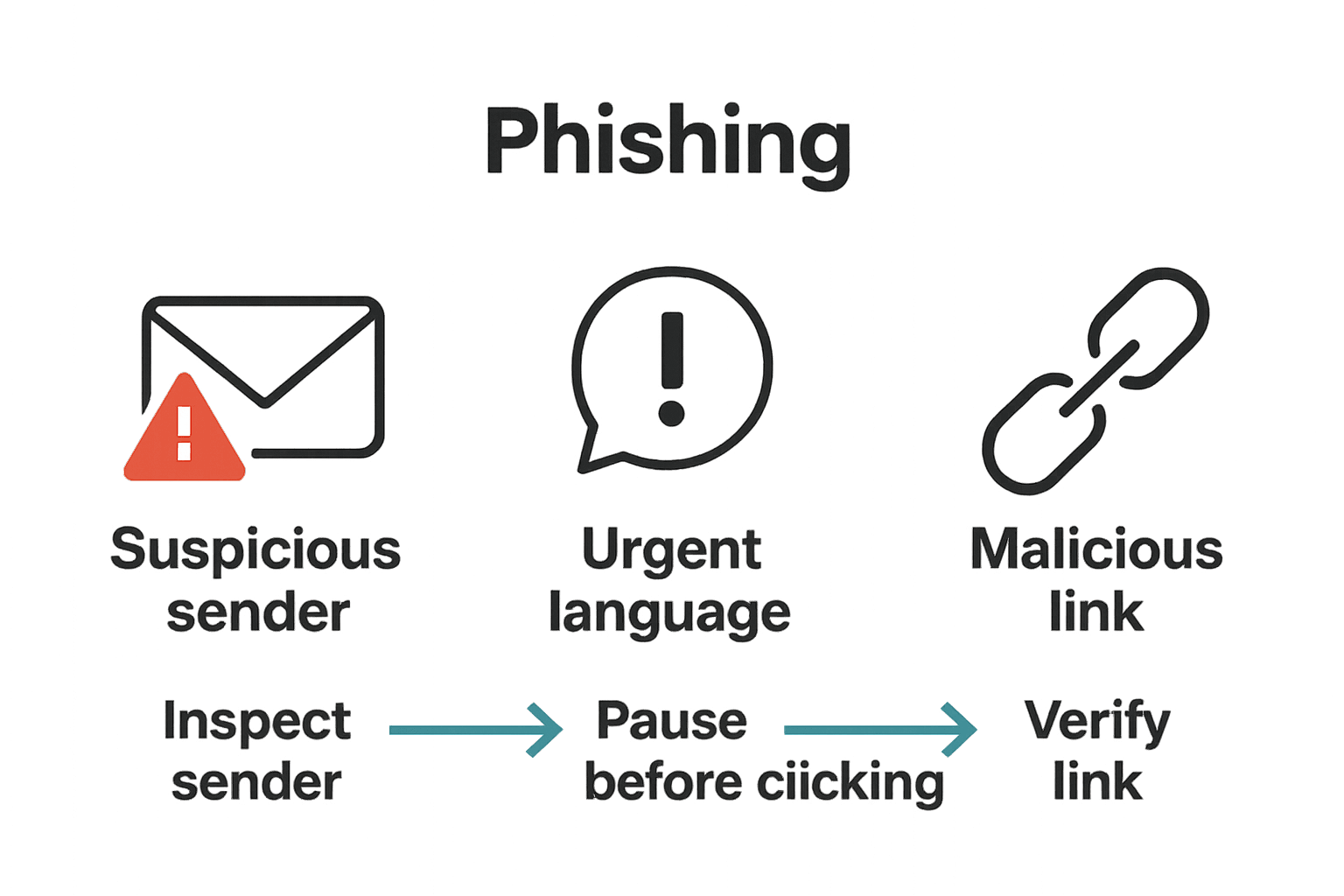
- Emails from unfamiliar or slightly misspelled sender addresses
- Generic greetings like “Dear Customer” instead of your name
- Spelling and grammatical errors in professional communications
- Suspicious links or unexpected attachments
- Requests to verify personal information immediately
- Threats of account closure or legal action
Research from the Phishing Codebook emphasizes that successful phishing detection requires understanding the psychological manipulation techniques used by cybercriminals. By training yourself to recognize these warning signs and maintaining a skeptical approach to unexpected communications, you can significantly reduce your risk of falling victim to these sophisticated attacks.
To strengthen your organization’s defense against these threats, learn more in our guide on preventing phishing.
Effective Strategies for Identifying Threats
Developing a robust approach to phishing threat detection requires a multifaceted strategy that combines technological solutions with human intuition. Recent research from arXiv demonstrates the potential of advanced machine learning techniques in analyzing and identifying potential phishing attempts, highlighting the importance of sophisticated detection methods beyond traditional security approaches.
Technical Analysis plays a crucial role in threat identification. This involves examining email headers, analyzing link destinations, and scanning for suspicious attachments. Modern approaches leverage artificial neural networks to process thousands of data points, identifying subtle patterns that might escape human detection. Psychological Awareness is equally important, as phishing attacks often exploit human emotions and cognitive vulnerabilities.
Key strategies for effective threat identification include:
- Implementing advanced email filtering technologies
- Conducting regular security awareness training
- Using multi-factor authentication
- Verifying sender identities through multiple channels
- Maintaining updated cybersecurity protocols
- Encouraging a culture of skeptical communication
According to research from arXiv, the most effective approach combines technical analysis with an understanding of human psychological manipulation tactics. By training employees to recognize both technical red flags and persuasive communication strategies, organizations can create a more comprehensive defense against sophisticated phishing attempts.
To gain deeper insights into protecting your organization, explore our guide on understanding types of cyber threats.
Mitigating Risk and Responding to Attacks
Risk mitigation in phishing defense requires a comprehensive, proactive approach that combines technological solutions with strategic organizational practices. According to research from arXiv, successful anti-phishing techniques demand continuous adaptation and research to stay ahead of evolving cyber threats.
Immediate Response Protocols are critical when a potential phishing attack is detected. Organizations should implement a structured framework that includes rapid isolation of suspicious communications, immediate notification of relevant security personnel, and swift containment of potential breach points. This involves disconnecting affected systems, conducting thorough forensic analysis, and preventing potential data exfiltration before comprehensive damage can occur.
Key risk mitigation strategies include:
- Developing a clear incident response plan
- Implementing advanced threat detection systems
- Conducting regular security awareness training
- Creating robust backup and recovery mechanisms
- Establishing multi-layered authentication protocols
- Performing periodic vulnerability assessments
Research from arXiv emphasizes the importance of machine learning techniques in rapidly identifying and responding to phishing threats. By leveraging advanced detection methods, organizations can significantly reduce their vulnerability window and minimize potential damage from sophisticated cyber attacks.
To enhance your organization’s cybersecurity preparedness, explore our guide on effective cybersecurity training for employees.
Protect Your Business from Phishing Threats with SRS Networks
Phishing emails pose real risks to your business security by exploiting human trust and technical vulnerabilities. This article highlights key pain points such as detecting urgent fraudulent emails, recognizing sophisticated attack types like spear phishing, and responding effectively before data breaches occur. If you are concerned about safeguarding your organization against these manipulative threats, understanding these challenges is the first step.
SRS Networks specializes in delivering tailored cybersecurity solutions designed to stop phishing attacks before they impact your operations. Our proactive email security, endpoint protection, and employee training programs empower you to spot phishing attempts early and respond confidently. We know how critical it is to protect sensitive information and maintain business continuity in a world of evolving cyber risks.
Ready to secure your business now? Experience the benefits of expert-led cybersecurity tailored for small and mid-sized companies in the Monterey Bay Area.

Explore how our Cybersecurity Solutions can defend your network and employees from phishing attacks. Visit SRS Networks to learn more about our comprehensive IT services. Let us provide you with the strategic guidance and reliable support you need to stay safe cyber threats. Act today to build a stronger defense against phishing with trusted local partners by your side.
Frequently Asked Questions
What are phishing emails?
Phishing emails are fraudulent communications that appear to be from legitimate sources, designed to trick recipients into revealing sensitive information or taking harmful actions.
How can I identify a phishing email?
Look for warning signs such as unfamiliar sender addresses, generic greetings, spelling errors, urgent requests for personal information, and suspicious links or attachments.
What are common types of phishing attacks?
Common types include email phishing, spear phishing, whaling, vishing (voice phishing), smishing (SMS phishing), clone phishing, and angler phishing, each targeting different groups using various methods.
What should I do if I receive a phishing email?
Immediately avoid clicking any links or downloading attachments. Report the email to your IT department or email provider, and consider changing your passwords if you’ve provided any information. Stay vigilant and monitor your accounts for unusual activity.