More than 60 percent of businesses now outsource at least some of their IT functions. Keeping up with rapid technology changes and mounting security risks can be tough for companies with limited resources. Outsourcing IT support is no longer just a trend but a smart move for organizations looking to save money, boost performance, and tap into top-tier technical expertise without heavy investments. This guide clarifies what IT outsourcing really means and how it can help your business grow.
Table of Contents
- What Does IT Outsourcing Mean?
- Types of IT Services to Outsource
- Key Benefits of Outsourcing IT Services
- Cost-Effectiveness and Budget Implications
- Mitigating Risks and Ensuring Compliance
- Choosing the Right IT Outsourcing Partner
Key Takeaways
| Point | Details |
|---|---|
| Strategic IT Outsourcing | IT outsourcing allows businesses to leverage external expertise for technology management, enhancing efficiency and reducing costs. |
| Common Services | Typical IT services outsourced include network management, cybersecurity, cloud computing, and technical support, among others. |
| Cost Efficiency | Outsourcing transforms unpredictable IT expenses into manageable operational costs, enabling businesses to focus on core competencies. |
| Risk Mitigation | Establishing clear contracts and ongoing monitoring is vital for effective risk management in outsourcing agreements, ensuring compliance and security. |
What Does IT Outsourcing Mean?
IT outsourcing represents a strategic business approach where organizations transfer their technology management and support functions to external specialized service providers. Outsourcing IT services allows companies to access expert technical support without maintaining a full internal IT department.
According to Gartner, IT outsourcing involves “the use of external service providers to effectively deliver IT-enabled business processes, application services, and infrastructure solutions for business outcomes.” This definition captures the core essence of the practice: leveraging external expertise to enhance technological capabilities.
The primary motivations for IT outsourcing typically include:
- Reducing operational technology costs
- Accessing specialized technical skills
- Improving operational efficiency
- Allowing internal teams to focus on core business functions
- Gaining access to advanced technological infrastructure
As GAO explains, outsourcing involves “transferring responsibility for one or more IT services to external providers, who manage the processes, people, and technology associated with these services.” This transfer is not just about delegating tasks but creating a strategic partnership that enables businesses to remain technologically competitive.
For small to medium-sized businesses, IT outsourcing offers a flexible solution to complex technological challenges. Instead of investing heavily in internal infrastructure and full-time technical staff, companies can now access enterprise-grade support at a fraction of the traditional cost. The model allows organizations to scale their technological capabilities dynamically, responding quickly to changing business needs without significant upfront investments.
Types of IT Services to Outsource
Businesses have numerous IT services they can effectively outsource to specialized providers, allowing them to optimize their technological capabilities while focusing on core operational objectives. Understanding the range of services available helps organizations make strategic decisions about which functions to transfer externally.
According to Gartner, typical IT services suitable for outsourcing include business process services, application services, and comprehensive infrastructure solutions. These services encompass utility services, software as a service, and cloud-enabled outsourcing, providing businesses with flexible technological support.
The most common types of IT services businesses typically outsource include:
- Network Management: Handling network infrastructure, monitoring, and security
- Cybersecurity Services: Threat detection, prevention, and incident response
- Cloud Computing: Migration, hosting, and management of cloud infrastructure
- Help Desk & Technical Support: Remote and onsite technical assistance
- Data Backup and Recovery: Comprehensive data protection and disaster recovery planning
- Software Development and Maintenance: Custom application development and ongoing support
- Compliance and Risk Management: Ensuring technological adherence to industry regulations
As Wikipedia highlights, these outsourced services often encompass “application development and maintenance, systems operations, network and communications management, end-user computing support, and systems planning and management.” This comprehensive approach allows organizations to leverage specialized expertise without maintaining extensive internal IT departments.

For small to medium-sized businesses in the Monterey Bay Area, strategic IT service outsourcing can provide access to enterprise-grade technological capabilities at a fraction of the traditional cost. Learn more about our managed IT services benefits and discover how targeted outsourcing can transform your technological infrastructure.
Key Benefits of Outsourcing IT Services
Outsourcing IT services has become a strategic imperative for small to medium-sized businesses seeking to optimize their technological capabilities while managing operational costs. Strategic IT outsourcing provides organizations with a powerful mechanism to access specialized expertise without the substantial overhead of maintaining a full internal IT department.
According to Gartner, outsourcing IT services enables enterprises to “reduce costs, accelerate time to market, and take advantage of external expertise, assets, and intellectual property.” This approach allows businesses to strategically redirect their resources toward core competencies and growth initiatives.
The key benefits of outsourcing IT services include:
- Cost Efficiency: Reducing operational and infrastructure expenses
- Access to Expertise: Leveraging specialized technological knowledge
- Scalability: Quickly adapting technological resources to business needs
- 24/7 Support: Ensuring continuous technological operational readiness
- Risk Mitigation: Transferring complex technological management responsibilities
- Enhanced Security: Implementing advanced cybersecurity protocols
- Technology Modernization: Staying current with emerging technological trends
Research from OAJI further validates these advantages, highlighting that outsourcing enables organizations to “focus on core activities, improve efficiency by reducing operational costs, and gain or reinforce competitive advantage in the market.”
Learn more about our IT support benefits for local businesses and discover how strategic technological partnerships can transform your operational capabilities.
Cost-Effectiveness and Budget Implications
For small to medium-sized businesses, IT outsourcing represents a strategic financial approach that transforms technological expenses from unpredictable capital investments into manageable operational costs. By leveraging external expertise, organizations can significantly optimize their technology spending while maintaining high-performance infrastructure.
According to Gartner, IT outsourcing enables enterprises to “reduce costs by leveraging external service providers for IT-enabled business processes, application services, and infrastructure solutions.” This approach allows businesses to allocate resources more strategically, redirecting financial investments toward core growth initiatives.
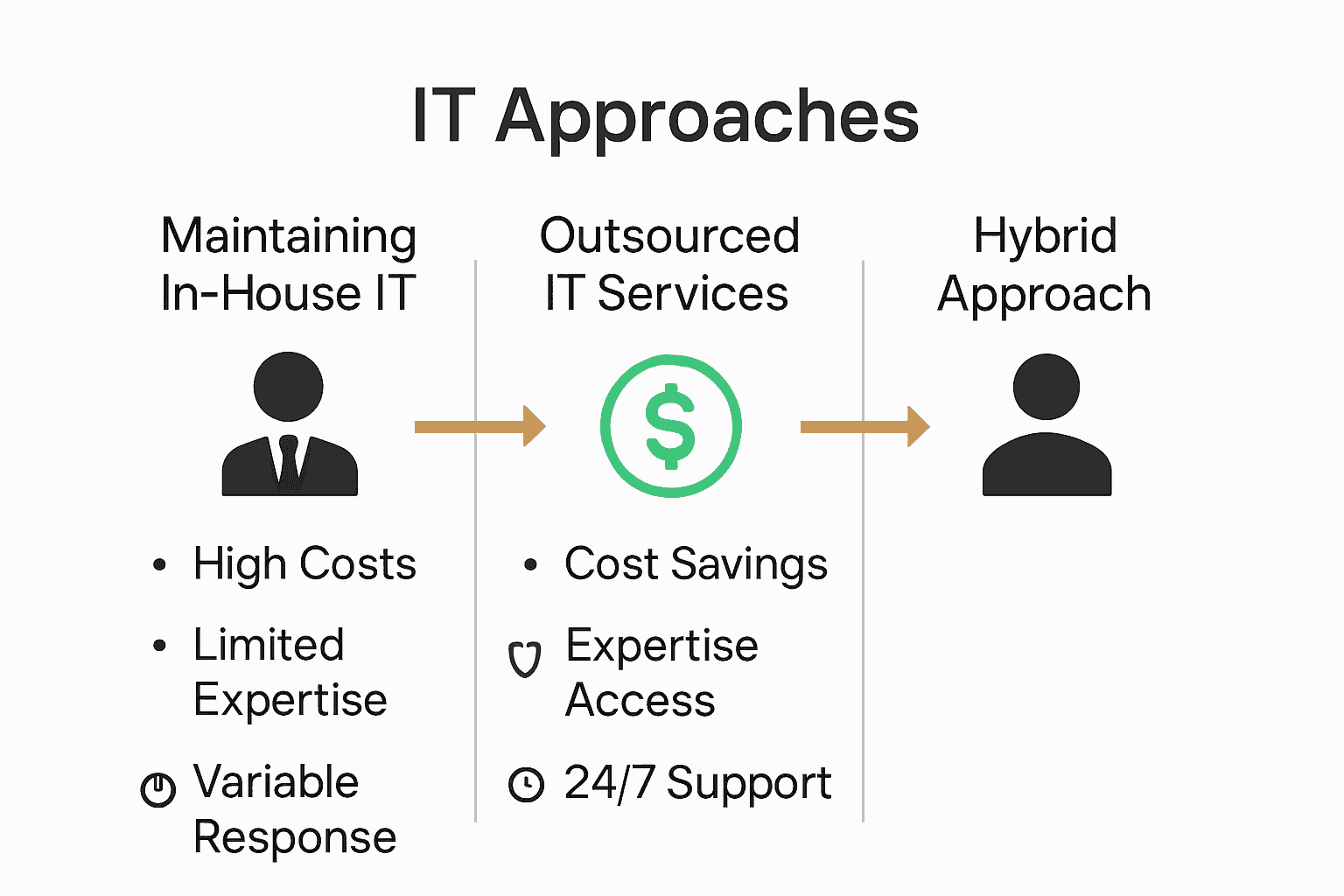
The primary cost-saving mechanisms of IT outsourcing include:
- Reduced Personnel Expenses: Eliminating full-time IT staff salaries and benefits
- Lower Infrastructure Costs: Minimizing hardware, software, and maintenance investments
- Predictable Monthly Expenses: Converting variable technology costs into fixed operational budgets
- Elimination of Training Expenditures: Accessing pre-trained, specialized technological expertise
- Scalable Resource Allocation: Adjusting technological support without significant financial commitments
- Avoiding Expensive Technology Upgrades: Leveraging provider’s continuous technological investments
Research from OAJI further validates these financial advantages, indicating that outsourcing “can lead to cost savings by reducing operational expenses and allowing organizations to focus on core competencies.”
Discover how our IT support benefits local businesses and learn how strategic technological partnerships can transform your financial approach to technology management.
Mitigating Risks and Ensuring Compliance
Cybersecurity and regulatory compliance represent critical challenges for small to medium-sized businesses navigating the complex technological landscape. Outsourcing IT services provides a strategic approach to managing these risks by leveraging specialized expertise and robust protective mechanisms that many organizations cannot develop internally.
According to the GAO, effective risk management in IT outsourcing requires “clear contracts, effective governance structures, and ongoing monitoring to mitigate potential risks associated with outsourcing agreements.” This approach ensures that businesses can protect their digital assets while maintaining operational flexibility.
Key risk mitigation strategies in IT outsourcing include:
- Comprehensive Contract Frameworks: Establishing clear legal boundaries and expectations
- Regular Security Audits: Continuous assessment of technological vulnerabilities
- Data Protection Protocols: Implementing robust encryption and access control measures
- Compliance Monitoring: Ensuring adherence to industry-specific regulatory requirements
- Incident Response Planning: Developing proactive strategies for potential security breaches
- Vendor Performance Tracking: Maintaining ongoing evaluation of service provider effectiveness
Research from ArXiv underscores the complexity of outsourcing relationships, highlighting the “necessity of understanding and managing the various risks and compliance issues that can arise during the outsourcing process.”
Learn more about the role of IT in compliance for SMBs and discover how strategic partnerships can transform your approach to technological risk management.
Choosing the Right IT Outsourcing Partner
Strategic partner selection represents the cornerstone of successful IT outsourcing for small to medium-sized businesses. The right technological partner can transform your organization’s operational capabilities, while the wrong choice can lead to significant disruptions and potential vulnerabilities.
According to Gartner, selecting IT service providers requires “developing appropriate sourcing strategies, structuring optimal contracts, and governing deals to ensure sustainable, win-win relationships.” This approach helps businesses achieve their desired technological outcomes through carefully curated partnerships.
Key criteria for selecting an ideal IT outsourcing partner include:
- Local Expertise: Understanding regional technological landscapes and compliance requirements
- Industry-Specific Knowledge: Demonstrated experience in your business sector
- Comprehensive Service Range: Ability to provide end-to-end technological support
- Robust Security Protocols: Proven track record of cybersecurity management
- Scalability: Capacity to grow and adapt with your business
- Transparent Communication: Clear reporting and responsive support channels
- Cultural Alignment: Shared values and commitment to your organizational goals
Research from ArXiv emphasizes the importance of “careful planning and execution when selecting outsourcing partners,” highlighting the critical need to align technological partnerships with broader organizational objectives.
Explore our comprehensive managed IT support overview to understand how the right technological partner can drive your business forward.
Unlock the Full Potential of IT Outsourcing for Your Business
The article highlights how small to medium-sized businesses face challenges like rising IT costs, complex cybersecurity needs, and the struggle to keep pace with technology without large internal teams. If your organization seeks cost efficiency, expertise, and scalable solutions that help you focus on core business goals, outsourcing IT services is a powerful option. You deserve a trusted partner who understands these pain points and crafts tailored strategies just for you.
At SRS Networks, we specialize in bridging that gap for Monterey Bay Area businesses with personalized Managed IT Services and robust Cybersecurity Solutions. We deliver proactive support, continuous monitoring, and compliance-driven protection to keep your systems secure and running smoothly. Let us help you conquer IT challenges while enhancing operational efficiency and ensuring predictable budgeting.
Take the next step toward optimized technology management
Discover how strategic IT outsourcing transforms your business with expert guidance and reliable local support. Visit SRS Networks to learn how our scalable IT solutions empower regional SMBs to grow securely and thrive. Connect with us today to build a custom IT roadmap designed just for your success.
Frequently Asked Questions
What is IT outsourcing?
IT outsourcing is a strategic approach where organizations transfer their technology management and support functions to external providers, allowing them to access specialized expertise without maintaining a full internal IT department.
What are the benefits of outsourcing IT services for SMBs?
The key benefits include cost efficiency, access to specialized expertise, scalability, 24/7 support, risk mitigation, enhanced security, and technology modernization. It allows businesses to focus on core competencies and growth initiatives.
Which IT services can businesses outsource?
Businesses can outsource services like network management, cybersecurity, cloud computing, technical support, data backup and recovery, software development, and compliance management among others.
How can outsourcing IT services help mitigate risks?
Outsourcing IT services helps manage risks through comprehensive contract frameworks, regular security audits, data protection protocols, compliance monitoring, incident response planning, and vendor performance tracking.