Disaster preparedness might sound like a buzzword reserved for giant corporations but it impacts every business, big or small. Most owners do not realize that proactive planning can cut recovery costs by up to 90 percent after a disruption. Instead of treating it like a worst-case scenario checklist, think of preparedness as a muscle that protects your team, your customers, and the future of your business before trouble even starts.
Table of Contents
- Defining Disaster Preparedness For Businesses
- The Importance Of Disaster Preparedness In Today’s Economy
- Key Concepts And Components Of Disaster Preparedness
- Real-World Examples: Lessons From Disaster Situations
- Creating A Culture Of Preparedness In Your Organization
Quick Summary
| Takeaway | Explanation |
|---|---|
| Implement detailed risk assessments | Conduct thorough evaluations to identify and quantify potential threats to business operations. |
| Develop comprehensive response protocols | Create adaptable frameworks that enable effective decision-making during unexpected events. |
| Foster a culture of preparedness | Encourage leadership commitment and employee engagement in proactive risk management practices. |
| Continuous evaluation and adaptation | Regularly update strategies based on new risks and feedback from training and real-world scenarios. |
| Leverage technological infrastructure | Invest in systems that ensure operational continuity and quick recovery during disruptions. |
Defining Disaster Preparedness for Businesses
Disaster preparedness represents a strategic approach that enables businesses to anticipate, respond to, and recover from unexpected disruptions that could potentially threaten their operations, employees, and overall organizational sustainability. Unlike reactive strategies, disaster preparedness involves proactive planning and systematic risk management designed to minimize potential damage and ensure business continuity.
What Constitutes Business Disaster Preparedness
At its core, disaster preparedness encompasses comprehensive planning that addresses multiple potential scenarios businesses might encounter. This includes natural disasters like earthquakes, floods, and severe weather events, as well as human-caused disruptions such as cyberattacks, infrastructure failures, or significant operational interruptions.
The following table highlights the key components of effective disaster preparedness for businesses, organizing each element alongside its primary purpose to clarify their roles within a comprehensive strategy.
| Component | Purpose |
|---|---|
| Detailed risk assessment | Identifies and quantifies potential threats to operations |
| Emergency response protocols | Provides clear actions during unexpected disruptions |
| Communication strategies | Ensures stakeholders are informed and coordinated |
| Data and infrastructure backups | Protects critical business information and systems |
| Employee training and safety | Equips staff with skills to respond and stay protected |
| Comprehensive disaster preparedness requires businesses to develop robust frameworks that protect critical assets, maintain essential functions, and create resilient response mechanisms. |
Key components of effective disaster preparedness typically include:
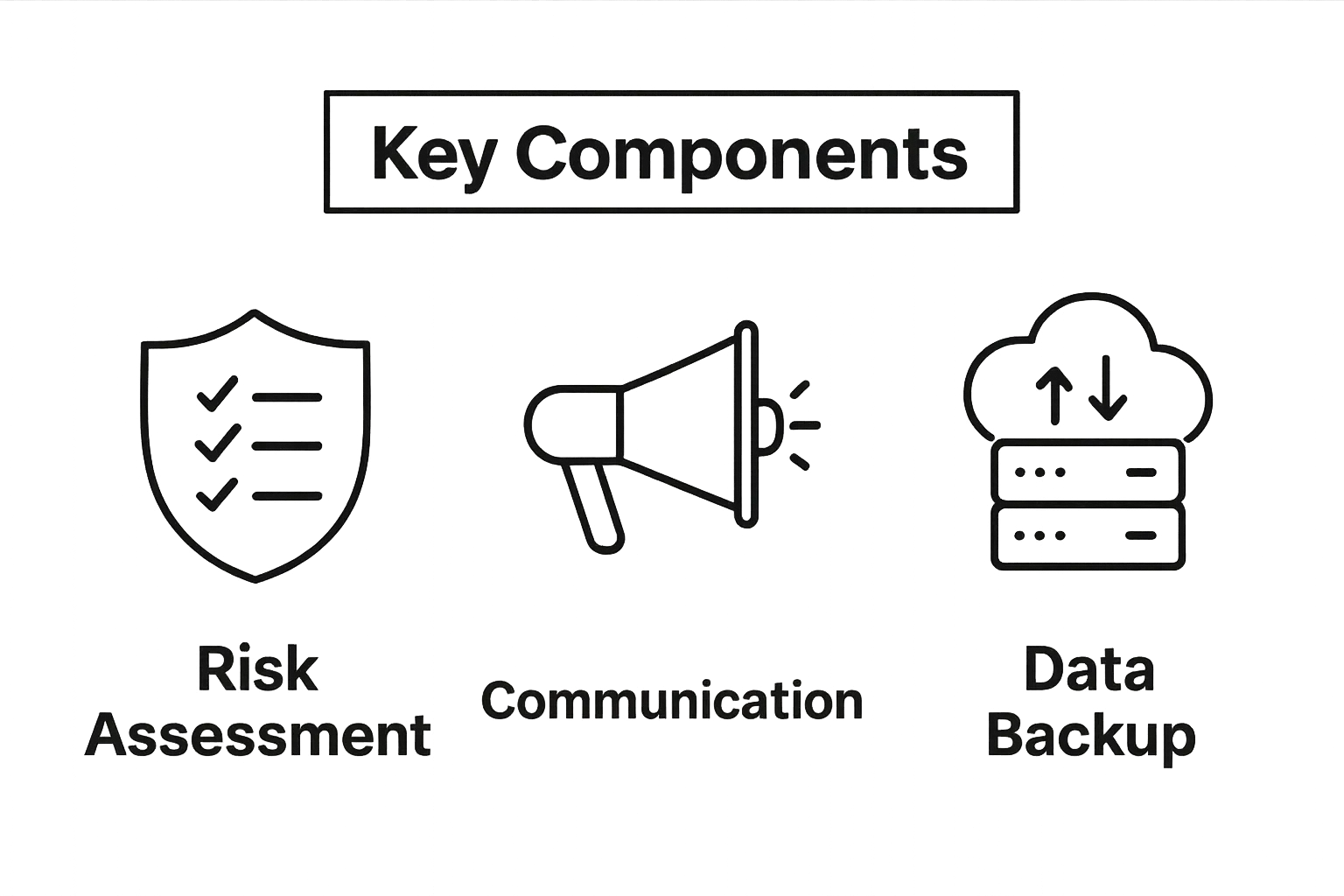
- Detailed risk assessment identifying potential threats
- Comprehensive emergency response protocols
- Clear communication strategies for stakeholders
- Robust data and infrastructure backup systems
- Employee training and safety procedures
Strategic Importance of Preparedness
Businesses that invest in disaster preparedness gain significant strategic advantages. Beyond physical and financial protection, these strategies demonstrate organizational maturity, enhance stakeholder confidence, and provide a competitive edge. Preparedness is not just about survival but about maintaining operational momentum during challenging circumstances. By developing adaptive strategies, businesses can transform potential disruptions into opportunities for resilience and strategic realignment.
The objective is creating a flexible, responsive organizational framework capable of absorbing shocks and maintaining core business functions, regardless of external challenges. This approach requires continuous evaluation, updating of strategies, and a commitment to proactive risk management.
The Importance of Disaster Preparedness in Today’s Economy
In an increasingly complex and unpredictable business landscape, disaster preparedness has evolved from a peripheral consideration to a critical strategic imperative. Economic volatility, technological disruptions, and global interconnectedness have dramatically heightened the potential impact of unexpected events on organizational sustainability and financial performance.
Economic Resilience Through Strategic Planning
Businesses that prioritize comprehensive disaster preparedness position themselves to navigate economic uncertainties with greater confidence and agility. According to research from the Small Business Administration, proactive planning can significantly mitigate financial risks and protect organizational assets during challenging periods. This approach transforms potential vulnerabilities into strategic opportunities for maintaining operational continuity.
Key economic benefits of robust disaster preparedness include:
- Minimizing financial losses during unexpected disruptions
- Protecting critical revenue streams
- Maintaining investor and stakeholder confidence
- Reducing long-term recovery costs
- Ensuring rapid operational restoration
Competitive Advantage in Uncertain Markets
Disaster preparedness represents more than risk management – it is a strategic differentiator in competitive markets. Organizations that demonstrate advanced resilience planning signal institutional maturity, technological sophistication, and strategic foresight to customers, investors, and partners. By developing comprehensive contingency frameworks, businesses can quickly adapt to sudden market shifts, technological disruptions, or systemic economic challenges.
The contemporary economic environment demands dynamic, responsive organizational structures capable of absorbing and quickly recovering from unexpected shocks. Businesses that integrate disaster preparedness into their core strategic planning create adaptive mechanisms that enable them to maintain momentum during turbulent periods, ultimately enhancing their long-term economic sustainability and competitive positioning.
Key Concepts and Components of Disaster Preparedness
Disaster preparedness is a multifaceted approach that requires comprehensive understanding of various interconnected elements. Organizations must develop nuanced strategies that address potential risks comprehensively, integrating technological, human, and systemic considerations into a cohesive framework.
Risk Assessment and Identification
Effective disaster preparedness begins with thorough and systematic risk assessment. According to the Federal Emergency Management Agency, understanding potential vulnerabilities is crucial for developing targeted mitigation strategies. This process involves identifying potential threats specific to an organization’s operational context, geographical location, technological infrastructure, and industry-specific challenges.
Critical elements of comprehensive risk assessment include:
- Detailed mapping of potential internal and external risks
- Evaluation of historical disruption patterns
- Analysis of organizational vulnerabilities
- Quantification of potential financial and operational impacts
- Assessment of existing protective mechanisms
Strategic Response Framework
Developing a robust response framework transcends simple contingency planning. It requires creating adaptive, flexible mechanisms that enable rapid decision making and resource allocation during unexpected events. This framework must integrate multiple layers of organizational resilience, including technological infrastructure, communication protocols, and human resource management.
A comprehensive disaster preparedness strategy encompasses technical capabilities, human expertise, and systemic adaptability. Organizations must cultivate a holistic approach that views disaster preparedness not as a static document but as a dynamic, continuously evolving organizational capability. This approach demands ongoing training, technological investment, and a cultural commitment to proactive risk management and organizational resilience.
Real-World Examples: Lessons from Disaster Situations
Real-world disaster scenarios offer powerful insights into the critical importance of comprehensive preparedness strategies. These experiences reveal not just the potential consequences of inadequate planning, but also demonstrate how strategic approaches can transform potential catastrophes into manageable challenges.
Corporate Resilience in Technological Disruptions
Research from the Business Continuity Institute highlights how technological disruptions can dramatically impact organizational operations. For instance, major corporations like Amazon and Google have developed sophisticated redundancy systems that enable rapid recovery from potential infrastructure failures. These organizations invest heavily in distributed computing architectures, multiple data centers, and advanced backup systems that ensure continuous service delivery even during significant technological challenges.
Key lessons from technological disaster scenarios include:
- Importance of decentralized infrastructure
- Critical need for real-time data replication
- Value of redundant communication systems
- Necessity of rapid response protocols
- Continuous technological monitoring capabilities
Natural Disaster Response Strategies
Businesses operating in regions prone to natural disasters demonstrate remarkable adaptation strategies. Companies in hurricane-vulnerable regions like Florida have developed comprehensive evacuation protocols, remote work frameworks, and advanced communication systems that enable them to maintain operational continuity during extreme weather events. These strategies go beyond simple emergency response, representing sophisticated organizational resilience mechanisms that protect both human resources and critical business infrastructure.
These real-world examples underscore a fundamental principle: effective disaster preparedness is not about preventing every possible scenario, but developing organizational flexibility, robust communication protocols, and adaptive response mechanisms that enable rapid recovery and minimal operational disruption.
This table compares technological and natural disaster preparedness strategies based on real-world examples, illustrating their distinct resilience approaches and critical features for business continuity.
| Scenario Type | Example Strategies | Critical Features |
|---|---|---|
| Technological | Distributed computing, redundant systems, rapid protocols | Decentralized infrastructure, real-time backups |
| Natural Disasters | Evacuation plans, remote work setups, adaptive communication | Advanced comms, employee safety, continuity plans |
Creating a Culture of Preparedness in Your Organization
Building a robust disaster preparedness culture requires more than implementing policies and procedures. It demands a fundamental shift in organizational mindset, transforming preparedness from a compliance requirement into a core strategic value that permeates every level of the organization.
Leadership and Cultural Integration
According to research from Harvard Business Review, successful preparedness cultures start with committed leadership that actively models and communicates the importance of proactive risk management. Leaders must demonstrate that disaster preparedness is not an isolated function but a fundamental organizational capability that requires continuous attention, investment, and strategic thinking.
Key elements of leadership-driven preparedness culture include:
- Transparent communication about organizational risks
- Regular training and skills development
- Consistent reinforcement of preparedness principles
- Recognition and reward of proactive risk management behaviors
- Open dialogue about potential vulnerabilities
Organizational Learning and Adaptation
Preparedness is fundamentally an ongoing learning process, not a static set of guidelines. Organizations must create mechanisms that encourage continuous skill development, knowledge sharing, and adaptive thinking. This involves developing systems that capture lessons from near-misses, simulate potential scenarios, and integrate feedback from employees across different organizational levels.
Successful preparedness cultures recognize that every team member plays a critical role in maintaining organizational resilience. By democratizing risk awareness and creating channels for bottom-up input, businesses can develop more comprehensive and nuanced disaster response strategies that leverage collective organizational intelligence.

Strengthen Your Disaster Preparedness with SRS Networks
Facing disruptions can feel overwhelming, especially knowing how quickly a business can go from fully operational to struggling if disaster strikes. This article emphasizes how crucial disaster preparedness is for reducing downtime, limiting financial loss, and preserving trust with your team and customers. Concepts like robust backup systems, proactive risk management, and a culture of readiness all play a part in building true resilience.
If your organization wants to move from reactive firefighting to proactive protection, SRS Networks is your ideal partner. We deliver comprehensive IT solutions that include managed IT, real-time monitoring, cybersecurity, detailed disaster recovery planning, and automated data backup. Our local experts will help you turn disaster preparedness from a checklist into a living strategy tailored to your unique needs. When others are caught off guard, you will keep serving your clients and growing your business.
Take the first step toward true business resilience. Visit SRS Networks today to see how our Data Backup & Business Continuity services safeguard your operations, provide peace of mind, and ensure you are never left unprepared. Connect with us now to secure your future.
Frequently Asked Questions
What is disaster preparedness for businesses?
Disaster preparedness for businesses is a strategic approach that enables organizations to anticipate, respond to, and recover from unexpected disruptions, ensuring operational continuity and minimizing potential damage.
Why is disaster preparedness important for businesses?
Disaster preparedness is vital as it helps businesses navigate unexpected events, protects financial assets, maintains stakeholder confidence, and provides a competitive edge in uncertain markets.
What are the key components of an effective disaster preparedness strategy?
Key components include a detailed risk assessment, emergency response protocols, communication strategies, data backup systems, and employee training to ensure a comprehensive approach to potential disruptions.
How can a business create a culture of preparedness?
Creating a culture of preparedness involves committed leadership, transparent communication about risks, regular training, recognizing proactive behaviors, and encouraging continuous learning and adaptation at all organizational levels.