Did you know that over 60 percent of data breaches target small and midsize businesses? Many organizations underestimate the importance of network vulnerability scans, leaving their systems exposed to cyberattacks that can disrupt operations and damage reputations. Understanding what a network vulnerability scan really does, and clearing up the most common myths, gives you the knowledge to safeguard your business against threats that often go unnoticed until it is too late.
Key Takeaways
| Point | Details |
|---|---|
| Importance of Regular Scanning | Network vulnerability scans are essential for all organizations, not just large ones, to identify and address security weaknesses proactively. |
| Types of Scans | Combining authenticated and unauthenticated scans provides a comprehensive view of internal and external security vulnerabilities. |
| Regulatory Compliance | Regular vulnerability scanning is crucial for meeting industry-specific compliance requirements and avoiding significant penalties. |
| Continuous Risk Management | Implementing ongoing vulnerability management practices and monitoring is critical to adapting to ever-evolving cyber threats. |
Key Takeaways from Network Vulnerability Scanning
- Defining Network Vulnerability Scans And Misconceptions
- Types Of Network Vulnerability Scans Explained
- How Vulnerability Scanning Works In Practice
- Regulatory Compliance And Legal Requirements
- Managing Risks And Avoiding Common Pitfalls
Defining Network Vulnerability Scans and Misconceptions
A network vulnerability scan is a systematic evaluation of your organization’s digital infrastructure designed to identify potential security weaknesses before malicious actors can exploit them. Think of it like a comprehensive health check for your computer network – proactively searching for vulnerabilities that might compromise your systems.
Many businesses mistakenly believe vulnerability scans are optional or only necessary for large enterprises. This couldn’t be further from the truth. Small and medium-sized organizations are actually prime targets for cybercriminals precisely because they often neglect fundamental security practices. Network vulnerability scans help uncover hidden risks such as:
- Outdated software versions
- Misconfigured network devices
- Unpatched system vulnerabilities
- Weak password configurations
- Potential entry points for unauthorized access
The scanning process involves automated tools that methodically probe your network’s hardware, software, and configurations, generating detailed reports about potential security gaps. Unlike manual security assessments, these scans provide quick, comprehensive insights without disrupting your daily operations. Imagine having a digital detective systematically checking every lock, window, and potential entry point in your digital infrastructure – that’s essentially what a network vulnerability scan accomplishes.
Contrary to popular misconception, vulnerability scans are not one-time events but continuous processes. Cyber threats evolve rapidly, and what might seem secure today could become a significant risk tomorrow. Regular scanning allows businesses to stay ahead of potential security breaches, demonstrating proactive risk management and protecting critical digital assets.
Types of Network Vulnerability Scans Explained
According to Gartner, network vulnerability scans can be broadly categorized into two primary types: authenticated and unauthenticated scans. These different approaches provide unique perspectives on potential security risks, helping organizations develop a comprehensive understanding of their network’s vulnerabilities.
Unauthenticated Vulnerability Scans
Unauthenticated scans simulate the perspective of an external attacker attempting to discover potential entry points without any insider access. These scans:
- Analyze network perimeter defenses
- Identify open ports and services
- Detect potential external network vulnerabilities
- Mimic the view of a potential cybercriminal
- Highlight potential points of unauthorized entry
Think of unauthenticated scans like checking your home’s external security – looking for unlocked windows, exposed entry points, or weaknesses in your fence that an outsider might exploit.
Authenticated Vulnerability Scans
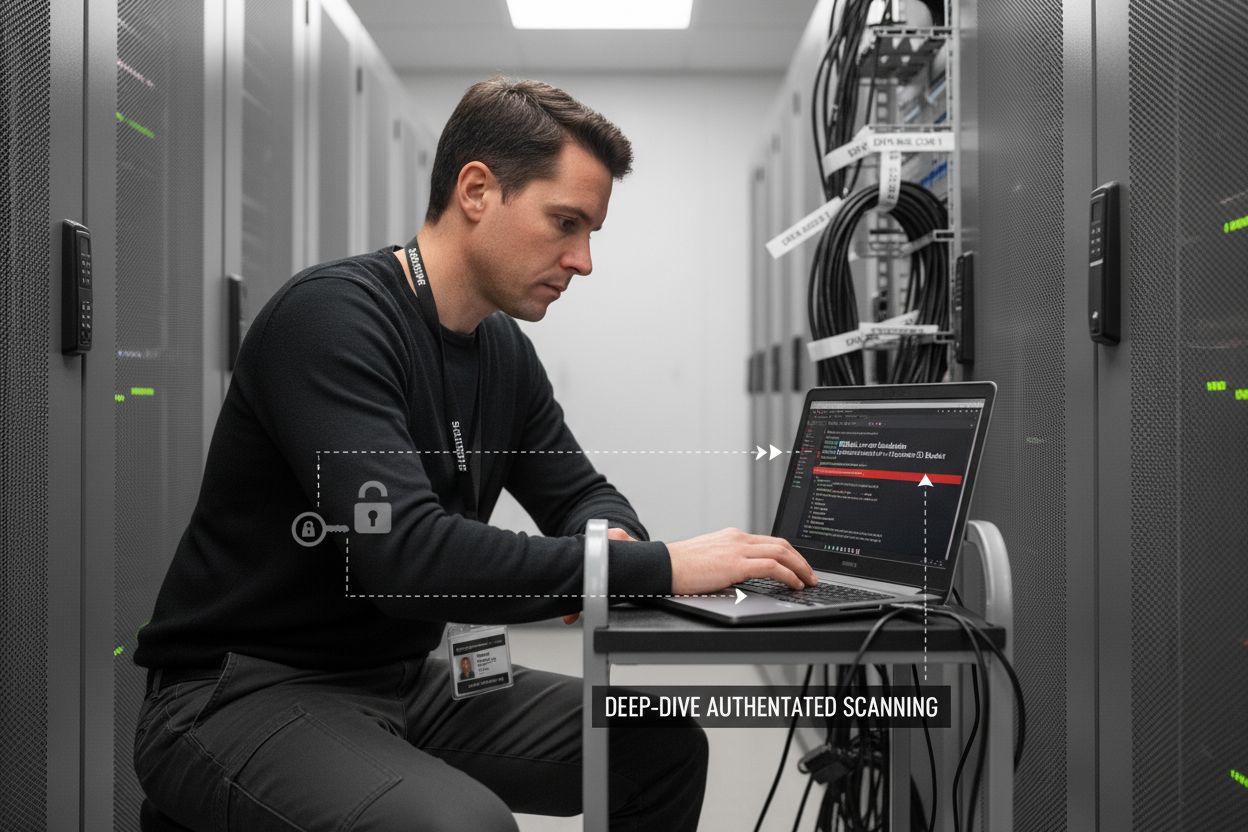
In contrast, authenticated scans provide a more in-depth analysis by using legitimate login credentials to probe deeper into system configurations and potential internal vulnerabilities. These scans:
- Log in with authorized user credentials
- Perform comprehensive internal network assessments
- Reveal misconfigurations within systems
- Identify unpatched software and potential insider risks
- Evaluate user access permissions and security settings
Authenticated scans are comparable to having a security expert walk through every room of your building, checking locks, reviewing access protocols, and identifying potential internal security gaps.
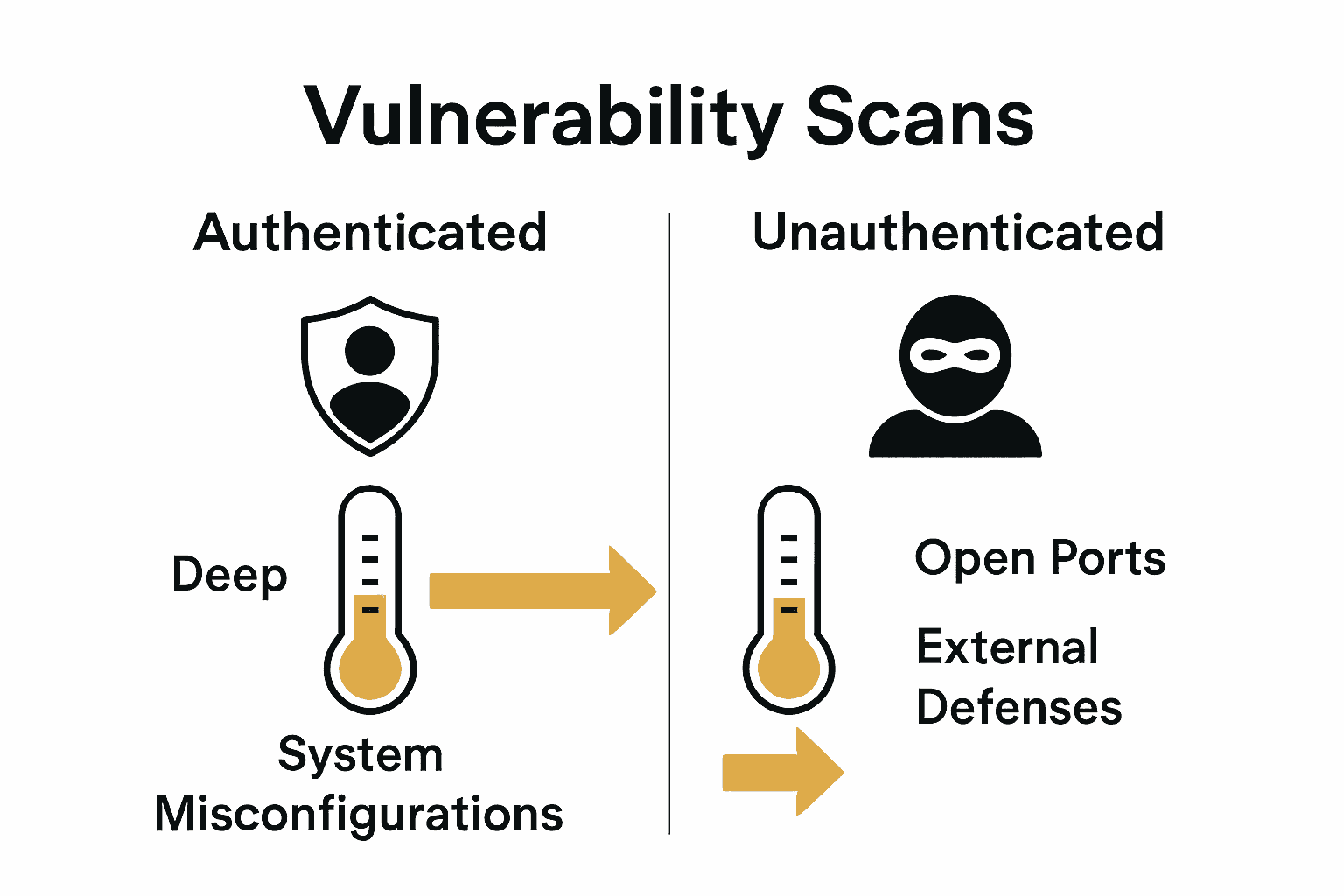
Here’s a comparison of authenticated and unauthenticated vulnerability scans:
| Feature | Authenticated Scans | Unauthenticated Scans |
|---|---|---|
| Access Level | Internal (logged-in) | External (no credentials) |
| Perspective Simulated | Insider/user | Outsider/attacker |
| Depth of Assessment | Deep (configurations & permissions) | Surface (perimeter only) |
| Typical Findings | Misconfigurations Insider risks Unpatched software |
Open ports External weaknesses Publicly exposed services |
| Use Case | Internal security review | Perimeter defense check |
By combining both authenticated and unauthenticated scanning approaches, organizations can develop a holistic view of their network’s security posture, addressing vulnerabilities from both external and internal perspectives.
How Vulnerability Scanning Works in Practice
According to NIST guidance, vulnerability scanning is a systematic process that employs automated tools to methodically analyze network systems and identify potential security weaknesses. Network vulnerability scanning operates like a digital detective, meticulously examining every corner of your digital infrastructure to uncover hidden risks.
The Scanning Discovery Phase
The first stage involves comprehensive network discovery. Scanning tools actively map out your entire network, identifying:
- Active network devices
- Open network ports
- Running software and services
- Network configurations
- Potential communication pathways
This initial reconnaissance is crucial, providing a complete blueprint of your digital environment before deeper vulnerability assessment begins.
Vulnerability Identification and Assessment
Once the network topology is mapped, scanning tools cross-reference discovered systems against extensive databases of known vulnerabilities. These tools:
- Check software versions against known vulnerability repositories
- Identify outdated or unpatched systems
- Detect misconfigurations that could create security risks
- Assess potential entry points for unauthorized access
- Generate detailed reports highlighting critical security gaps
Imagine these tools as sophisticated security guards constantly comparing your network’s current state against a comprehensive database of potential threats.
The final stage involves prioritizing and reporting discovered vulnerabilities. Not all vulnerabilities pose equal risk, so advanced scanning tools help organizations focus on the most critical issues. By understanding which vulnerabilities could potentially cause the most significant damage, businesses can strategically allocate resources to address the most pressing security concerns.
Regulatory Compliance and Legal Requirements
Vulnerability scanning has become a critical component of regulatory compliance across multiple industries. According to the U.S. Department of Health and Human Services, HIPAA compliance specifically requires healthcare organizations to conduct systematic vulnerability assessments to protect electronic protected health information (ePHI).
Industry-Specific Compliance Requirements
Different industries have distinct vulnerability scanning mandates:
Healthcare Organizations
- Mandatory risk assessments of electronic health systems
- Regular identification of potential security vulnerabilities
- Timely mitigation of discovered risks
- Comprehensive documentation of scanning processes
Financial and Payment Processing
The Payment Card Industry Data Security Standard (PCI DSS) mandates rigorous vulnerability scanning protocols for organizations handling credit card transactions. These requirements include:
- Quarterly external vulnerability scans
- Internal vulnerability assessments
- Immediate remediation of identified security gaps
- Comprehensive reporting of scanning results
Consequences of Non-Compliance
Failure to conduct regular vulnerability scans can result in significant consequences:
- Substantial financial penalties
- Potential loss of operational licenses
- Legal liability for data breaches
- Reputational damage to the organization
By proactively implementing robust vulnerability scanning practices, businesses not only meet regulatory requirements but also demonstrate a commitment to protecting sensitive information and maintaining stakeholder trust.
Managing Risks and Avoiding Common Pitfalls
According to the UK National Cyber Security Centre, effective vulnerability management requires a strategic and comprehensive approach that goes beyond simple scanning. It’s about creating a proactive security ecosystem that continuously adapts and responds to emerging threats.
Key Risk Management Strategies
Continuous Monitoring is the cornerstone of effective vulnerability management. This involves:
- Implementing regular, scheduled vulnerability scans
- Tracking changes in your network infrastructure
- Maintaining up-to-date scanning tools and signatures
- Establishing clear remediation protocols
- Creating a dynamic response framework
Common Vulnerability Management Pitfalls
Many organizations unknowingly compromise their security by:
- Conducting infrequent or irregular scans
- Ignoring low-priority vulnerability alerts
- Failing to patch systems promptly
- Using outdated scanning methodologies
- Lacking a comprehensive tracking mechanism
Developing a Robust Risk Mitigation Framework
To effectively manage vulnerabilities, organizations should:
- Prioritize vulnerabilities based on potential impact
- Create a systematic patch management process
- Implement automated scanning and monitoring tools
- Develop clear escalation and remediation procedures
- Conduct regular security awareness training
Remember, vulnerability management isn’t a one-time task but a continuous journey of assessment, improvement, and adaptation. By staying vigilant and proactive, businesses can significantly reduce their exposure to potential cyber threats.
Ready to Eliminate Network Vulnerabilities With Local Expertise?
Still wrestling with uncertainty about the true safety of your network? The article showed that network vulnerability scans catch hidden gaps, outdated software, and misconfigurations before criminals do. For many organizations these weaknesses slip through the cracks because scanning and proactive defenses rarely fit into a busy schedule. This leaves your business exposed to regulatory fines and damaging breaches.
Now is the time to protect what matters and meet rigorous compliance requirements before risk becomes reality. With SRS Networks, you get hands-on support from a local team that understands the Monterey Bay region and the pressures facing small and mid-sized businesses. We offer tailored cybersecurity solutions and reliable network infrastructure & security services designed to uncover vulnerabilities and keep your operation running strong.
Empower your business to thrive securely. Visit our homepage to start your custom vulnerability assessment and experience trusted protection now.
Frequently Asked Questions
What is a network vulnerability scan?
A network vulnerability scan is a systematic evaluation of an organization’s digital infrastructure designed to identify potential security weaknesses before they can be exploited by malicious actors.
Why are vulnerability scans important for small and medium-sized businesses?
Small and medium-sized businesses are often prime targets for cybercriminals, making regular vulnerability scans essential for uncovering hidden risks and proactively managing security threats.
What are the different types of vulnerability scans?
There are two main types: authenticated scans, which use legitimate login credentials to access deeper system configurations, and unauthenticated scans, which simulate external attacks without insider access to identify perimeter vulnerabilities.
How often should organizations conduct vulnerability scans?
Organizations should conduct vulnerability scans regularly, as cyber threats evolve rapidly and what may seem secure today could become a significant risk tomorrow. Continuous monitoring is crucial for maintaining security.