Cyberattacks cost businesses billions each year, yet over 60 percent of breaches exploit known vulnerabilities that could have been prevented. Many organizations struggle to spot these weak points before cybercriminals do. Network vulnerability scanning gives you a clear, early warning by uncovering hidden risks in your digital ecosystem. Understanding how this process works can help you protect sensitive data, meet compliance demands, and avoid costly security failures.
Table of Contents
- Network Vulnerability Scanning Defined and Explained
- Types of Network Vulnerability Scans Compared
- How Network Vulnerability Scanning Works
- Compliance Requirements and Legal Implications
- Common Risks and Mistakes to Avoid
Explore Key Sections of the Network Vulnerability Scanning Guide
| Point | Details |
|---|---|
| Importance of Scanning | Network vulnerability scanning is crucial for identifying potential security weaknesses within an organization’s digital infrastructure. |
| Types of Scanners | There are two main types: network scanners, which focus on mapping infrastructure, and host scanners, which assess device-level vulnerabilities. |
| Compliance Necessity | Regular vulnerability scanning is often a legal requirement for various industries, aiding in compliance with standards like HIPAA and PCI DSS. |
| Common Risks | Key pitfalls include overlooking unpatched software and misconfigurations; maintaining vigilance is essential for effective cybersecurity management. |
Network Vulnerability Scanning Defined and Explained
Network vulnerability scanning is a critical cybersecurity technique that systematically identifies potential security weaknesses across an organization’s digital infrastructure. According to CSRC, vulnerability scanning is a “technique used to identify hosts, their attributes, and associated vulnerabilities within a network” – essentially acting like a digital security detective searching for potential entry points that malicious actors might exploit.
At its core, network vulnerability scanning works by comprehensively mapping and analyzing an organization’s technological ecosystem. As detailed by NVLPUBS, these sophisticated scanners methodically examine hosts, open network ports, and compare operating systems and applications against extensive databases of known security vulnerabilities. Think of it like a thorough health checkup for your entire technological network – proactively identifying potential weaknesses before they can be weaponized by cybercriminals.
The scanning process typically involves several key steps:
- Discovering all network-connected devices and systems
- Identifying software versions and configurations
- Checking for unpatched software and known security gaps
- Evaluating potential misconfigurations
- Generating detailed reports highlighting discovered vulnerabilities
By conducting regular network vulnerability scans, businesses can stay ahead of potential security threats, understand their technological risk landscape, and take preemptive action to protect their critical digital assets. Learn more about understanding common network vulnerabilities to enhance your organization’s cybersecurity posture.
Types of Network Vulnerability Scans Compared
Network vulnerability scanning is a sophisticated cybersecurity practice with multiple specialized approaches designed to uncover different types of security weaknesses. According to NVLPUBS, vulnerability scanners can be broadly categorized into two primary types: network scanners and host scanners, each serving a unique and critical role in identifying potential security risks.
Network scanners focus on mapping network infrastructure and discovering potential entry points. They systematically analyze network topology, identify open ports, and assess overall network configurations that might present security vulnerabilities. In contrast, host scanners drill down into individual system-level vulnerabilities, examining specific device misconfigurations, outdated software versions, and potential security gaps that could be exploited by malicious actors.
Additionally, as highlighted by GeeksforGeeks, another critical category of vulnerability scanning is web application scanning. This specialized approach targets security flaws specifically within web services and applications, identifying potential weaknesses such as:
- Injection vulnerabilities
- Cross-site scripting risks
- Authentication and authorization bypasses
- Insecure data storage mechanisms
- Potential API security gaps
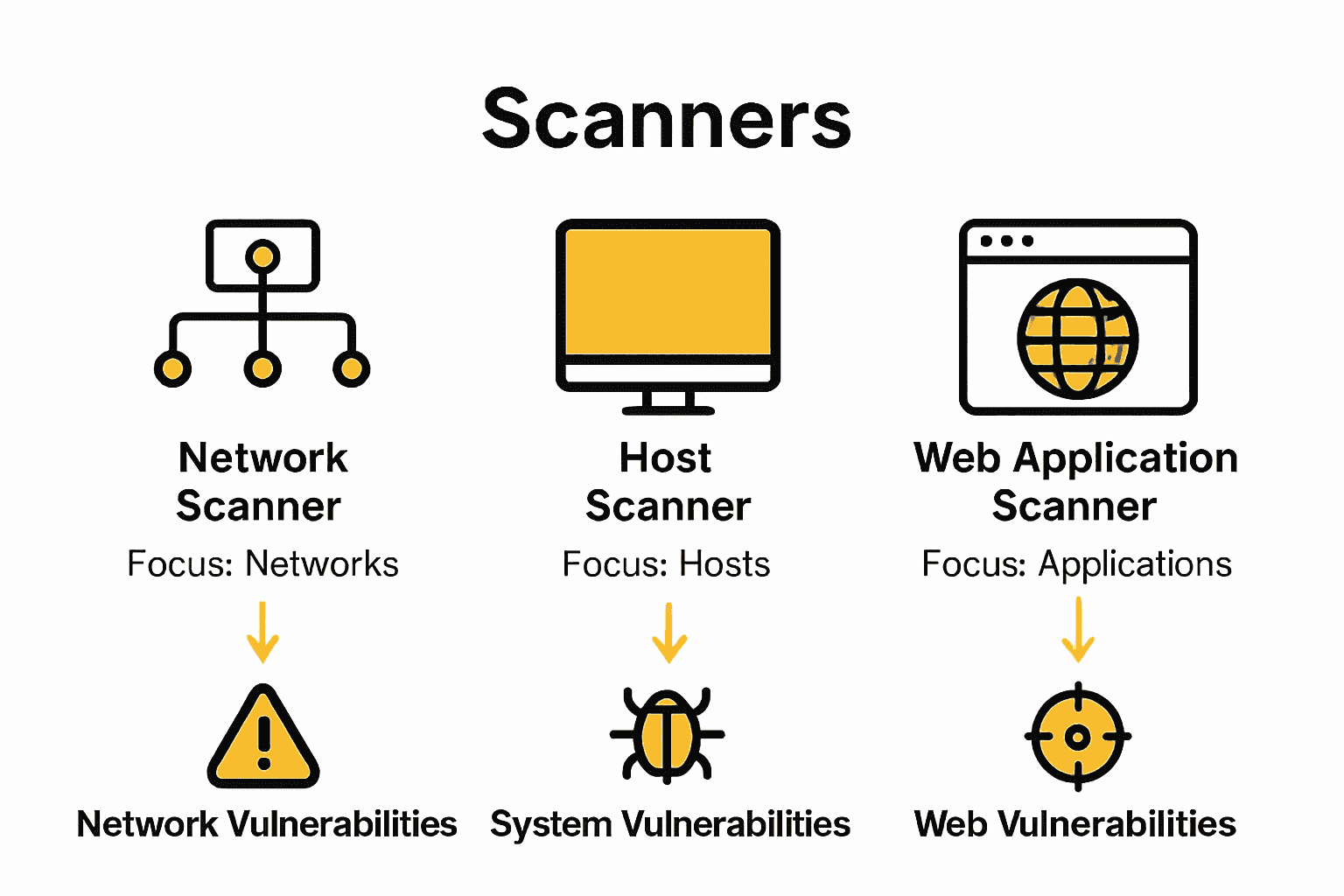
By understanding and implementing these different types of network vulnerability scans, organizations can develop a comprehensive and nuanced approach to cybersecurity. Learn more about network security strategies for businesses to enhance your digital defense mechanisms and protect your critical technological assets.
How Network Vulnerability Scanning Works
Network vulnerability scanning is a methodical process that systematically probes an organization’s digital infrastructure to identify potential security weaknesses. According to NVLPUBS, these sophisticated scanners work by identifying active hosts, open ports, and associated vulnerabilities through comprehensive comparisons against extensive databases of known security risks.
The scanning process typically unfolds through several sophisticated stages. Initially, the vulnerability scanner performs a network discovery phase, mapping out all connected devices, IP addresses, and potential entry points. Next, the scanner conducts a detailed port scanning operation, identifying which network ports are open and potentially vulnerable. During this phase, the tool meticulously examines each discovered system, checking for outdated software versions, misconfigurations, and potential security gaps that could be exploited by malicious actors.
For wireless networks, the vulnerability scanning process becomes even more nuanced. As CISA explains, wireless network vulnerability scanning involves a comprehensive analysis that goes beyond traditional wired network approaches. This specialized scanning process includes:
- Analyzing wireless devices and access points
- Reviewing security configurations
- Identifying potential unauthorized or misconfigured network access points
- Generating detailed reports of detected devices and their security status
- Highlighting potential wireless network penetration risks

Learn more about comprehensive network vulnerability scanning strategies to understand how these advanced techniques can protect your organization’s digital infrastructure from emerging cybersecurity threats.
Compliance Requirements and Legal Implications
Network vulnerability scanning is no longer just a technical best practice but a critical legal and regulatory requirement for organizations across various industries. According to CISA, vulnerability scanning services play a crucial role in helping organizations meet complex security standards by providing comprehensive analysis of network devices, access points, and potential vulnerabilities.
Different industries face unique compliance mandates that necessitate rigorous network vulnerability scanning. Healthcare organizations must comply with HIPAA regulations, financial institutions need to meet PCI DSS standards, and government contractors are required to follow NIST guidelines. Each of these frameworks demands systematic identification and mitigation of potential security risks through regular and thorough vulnerability assessments.
Continuous vulnerability scanning serves multiple compliance objectives, as highlighted by Security Berkeley. Organizations can demonstrate their commitment to cybersecurity by maintaining documentation of:
- Regular vulnerability assessment reports
- Remediation efforts for identified security gaps
- Comprehensive network configuration reviews
- Detailed tracking of system vulnerabilities
- Proof of proactive security management
Learn more about comprehensive network vulnerability scanning strategies to ensure your organization remains compliant and protected against evolving cybersecurity threats.
Common Risks and Mistakes to Avoid
Network vulnerability scanning, while essential for cybersecurity, comes with its own set of potential pitfalls that organizations must carefully navigate. According to NVLPUBS, vulnerability scanners can generate significant network traffic and may produce high false positive rates, requiring expert interpretation of results to avoid misguided security responses.
The landscape of potential vulnerabilities is complex and multifaceted. Overlooking critical security details can leave organizations exposed to substantial risks. As highlighted by GeeksforGeeks, the most common vulnerabilities organizations encounter include:
- Unpatched Software: Failing to apply critical security updates
- Misconfigurations: Improper network and system settings
- Weak Passwords: Using easily guessable or default credentials
- Unsupported Software: Running outdated or no-longer-supported systems
- Inadequate Access Controls: Poor management of user permissions
Mitigating these risks requires a proactive and comprehensive approach. Organizations must not only conduct regular vulnerability scans but also develop a robust process for interpreting results, prioritizing remediation efforts, and continuously monitoring their network infrastructure. Learn more about comprehensive network vulnerability scanning strategies to build a resilient and secure digital environment.
Take Control of Your Network Security Today
Network vulnerability scanning reveals hidden weaknesses in your digital infrastructure before attackers do. The article highlights critical challenges like unpatched software, misconfigurations, and inadequate access controls that can leave your business exposed. These issues not only impact your security but also create compliance risks and potential downtime that small to medium-sized businesses cannot afford.
SRS Networks understands how overwhelming it can be to manage these risks while focusing on business growth. Our tailored cybersecurity solutions and managed IT services provide expert network vulnerability scanning combined with proactive remediation strategies. We specialize in creating compliant, scalable, and secure IT environments for businesses across healthcare, finance, legal, retail, and more.
Discover how a trusted local partner can guard your vital digital assets and simplify your IT management. Learn more about comprehensive network vulnerability scanning strategies and how we bring enterprise-grade security with a personal touch.
Don’t wait until a vulnerability becomes a crisis. Visit SRS Networks now to get expert help in securing your network infrastructure. Protect your business with proven strategies and local responsiveness designed for your success. Reach out today and let’s build a stronger, safer network for your future.
Frequently Asked Questions
What is network vulnerability scanning?
Network vulnerability scanning is a cybersecurity technique that identifies potential security weaknesses in an organization’s digital infrastructure by mapping and analyzing network-connected devices, software versions, and configurations against known vulnerabilities.
What are the different types of network vulnerability scans?
The two primary types of network vulnerability scans are network scanners, which analyze network topology and entry points, and host scanners, which focus on individual system vulnerabilities. Additionally, web application scanning targets security flaws in web services and applications.
How often should organizations conduct vulnerability scans?
Organizations should conduct vulnerability scans regularly, ideally on a quarterly basis or after significant system changes, to maintain an up-to-date understanding of their security posture and address any newly discovered vulnerabilities promptly.
What are the common risks associated with network vulnerability scanning?
Common risks include generating significant network traffic, producing high false positive rates, and potentially overlooking critical security details. Organizations must develop robust processes to interpret scan results and prioritize remediation efforts.