Did you know that over 60 percent of data breaches involve lateral movement across enterprise networks? This risk turns even small vulnerabilities into major threats. As businesses rely more on digital systems, controlling who can access different parts of a network becomes more important than ever. By understanding how network segmentation works and why it matters, you can create smarter defenses that protect sensitive information and keep operations running smoothly.
Key Takeaways
| Point | Details |
|---|---|
| Network Segmentation Definition | Network segmentation divides a network into smaller parts to enhance security, control access, and optimize performance. |
| Segmentation Approaches | Two main types exist: physical (using hardware) and virtual (using software), each suited for different operational needs. |
| Security Benefits | Effective segmentation limits lateral movement during breaches, enhances monitoring, and helps meet compliance requirements. |
| Implementation Challenges | Segmentation can introduce complexities such as configuration difficulty, resource intensity, and potential performance overhead. |
Network Segmentation: Key Benefits and Takeaways
- What Is Network Segmentation? Core Concepts
- Types of Network Segmentation Approaches
- How Segmentation Enhances Security Posture
- Real-World Use Cases for Businesses
- Compliance, Costs, and Common Pitfalls
What Is Network Segmentation? Core Concepts
Network segmentation is a strategic approach to breaking down computer networks into smaller, more manageable sections. Imagine your business network like a large office building – instead of having one massive, open floor plan where anyone can walk anywhere, you’re creating distinct zones with controlled access points. According to Cisco, this method fundamentally divides a network into smaller parts to dramatically enhance both security and performance.
Traditionally, businesses used several core techniques to implement network segmentation:
- Firewalls: Creating barriers between network segments
- VLANs: Logically separating network traffic
- Access Control Lists (ACLs): Defining precise rules about network traffic permissions
- Software-Defined Networking: Modern approaches using intelligent software controls
The primary goal of network segmentation goes beyond simple division. As Webopedia explains, it serves critical objectives like limiting potential lateral movement during a security breach, improving overall network traffic flow, and supporting important regulatory compliance requirements such as GDPR. By creating these controlled zones, organizations can significantly reduce their attack surface and implement more granular security policies that protect sensitive business data and systems.
At its core, network segmentation is about strategic control. You’re not just splitting networks – you’re creating intelligent, secure environments where each segment has specific purposes, access rules, and protection mechanisms. This approach allows businesses to minimize risks while maintaining the flexibility needed for modern, dynamic IT infrastructures.
Types of Network Segmentation Approaches
Network segmentation isn’t a one-size-fits-all solution. Instead, businesses can choose from several strategic approaches tailored to their specific infrastructure and security needs. According to GeeksforGeeks, these approaches primarily fall into two fundamental categories: physical segmentation and virtual segmentation.
Physical Segmentation involves using dedicated hardware to create distinct network boundaries. This traditional method literally separates network components through physical devices like:
- Separate network switches
- Dedicated routers
- Isolated data center infrastructure
Virtual (Logical) Segmentation, by contrast, uses software-based techniques to create network divisions without additional hardware. Akamai highlights several key virtual segmentation techniques:
- VLANs: Logically separating network traffic
- Subnets: Dividing IP address ranges
- Access Control Lists (ACLs): Defining granular traffic permissions
Modern network segmentation has evolved to include advanced approaches like microsegmentation and Zero Trust architecture. These techniques offer unprecedented granularity, allowing organizations to create security policies at the application or even individual device level. By implementing such precise controls, businesses can dramatically reduce potential attack surfaces and create more resilient network environments.
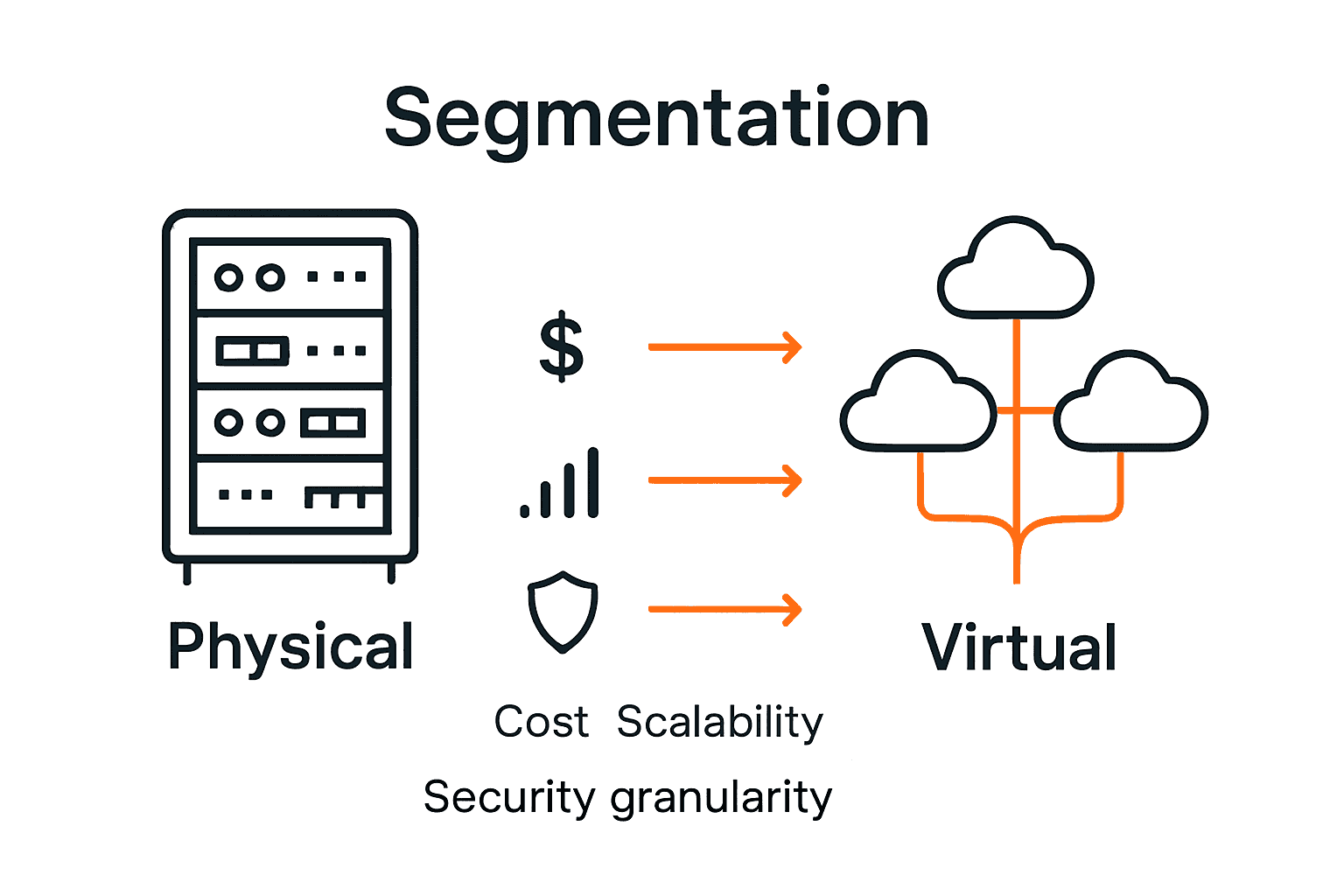
Here’s a comparison of physical and virtual network segmentation approaches:
| Criteria | Physical Segmentation | Virtual (Logical) Segmentation |
|---|---|---|
| Implementation | Dedicated hardware Separate switches & routers |
Software configuration VLANs, subnets, ACLs |
| Scalability | Limited by hardware | Highly scalable |
| Cost | High initial investment | Lower upfront cost |
| Flexibility | Rigid, hard to change | Easily modified |
| Typical Use Cases | Data centers Critical infrastructure |
Mixed environments Cloud & remote work |
| Security Granularity | Coarse | Fine-grained |
The key is selecting a segmentation strategy that aligns with your specific operational requirements, compliance needs, and security objectives. Whether you choose physical barriers, software-defined networking, or a hybrid approach, network segmentation remains a critical defense mechanism in today’s complex digital landscape.
How Segmentation Enhances Security Posture
Network segmentation transforms cybersecurity from a broad, reactive approach to a precise, proactive defense strategy. According to Trellix, this approach fundamentally reduces the attack surface by creating intelligent barriers that make it significantly harder for potential threats to spread across an organization’s digital infrastructure.
The security benefits of network segmentation are multilayered:
- Breach Containment: Limits the potential spread of cyber attacks
- Granular Access Control: Restricts user and system permissions
- Enhanced Monitoring: Improves visibility into network traffic patterns
- Incident Response: Enables faster detection and isolation of security threats
OpenNMS emphasizes how segmentation directly supports critical compliance requirements. By protecting sensitive data and creating clear access boundaries, businesses can more easily meet stringent regulations like PCI DSS, HIPAA, and GDPR. Think of it like creating secure, locked rooms within your digital building – each segment has its own security protocol, making unauthorized access exponentially more difficult.
Ultimately, network segmentation is about creating intelligent, adaptive security environments. It transforms your network from a vulnerable, open landscape into a strategic, compartmentalized system where potential threats are immediately identified, isolated, and neutralized. For modern businesses facing increasingly sophisticated cyber risks, segmentation isn’t just a security feature – it’s a fundamental requirement for maintaining operational resilience and protecting critical digital assets.
Real-World Use Cases for Businesses
Network segmentation isn’t just a theoretical concept – it’s a practical solution solving real challenges across diverse industries. According to Meter, businesses can leverage segmentation to create targeted, secure environments that protect critical assets and optimize performance.
In healthcare, network segmentation becomes crucial for protecting sensitive patient data and medical devices. Hospitals can create distinct network segments for:
- Patient record systems
- Medical imaging equipment
- Administrative networks
- IoT medical devices
- Guest Wi-Fi access
TechPatio highlights additional industry-specific applications. Manufacturing organizations, for instance, can isolate operational technology (OT) networks from information technology (IT) networks, preventing potential cross-contamination of systems and reducing cybersecurity risks.
Financial institutions have particularly stringent segmentation needs. Payment processing systems require PCI-DSS compliant network environments, which means creating highly controlled segments for point-of-sale terminals, customer databases, and internal administrative networks. By implementing granular segmentation, these organizations can dramatically reduce the risk of financial fraud and maintain regulatory compliance.

Ultimately, network segmentation provides a flexible, powerful approach to managing complex digital infrastructures. Whether you’re a small medical practice, a manufacturing plant, or a financial services firm, the ability to create intelligent, secure network boundaries can transform your approach to cybersecurity and operational efficiency.
Compliance, Costs, and Common Pitfalls
Network segmentation isn’t just a technical strategy – it’s a critical component of regulatory compliance and risk management. According to Neumetric, industries like payment processing must implement precise segmentation to meet stringent standards such as PCI DSS. This involves creating controlled environments that isolate sensitive data, implement robust monitoring, and maintain comprehensive documentation.
The implementation of network segmentation comes with several potential challenges:
- Configuration Complexity: Managing multiple network segments
- Resource Intensity: Requiring specialized skills and ongoing maintenance
- Performance Overhead: Potential latency from additional security controls
- Evolving Network Environments: Keeping segmentation strategies current
Akamai highlights the often-overlooked hidden costs of segmentation. Traditional approaches like VLAN segmentation can create significant management burdens, especially in complex, distributed environments like cloud and containerized infrastructure. Organizations might face challenges such as:
- Slow, manual configuration processes
- Reduced network visibility
- Increased potential for misconfigurations
- Difficulties during compliance audits
Successful network segmentation requires a strategic, holistic approach. It’s not just about creating barriers, but about designing an intelligent, adaptive security framework that balances protection, performance, and operational efficiency. Smart businesses view segmentation as an ongoing process, not a one-time implementation, continuously refining their approach to match evolving technological landscapes and threat environments.
Ready to Transform Your Network Security and Compliance?
Is your business feeling overwhelmed by the risks of unchecked lateral movement, rising compliance demands, or the complexity of creating secure network boundaries? The Essential Guide to Network Segmentation highlights how a lack of strategic segmentation leaves critical data vulnerable and increases both operational costs and stress. If concerns like breach containment, regulatory requirements, or the sheer challenge of configuring and managing multiple segments sound familiar, you deserve an IT partner with real expertise.
SRS Networks specializes in building secure, scalable, and compliant networks for businesses throughout Central California. We understand the stress of keeping digital assets protected while meeting industry standards. Our tailored Network Infrastructure & Security services bring clarity and control to complex environments, helping you avoid hidden costs and compliance headaches. Make your next move the smartest one yet. Visit SRS Networks to schedule a free consultation and see how personalized network segmentation can give your organization real peace of mind.
Frequently Asked Questions
What is network segmentation and why is it important?
Network segmentation is the practice of dividing a computer network into smaller, controlled segments to enhance security and performance. It is important because it limits lateral movement during security breaches, improves network traffic flow, and supports compliance with regulations like GDPR.
What are the common methods used for network segmentation?
Common methods for implementing network segmentation include firewalls, VLANs (Virtual Local Area Networks), Access Control Lists (ACLs), and software-defined networking. Each method has its own strengths and use cases.
How does network segmentation enhance security posture?
Network segmentation enhances security by reducing the attack surface, containing breaches, enabling granular access control, improving monitoring, and facilitating faster incident response. It creates controlled zones with specific security protocols, making unauthorized access more difficult.
What are the challenges of implementing network segmentation?
Challenges include configuration complexity, resource intensity, potential performance overhead, and the need to adapt segmentation strategies to evolving network environments. Hidden costs may arise from increased management burdens and the risk of misconfigurations.