Phishing attacks are not just common annoyances for businesses. They are a real threat and can cost organizations millions each year. Recent research shows that proactive assessment strategies can cut security breaches by up to 60 percent. Most companies scramble to patch holes after an attack hits. But the most effective teams do the opposite and stay several steps ahead by constantly adapting and testing their defenses.
Table of Contents
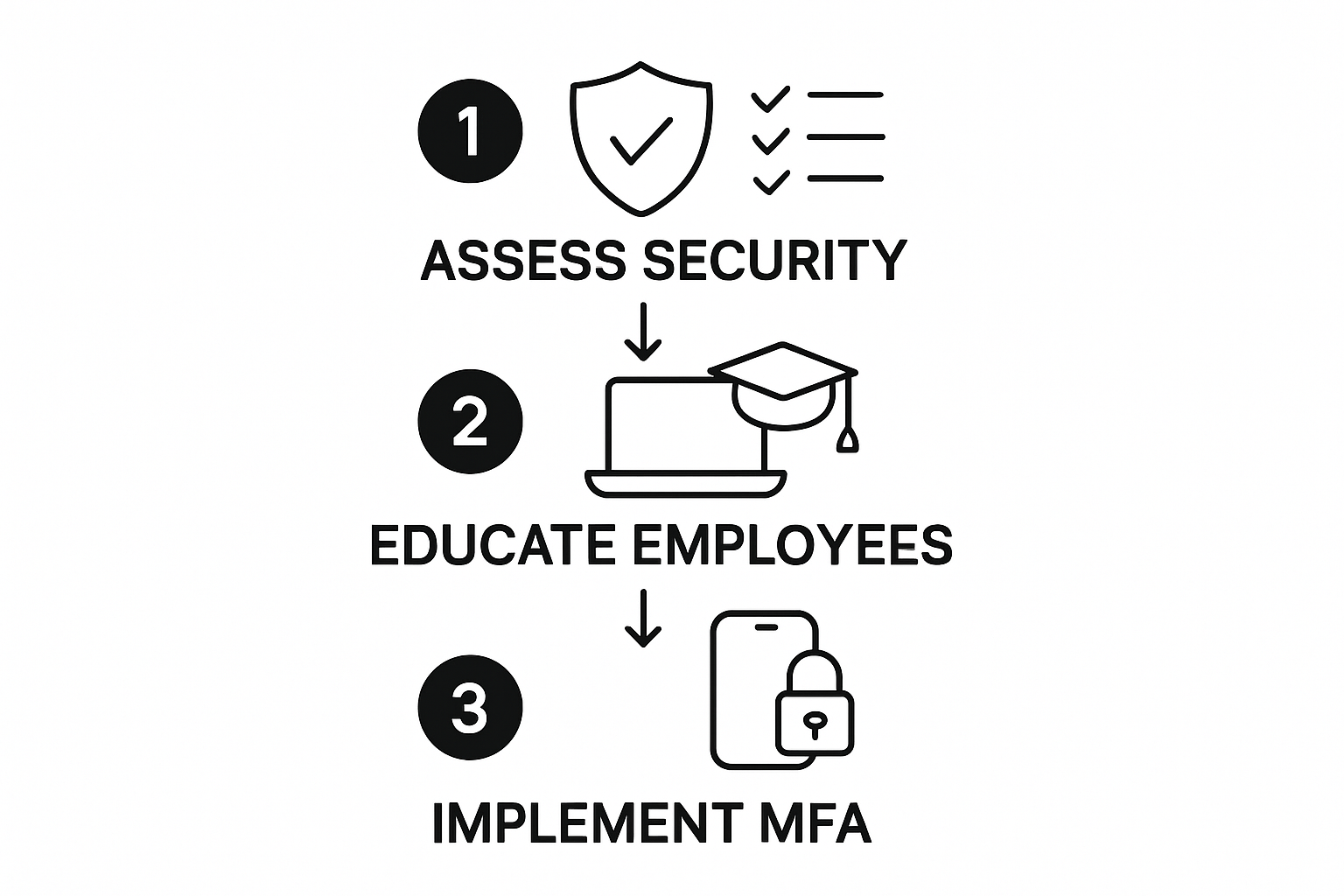
- Step 1: Assess Your Current Cybersecurity Measures
- Step 2: Educate Employees on Phishing Tactics
- Step 3: Implement Multifactor Authentication Practices
- Step 4: Regularly Update Security Software and Protocols
- Step 5: Test Your Defense Mechanisms Against Phishing Attempts
- Step 6: Review and Adjust Your Phishing Prevention Strategy
Quick Summary
| Key Point | Explanation |
|---|---|
| 1. Assess current cybersecurity measures | Conduct a thorough audit of existing cybersecurity infrastructure to identify vulnerabilities and areas for improvement. |
| 2. Educate employees on phishing tactics | Implement interactive training programs to help employees recognize and respond effectively to phishing attempts. |
| 3. Implement multifactor authentication | Require multiple verification steps for accessing critical systems to enhance security against unauthorized access. |
| 4. Regularly update security software | Maintain up-to-date security software to defend against emerging threats and ensure effective protection protocols. |
| 5. Test defense mechanisms regularly | Conduct phishing simulations to evaluate employee awareness and improve organizational resilience against phishing attacks. |
Step 1: Assess Your Current Cybersecurity Measures
Protecting your organization from phishing attacks begins with a comprehensive evaluation of your existing cybersecurity infrastructure. This critical first step helps you understand potential vulnerabilities and create a targeted strategy to prevent sophisticated phishing attempts.
Start by conducting a thorough internal security audit that examines all digital entry points within your organization. This means systematically reviewing your email systems, network configurations, user access protocols, and current security software. Pay special attention to how employees currently handle incoming communications, especially digital messages that could potentially contain malicious links or deceptive content.
Key Assessment Focus Areas
- Current email filtering mechanisms
- Employee training and awareness programs
- Existing network security infrastructure
- Authentication and access control protocols
- Incident response capabilities
Effective assessment requires more than just technical review. You need to understand human behaviors and potential weak points in your organization. Simulate mock phishing scenarios to test employee resilience and identify knowledge gaps. This approach allows you to measure not just technological defenses but also human response to potential threats.
Cybersecurity research from NIST suggests that organizations with proactive assessment strategies reduce potential security breaches by up to 60%. By establishing a baseline understanding of your current cybersecurity posture, you create a foundation for implementing more robust phishing prevention strategies.
Successful completion of this assessment means developing a comprehensive report that highlights current strengths, identifies specific vulnerabilities, and outlines immediate actionable recommendations for improvement.
 This document will serve as your roadmap for subsequent phishing prevention steps, ensuring a targeted and effective approach to organizational security.
Step 2: Educate Employees on Phishing Tactics
Employee education represents the most critical line of defense against phishing attacks. Your team members are simultaneously your most vulnerable vulnerability and your strongest protective shield. By transforming employees into knowledgeable cybersecurity advocates, you create a human firewall that can identify and neutralize potential threats before they compromise your organization.
Designing an effective training program requires more than simple slideshow presentations. You need interactive, engaging educational experiences that help employees develop genuine cybersecurity instincts. Consider developing scenario-based training modules that simulate real-world phishing attempts, allowing staff to practice identifying suspicious communications in a controlled environment. These simulations should mirror the sophisticated tactics used by actual cybercriminals, including urgent language, seemingly legitimate sender addresses, and compelling narrative hooks designed to trigger emotional responses.
Critical Training Components
- Red flag identification techniques
- Email authentication verification skills
- Social engineering recognition strategies
- Proper reporting protocols for suspicious communications
Your training approach must be consistently reinforced through periodic refresher sessions and ongoing awareness campaigns. Short, monthly cybersecurity reminders can help keep phishing prevention top of mind. These could include quick video tutorials, brief email notifications highlighting recent phishing trends, or small interactive challenges that test and reinforce learning.
Research from CISA demonstrates that organizations with comprehensive employee education programs experience significantly reduced successful phishing attempts. By investing time and resources into creating a security-conscious culture, you transform potential vulnerabilities into proactive defense mechanisms.
Successful implementation means your employees can confidently identify and respond to potential phishing attempts. They should understand not just how to recognize suspicious communications, but also precisely what steps to take when encountering them – whether that means immediate deletion, reporting to IT security, or using designated reporting tools within your organization.
Step 3: Implement Multifactor Authentication Practices
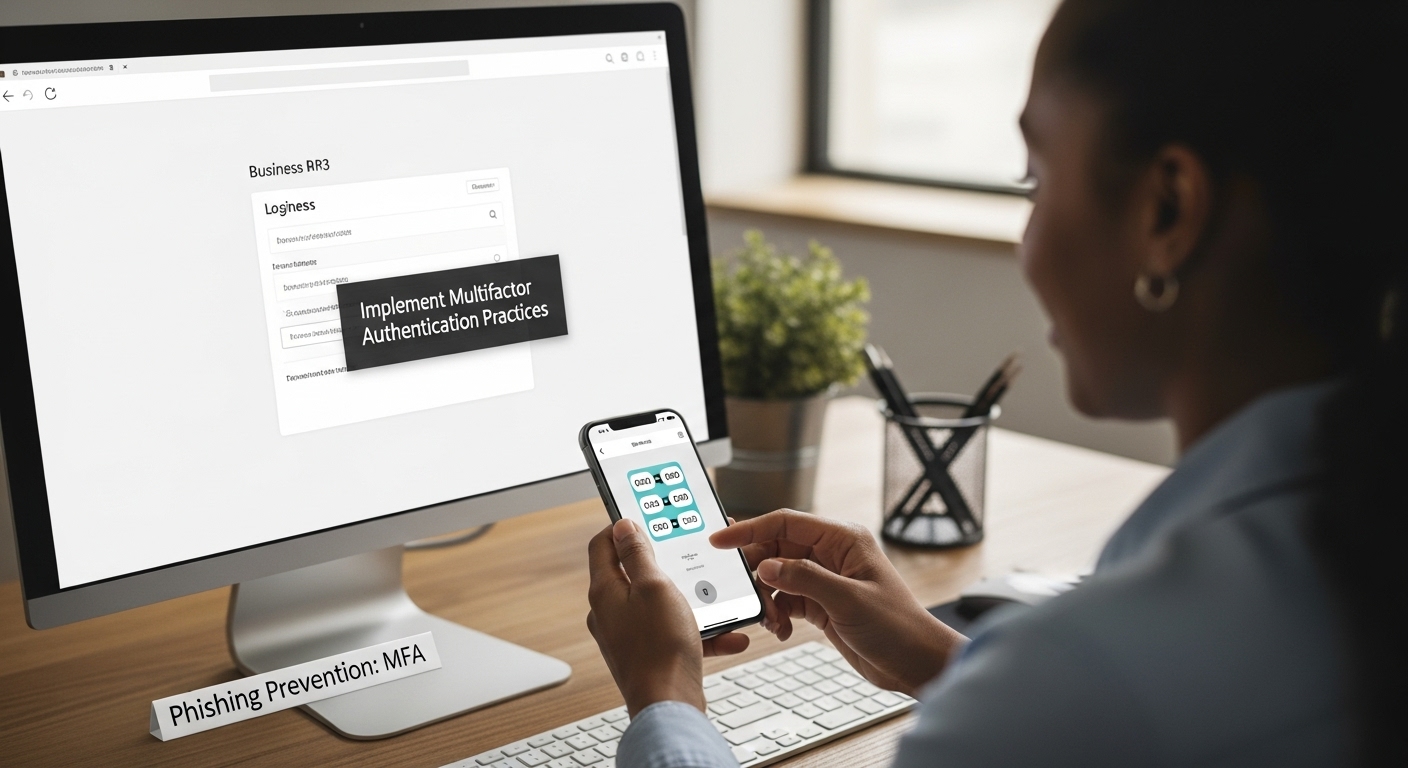
Multifactor authentication (MFA) represents a powerful defense mechanism against phishing attacks, creating multiple barriers that prevent unauthorized access even if initial login credentials are compromised. Think of MFA as a sophisticated security checkpoint where a single password is no longer sufficient to gain entry to your digital resources.
Implementing MFA requires a strategic approach that balances robust security with user convenience. Start by identifying all critical systems and applications within your organization that handle sensitive information. This includes email platforms, cloud storage services, financial management tools, and customer relationship management systems. Each of these platforms should require multiple verification steps beyond traditional password entry.
Authentication Factor Options
- Biometric verification (fingerprint or facial recognition)
- Hardware security tokens
- SMS or email verification codes
- Authenticator mobile applications
- Physical security keys
The most effective MFA strategies combine different verification methods that are difficult for malicious actors to replicate. For instance, pairing a password with a time-sensitive code generated by an authenticator app provides significantly stronger protection than simple two-step verification. When selecting authentication methods, consider both security strength and user experience to ensure high adoption rates across your organization.
To help you visualize and compare multifactor authentication options, here is a table summarizing the verification factors mentioned and their typical use-case or description.
| Authentication Method | Description |
|---|---|
| Biometric verification | Fingerprint or facial recognition used to confirm identity |
| Hardware security tokens | Physical device that generates unique login codes |
| SMS or email verification | One-time codes sent to a registered phone or email |
| Authenticator applications | Apps that generate time-sensitive verification codes |
| Physical security keys | USB or NFC keys providing cryptographic authentication |
Cybersecurity experts at CISA recommend gradual implementation, starting with the most sensitive systems and progressively expanding MFA coverage. This approach allows your team to adapt to new security protocols without experiencing overwhelming technological disruption.
Successful MFA implementation means establishing a comprehensive authentication framework where every critical system requires multiple verification steps. Your organization should develop clear documentation explaining the new authentication processes, provide training on using different verification methods, and create support channels to help employees navigate potential technical challenges during the transition.
Step 4: Regularly Update Security Software and Protocols
Cybersecurity is an ever-evolving landscape where static defenses quickly become obsolete. Maintaining up-to-date security software and protocols represents a dynamic shield against emerging phishing threats, ensuring your organization remains resilient against sophisticated digital attacks. Treating security updates as a continuous process rather than an occasional task is crucial for protecting your digital infrastructure.
Develop a systematic approach to software and protocol updates that goes beyond simple automatic installations. Create a comprehensive inventory of all digital systems, software applications, and security tools used across your organization. Schedule regular review periods where your IT team thoroughly evaluates each system for potential vulnerabilities, pending updates, and compatibility with current security standards. This proactive strategy allows you to identify and address potential weaknesses before they can be exploited by malicious actors.
Critical Update Focus Areas
- Antivirus and anti-malware software
- Firewall configurations
- Email filtering systems
- Operating system patches
- Network security protocols
Implementing a robust update strategy requires more than technical interventions. Develop clear communication channels that inform employees about upcoming changes, potential system downtimes, and new security requirements. Transparency helps reduce resistance to security modifications and ensures smoother transitions during critical update periods.
Cybersecurity research from NIST emphasizes that organizations with consistent, well-documented update protocols experience significantly reduced security incidents. Your update process should include detailed documentation tracking every modification, creating an audit trail that helps understand how and when security enhancements were implemented.
Successful implementation means establishing a perpetual improvement cycle where security updates are not viewed as disruptions but as strategic investments in organizational resilience. Regularly scheduled security reviews, automated patch management systems, and a culture of continuous learning will transform your update process from a reactive task to a proactive defense mechanism.
Step 5: Test Your Defense Mechanisms Against Phishing Attempts
Testing your organization’s phishing defense mechanisms is not just a technical exercise but a critical vulnerability assessment that reveals potential weaknesses in your cybersecurity infrastructure. This step transforms theoretical protection strategies into measurable, actionable insights by simulating real-world phishing scenarios that challenge your existing security protocols.
Design a comprehensive testing strategy that encompasses multiple approaches to evaluate your organization’s resilience. Develop controlled phishing simulation campaigns that mimic sophisticated attack techniques used by actual cybercriminals. These simulations should include various scenarios such as urgent communication requests, financial alert emails, and professional networking connection attempts. The goal is not to embarrass employees but to provide targeted learning opportunities that enhance their threat recognition skills.
Simulation Testing Components
- Crafted test phishing emails with varying complexity
- Tracking employee response and interaction rates
- Detailed reporting of potential security vulnerabilities
- Immediate feedback and educational interventions
- Measurement of improvement over multiple testing cycles
Each simulated phishing attempt should be carefully constructed to reflect current cybercriminal tactics. This means creating emails that look legitimate, use contextually appropriate language, and test different psychological triggers that might compel an employee to click a suspicious link or provide sensitive information. After each simulation, provide immediate, constructive feedback that helps employees understand why a particular email was suspicious and how they could have identified the potential threat.
Research from CISA suggests that organizations implementing regular phishing simulations can reduce successful phishing attempts by up to 50%. Successful testing means developing a repeatable process where each simulation provides actionable insights, employees receive targeted training, and your overall security posture continuously improves through iterative learning and adaptation.
Step 6: Review and Adjust Your Phishing Prevention Strategy
Cybersecurity is not a static destination but a continuous journey of adaptation and improvement. Reviewing and adjusting your phishing prevention strategy ensures that your defense mechanisms remain agile and responsive to evolving digital threats. This final step transforms your initial protective measures into a dynamic, intelligent security ecosystem that learns and grows with emerging challenges.
Establish a structured quarterly review process that comprehensively analyzes all aspects of your phishing prevention approach. This involves meticulously examining data collected from previous simulation tests, employee training outcomes, security incident reports, and emerging cybersecurity trends. Look beyond raw numbers to understand the underlying patterns and behavioral insights that reveal potential vulnerabilities in your current strategy.
Below is a checklist table that summarizes the critical review components and verification steps for updating your phishing prevention strategy during each quarterly review process.
| Review Focus Area | Verification Step or Criteria |
|---|---|
| Security incident analysis | Review all incidents, analyzing cause and impact |
| Employee training effectiveness | Measure participation rates and quiz scores |
| Technological defense evaluation | Assess performance and status of security tools |
| Emerging threat assessment | Monitor new attack vectors relevant to your industry |
| Organizational risk calibration | Adjust tolerance levels based on latest data |
Strategic Review Components
- Comprehensive security incident analysis
- Employee training effectiveness metrics
- Technological defense performance evaluation
- Emerging threat landscape assessment
- Organizational risk tolerance calibration
Your review should be more than a passive documentation exercise. Develop a proactive approach that involves cross-functional collaboration between IT security teams, human resources, and management. This collaborative review helps create a holistic understanding of your organization’s unique risk profile and ensures that phishing prevention strategies align with broader business objectives and operational realities.
Cybersecurity experts recommend treating your phishing prevention strategy as a living document that requires continuous refinement. Successful implementation means creating a feedback loop where every identified weakness becomes an opportunity for strategic improvement. This approach transforms potential vulnerabilities into strengths, building a resilient organizational culture that views cybersecurity as a collective responsibility rather than a purely technical challenge.
Ready to Turn Your Phishing Vulnerabilities Into Strength?
As you read about the latest strategies for stopping phishing in its tracks, you may feel uncertain about the gaps that could still threaten your business. If terms like “multifactor authentication,” “email filtering,” and “phishing simulations” hit close to home, the real question becomes: Who is ensuring these safeguards are set up, monitored, and regularly improved for your unique business?
At SRS Networks, we help Central California organizations just like yours build a resilient frontline against phishing threats. Our local team leverages hands-on security audits, employee awareness training, continuous software updates, and real-world phishing simulations. You can count on us to manage your technology so you never need to face cyber risk alone.
Worried your current defenses may not keep up with tomorrow’s phishing attacks? Take the first step toward genuine peace of mind. Partner with SRS Networks for managed cybersecurity, custom employee training, and proactive protection tailored for your business. Contact our team today to request your security review or learn how we help businesses stay safe and compliant in 2025 and beyond. Visit SRS Networks now and move confidently into a more secure future.
Frequently Asked Questions
What are the essential steps to prevent phishing?
To prevent phishing, organizations should assess their current cybersecurity measures, educate employees on phishing tactics, implement multifactor authentication, regularly update security software, test defense mechanisms, and continually review and adjust their phishing prevention strategies.
How can employee training help reduce phishing risks?
Employee training helps by educating staff on identifying suspicious communications, recognizing social engineering tactics, and understanding reporting protocols. Engaging training programs, such as simulations of real-world phishing attempts, can significantly boost awareness and response capabilities.
What is multifactor authentication, and why is it important in phishing prevention?
Multifactor authentication (MFA) requires users to provide multiple forms of verification before accessing sensitive systems, making it much harder for attackers to gain unauthorized access, even if they have login credentials. MFA serves as a critical additional security barrier against phishing.
How often should organizations review their phishing prevention strategy?
Organizations should conduct a structured review of their phishing prevention strategy at least quarterly. This review should analyze previous incidents, training effectiveness, technological defenses, and emerging threats to ensure their approach remains effective and adaptive.