IT compliance has become a massive challenge for businesses in the Greater Bay Area. By 2025, multiple states will introduce sweeping data protection laws, putting unprecedented pressure on local companies to adapt fast. That sounds overwhelming, right? Many leaders think compliance is just endless paperwork and constant firefighting but the real advantage comes when you see it as a strategic edge that transforms risk management and even boosts your reputation. Curious how? Keep reading to see why the winners will be those who turn these rules into real opportunity.
Navigating 2025 IT Compliance: Section-by-Section Guide
- Understanding Essential It Compliance Requirements
- Industry-Specific It Compliance Standards In 2025
- Best Practices For Achieving Compliance Locally
- Common It Compliance Pitfalls And How To Avoid Them
Quick Summary
| Takeaway | Explanation |
|---|---|
| IT compliance is a dynamic journey. | Organizations must continuously adapt to evolving regulations and develop proactive strategies to maintain compliance. |
| Employee training is essential for security. | Regular, interactive training programs ensure employees are aware of potential threats and understand compliance protocols. |
| Tailor compliance strategies to industry needs. | Different industries have specific regulatory requirements; tailored approaches are crucial for effective compliance. |
| Develop robust incident response plans. | Create and regularly test detailed response protocols to ensure preparedness for potential security incidents. |
| View compliance as a strategic advantage. | Compliance can enhance operational efficiency and reputation; it should not be seen merely as a regulatory burden. |
Understanding Essential IT Compliance Requirements
IT compliance requirements have become increasingly complex and critical for businesses operating in the Greater Bay Area. Organizations must navigate a sophisticated landscape of regulatory mandates that protect sensitive data, ensure cybersecurity, and maintain operational integrity.
Core Components of IT Compliance Framework
Businesses must recognize that IT compliance is not a one-time checklist but a comprehensive strategy involving multiple interconnected elements. According to UC Davis Cybersecurity Guidelines, organizations need to implement six critical compliance dimensions that form the foundation of a robust IT governance approach.
Key Compliance Dimensions Include:
To clarify the six critical compliance dimensions necessary for establishing a robust IT governance approach, the table below provides a concise summary and description of each element.
| Compliance Dimension | Description |
|---|---|
| Cybersecurity Awareness Training | Employee training on digital threats and security best practices |
| Multi-Factor Authentication | Advanced login protections requiring multiple credentials |
| Endpoint Detection and Response | Monitoring and defense for all network access points |
| Incident Escalation Protocols | Clearly defined strategies for responding to security breaches |
| Data Privacy Regulations | Policies ensuring personal and sensitive data are protected |
| Comprehensive Risk Management | Integrated, organization-wide approach to identifying and handling IT risks |
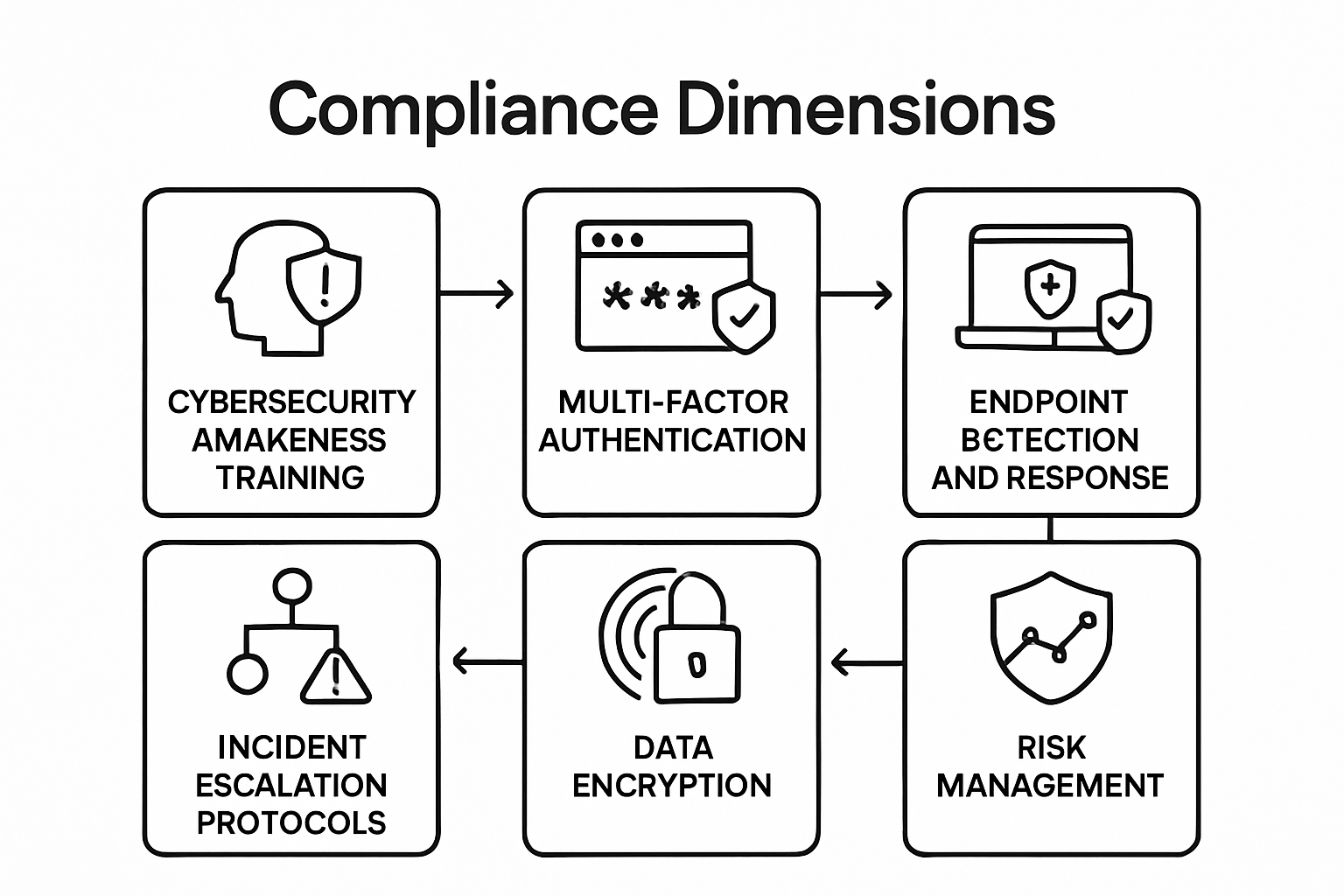
- Cybersecurity Awareness Training: Ensuring all employees understand potential digital threats and best practices
- Multi-Factor Authentication: Implementing advanced login protections
- Endpoint Detection and Response: Monitoring and protecting all network access points
- Incident Escalation Protocols: Developing clear response strategies for potential security breaches
The regulatory environment continues to evolve rapidly. California Corporate Law Experts emphasize that compliance now encompasses far more than traditional IT security measures. Modern requirements integrate data privacy regulations, cybersecurity protocols, and comprehensive risk management strategies.
Privacy and Data Protection Regulations
With the expansion of state-level privacy laws, businesses must be prepared to adapt quickly. By 2025, multiple states will implement comprehensive data protection regulations that significantly impact how organizations handle personal information. These regulations grant residents unprecedented rights regarding their personal data, including access, deletion, correction, and opt-out capabilities.
Companies must develop sophisticated systems that can:
- Identify and Classify Data: Create comprehensive data mapping strategies
- Implement Robust Encryption: Protect sensitive information across all platforms
- Develop Transparent Policies: Clearly communicate data handling practices to stakeholders
The complexity of these requirements means that businesses can no longer treat IT compliance as a peripheral concern. It has become a central strategic imperative that directly impacts operational efficiency, legal standing, and organizational reputation.
Strategic Compliance Management
Successful IT compliance requires a holistic approach that integrates technology, human resources, and organizational culture. Organizations must invest in continuous education, regularly update their technological infrastructure, and foster a culture of proactive risk management.
This means going beyond mere technical implementations and creating a comprehensive compliance ecosystem that:
- Anticipates potential regulatory changes
- Provides ongoing employee training
- Maintains flexible and adaptable technological frameworks
- Conducts regular internal audits and assessments
By treating IT compliance as a dynamic, integrated strategy rather than a static requirement, businesses in the Greater Bay Area can protect themselves from potential legal risks while positioning themselves as responsible, forward-thinking organizations.
The landscape of IT compliance is complex, but with strategic planning and a commitment to continuous improvement, businesses can transform these requirements from potential obstacles into opportunities for enhanced operational excellence.
Industry-Specific IT Compliance Standards in 2025
IT compliance is not a one-size-fits-all approach. Different industries face unique technological challenges and regulatory requirements that demand specialized compliance strategies. In 2025, businesses must adopt nuanced compliance frameworks that address their specific operational environments and technological ecosystems.
Healthcare and Medical Technology Compliance
Healthcare organizations face some of the most stringent IT compliance requirements. The Health Insurance Portability and Accountability Act (HIPAA) continues to evolve, demanding increasingly sophisticated data protection mechanisms. San Francisco Digital Accessibility Guidelines now require healthcare providers to ensure their digital platforms are fully accessible, extending compliance beyond traditional data protection into user experience and inclusivity.
Key compliance priorities for healthcare include:
The following table summarizes the main IT compliance priorities for 2025 across three critical industries in the Greater Bay Area, highlighting their unique regulatory challenges and focus areas.
| Industry | Key Compliance Priorities |
|---|---|
| Healthcare & Medical Tech | Patient data protection, digital accessibility, telemedicine security |
| Technology & AI | Ethical AI development, privacy protection, algorithmic bias prevention |
| Financial & Professional Svcs | Fraud prevention, client data protection, automated regulatory reporting |
- Patient Data Protection: Implementing advanced encryption and secure data transmission protocols
- Digital Accessibility: Ensuring all digital platforms meet WCAG 2.1 Level AA standards
- Telemedicine Security: Developing robust frameworks for remote medical consultations
Technology and Artificial Intelligence Compliance
Tech companies and organizations utilizing artificial intelligence face unprecedented regulatory scrutiny. California’s State Technology Policy establishes rigorous guidelines for Generative AI use, emphasizing principles of fairness, transparency, and accountability.
Companies must now demonstrate:
- Ethical AI Development: Transparent algorithmic decision-making processes
- Privacy Protection: Comprehensive data anonymization strategies
- Algorithmic Bias Prevention: Systematic approaches to identifying and mitigating potential discriminatory outcomes
Financial and Professional Services Compliance
Financial institutions and professional service providers must navigate complex regulatory landscapes that blend cybersecurity, data privacy, and operational transparency. Compliance in these sectors requires a multi-layered approach that goes beyond traditional security measures.
Critical compliance considerations include:
- Advanced Fraud Prevention: Implementing machine learning-based detection systems
- Client Data Protection: Developing end-to-end encryption protocols
- Regulatory Reporting: Creating automated compliance tracking and reporting mechanisms
The 2025 compliance landscape demands more than mere technical adherence. Organizations must cultivate a comprehensive approach that integrates technological solutions with organizational culture, employee training, and proactive risk management.
Successful compliance is no longer about avoiding penalties but about creating robust, trustworthy technological ecosystems that protect stakeholders and drive organizational innovation. Each industry must develop tailored strategies that balance regulatory requirements with operational efficiency and technological advancement.
Businesses that view compliance as a strategic opportunity rather than a regulatory burden will be best positioned to thrive in an increasingly complex digital environment. The most successful organizations will be those that can transform compliance from a checkbox exercise into a competitive advantage.
Best Practices for Achieving Compliance Locally
Achieving local IT compliance requires a strategic and comprehensive approach that goes beyond basic technical implementations. Businesses in the Greater Bay Area must develop robust frameworks that address both technological and organizational dimensions of regulatory requirements.
Developing a Proactive Compliance Strategy
MIT Sloan’s Cybersecurity Research emphasizes the critical importance of adopting a ‘secure by design’ philosophy. This approach means integrating security considerations from the earliest stages of technology development and organizational planning, rather than treating compliance as an afterthought.
Key elements of a proactive compliance strategy include:
- Continuous Risk Assessment: Regularly evaluating potential vulnerabilities
- Integrated Security Planning: Embedding compliance considerations into every technological initiative
- Adaptive Framework Development: Creating flexible systems that can quickly respond to regulatory changes
Local organizations must recognize that compliance is not a static destination but a dynamic journey requiring constant vigilance and adaptation. The most successful approaches transform compliance from a regulatory requirement into a strategic advantage.
Technology and Training Alignment
UC Davis Cybersecurity Guidelines highlight the critical role of comprehensive employee training in achieving robust IT compliance. Organizations must develop multifaceted training programs that go beyond simple information delivery and create a culture of security awareness.
Effective training strategies should focus on:
- Interactive Learning Modules: Engaging employees through practical, scenario-based training
- Regular Skill Updates: Keeping teams informed about emerging technological risks
- Cultural Integration: Making cybersecurity a fundamental organizational value
Technology implementation must be paired with human understanding. The most advanced security systems can be compromised by a single uninformed employee action, making comprehensive training an essential compliance component.

Localized Compliance Implementation
The Greater Bay Area presents unique compliance challenges that require nuanced, location-specific approaches. San Francisco’s Digital Accessibility Standards demonstrate how local regulations can extend beyond traditional cybersecurity concerns to include broader considerations of digital inclusivity and user experience.
Local businesses must:
- Understand Regional Regulations: Stay informed about specific local and state compliance requirements
- Develop Tailored Solutions: Create compliance strategies that reflect local technological ecosystems
- Engage with Local Experts: Build networks with regional compliance professionals
Successful local compliance requires more than technical proficiency. It demands a holistic approach that integrates technological solutions, human capabilities, and a deep understanding of regional regulatory landscapes.
Businesses that view compliance as an opportunity for innovation rather than a burdensome requirement will be best positioned to thrive. By developing adaptive, comprehensive compliance strategies, organizations can transform regulatory challenges into competitive advantages that distinguish them in an increasingly complex technological environment.
Common IT Compliance Pitfalls and How to Avoid Them
IT compliance is a complex landscape fraught with potential challenges that can derail an organization’s technological and regulatory objectives. Understanding and proactively addressing these common pitfalls is crucial for businesses seeking to maintain robust, secure, and compliant technological ecosystems.
Regulatory Complexity and Fragmentation
ISACA’s Cybersecurity Compliance Research highlights the significant challenge of navigating inconsistent cybersecurity compliance frameworks. The lack of uniform standards creates substantial complexity, forcing organizations to invest considerable resources in reconciling different control requirements.
Common challenges in this area include:
- Inconsistent Control Standards: Difficulty aligning multiple regulatory requirements
- Resource Intensive Reconciliation: Significant time and financial investments needed to develop cohesive strategies
- Regulatory Interpretation Gaps: Varying interpretations of compliance mandates across different jurisdictions
To mitigate these challenges, businesses must develop flexible compliance frameworks that can adapt to evolving regulatory landscapes. This requires continuous monitoring, proactive learning, and the development of agile technological infrastructures.
Incident Response and Preparedness Gaps
AuditBoard’s Compliance Trends Analysis reveals that many organizations struggle with inadequate incident response capabilities. The rapidly changing risk environment demands more than traditional reactive approaches.
Key preparedness strategies include:
- Comprehensive Incident Response Planning: Developing detailed, regularly tested response protocols
- Proactive Threat Monitoring: Implementing continuous surveillance systems
- Employee Training and Awareness: Creating a culture of cybersecurity readiness
California Department of Education Guidelines emphasize the critical importance of maintaining verified system backups and staying current with cybersecurity developments. Organizations must view incident preparedness as an ongoing process of assessment, training, and technological adaptation.
Technological and Human Factor Vulnerabilities
The most sophisticated technological systems can be compromised by human error or outdated practices. Compliance is not just about implementing advanced tools but creating a holistic approach that integrates technological solutions with human capabilities.
Critical areas for addressing vulnerabilities include:
- Regular Security Awareness Training: Continuous education on emerging threats
- Comprehensive Access Management: Implementing robust authentication protocols
- Cultural Security Integration: Making cybersecurity a fundamental organizational value
Businesses must recognize that compliance is a dynamic journey, not a static destination. The most effective approaches transform compliance from a regulatory burden into a strategic advantage that enhances organizational resilience and competitive positioning.
Successful IT compliance requires a multifaceted approach that balances technological sophistication, human understanding, and adaptive strategic thinking. Organizations that can navigate these complex requirements with agility and foresight will be best positioned to thrive in an increasingly challenging digital landscape.
Frequently Asked Questions
What are the key components of an IT compliance framework for businesses in the Greater Bay Area?
The key components include cybersecurity awareness training, multi-factor authentication, endpoint detection and response, incident escalation protocols, data privacy regulations, and comprehensive risk management strategies.
How can businesses develop a proactive compliance strategy for IT requirements?
Organizations can develop a proactive compliance strategy by continuously assessing risks, integrating security into every technological initiative, and creating adaptive frameworks that respond swiftly to regulatory changes.
What are some common IT compliance pitfalls that organizations should avoid?
Common pitfalls include regulatory complexity and fragmentation, inadequate incident response planning, and vulnerabilities related to human factors and outdated practices.
How does the evolving privacy and data protection landscape impact IT compliance?
The evolving landscape mandates that businesses adapt their data handling practices to ensure compliance with new regulations, which grant residents more rights over their personal data, including access, deletion, and correction capabilities.
Turn 2025 IT Compliance into a Local Business Advantage
Are you worried about fast-changing IT compliance requirements in the Greater Bay Area? Many local business leaders feel overwhelmed by the demand for stronger cybersecurity, evolving privacy laws, and the growing pressure to prove compliance readiness. The article highlights how navigating regulations like multi-factor authentication, risk management, and state data protection can seem confusing and expensive. But you do not have to face this challenge alone. SRS Networks is your local partner for transforming these compliance pressures into a real business advantage.
We understand your concerns about regulatory complexity and data security.
- Our team delivers hands-on compliance support, from employee cybersecurity training to advanced endpoint protection and incident response plans.
- We specialize in solutions tailored to your unique industry, whether healthcare, finance, or any sector impacted by new rules.
- You get the benefit of proactive monitoring, secure network design, and business continuity planning all delivered with personal, community-based service.
Ready to shift compliance from a burden to a business asset? Visit SRS Networks to discover how our compliance-focused IT services can secure your operations and help you stay ahead of 2025 regulations.
Explore our managed IT and cybersecurity solutions now at SRS Networks IT Solutions and start preparing your business for the future today.