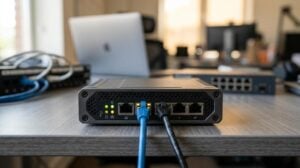
Running a small business in Monterey means you wear a lot of hats.
One minute you’re closing a sale, the next your computer freezes and your client is waiting.
That panic is exactly why local IT support for small business matters.
When a tech issue hits, you need a neighbor who knows the same internet quirks, the same parking limits, and can be on-site or remote within minutes.
Imagine a quick call and a tech shows up before the lunch rush ends. No more scrambling for a spare part from a far‑away provider.
Local support also means they understand the regulations that affect you – HIPAA for a health clinic, CCPA for a marketing firm, or PCI for an e‑commerce store.
With a managed approach, they watch your network 24/7, patch software before a bug spreads, and back up data so a storm doesn’t erase months of work.
In return, you get steady uptime, fewer surprise bills, and more time to focus on growth instead of troubleshooting.
In this guide you’ll learn how to spot the signs that you need a local partner, what questions to ask when you vet a provider, and which services give the biggest bang for your buck.
By the end you’ll have a clear path to turn tech headaches into smooth, predictable operations.
Why Local IT Support Matters for Small Businesses
Running a small business means you wear many hats. When a tech glitch hits, you lose time and money. That’s why having a neighbor who knows your network matters.
Local support can be on site in minutes. A tech who drives the same streets knows the parking spots, the ISP quirks, and the local compliance rules. That speed turns a panic into a quick fix.
Think about a health clinic that must keep patient records safe for HIPAA. A local partner can set up backups that meet the law and check them every night. A retail shop can get a printer fixed before the lunch rush. In both cases, the response time saves revenue.
Local teams also understand regional regulations like CCPA. They can help you set up data‑handling processes that avoid fines. That peace of mind lets you focus on serving customers.
Beyond speed, local providers often bundle services that keep your systems humming. They watch your network 24/7, patch software before a bug spreads, and back up data so a storm doesn’t erase months of work.
Here’s a quick checklist you can run right now:
- List the apps that can’t afford downtime.
- Note any compliance calendars (HIPAA, CCPA, PCI).
- Ask for a 15‑minute guaranteed response promise.
One place to see that kind of promise is the Reliable IT Support Bay Area Guide for Growing SMBs. It walks you through the questions to ask and the signs that you need a local partner.
While you tighten up tech, don’t forget the paperwork that keeps your business running. Affordable printed forms, labels, and invoices can be ordered from JiffyPrintOnline so you stay organized while the IT team handles the servers.
Watch this short video to see how a fast response saves a busy morning:
After the video, you’ll see why a local partner feels like an extension of your team. They speak your language, they know your street, and they answer the phone when you need them.
Cost is another big reason to go local. Hiring one full‑time IT person means salary, benefits, training, and vacation time. A managed local partner spreads those costs across many clients, so you pay a flat monthly fee that fits a small budget. You also avoid surprise bills because the service plan spells out what you get.
Scalability matters as you grow. When you add a new laptop or open a second office, the same local team can extend the same monitoring and help‑desk support without a big admin headache. They already know your first site, so the rollout is smooth.
Trust builds over time. A tech who walks to your office knows the faces behind the phones. That personal touch makes it easier to explain a problem, and you feel confident that the fix will last.
Remote support alone can’t replace a quick on‑site visit. Some issues need a cable, a spare part, or a physical inspection. A neighbor who can be there in 15 minutes cuts downtime that a distant call‑center can’t match.
Proactive monitoring is like having a guard who watches your servers while you work. The tech sets alerts for high CPU use, low disk space, or a failed backup. When an alert fires, they can fix the issue before you even notice a slowdown.
Take the next step today. Write down your top three mission‑critical apps, check the checklist, and reach out to a local provider who promises a 15‑minute response. Your business will run smoother, and you’ll get back to what you love.
Assessing Your Current IT Environment
First, write down every piece of tech that keeps your business running. Think of the cash register, the cloud‑based accounting software, the patient‑record system, the Wi‑Fi router in the break room. Put a pen to paper or use a simple spreadsheet.
Next, grade each item on three things: how much money you lose if it stops, how risky it is for data or compliance, and how fast your current support can fix it. A quick 1‑2‑3 rating (high, medium, low) is enough.
Now, check the health of each piece. Look at the last time it was patched, when the backup ran, or if the hardware shows any warning lights. If you can’t find that info, ask your provider for a status report.
Spot the Gaps
Compare your ratings with the support you get today. Does your help desk promise a 15‑minute response but take an hour on a critical ticket? Are you missing backups for the EMR system that must meet HIPAA?
Write down every mismatch. Those are the spots where local IT support for small business can add real value.
Take Action
Pick the top three gaps that hurt you most. Call a local provider and ask for a free health‑check that includes a look at those exact items. Request to see a dashboard demo so you can watch alerts in real time.
Ready to start? Grab that list, score each item, and reach out for a managed IT services review. In just a few minutes you’ll see where you’re vulnerable and how a local partner can fix it.

Key Services to Expect from a Local IT Partner
When you hand off tech to a local partner, you want a clear list of what they’ll actually do for you. Think of it as a menu of services you can order, each one aimed at keeping your business humming.
Proactive monitoring. A good partner watches your network 24/7, spots a failing drive or a spike in traffic, and fixes it before you notice a slowdown. That early warning saves you the panic of a sudden outage.
Help‑desk support. You should be able to call or email any time and get a real person on the line within minutes. Critical tickets – like a POS that won’t print during lunch – get a 15‑minute response promise so you don’t lose a sale.
On‑site repairs. Remote fixes are great, but sometimes you need a tech at your door with the right cables and spare parts. Look for a partner who can be on‑site in under 30 minutes for hardware swaps, printer jams, or network cable fixes.
Patch management and updates. Keeping Windows, macOS, and the apps you rely on up‑to‑date is a full‑time job. Your partner should roll out patches automatically, test them in a lab, and confirm they don’t break anything critical.
Backup and disaster recovery. Nightly, encrypted backups stored off‑site protect you from ransomware or a busted server. Ask for a documented restore test every quarter so you know you can get back online in under an hour.
Compliance assistance. If you run a health clinic, a law office, or handle credit‑card data, you need HIPAA, CCPA, or PCI checks baked into every service. A local partner familiar with California regulations can tailor policies and audit logs for you.
Here’s a quick checklist you can run with any prospective partner:
- Do they offer 24/7 monitoring with real‑time alerts?
- What is their guaranteed response time for critical tickets?
- Do they include on‑site visits in their SLA, and how fast can they get to your office?
- How often do they test backups and document restore times?
- Can they map your tech stack to relevant compliance standards?
Once you’ve ticked those boxes, you’ll have a partner that not only fixes problems but also prevents them. Managed IT Services from a local provider often bundle all of these items under a flat‑fee plan, giving you predictable costs and a single point of contact.
If you also want to streamline non‑IT paperwork – like custom invoices or service orders – consider pairing your IT partner with a reliable form‑printing service. And for smarter help‑desk workflows, tools like BubblyAgent can turn voice notes into actionable tickets, cutting down the time you spend typing and triaging.
Cybersecurity and Compliance Essentials
Think about a single phishing email that lands in a staff inbox. One click can shut down a whole shop, cost money, and land you in trouble with the law.
That’s why you need a solid security base before a breach even shows up. A local IT partner can watch your network 24/7, spot weird traffic, and lock it down before it spreads.
Layered protection that makes sense
First, lock the doors on the outside. Firewalls, strong passwords, and two‑step verification keep strangers out.
Next, protect the inside. Anti‑virus, endpoint checks, and regular patch updates stop known bugs from sneaking in.
Finally, plan for the worst. Daily backups stored off‑site give you a way to get back in minutes if ransomware hits.
Compliance without the headache
If you run a health clinic, a law office, or handle credit‑card data, you’ve got rules like HIPAA, CCPA, or PCI to follow. Missing a deadline can mean fines or lost trust.
A local IT team knows California’s privacy laws and can set up audit logs, encryption, and access controls that match those standards.
Imagine a quick health‑check where the tech runs a compliance scan and hands you a simple report. No legal jargon, just clear steps.
Practical steps you can take today
1. List the apps you can’t lose – QuickBooks, EMR, POS. 2. Ask your provider how they back up each app and how fast they can restore it. 3. Confirm they run monthly vulnerability scans and patch critical software within a week.
4. Verify they have a documented incident‑response plan that includes who to call, what to do, and how you’ll report to regulators.
5. Check that they test backups at least once a quarter and give you a summary of the results.
Doing this turns a vague compliance worry into a clear checklist you can tick off.

When you pair a proactive monitoring service with a clear compliance roadmap, you get peace of mind and a partner that can act fast. No more guessing if you’re covered – you’ll know exactly what’s protected and how.
Ready to tighten your security and stay on the right side of the law? A local IT support team can give you a free security snapshot and show where you need to improve.
Comparing Support Models: Managed vs Break‑Fix vs Co‑Managed
Most small businesses waste hours fixing tech glitches that could have been stopped earlier. That’s why picking the right support model matters.
In a break‑fix setup you call a tech only when something stops working. You pay each time, and response can stretch out.
A managed model flips that script. The provider monitors your network 24/7, applies patches, backs up data and jumps on alerts before you even notice a problem.
Co‑managed sits in the middle. You keep an internal admin for day‑to‑day tasks, while the MSP adds proactive monitoring and expertise you don’t have in‑house.
Which one fits your local IT support for small business needs?
Ask yourself: Do you need predictable costs, fast fixes, or a hybrid mix?
When you compare the three models side by side, a few key factors keep showing up: cost, response time, coverage, and who owns the day‑to‑day tasks.
Here’s a quick side‑by‑side look.
| Aspect | Managed | Break‑Fix | Co‑Managed |
|---|---|---|---|
| Cost predictability | Flat monthly fee | Pay per incident | Base fee + pay‑per‑use |
| Response time | 15‑minute guaranteed | Varies, often hours | Depends on internal staff + MSP SLA |
| Coverage | 24/7 monitoring, patches, backups | Reactive only | Monitoring plus internal handling |
If you value a set monthly bill and a team that catches issues before they hit your checkout line, managed support is the clear pick.
If your budget only allows you to pay when something breaks, break‑fix keeps spend low but leaves you vulnerable to surprise downtime.
If you already have a tech who knows your office layout but lack 24‑hour eyes on the network, co‑managed gives you the best of both worlds.
Most SMB owners in Monterey find that moving from break‑fix to managed IT services for small businesses cuts average downtime by about a third, a stat echoed by industry research.
To decide, score each model against your own checklist – for example, rate how important a 15‑minute response is, or how much you value regular security updates.
Remember, the right model can turn IT from a surprise expense into a predictable part of your budget, letting you focus on serving customers instead of fighting fires.
And if your business grows, you can switch models without a painful overhaul – most providers let you add or drop services as you need.
Bottom line: match the model to your risk tolerance, growth plans and how much you want IT to run your day‑to‑day.
Frequently Asked Questions
What is local IT support for small business?
It means a nearby tech team that watches your network, fixes bugs, and keeps data safe. They can pop by the office or jump on a remote call within minutes. Because they know the local ISP quirks and regional regulations, you get faster help than a far‑away call center. The goal is to stop downtime before it hurts your sales.
How quickly can a local provider answer a critical ticket?
Many providers promise a response in under 15 minutes for issues that stop your POS or patient records. In practice, a local tech can be on the phone right away and reach your door in 20 minutes or less. That fast reaction cuts lost revenue and keeps customers happy.
What services are usually part of a managed support plan?
A managed plan typically includes 24/7 monitoring, regular patch updates, backup and disaster recovery, help‑desk support, and on‑site visits for hardware swaps. It also covers security checks, antivirus management, and compliance reviews. All of these run on a flat monthly fee so you know the cost ahead of time.
How does local IT support help with compliance like HIPAA or CCPA?
Local teams understand California privacy rules and can set up encryption, audit logs, and secure backup routines that meet HIPAA and CCPA standards. They run regular scans, document the results, and help you fix any gaps before an audit. This hands‑on approach lowers the risk of fines and protects patient or client data.
What should I look for in an SLA?
Key items are guaranteed response times, on‑site dispatch windows, uptime targets, and clear escalation paths. The SLA should spell out how quickly a tech will arrive, what issues are covered, and how backup restores are tested. Make sure the language is plain so you can check it without a lawyer.
When should I move from break‑fix to a managed model?
If you notice frequent outages, surprise bills, or slow response times, it’s a sign you need proactive monitoring. A managed model reduces surprise costs and gives you a single point of contact. Think about the apps you can’t lose – if they’re at risk, a managed plan will likely save you time and money.
Conclusion & Next Steps
Running a small business in Monterey shouldn’t mean you live with tech chaos. With local IT support for small business you get faster fixes, proactive monitoring, and compliance peace of mind. Those benefits turn downtime into a rare event.
Here’s what to do next:
- Write down the three apps you can’t lose and note their backup schedule.
- Ask any local provider for a 15‑minute response guarantee and a written SLA.
- Schedule a free health‑check this week and compare the answers.
When you reach out, ask about their IT Support & Help Desk services to see how tickets are triaged and resolved.
You may also want a reliable source for printed invoices and work orders; JiffyPrintOnline offers affordable custom forms that keep paperwork in line with your tech upgrades.
Ready to lock in a smoother IT experience? Contact us today for a quick consultation and get your tech back on track.