Workplace productivity drives the success of every business, shaping how efficiently teams hit their goals and deliver results. You might assume productivity is just about putting in long hours at your desk. But research reveals that companies focusing on workplace productivity can actually see performance improvements of up to 25 percent across their entire organization. That kind of boost does not come from squeezing more out of people, but from rethinking how work gets done in smarter, more satisfying ways.
Workplace Productivity Guide: Table of Contents
- What Is Workplace Productivity And Why Is It Important?
- The Factors Influencing Workplace Productivity
- How Workplace Culture Affects Productivity Levels
- The Role Of Technology In Enhancing Productivity
- Measuring And Assessing Productivity In Various Industries
Quick Summary
| Takeaway | Explanation |
|---|---|
| Workplace productivity drives organizational success. | Effective productivity impacts financial performance, reduces costs, and improves competitiveness. |
| Culture enhances employee productivity. | A positive workplace culture fosters motivation and engagement, leading to better individual performance. |
| Technology is crucial for efficiency. | Digital tools streamline workflows, enhance collaboration, and enable data-driven decisions, boosting productivity. |
| Individual performance is multifaceted. | Factors such as motivation, well-being, and skills significantly influence an employee’s capacity to perform effectively. |
| Measurement tailors productivity assessments. | Customizing productivity metrics to industry specifics empowers organizations to gauge performance accurately. |
What is Workplace Productivity and Why is it Important?
Workplace productivity is the efficiency and effectiveness with which employees complete tasks and achieve organizational goals within a specific timeframe. At its core, productivity measures how much valuable work an individual or team accomplishes relative to the time and resources invested.
Defining Workplace Productivity
Productivity is not simply about working harder, but working smarter. It encompasses several critical dimensions:
- Output quality and quantity
- Time management
- Resource utilization
- Goal achievement
According to McKinsey Global Institute, companies that effectively manage workplace productivity can see performance improvements of up to 25% across their organization.
The Strategic Importance of Productivity
Improving workplace productivity is crucial for several compelling reasons:
Economic Impact: Productivity directly influences an organization’s financial performance, competitiveness, and long term sustainability. Higher productivity means more efficient use of resources, reduced operational costs, and increased profitability.
Employee Engagement: When employees can work more efficiently, they experience less burnout, greater job satisfaction, and a stronger sense of accomplishment. This creates a positive feedback loop where motivated workers naturally become more productive.
Organizational Growth: Consistent productivity enables businesses to scale operations, innovate faster, and respond more quickly to market changes. It transforms workplace performance from a tactical concern into a strategic advantage.
Understanding and strategically improving workplace productivity is not about squeezing more work out of employees, but creating an environment where people can perform at their best, feel valued, and contribute meaningfully to organizational success.
The Factors Influencing Workplace Productivity
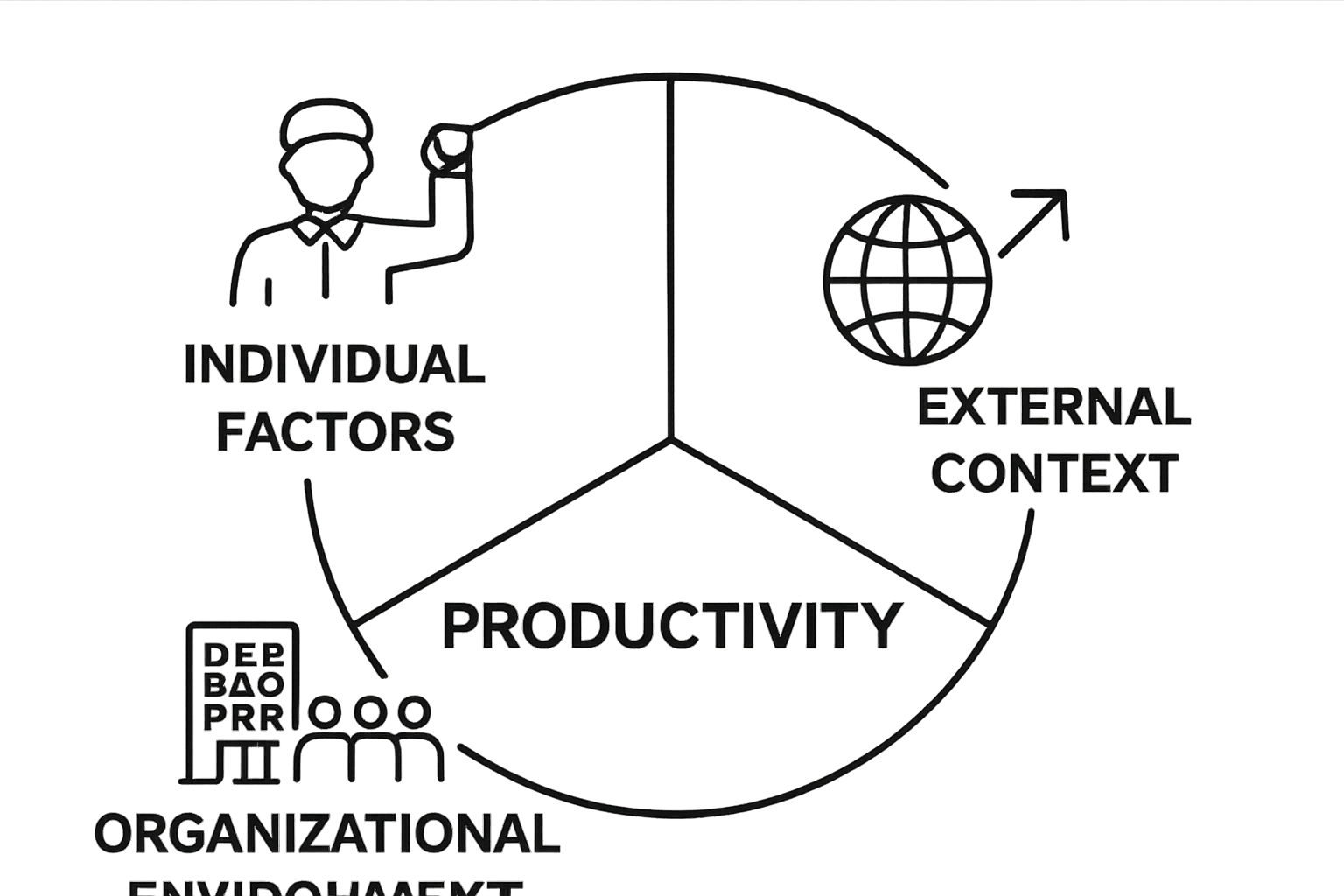
Workplace productivity is a complex ecosystem influenced by multiple interconnected factors that extend far beyond simple time management. Understanding these factors helps organizations create environments that optimize employee performance and organizational success.
Individual Performance Drivers
Individual productivity stems from a combination of personal and professional elements that shape an employee’s ability to perform effectively:
- Personal motivation and engagement
- Skills and professional competence
- Physical and mental well being
- Personal work organization strategies
According to research from the National Institutes of Health, psychosocial work environments play a critical role in determining individual performance. Factors such as managerial support, job autonomy, and workplace resources significantly impact an employee’s capacity to deliver high quality work.
Organizational Environment Factors
Beyond individual capabilities, several organizational elements dramatically influence workplace productivity:
Technological Infrastructure: Modern digital tools and seamless technology integration enable faster communication, more efficient workflows, and reduced administrative overhead.
Workplace Culture: A positive, supportive organizational culture that values collaboration, recognizes achievements, and promotes continuous learning naturally enhances productivity.
Leadership and Management Approaches: Leadership styles that emphasize clear communication, provide constructive feedback, and create transparent performance expectations directly contribute to improved workplace productivity.
External Contextual Influences
External factors also play a substantial role in shaping workplace productivity. Economic conditions, industry trends, remote work dynamics, and global disruptions can all significantly impact how organizations and individuals approach work performance.
Recognizing that workplace productivity is a multifaceted concept allows businesses to develop comprehensive strategies that address performance holistically.
The following table compares the key factors influencing workplace productivity, summarizing how each category impacts employee and organizational performance.
| Factor Category | Description | Example Impacts |
|---|---|---|
| Individual Performance Drivers | Personal traits and circumstances affecting work effectiveness | Motivation, well-being, job organization |
| Organizational Environment | Company-level conditions shaping employee productivity | Tech infrastructure, culture, leadership |
| External Contextual Influences | Outside forces affecting workplace dynamics | Economy, industry trends, global events |
| By understanding and proactively managing these interconnected factors, organizations can create environments where employees are empowered to perform at their best. |
How Workplace Culture Affects Productivity Levels
Workplace culture represents the intricate web of shared values, behaviors, and unwritten rules that define an organization’s social and psychological environment. Its profound impact on employee productivity extends far beyond superficial workplace interactions.
The Psychological Foundation of Culture
Culture operates as an invisible framework that shapes employee motivation, engagement, and overall performance. Key psychological dimensions include:
- Emotional safety and trust
- Sense of belonging
- Perceived organizational support
- Individual and collective purpose
According to research from the National Institutes of Health, a positive workplace culture characterized by collaboration and recognition directly empowers employees to reach their fullest potential, creating a virtuous cycle of increased job satisfaction and productivity.
Behavioral and Performance Dynamics
Positive Culture Indicators: Workplace cultures that prioritize transparency, mutual respect, and continuous learning generate measurable performance improvements. Organizations with strong cultural foundations see enhanced:
- Team collaboration
- Innovation capacity
- Employee retention
- Adaptability to change
Negative Culture Consequences: Toxic workplace environments can dramatically undermine productivity. Factors like chronic stress, poor communication, and lack of recognition create significant performance barriers.
This table highlights differences between positive and negative workplace culture by outlining their characteristics and related effects on productivity.
| Culture Type | Key Characteristics | Impact on Productivity |
|---|---|---|
| Positive Culture | Transparency, respect, collaboration | Boosts teamwork, innovation, retention |
| Negative Culture | Stress, poor communication, lack of trust | Causes burnout, turnover, inefficiency |
Practical Culture Transformation Strategies
Building a productivity enhancing culture requires intentional, systemic approaches:
- Develop clear organizational values
- Create transparent communication channels
- Implement recognition and feedback mechanisms
- Foster psychological safety
- Encourage continuous learning and professional development
Ultimately, workplace culture is not a static concept but a dynamic ecosystem that requires consistent nurturing. Organizations that view culture as a strategic asset rather than a peripheral concern can unlock substantial productivity potential, transforming workplace interactions from transactional to truly transformative.
The Role of Technology in Enhancing Productivity
Technology has emerged as a transformative force in modern workplace productivity, fundamentally reshaping how organizations approach work, collaboration, and performance optimization. Its role extends far beyond simple task automation, representing a strategic lever for organizational efficiency and innovation.
Digital Tools and Workflow Optimization
Modern technological solutions provide unprecedented capabilities for streamlining work processes and eliminating traditional productivity barriers:
- Automated task management systems
- Cloud based collaboration platforms
- Real time communication tools
- Advanced data analytics capabilities
According to research from the National Bureau of Economic Research, digital tool adoption significantly enhances workplace productivity by improving both the efficiency and flexibility of work processes.
Technological Performance Enablers
Collaboration and Communication: Digital technologies break down geographical barriers, enabling seamless remote collaboration through:
- Video conferencing platforms
- Instant messaging applications
- Shared document editing systems
- Project management software
Data Driven Decision Making: Advanced analytics and artificial intelligence tools empower organizations to:
- Identify performance bottlenecks
- Predict potential workflow interruptions
- Develop personalized productivity strategies
- Optimize resource allocation
Strategic Technology Integration
Successful technology implementation requires more than simply acquiring tools. Organizations must develop:
- Clear technological adoption strategies
- Comprehensive employee training programs
- Ongoing assessment of technological effectiveness
- Flexible technological ecosystems
Technology represents more than a productivity tool it is a strategic organizational capability. By thoughtfully integrating digital solutions, businesses can create more adaptive, responsive, and efficient work environments that unlock human potential and drive sustainable competitive advantage.
Measuring and Assessing Productivity in Various Industries
Productivity measurement is a nuanced process that requires sophisticated approaches tailored to specific industry characteristics. Each sector presents unique challenges and opportunities in quantifying workplace performance and efficiency.
This table organizes how productivity is measured across different industries, featuring both foundational and sector-specific assessment approaches discussed in the article.
| Industry Sector | Common Productivity Metrics | Assessment Focus |
|---|---|---|
| All Sectors | Output per labor hour, revenue per employee | Quantitative and qualitative |
| Manufacturing | Units per worker, machine efficiency, cycle times | Output and efficiency |
| Service Industries | Customer satisfaction, project speed, deliverables | Service quality and outcomes |
Foundational Productivity Metrics
Effective productivity assessment involves multiple quantitative and qualitative dimensions that provide comprehensive performance insights:
- Output per labor hour
- Revenue generated per employee
- Quality of work produced
- Efficiency of resource utilization
- Time spent on core business activities
According to research from the National Academies of Sciences, productivity measurement requires understanding the distinct dynamics of different industry sectors and developing customized evaluation frameworks.
Industry Specific Assessment Approaches
Manufacturing Sector: Productivity measurement typically focuses on:
- Units produced per worker
- Machine efficiency
- Production cycle times
- Material waste reduction
Service Industries: Productivity assessment involves more complex metrics:
- Customer satisfaction rates
- Project completion speed
- Value of deliverables
- Knowledge worker output
- Client retention metrics
Advanced Measurement Techniques
Modern productivity assessment goes beyond traditional quantitative measurements. Contemporary approaches incorporate:
- Balanced scorecards
- Key performance indicators
- Qualitative performance evaluations
- Technological performance tracking
- Comparative benchmarking
Successful productivity measurement requires a holistic approach that balances numerical data with contextual understanding. Organizations must develop flexible, nuanced assessment strategies that capture the multifaceted nature of workplace performance across different operational environments.

Bridge the Gap Between Knowledge and Real Workplace Productivity
You know that real workplace productivity goes beyond just getting more done in less time. It is about creating the right environment, removing workflow barriers, and using effective technology so your team can flourish. If reading about individual performance, supportive culture, and the need for integrated technological tools got you thinking about your own business struggles, you are not alone. Pain points like inefficient systems, burnout, or outdated infrastructure can halt your growth and make it difficult to achieve lasting success.
Let SRS Networks turn your productivity goals into real business results. As a trusted partner for growing organizations in the Monterey Bay Area and beyond, we deliver tailored IT solutions that align technology with your unique needs. From proactive managed IT and responsive helpdesk support to advanced cloud platforms, we address the same strategic challenges highlighted in this article: secure workflows, business continuity, and empowered teams. Visit SRS Networks now to discover how you can boost productivity, lower your risk, and create a culture where your people perform at their very best. Let us show you how transforming technology can transform your results today.
Frequently Asked Questions
What is workplace productivity?
Workplace productivity refers to the efficiency and effectiveness with which employees complete tasks and achieve organizational goals within a specific timeframe. It measures valuable work accomplished relative to time and resources invested.
Why is improving workplace productivity important?
Improving workplace productivity is crucial for enhancing economic performance, increasing employee engagement, and enabling organizational growth. It leads to more efficient resource use, reduced operational costs, and greater employee satisfaction.
What factors influence workplace productivity?
Workplace productivity is influenced by individual performance drivers (like motivation and skills), organizational environment factors (such as technology and culture), and external contextual influences (like economic conditions and industry trends).
How can technology enhance workplace productivity?
Technology enhances workplace productivity by streamlining workflows, improving communication through digital tools, and enabling data-driven decision-making. By adopting modern solutions, organizations can optimize efficiency and flexibility in their operations.