Firewalls stand guard at the front lines of network security, quietly deciding who can come and go in your digital world. Most people assume hackers break through with sophisticated code, but about 95 percent of firewall breaches happen because someone made a configuration mistake. So if you think fancy technology is the biggest risk, think again. The real danger often comes down to simple human error.
Table of Contents
- What Is A Firewall And Its Role In Network Security?
- Why Firewall Best Practices Are Essential For Businesses
- How Firewalls Work: Key Components And Functionality
- Understanding Common Firewall Configuration Mistakes
- Real-World Applications Of Firewall Best Practices
Quick Summary
| Takeaway | Explanation |
|---|---|
| Implement comprehensive firewall strategies. | Organizations should adopt layered firewall setups to enhance their network security against cyber threats. |
| Regularly update firewall configurations. | Consistent updates help maintain firewall effectiveness and address emerging vulnerabilities. |
| Conduct frequent security audits. | Regular audits can identify misconfigurations that may leave networks vulnerable to attacks. |
| Establish clear incident response protocols. | Well-defined response plans ensure quick and efficient management of security incidents when they occur. |
| Utilize industry-specific security measures. | Tailoring firewall configurations to specific industry needs protects sensitive data and ensures compliance with regulations. |
What is a Firewall and Its Role in Network Security?
A firewall serves as a critical digital guardian for computer networks, acting as a protective barrier between trusted internal networks and untrusted external networks like the internet. Cybersecurity experts at CISA define a firewall as a network security system designed to monitor and control incoming and outgoing network traffic based on predetermined security rules.
Understanding Firewall Functionality
Firewalls operate as sophisticated digital screening mechanisms that inspect data packets moving through a network. They analyze each packet’s source, destination, content, and other characteristics to determine whether it should be allowed or blocked. Think of a firewall like a security checkpoint that carefully examines every piece of digital communication attempting to enter or leave your network.
Key functions of a firewall include:
- Blocking unauthorized access attempts
- Filtering potential malicious traffic
- Creating a barrier between internal network segments
- Logging network traffic for security monitoring
Types of Firewall Protection
Businesses can implement different firewall technologies depending on their specific security requirements. NIST research identifies several primary firewall categories:
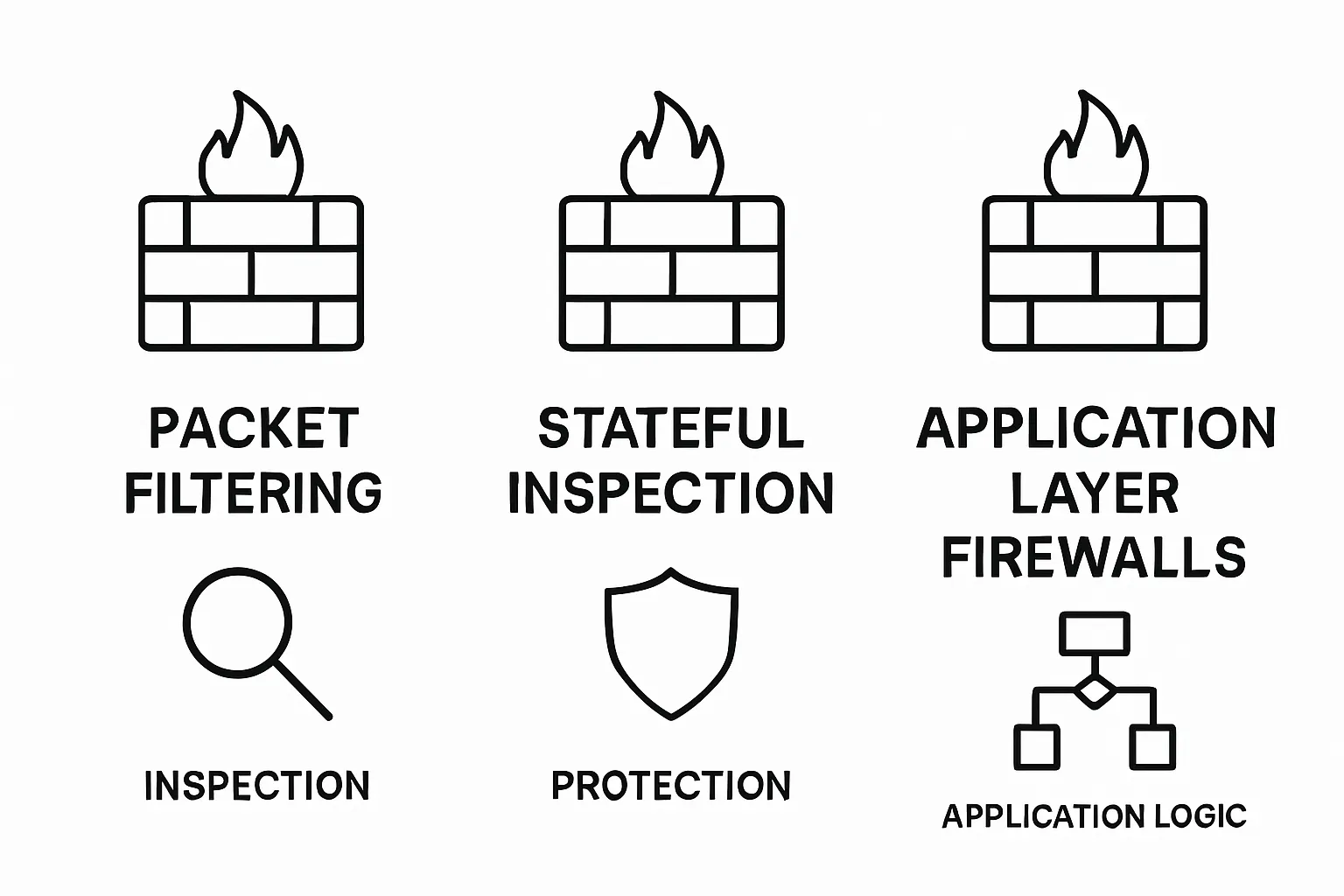
- Packet Filtering Firewalls: Examine individual data packets and allow or block them based on predefined rules
- Stateful Inspection Firewalls: Track the state of network connections and make more sophisticated filtering decisions
- Application Layer Firewalls: Analyze traffic at the application protocol level, providing deeper security examination
- Next Generation Firewalls: Combine traditional firewall capabilities with advanced threat detection and intrusion prevention technologies
By implementing robust firewall practices, organizations create a critical first line of defense against potential cybersecurity threats, protecting their digital assets and maintaining the integrity of their network infrastructure.
To help clarify the distinct approaches, here is a comparison of common firewall types, their main functions, and typical use cases.
| Firewall Type | Main Function | Typical Use Case |
|---|---|---|
| Packet Filtering Firewall | Screens individual data packets based on preset rules | Basic network perimeter protection |
| Stateful Inspection Firewall | Tracks active connections and session states | Business networks needing robust security |
| Application Layer Firewall | Monitors and filters traffic at the application protocol | Environments needing deep traffic filtering |
| Next Generation Firewall | Integrates threat detection and intrusion prevention | Enterprises facing advanced cyber threats |
Why Firewall Best Practices are Essential for Businesses
Firewall best practices are fundamental to protecting organizational digital infrastructure and maintaining business continuity. IBM Security research reveals that the average cost of a data breach in 2022 was $4.35 million, underscoring the critical importance of robust network security strategies.
Financial and Operational Risk Mitigation
Implementing comprehensive firewall best practices goes beyond simple technical compliance. These practices represent a strategic approach to protecting an organization’s most valuable digital assets. Businesses face significant financial risks from potential cybersecurity incidents, including direct monetary losses, regulatory penalties, and long-term reputation damage.
Key financial risks mitigated by strong firewall practices include:
- Preventing unauthorized data access and potential theft
- Reducing potential legal and compliance penalties
- Minimizing business disruption from cyber incidents
- Protecting intellectual property and sensitive customer information
Comprehensive Security Landscape
Gartner cybersecurity research indicates that modern businesses require multi-layered security approaches. Firewall best practices are not standalone solutions but integral components of a holistic cybersecurity strategy. They work in concert with other security measures to create comprehensive digital protection.
Critical elements of a robust firewall strategy include:
- Regular security configuration updates
- Continuous monitoring of network traffic
- Implementing multi-factor authentication
- Developing clear incident response protocols
- Conducting periodic security assessments
By prioritizing firewall best practices, businesses create a resilient defense mechanism that adapts to evolving digital threats, protects critical infrastructure, and maintains operational integrity in an increasingly complex technological landscape.
How Firewalls Work: Key Components and Functionality
Firewalls are sophisticated network security systems that operate through complex mechanisms of traffic filtering and monitoring. SANS Institute research explains that firewalls function as critical digital gatekeepers, analyzing and controlling network communications based on predefined security rules.
Network Traffic Inspection Mechanisms
At their core, firewalls examine data packets traversing network boundaries using advanced inspection techniques. Each data packet contains crucial information including source address, destination address, protocol type, and port numbers. Firewalls analyze these packet characteristics against established rule sets to determine whether the communication should be permitted or blocked.
Key packet inspection methods include:
- Stateless Inspection: Evaluates individual packets in isolation
- Stateful Tracking: Monitors entire communication connection states
- Deep Packet Inspection: Analyzes packet contents beyond standard header information
Rule Configuration and Decision Making
NIST cybersecurity guidelines highlight that firewall effectiveness depends on sophisticated rule configurations. These rules establish granular policies defining allowed and prohibited network interactions. Administrators create complex rulesets that consider multiple factors such as:
- Source and destination IP addresses
- Network ports and protocols
- Time-based access restrictions
- User authentication requirements
- Traffic volume and connection patterns
By continuously analyzing network traffic against these predefined rules, firewalls make instantaneous decisions about packet transmission, effectively creating a dynamic security barrier that protects organizational network infrastructure from potential unauthorized access and malicious activities.
Understanding Common Firewall Configuration Mistakes
Firewall misconfiguration represents a significant vulnerability that can compromise an entire network’s security infrastructure. Gartner cybersecurity research indicates that approximately 95% of firewall breaches result from misconfiguration rather than technical vulnerabilities.
Critical Configuration Errors
Network administrators often encounter configuration challenges that can inadvertently create security gaps. These mistakes frequently stem from complex network environments, rapid technological changes, and insufficient security awareness. Understanding these common pitfalls is crucial for maintaining robust network protection.
Most prevalent firewall configuration mistakes include:
- Overly permissive rule sets
- Lack of regular security audits
- Incomplete access control configurations
- Default settings left unchanged
- Insufficient logging and monitoring mechanisms
Potential Security Consequences
CISA cybersecurity guidelines highlight that misconfigured firewalls can create substantial organizational risks. Improperly configured firewalls might accidentally provide unauthorized network access, expose sensitive systems, or create backdoors for potential cyber attackers.
Key potential consequences of firewall misconfigurations include:
- Unintended network exposure
- Increased vulnerability to cyber attacks
- Potential regulatory compliance violations
- Compromised data protection mechanisms
- Reduced ability to detect and respond to security incidents
By recognizing and addressing these common configuration mistakes, organizations can significantly enhance their network security posture and minimize potential vulnerabilities that malicious actors might exploit.
This table outlines the most common firewall misconfiguration errors along with their potential security impacts to help you avoid costly mistakes.
| Common Misconfiguration Error | Potential Security Consequence |
|---|---|
| Overly permissive rule sets | Unintended network exposure to unauthorized users |
| Lack of regular security audits | Increased vulnerability to evolving cyber attacks |
| Incomplete access control | Unrestricted access to sensitive systems |
| Default settings left unchanged | Exposure to known vulnerabilities or backdoor access |
| Insufficient logging and monitoring | Difficulty detecting and responding to security incidents |
Real-World Applications of Firewall Best Practices
Firewall best practices extend far beyond theoretical concepts, playing a critical role in protecting diverse organizational digital infrastructures. NIST cybersecurity research demonstrates that strategic firewall implementation can significantly reduce network vulnerabilities across various industry sectors.
Industry-Specific Firewall Strategies
Different industries require tailored firewall approaches to address unique security challenges. Healthcare organizations, for instance, must protect sensitive patient data, while financial institutions need robust defenses against sophisticated cyber threats. These sector-specific requirements demand nuanced firewall configurations that balance accessibility with stringent security protocols.
Critical industry-specific firewall considerations include:
- Compliance with regulatory standards
- Protection of sensitive information
- Maintaining operational continuity
- Preventing unauthorized data access
- Supporting secure remote work environments
Multilayered Network Protection
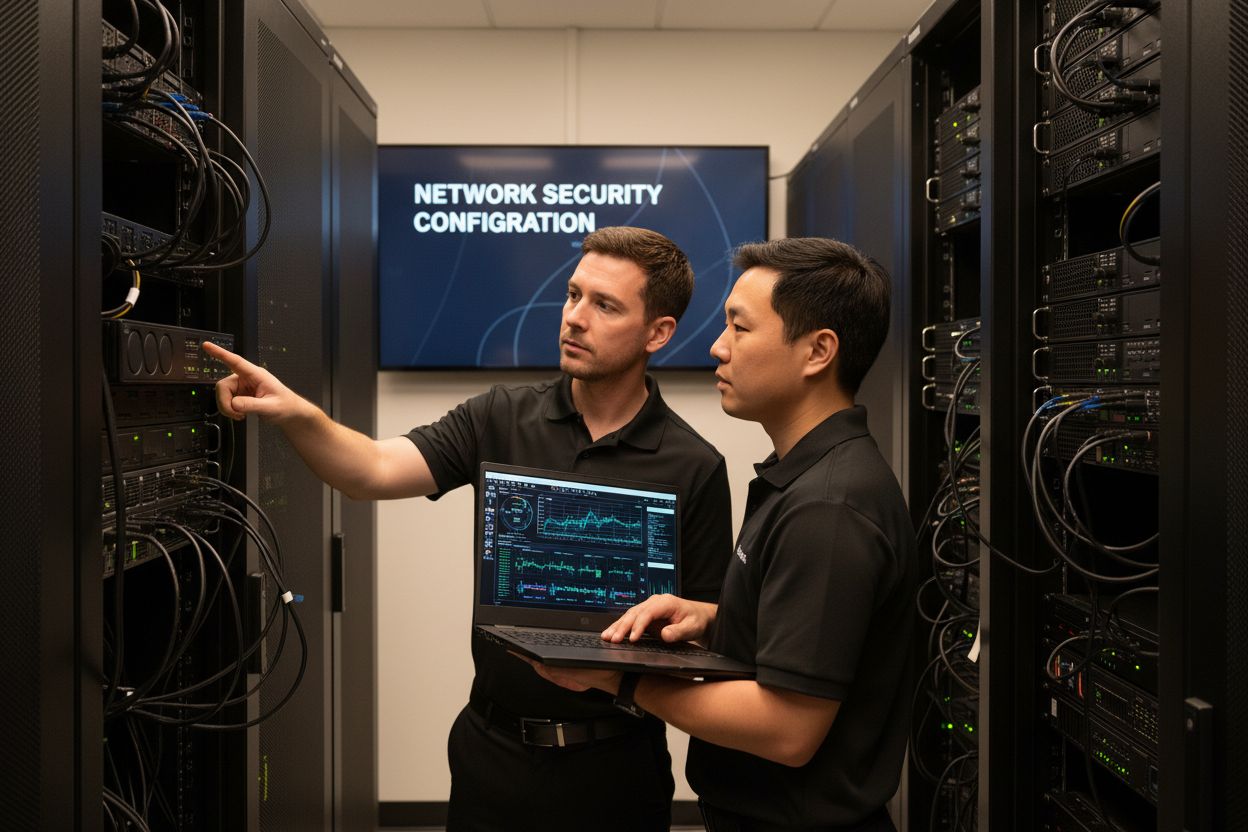
Cybersecurity experts at CISA recommend implementing comprehensive, multilayered firewall strategies that create multiple defensive barriers. This approach involves deploying firewalls at different network levels, including perimeter defenses, internal segment protections, and application-level security mechanisms.
Key components of a robust multilayered firewall strategy include:
- Perimeter firewalls blocking external threats
- Internal network segmentation firewalls
- Application-specific security controls
- Advanced threat detection systems
- Continuous monitoring and adaptive response mechanisms
By implementing sophisticated, context-aware firewall best practices, organizations can create dynamic security ecosystems that protect against evolving digital threats while maintaining operational efficiency and technological flexibility.
Shield Your Business with Expert Firewall Solutions from SRS Networks
Is your business fully protected from the costly consequences of firewall misconfiguration and evolving cyber threats? As highlighted in the article, even small mistakes in firewall setup can lead to data breaches, downtime, or compliance penalties. Many organizations struggle to manage complex rule sets and keep up with the latest best practices, putting their valuable data and operations at risk. You deserve peace of mind knowing your network is both secure and resilient.

Take control of your network security with the trusted local team at SRS Networks. We bring industry expertise and personal support to businesses across the Monterey Bay Area, ensuring your firewalls are expertly configured, monitored, and aligned with compliance requirements. Ready to strengthen your defenses and minimize risk? Contact our experts today for a firewall assessment and let us show you how technology can be your strongest ally in a safer digital future.
Frequently Asked Questions
What is a firewall and how does it protect my business?
A firewall is a network security system that monitors and controls incoming and outgoing network traffic based on predetermined security rules. It acts as a barrier between trusted internal networks and untrusted external networks, protecting your business from unauthorized access and cyber threats.
What are the types of firewalls available for businesses?
There are several types of firewalls including packet filtering firewalls, stateful inspection firewalls, application layer firewalls, and next-generation firewalls. Each type offers different levels of security and features, allowing businesses to choose based on their specific needs.
How can I avoid common firewall configuration mistakes?
To avoid common configuration mistakes, ensure you regularly update your firewall rules, conduct frequent security audits, avoid overly permissive settings, and monitor network traffic diligently. It’s also critical to change default settings to enhance security.
What are the key components of a robust firewall strategy?
A robust firewall strategy includes regular security configuration updates, continuous monitoring of network traffic, implementing multi-factor authentication, developing clear incident response protocols, and conducting periodic security assessments.