Cloud migration strategies are shaking up the way companies manage their technology. You might think the move to the cloud is purely technical, just about shifting files and servers. But over 90 percent of businesses now say cloud migration is a core part of their actual business strategy, not just an IT upgrade. That means this shift is less about cables and code and more about reimagining how organizations stay competitive, flexible, and future-proof.
Cloud Migration Strategies: Your Quick Guide
- What Are Cloud Migration Strategies?
- Why Cloud Migration Matters For Businesses
- Key Concepts Behind Cloud Migration
- Different Types Of Cloud Migration Approaches
- Real-World Applications Of Cloud Migration Strategies
Quick Summary
| Takeaway | Explanation |
|---|---|
| Choose the Right Migration Strategy | Select between Rehost, Refactor, Revise, Rebuild, or Replace based on your needs. |
| Assess Existing Systems Before Migration | Evaluate compatibility, performance, security, cost, and scalability factors of your current systems. |
| Understand Cloud Service Models | Familiarize yourself with IaaS, PaaS, and SaaS to determine the best fit for your business. |
| Plan for Continuous Improvement | View cloud migration as an ongoing journey to enhance agility, efficiency, and competitiveness. |
| Utilize Hybrid Solutions When Needed | Consider hybrid cloud strategies for incremental change while balancing costs and performance. |
What are Cloud Migration Strategies?
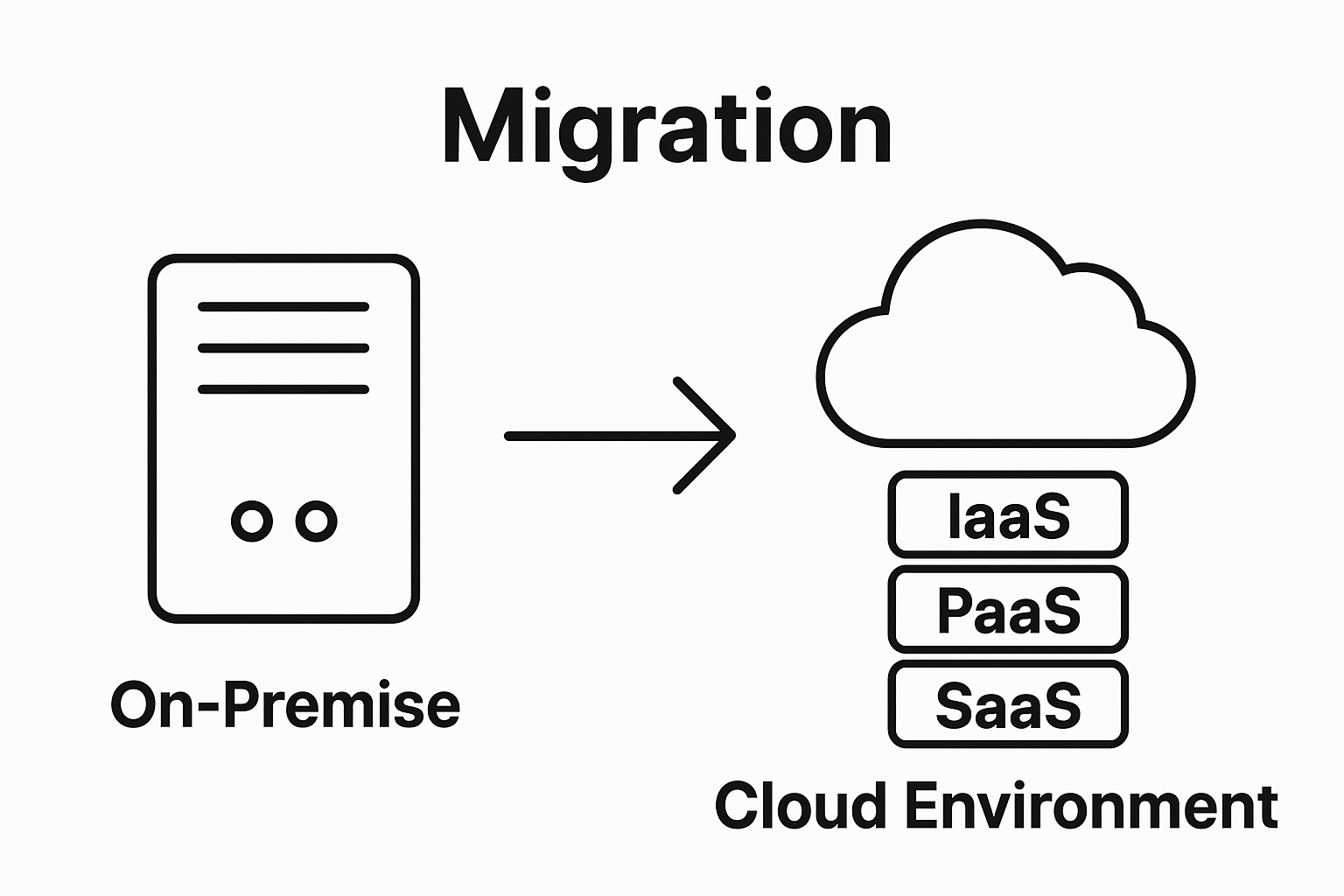
Cloud migration strategies are systematic approaches businesses use to transition their digital infrastructure, applications, and data from on-premise systems to cloud environments. These strategies are not one-size-fits-all solutions but carefully designed methodologies tailored to an organization’s unique technological landscape and business objectives.
Understanding the Core Concept
At its fundamental level, cloud migration involves moving digital assets from local servers to remote, internet-based computing platforms. According to Caltech’s research on cloud computing, organizations typically employ five primary migration strategies known as the “Five R’s”:
- Rehost: Directly transferring existing applications to cloud infrastructure without significant modifications
- Refactor: Partially adjusting applications to better leverage cloud capabilities
- Revise: Substantially modifying application architecture before migration
- Rebuild: Completely redesigning applications specifically for cloud environments
- Replace: Switching to entirely new cloud-native applications
Strategic Considerations for Migration
Successful cloud migration requires comprehensive planning and a deep understanding of an organization’s technological ecosystem. Businesses must evaluate several critical factors before initiating their migration process:
- Compatibility of existing systems with cloud platforms
- Performance requirements and potential latency issues
- Security and compliance considerations
- Cost implications of migration and ongoing cloud services
- Long-term scalability and flexibility needs
Cloud migration is not merely a technical transition but a strategic business decision that can significantly impact operational efficiency, cost management, and technological agility. By carefully selecting and implementing the right migration strategy, organizations can unlock substantial benefits such as improved scalability, enhanced collaboration, reduced infrastructure costs, and greater technological resilience.
The journey toward cloud adoption demands thoughtful assessment, precise planning, and a nuanced understanding of both technological capabilities and business objectives. Each organization will have a unique path, but the fundamental goal remains consistent: creating a more adaptable, efficient, and innovative technological infrastructure.
Below is a comparison of the five primary cloud migration strategies, highlighting their main approach and key business considerations to support decision makers evaluating their options.
| Strategy | Main Approach | Level of Modification | Key Business Considerations |
|---|---|---|---|
| Rehost | Move existing applications to cloud as-is | Minimal | Fast migration, limited use of cloud features |
| Refactor | Modify applications to better leverage cloud capabilities | Moderate | Some code changes, improved scalability |
| Revise | Substantially modify the application architecture | Significant | Optimize for cloud, requires more resources |
| Rebuild | Redesign applications for the cloud environment | Complete | High investment, maximizes cloud benefits |
| Replace | Swap with new cloud-native applications | Total replacement | Adopt modern apps, may involve business change |
Why Cloud Migration Matters for Businesses
Cloud migration has transformed from a technological trend to a critical business strategy that enables organizations to remain competitive, adaptable, and technologically resilient in an increasingly digital marketplace.
Economic and Operational Advantages
Businesses recognize cloud migration as a powerful mechanism for driving operational efficiency and reducing technological overhead. According to the U.S. Government Accountability Office, cloud migration provides organizations with significant strategic benefits that extend far beyond simple technological upgrades.
The economic implications of cloud migration are profound and multifaceted:
- Cost Reduction: Elimination of expensive on-premise hardware and infrastructure maintenance
- Scalability: Ability to rapidly adjust computing resources based on business demand
- Flexibility: Enhanced capacity to support remote and distributed workforce models
- Performance: Access to advanced technological capabilities without substantial upfront investments
Strategic Technology Transformation
Cloud migration represents more than a technical transition—it is a fundamental reimagining of how businesses approach technological infrastructure. Organizations that successfully migrate to cloud platforms gain competitive advantages through:
- Improved data accessibility and collaboration
- Enhanced cybersecurity capabilities
- Faster deployment of new applications and services
- More robust disaster recovery and business continuity mechanisms
The transformative potential of cloud migration extends across virtually every industry. Small businesses can access enterprise-grade technologies, while large corporations can streamline complex technological ecosystems. By decoupling technological capabilities from physical infrastructure, companies can focus more energy on innovation and core business objectives.
Ultimately, cloud migration is not just about moving data—it is about positioning businesses to be more responsive, efficient, and competitive in an increasingly digital world. The journey requires strategic planning, but the potential rewards include unprecedented technological agility and organizational resilience.
Key Concepts Behind Cloud Migration
Cloud migration encompasses a complex set of technological and strategic principles that enable businesses to transition their digital infrastructure effectively and securely. Understanding these fundamental concepts is crucial for organizations planning a successful cloud transformation.
Cloud Service Models
According to the National Institute of Standards and Technology, cloud migration involves understanding three primary service models that define how businesses interact with cloud technologies:
- Infrastructure as a Service (IaaS): Provides virtualized computing resources over the internet
- Platform as a Service (PaaS): Offers a complete development and deployment environment
- Software as a Service (SaaS): Delivers software applications directly through cloud platforms
Each service model represents a different level of management responsibility and technological integration, allowing businesses to choose the most suitable approach for their specific needs.
This table summarizes the three primary cloud service models, organizing their core service, typical business use, and the management responsibilities businesses retain with each model.
| Service Model | Core Service Provided | Typical Use Case | Management Responsibility |
|---|---|---|---|
| Infrastructure (IaaS) | Virtualized computing resources | Data center replacement | High (user manages OS and software) |
| Platform (PaaS) | App development and deployment environment | Building custom applications | Moderate (user manages apps/code) |
| Software (SaaS) | Software apps via the cloud | Email, CRM, collaboration | Low (provider manages everything) |
Architectural and Security Considerations
Cloud migration is not simply about moving data but redesigning technological architecture to maximize efficiency and security. Businesses must carefully evaluate:
- Data governance and compliance requirements
- Network security and access management
- Performance optimization strategies
- Scalability and resource allocation mechanisms
- Integration capabilities with existing systems
Successful cloud migration requires a holistic approach that balances technological capabilities with organizational objectives. This means considering not just the technical aspects of migration but also the broader implications for workflow, productivity, and long-term business strategy.
The complexity of cloud migration demands a nuanced understanding of both technological infrastructure and business goals. Organizations must view cloud adoption as a strategic transformation rather than a simple technological upgrade. By carefully mapping their unique requirements to appropriate cloud service models and architectural frameworks, businesses can unlock unprecedented levels of operational flexibility, cost efficiency, and technological innovation.
Different Types of Cloud Migration Approaches
Cloud migration is not a monolithic process but a diverse set of strategies businesses can leverage to transition their technological infrastructure. Understanding these different approaches allows organizations to select the most appropriate method for their unique technological ecosystem and business objectives.
Comprehensive Migration Strategies
According to research from the University of Minnesota, organizations can choose from several distinct migration approaches:
- Lift-and-Shift: Directly transferring existing applications to cloud infrastructure with minimal modifications
- Replatforming: Making minimal adjustments to applications to optimize cloud compatibility
- Refactoring: Extensively modifying application architecture to fully leverage cloud capabilities
- Rebuild: Completely redesigning applications specifically for cloud environments
Each strategy represents a different level of complexity, investment, and potential technological transformation. The choice depends on factors such as existing infrastructure, budget constraints, and long-term technological goals.
Hybrid Cloud Solutions
Hybrid cloud migration represents a nuanced approach that bridges traditional on-premise infrastructure with cloud technologies. This strategy allows businesses to:
- Maintain critical applications on local servers
- Gradually transition less sensitive workloads to cloud platforms
- Optimize cost and performance through flexible resource allocation
- Retain greater control over sensitive data and compliance requirements
The hybrid approach provides organizations with a balanced pathway to cloud adoption, enabling incremental transformation without disrupting core business operations. By strategically distributing workloads between private and public cloud environments, businesses can minimize risk while maximizing technological flexibility.
Cloud migration is fundamentally about selecting the right approach that aligns with an organization’s specific technological maturity, business goals, and risk tolerance. There is no universal solution—success requires a thoughtful, tailored strategy that considers the unique characteristics of each business’s technological landscape.
Real-World Applications of Cloud Migration Strategies
Cloud migration strategies have transformed from theoretical concepts to practical business solutions across diverse industries, enabling organizations to reimagine their technological capabilities and operational efficiency.
Enterprise Technology Transformation
According to Harvard Business School’s IT Strategy, cloud migration represents a critical pathway for businesses to enhance technological agility and scalability. Real-world applications demonstrate how different sectors leverage cloud technologies to solve complex operational challenges:
- Healthcare: Secure patient data management and telehealth platforms
- Finance: Advanced risk modeling and fraud detection systems
- Manufacturing: Supply chain optimization and predictive maintenance
- Education: Remote learning infrastructure and collaborative research environments
These applications showcase how cloud migration enables organizations to transcend traditional technological limitations, creating more responsive and adaptive technological ecosystems.
Strategic Implementation Approaches
Successful cloud migration requires a nuanced understanding of organizational needs and technological constraints. Businesses implement cloud strategies through:
- Gradual workload migration to minimize operational disruption
- Comprehensive security and compliance assessments
- Continuous performance monitoring and optimization
- Strategic investment in cloud-native technologies
- Employee training and cultural adaptation
The most effective cloud migration strategies go beyond technical implementation, addressing the broader organizational implications of technological transformation. By viewing cloud migration as a holistic business strategy, organizations can unlock unprecedented levels of innovation, efficiency, and competitive advantage.
Ultimately, cloud migration is not a destination but a continuous journey of technological evolution. Businesses that approach this transformation with strategic vision, technical expertise, and organizational adaptability are best positioned to thrive in an increasingly digital global marketplace.

Ready to Unlock Real Growth with a Smarter Cloud Migration Strategy?
If planning your move to the cloud feels overwhelming, you are not alone. Many businesses worry about choosing the wrong migration strategy, disruption to daily operations, high costs, and the risk of not meeting compliance standards. Whether you are exploring rehosting, refactoring, or a hybrid approach, your challenges are unique. The right cloud migration opens the door to better scalability, security, and business continuity. But without guidance or local expertise, the path can be uncertain.
Let SRS Networks help you gain confidence in your cloud journey. Our team in Salinas specializes in cloud migration solutions, ensuring your transition is smooth, secure, and perfectly matched to your business needs. We take time to understand your specific goals—like reducing costs, improving performance, and ensuring compliance—so you can focus on growth instead of IT headaches. Act now and take the first step toward safer data, stronger collaboration, and reliable support. Visit SRS Networks to learn more and schedule your first IT consultation today.
Frequently Asked Questions
What are the key cloud migration strategies?
Cloud migration strategies primarily include five approaches known as the “Five R’s”: Rehost, Refactor, Revise, Rebuild, and Replace. Each strategy offers different levels of modification to applications as they transition to cloud environments.
Why is cloud migration important for businesses?
Cloud migration is crucial for businesses as it drives operational efficiency, reduces costs, enhances scalability, and improves flexibility. It also allows companies to keep pace with technological advancements and meet changing market demands.
What factors should organizations consider before migrating to the cloud?
Organizations should evaluate compatibility of existing systems, performance requirements, security and compliance needs, cost implications, and long-term scalability before initiating a cloud migration process.
What are the different types of cloud service models related to migration?
The primary cloud service models include Infrastructure as a Service (IaaS), which offers virtualized computing resources; Platform as a Service (PaaS), providing a complete development environment; and Software as a Service (SaaS), which delivers applications directly over the cloud.