Every year, over 422 million records are exposed in data breaches worldwide, disrupting lives and putting organizations at risk. With sensitive information now woven into nearly every aspect of business and daily life, the fallout from a single breach can reach far beyond lost files or technical glitches. Gaining a clear understanding of how breaches happen and why they matter helps individuals and businesses stay ahead of costly cyber threats.
Key Takeaways: Proactive Data Breach Prevention Strategies
| Point | Details |
|---|---|
| Data Breach Definition | A data breach involves unauthorized access or exposure of sensitive information, resulting from both human errors and external attacks. |
| Root Causes and Types | Common sources include technical vulnerabilities, human error, insider threats, and supply-chain attacks, each posing unique challenges for cybersecurity. |
| Protective Strategies | Organizations must adopt advanced defense technologies and continuous employee training to build resilient cybersecurity frameworks. |
| Legal and Financial Risks | Non-compliance with data protection regulations can lead to significant financial penalties and reputational damage, emphasizing the need for proactive compliance management. |
Table of Contents
- What Is A Data Breach And Why It Happens
- Common Types And Sources Of Data Breaches
- Essential Strategies For Protecting Data
- Legal Responsibilities And Compliance Standards
- Risks, Costs, And Consequences Of Breaches
What Is a Data Breach and Why It Happens
A data breach represents a critical cybersecurity event where sensitive, confidential, or protected information is accessed, stolen, or exposed without proper authorization. According to Wikipedia, these incidents can stem from multiple sources, ranging from sophisticated external attacks to simple human errors.
The landscape of data breaches is complex and multifaceted. As Investopedia explains, breaches can be both intentional and unintentional. Intentional breaches often involve deliberate actions like hacking, where cybercriminals actively seek to penetrate digital systems. Unintentional breaches, however, can occur through seemingly innocuous actions such as:
- Losing unencrypted devices
- Clicking on compromised email links
- Misconfiguring system settings
- Accidentally sharing sensitive information
The root causes of data breaches are increasingly diverse in our interconnected digital world. Software vulnerabilities play a significant role, with unpatched systems and zero-day exploits creating potential entry points for malicious actors. Insider threats also contribute substantially, whether through malicious intent or simple human error. From an employee accidentally emailing confidential documents to a disgruntled team member deliberately leaking information, the human element remains a critical factor in cybersecurity risk.
Understanding these dynamics is the first step in developing robust prevention strategies. By recognizing the various pathways through which data breaches can occur, organizations can implement more comprehensive and proactive security measures.
Common Types and Sources of Data Breaches
Data breaches are not monolithic events but complex incidents with diverse origins and methodologies. According to Wikipedia, these security compromises can emerge from multiple technical and human-driven vectors, each presenting unique challenges for organizations.
Here’s a summary of common data breach sources and examples:
| Source Type | Example Methods | Typical Impact |
|---|---|---|
| Technical | Software vulnerabilities Zero-day exploits Phishing Malware |
Unauthorized system access Data theft |
| Human Error | Lost devices Misdirected emails Improper sharing |
Accidental exposure Leakage of data |
| Insider Threat | Malicious employee actions Negligent staff |
Sabotage Deliberate leaks |
| Supply-Chain Attack | Compromised third-party vendors Manipulated software updates |
Widespread compromise Regulatory risks |
Technical Vulnerability Exploitation
Technical sources of data breaches frequently involve sophisticated methods targeting system weaknesses:
- Software Vulnerabilities: Unpatched systems provide entry points for malicious actors
- Zero-Day Exploits: Attackers leverage unknown software security flaws
- Phishing Attacks: Tricking employees into revealing credentials or installing malware
- Malware Infiltration: Deploying harmful software to compromise network security
Strategic Attack Vectors
As demonstrated in high-profile incidents, supply-chain attacks represent a particularly insidious breach mechanism. According to Wikipedia, these attacks can have massive implications. For instance, state-sponsored actors have successfully exploited vulnerabilities in major software platforms like Microsoft Exchange, gaining unauthorized access to sensitive diplomatic communications across thousands of email accounts.
The motivations behind data breaches are equally varied. Cybercriminals might seek financial gain through ransomware, engage in corporate espionage, pursue political activism, or simply demonstrate technical prowess by penetrating sophisticated security systems. Understanding these diverse motivations helps organizations develop more nuanced and comprehensive defense strategies.
Essential Strategies for Protecting Data
Protecting organizational data requires a multifaceted approach that goes beyond traditional security measures. Cybersecurity strategy is no longer about building walls, but creating adaptive, intelligent defense mechanisms that can anticipate and neutralize threats before they cause significant damage.
Advanced Defense Technologies
According to Bitsight, several cutting-edge strategies have emerged as critical components of robust data protection:
- Zero-Trust Architecture: Verify every user, device, and connection
- Security AI and Automation: Implement intelligent threat detection systems
- Extended Detection and Response (XDR): Comprehensive threat monitoring across multiple platforms
- Incident Response Teams: Develop specialized groups for rapid breach containment
Technological and Human Synergy
IBM research reveals compelling evidence about the power of advanced technologies. By leveraging AI and automation, organizations can potentially reduce breach costs by over $1.7 million and shorten breach detection timelines by more than 100 days. This isn’t just about technology—it’s about creating a proactive, intelligent security ecosystem.
The most effective data protection strategies recognize that security is both a technological and human challenge. This means continuous employee training, implementing strict access controls, regularly updating systems, and maintaining a culture of security awareness. By combining sophisticated technological solutions with human vigilance, organizations can build resilient defenses that adapt and respond to evolving cyber threats.

Legal Responsibilities and Compliance Standards
Data protection compliance has become a critical legal minefield for organizations across various industries. According to Morgan Lewis, the regulatory landscape is increasingly complex, with organizations facing significant financial risks for non-compliance.
Regulatory Landscape
The compliance environment presents multiple layers of legal obligations:
- Federal Regulations: Overarching national data protection requirements
- State-Level Laws: Additional jurisdiction-specific compliance standards
- Sector-Specific Rules: Tailored requirements for industries like healthcare and finance
- International Standards: Global data protection frameworks
Financial and Legal Consequences
IBM research highlights the critical importance of proper breach response. In regulated sectors like healthcare, organizations must navigate complex notification requirements and legal frameworks. Strikingly, one in three organizations receives post-breach regulatory fines, with approximately half paying over $100,000 in penalties.
The most effective approach involves proactive compliance management. This means developing comprehensive incident response plans, maintaining meticulous documentation, and ensuring rapid, transparent communication during potential breaches. Organizations must view legal compliance not as a burden, but as a strategic shield that protects both their reputation and financial stability. Collaborating with legal experts, investing in compliance training, and staying updated on evolving regulations are no longer optional—they’re essential survival strategies in today’s hyper-regulated digital landscape.
Risks, Costs, and Consequences of Breaches
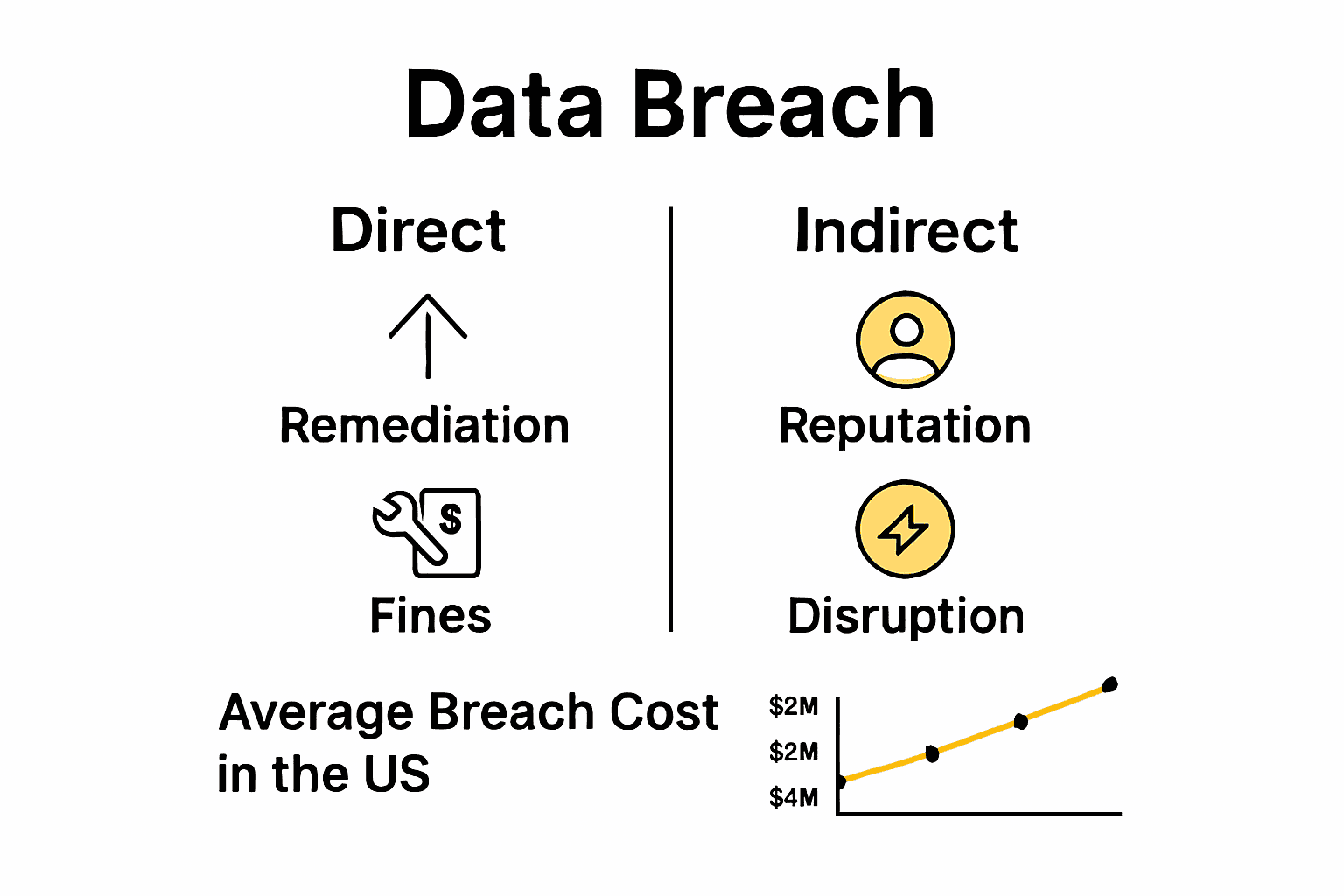
Data breaches have evolved from potential risks to substantial financial threats for organizations. According to Centraleyes, the financial landscape of cybersecurity incidents has reached unprecedented levels, with the average cost of a data breach in the US hitting a staggering $10 million in 2025.
Financial Impact Breakdown
The monetary consequences of breaches are multilayered:
- Direct Financial Losses: Immediate remediation and recovery costs
- Regulatory Fines: Substantial penalties for non-compliance
- Reputation Damage: Long-term brand and customer trust erosion
- Operational Disruption: Potential business continuity challenges
Industry-Specific Vulnerabilities
IBM’s research provides stark insights into the breach ecosystem. In 2023, while the global average breach cost was $4.45 million, the US dramatically exceeded this at $9.48 million. Healthcare organizations were particularly vulnerable, experiencing an average breach cost of $10.93 million with detection times stretching to 213 days.
The most critical revelation is that breaches involving insider threats or supply-chain compromises are exponentially more complex and expensive to resolve. Organizations must recognize that the consequences extend far beyond immediate financial losses. The long-term reputational damage, potential legal challenges, and erosion of customer trust can create ripple effects that persist long after the initial incident.
 Proactive investment in comprehensive cybersecurity measures is no longer a luxury—it’s an essential survival strategy in an increasingly interconnected digital landscape.
Ready to Prevent Data Breaches? Trust SRS Networks for Complete Protection
Reading this guide, you have seen just how costly and disruptive data breaches can be. Vulnerabilities in software, human error, or insider threats can leave your organization exposed to financial loss and regulatory fines. You need more than generic solutions. You deserve a true partner who understands the real risks your business faces and offers a proactive approach to cybersecurity.
Discover SRS Networks Cybersecurity Expertise
Take the first step to securing your business. Schedule a free security assessment with SRS Networks today. We help small and medium-sized businesses in Central California implement the strategies outlined in this guide with:
• Ongoing monitoring and threat detection
• Compliance-driven security solutions
• 24/7 support from real experts
Act now to keep your sensitive data safe, avoid costly breaches, and focus on growing your business. Visit SRS Networks and start building your resilience today.
Frequently Asked Questions
What is a data breach?
A data breach is a cybersecurity event where sensitive or confidential information is accessed, stolen, or exposed without proper authorization.
What are the common causes of data breaches?
Common causes of data breaches include technical vulnerabilities like software flaws, unintentional human errors such as lost devices and misconfigured settings, insider threats from employees, and supply-chain attacks involving third-party vendors.
How can organizations protect against data breaches?
Organizations can protect against data breaches by implementing a multifaceted cybersecurity strategy, including advanced defense technologies like zero-trust architecture, security AI, and continuous employee training on security awareness.
What are the legal responsibilities regarding data breaches?
Organizations must navigate complex legal obligations related to data protection compliance, which include federal regulations, state-level laws, and sector-specific rules. Proactive compliance management ensures proper breach response and mitigates financial risks.