Physical security and cybersecurity often seem like separate worlds. One deals with locked doors and surveillance cameras, the other with passwords, networks, and digital breaches. But shockingly, Bay Area tech companies face 37 percent more targeted cyber attacks than other US cities. The real risk is not choosing which side to focus on. It is failing to realize these two domains are so tightly linked that a weak spot in one can instantly jeopardize the other.
Table of Contents
- Understanding Physical Security And Cybersecurity
- Unique Risks For Bay Area Businesses
- Building A Unified Security Strategy
- Best Practices For Lasting Protection
Quick Summary
| Takeaway | Explanation |
|---|---|
| Integrate Physical and Cybersecurity | Organizations must develop comprehensive security protocols that address both physical and digital threats. |
| Conduct Unified Risk Assessments | Assess vulnerabilities across both domains to create a dynamic risk profile that adapts to threats. |
| Emphasize Cross-Functional Collaboration | Break down silos between security teams to improve communication and response capabilities. |
| Implement Advanced Access Controls | Use multi-factor authentication and biometric systems to enhance entry security for both physical and digital assets. |
| Continuous Threat Monitoring and Training | Regularly update security measures and train employees to recognize and handle threats effectively. |
Understanding Physical Security and Cybersecurity
In the complex world of organizational protection, physical security and cybersecurity represent two critical yet distinct domains of safeguarding an organization’s assets. While both aim to protect an organization’s resources, they approach security from fundamentally different perspectives.
Defining the Security Landscape
Physical security focuses on protecting tangible assets, infrastructure, and personnel through concrete measures like access control systems, surveillance cameras, security guards, and secured entry points. The National Institute of Standards and Technology (NIST) defines cybersecurity as the process of protecting information systems by preventing, detecting, and responding to digital attacks that target data, networks, and computer systems.
The key distinction lies in their primary targets. Physical security protects the physical realm protection against unauthorized human access, theft, and environmental risks. Cybersecurity, conversely, defends digital assets against intangible threats like malware, hacking attempts, data breaches, and network vulnerabilities.
Here’s a comparison table outlining the key differences between physical security and cybersecurity, as discussed in the article. This summary helps clarify the distinct but interrelated domains organizations must address:
| Aspect | Physical Security | Cybersecurity |
|---|---|---|
| Primary Focus | Protection of tangible assets and infrastructure | Protection of digital information and systems |
| Main Threats | Unauthorized human access, theft, environmental risks | Malware, hacking, data breaches, network vulnerabilities |
| Protection Methods | Access control, surveillance, security guards | Passwords, multi-factor authentication, encryption |
| Example Vulnerabilities | Unsecured entry points, server room access | Weak passwords, unpatched software |
| Impact of Breach | Physical theft, facility damage | Data loss, reputational damage, business interruption |
Interconnected Security Strategies
Modern organizations cannot treat physical and cybersecurity as separate entities. Research from Gartner indicates that integrated security approaches are becoming increasingly essential. A breach in physical security can directly compromise cybersecurity infrastructure. For instance, an unauthorized person gaining physical access to a server room could potentially install malicious hardware or directly compromise network equipment.
This interconnectedness demands a holistic security strategy that bridges physical and digital protection mechanisms. Organizations must develop comprehensive security protocols that address both tangible and intangible risks. This means implementing robust access control systems that limit physical entry and simultaneously maintaining sophisticated digital defense mechanisms like multi-factor authentication, encryption, and continuous network monitoring.
Emerging Security Challenges
The convergence of physical and digital security has accelerated with the rise of Internet of Things (IoT) devices, smart building technologies, and remote work environments. Modern security systems increasingly blur traditional boundaries. A security camera is no longer just a physical protection tool but a network-connected device vulnerable to digital exploitation.
Businesses must recognize that security is no longer about erecting walls or implementing firewall software. It is about creating an integrated, adaptive ecosystem that can detect, prevent, and respond to threats across multiple domains. This requires ongoing training, technological investment, and a cultural commitment to security awareness that encompasses both physical and digital protection strategies.
By understanding the nuanced relationship between physical and cybersecurity, organizations can develop more resilient, comprehensive protection frameworks that safeguard their most valuable assets in an increasingly complex threat environment.
Unique Risks for Bay Area Businesses
The San Francisco Bay Area represents a unique technological ecosystem with distinctive security challenges that demand sophisticated physical and cybersecurity approaches. Organizations in this region face complex threats stemming from their innovative technological infrastructure, high-profile corporate environments, and concentrated technology workforce.
Technology Sector Vulnerabilities
The Bay Area’s technology-driven economy creates unprecedented security risks that extend beyond traditional protection models. According to a cybersecurity report from Silicon Valley cybersecurity firm Crowdstrike, technology companies in the region experience 37% more targeted cyber attacks compared to other US metropolitan areas. These attacks frequently target intellectual property, research and development data, and proprietary technological innovations.
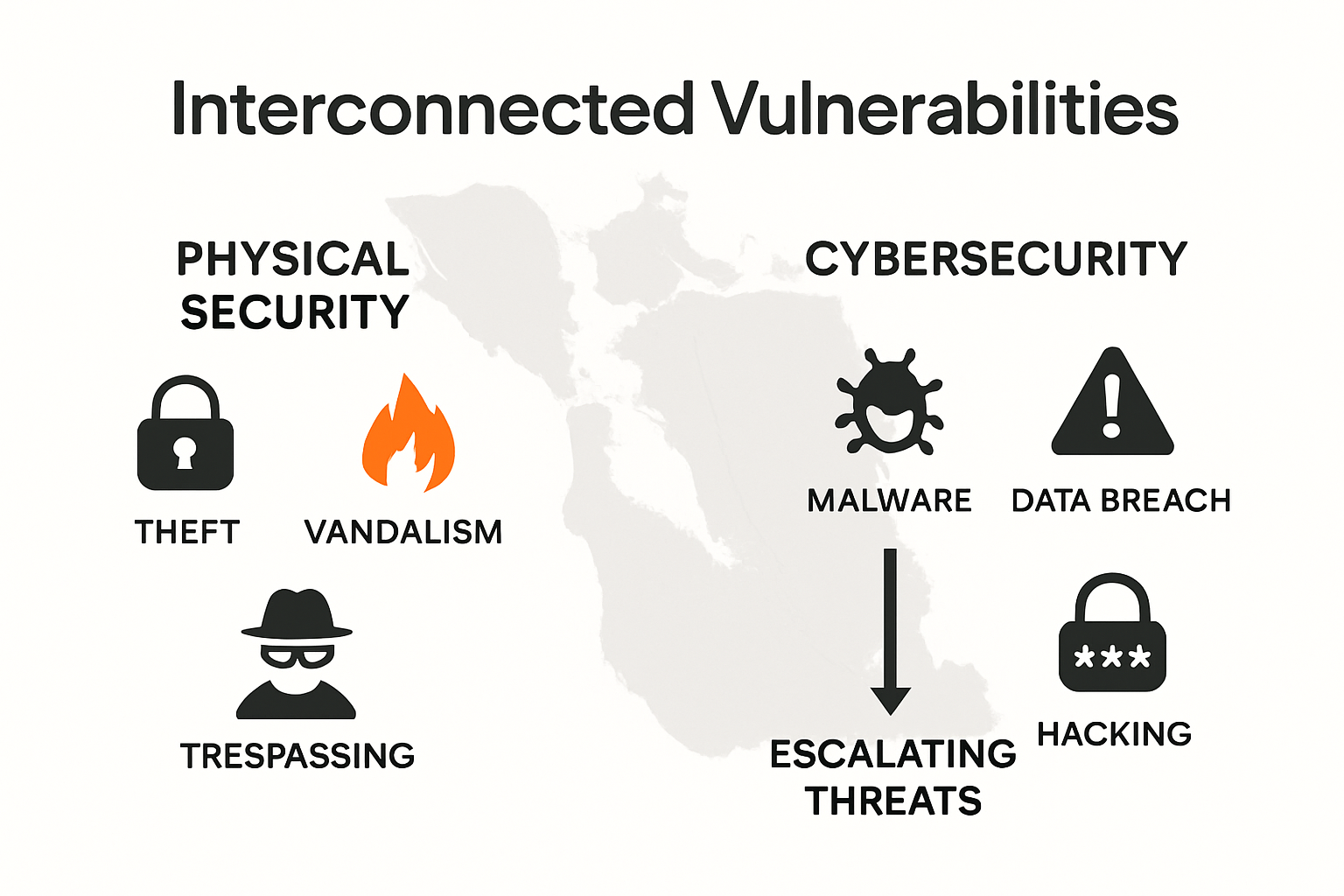
Startups and established tech firms alike face significant challenges in protecting their digital and physical assets. The competitive nature of the technology sector means that corporate espionage and targeted breaches are constant threats. Physical security becomes crucial in protecting research facilities, data centers, and innovation spaces where cutting-edge technologies are developed.
Regional Infrastructure Risks
Bay Area businesses confront unique environmental and infrastructural security challenges. Research from the California Cybersecurity Integration Center highlights that the region’s complex technological infrastructure, coupled with proximity to major fault lines and potential natural disaster zones, creates multifaceted security risks.
The intersection of physical and digital security becomes particularly critical in this context. Businesses must develop resilient security strategies that account for potential infrastructure disruptions, including earthquake risks, power grid vulnerabilities, and potential communication network failures. This requires comprehensive disaster recovery planning that addresses both physical and digital asset protection.
Economic and Talent-Related Security Challenges
The Bay Area’s concentrated technology workforce presents unique security dynamics. High employee mobility, competitive recruitment practices, and a culture of rapid innovation create complex security environments. Companies must implement robust onboarding and offboarding processes that protect sensitive information during employee transitions.
Additionally, the region’s high-value technology ecosystem attracts sophisticated threat actors. Cybercriminals and corporate espionage groups specifically target Bay Area businesses, understanding the potential financial and strategic value of their intellectual assets. This necessitates a proactive, adaptive security approach that goes beyond traditional defensive mechanisms.
Businesses in the Bay Area must view security not as a static set of protocols but as a dynamic, integrated strategy that anticipates and responds to evolving threats. By recognizing the unique risks inherent in their technological and geographical context, organizations can develop comprehensive security frameworks that protect their most valuable assets in an increasingly complex threat landscape.
Building a Unified Security Strategy
Developing a comprehensive security strategy requires organizations to transcend traditional silos and create an integrated approach that addresses both physical and cybersecurity challenges. This holistic methodology ensures a more robust defense against increasingly sophisticated threats.
Integrated Risk Assessment Framework
According to the Cybersecurity and Infrastructure Security Agency (CISA), organizations must adopt a unified risk assessment approach that evaluates threats across digital and physical domains. This means conducting comprehensive vulnerability assessments that consider interconnected risks rather than treating physical and cyber threats as separate entities.
Effective risk assessment involves mapping potential vulnerabilities across all organizational assets. This includes evaluating physical access points, network infrastructure, employee behaviors, and technological systems. The goal is to create a dynamic risk profile that can adapt to emerging threats and organizational changes.
Collaborative Security Governance
Research from ISACA emphasizes the critical importance of breaking down organizational silos. Traditional security models often separate physical security teams from cybersecurity professionals, creating dangerous gaps in protection. A unified strategy requires creating cross-functional security teams that share intelligence, coordinate responses, and develop integrated protection protocols.
Key elements of collaborative security governance include:
- Unified Reporting Structures: Establishing common reporting mechanisms
- Integrated Training Programs: Developing comprehensive security awareness initiatives
- Shared Technology Platforms: Implementing unified monitoring and response systems
Technology and Process Integration
The National Academies Press highlights that modern security strategies must leverage technology to create seamless protection mechanisms. This involves implementing advanced technologies that bridge physical and digital security domains, such as:
- Intelligent access control systems that integrate network authentication
- Video surveillance with advanced threat detection capabilities
- Biometric authentication systems that combine physical and digital verification
Moreover, organizations must develop flexible incident response protocols that can address threats across multiple domains. This means creating comprehensive playbooks that outline coordinated responses to potential security breaches, whether they originate from physical intrusions or digital attacks.
Building a unified security strategy is not a one-time project but an ongoing process of adaptation and improvement. Organizations must commit to continuous learning, regularly updating their approaches to match evolving threat landscapes. This requires a cultural shift that views security as a holistic, organization-wide responsibility rather than a siloed technical function.
By embracing an integrated approach, businesses can create more resilient, adaptive security frameworks that provide comprehensive protection in an increasingly complex threat environment. The key lies in breaking down traditional barriers, fostering collaboration, and developing a unified vision of organizational security.
Best Practices for Lasting Protection
Establishing enduring security requires a strategic, comprehensive approach that goes beyond traditional defensive measures. Organizations must develop robust practices that address both physical and digital security vulnerabilities while maintaining flexibility and adaptability.
Access Control and Authentication Protocols
According to the Federal Trade Commission, implementing sophisticated access control mechanisms is fundamental to protecting organizational assets. This involves creating multi-layered authentication processes that combine physical and digital verification techniques.
Key strategies include:
- Biometric Access Systems: Utilizing fingerprint, facial recognition, or retinal scanning technologies
- Multi-Factor Authentication: Requiring multiple verification methods for system and physical space entry
- Dynamic Access Credentials: Implementing time-limited and role-based access permissions
These approaches ensure that only authorized personnel can access critical infrastructure, reducing the risk of unauthorized entry through physical or digital channels.

Comprehensive Risk Management and Training
The U.S. Department of Labor recommends conducting regular, comprehensive risk assessments that evaluate both physical and digital security landscapes. Organizations must develop a proactive approach to identifying and mitigating potential vulnerabilities before they can be exploited.
Effective risk management involves:
- Annual security infrastructure assessments
- Continuous threat monitoring
- Regular updates to security protocols
- Ongoing employee security awareness training
Employee education is crucial in creating a security-conscious organizational culture. Training programs should cover both physical security awareness and digital threat recognition, empowering staff to become active participants in the organization’s security strategy.
Integrated Technology and Infrastructure Protection
The Cybersecurity and Infrastructure Security Agency highlights the importance of integrating advanced technologies to create comprehensive security ecosystems. Modern protection strategies must leverage intelligent systems that provide real-time monitoring, threat detection, and rapid response capabilities.
Recommended technological integrations include:
- Advanced surveillance systems with AI-powered threat detection
- Network-connected physical security infrastructure
- Centralized security management platforms
- Automated incident response mechanisms
By implementing these sophisticated technological solutions, organizations can create adaptive security frameworks that respond dynamically to emerging threats. The goal is to develop a holistic approach that treats physical and digital security as interconnected components of a unified protection strategy.
The following table summarizes the best practices for building robust organizational security, combining both physical and cybersecurity recommendations mentioned in the article. This overview aids quick reference for implementation priorities:
| Best Practice | Description |
|---|---|
| Biometric Access Systems | Use fingerprint, facial recognition, or retinal scanning for secure physical and digital access |
| Multi-Factor Authentication | Require multiple verification methods for entry (digital and physical) |
| Comprehensive Risk Assessments | Regularly evaluate both physical and cyber vulnerabilities |
| Employee Security Awareness Training | Educate staff on recognizing and responding to threats |
| Advanced Surveillance Systems | Implement AI-powered and network-connected monitoring |
| Centralized Security Management | Integrate monitoring and response on a unified platform |
| Automated Incident Response | Use automated systems for rapid threat detection and mitigation |
Ultimately, lasting protection requires a commitment to continuous improvement, ongoing education, and a proactive approach to identifying and mitigating potential security risks. Organizations must view security not as a static set of rules, but as a dynamic, evolving discipline that demands constant attention and strategic adaptation.
Frequently Asked Questions
What is the difference between physical security and cybersecurity?
Physical security focuses on protecting tangible assets and infrastructure against unauthorized access, theft, and environmental risks, while cybersecurity protects digital information and systems from threats like malware and hacking.
Why is it important for Bay Area organizations to integrate physical security and cybersecurity?
Bay Area organizations face 37% more targeted cyber attacks than other US cities. Integrating both types of security protects against vulnerabilities that could be exploited through physical access to digital systems.
What are some best practices for enhancing security in Bay Area tech companies?
Best practices include implementing biometric access systems, using multi-factor authentication, conducting comprehensive risk assessments, and providing ongoing employee security awareness training.
How can organizations assess vulnerabilities across physical and digital domains?
Organizations should adopt a unified risk assessment approach that evaluates threats across both domains by mapping potential vulnerabilities and considering interconnected risks to develop a dynamic risk profile.
Transform Your Security Gaps Into Strength With SRS Networks
Are you worried that a vulnerability in your physical security could leave your entire business exposed? The article has shown how quickly a weak door lock or an unsecured network device can lead to a major breach. This is a real problem for Bay Area organizations facing rising cyber attacks and hybrid threats. At SRS Networks, we know the fear and frustration of protecting valuable data and property—especially when separate security systems might miss the bigger picture. Our team turns those worries into workable solutions by aligning physical and cybersecurity into one simple, reliable defense plan for your business.

Do not let your organization become another statistic in Silicon Valley’s threat landscape. Connect with a local partner that understands your unique risks and responds quickly when every minute counts. Visit SRS Networks to see how our managed IT services, proactive cybersecurity solutions, and business continuity planning can close gaps before attackers find them. Now is the right time to secure your future with experts who care about your success. Reach out today and turn your security challenges into real peace of mind.