Password management sounds simple but its impact runs deep. Reusing a single password across different accounts can multiply your chances of a full-scale security breach. Most people worry about remembering passwords, but that is not where the real risk hides. The threat is far larger if you stick with shortcuts instead of safe habits.
Table of Contents
- What Is Password Management And Why It Matters?
- The Risks Of Poor Password Practices Explained
- Key Concepts For Strong Passwords And Authentication
- How Password Managers Function To Boost Security
- Real-World Examples Of Password Management Successes
Table of Contents: Password Management Strategies & Tips
| Takeaway | Explanation |
|---|---|
| Implement strong, unique passwords for each account. | Using unique passwords reduces risks of multiple accounts being compromised through a single breach. |
| Utilize password managers for secure storage. | Password managers encrypt and manage your passwords, simplifying the process of using complex credentials. |
| Adopt multi-factor authentication (MFA) for added security. | MFA requires multiple forms of verification, making unauthorized access significantly more difficult. |
| Regularly update passwords to maintain security. | Frequent updates help mitigate risks associated with compromised credentials and keep systems secure. |
| Monitor for potential credential breaches continuously. | Staying vigilant against breaches allows proactive measures to be taken before significant damage occurs. |
What is Password Management and Why It Matters?
Password management represents a critical strategy for protecting digital identities and securing sensitive information across personal and professional environments. At its core, password management involves creating, storing, tracking, and maintaining secure login credentials using systematic approaches that minimize cybersecurity risks.
Understanding the Basics of Password Management
Password management goes beyond simply remembering login details. It encompasses a comprehensive approach to developing, organizing, and protecting access credentials across multiple digital platforms. According to the University of Tennessee’s Office of Innovative Technologies, effective password management involves several key components:
- Generating strong, unique passwords for each account
- Storing credentials securely in encrypted environments
- Automatically populating login information safely
- Protecting against unauthorized digital access
The primary goal of password management is to create a robust defense mechanism against potential cybersecurity threats. By implementing strategic password practices, individuals and organizations can significantly reduce the risk of unauthorized access, data breaches, and identity theft.
The Critical Importance of Robust Password Practices
Weak password management exposes individuals and businesses to substantial digital risks. Cybercriminals continuously develop sophisticated techniques to exploit vulnerable login credentials. Reusing passwords across multiple platforms dramatically increases the potential for comprehensive security breaches.
The Cybersecurity and Infrastructure Security Agency (CISA) emphasizes that using advanced password management tools represents one of the most effective strategies for protecting digital identities. These tools help users create complex, randomized passwords that are substantially more difficult for malicious actors to compromise.
By adopting comprehensive password management approaches, users can transform their digital security landscape. This involves not just creating strong passwords, but also implementing systematic processes for regular password updates, monitoring potential security vulnerabilities, and maintaining a proactive stance against emerging cyber threats.
The Risks of Poor Password Practices Explained
Password security represents a critical line of defense against digital threats, with poor password practices creating significant vulnerabilities that cybercriminals actively exploit. Understanding these risks is essential for developing robust digital protection strategies that safeguard personal and professional information.
Common Vulnerabilities in Password Management
Weak password practices expose individuals and organizations to multiple layers of potential security breaches. According to the Cybersecurity and Infrastructure Security Agency, inadequate password strategies can lead to severe digital risks:
- Easy-to-guess passwords that can be quickly cracked
- Reusing passwords across multiple platforms
- Using personal information in password construction
- Failing to update passwords regularly
Cybercriminals leverage sophisticated techniques to exploit these vulnerabilities, often using automated tools that can rapidly test thousands of potential password combinations. The more predictable a password, the higher the likelihood of successful unauthorized access.
Potential Consequences of Compromised Credentials
The repercussions of weak password practices extend far beyond simple account access. When digital credentials are compromised, individuals and organizations face potentially devastating consequences:
- Financial losses through unauthorized transactions
- Identity theft and personal information exposure
- Professional reputation damage
- Potential legal and compliance challenges
Compromised credentials can create cascading security risks. A single weak password can provide attackers with a gateway to interconnected digital systems, potentially exposing multiple accounts and sensitive information.
The table below compares common password vulnerabilities with their potential consequences to help readers understand how each risk can directly impact digital security.
| Vulnerability | Potential Consequence |
|---|---|
| Easy-to-guess passwords | Unauthorized account access |
| Reusing passwords across platforms | Compromise of multiple accounts |
| Using personal information in passwords | Enhanced risk of identity theft |
| Failing to update passwords regularly | Prolonged exposure to security breaches |
| Weak overall password strategies | Financial loss and reputational damage |
| Sophisticated cybercriminals often use initial access points to gradually expand their unauthorized reach, making comprehensive password protection crucial. |
By recognizing and addressing these risks, users can develop more strategic approaches to digital security. This involves not just creating complex passwords, but understanding the evolving landscape of digital threats and maintaining vigilant, proactive security practices.
Key Concepts for Strong Passwords and Authentication
Authentication represents the critical digital gateway that protects access to sensitive information, requiring sophisticated strategies beyond simple password creation. Understanding the fundamental principles of robust authentication mechanisms enables individuals and organizations to build comprehensive security frameworks that resist sophisticated cyber threats.
Core Components of Effective Password Design
Creating strong passwords involves more than random character combinations. Effective password design requires strategic complexity and unique characteristics that make unauthorized access exponentially more challenging. Key principles include:
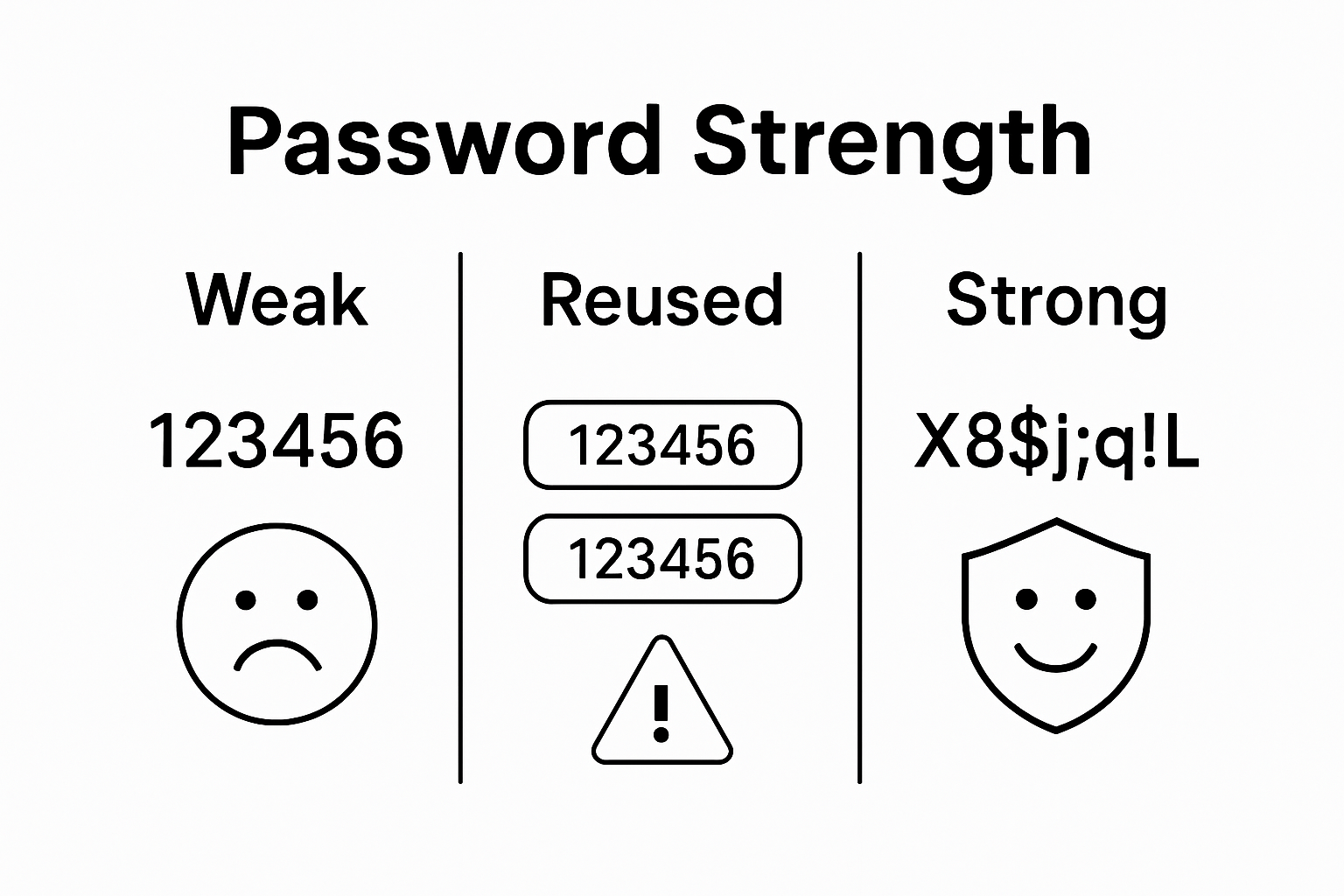
- Utilizing lengthy passwords with minimum 12 characters
- Incorporating diverse character types (uppercase, lowercase, numbers, symbols)
- Avoiding predictable personal information
- Creating unique passwords for each digital account
Passwords function as digital locks, and their strength determines the level of protection against potential intrusions. The more unpredictable and complex the password, the more challenging it becomes for malicious actors to compromise digital access.
Multi-Factor Authentication: Enhanced Security Strategies
According to the National Institute of Standards and Technology, multi-factor authentication (MFA) represents a powerful security enhancement that dramatically reduces unauthorized access risks. MFA requires multiple verification methods to confirm user identity, typically involving:
- Something you know (password or PIN)
- Something you possess (security token or mobile device)
- Something inherent to you (biometric data like fingerprints)
By implementing multiple authentication layers, organizations create robust defense mechanisms that protect against credential theft. Even if one authentication factor is compromised, additional verification steps prevent unauthorized system access.

Authentication technologies continue evolving, integrating advanced techniques like behavioral biometrics and artificial intelligence to create increasingly sophisticated security protocols. Staying informed about emerging authentication strategies is crucial for maintaining effective digital protection in an increasingly complex cybersecurity landscape.
This table summarizes the three main factors involved in multi-factor authentication, helping readers grasp how MFA provides layered verification and superior digital security.
| Authentication Factor | Description | Example |
|---|---|---|
| Something you know | An information-based credential | Password or PIN |
| Something you possess | A physical object you own | Security token or smartphone |
| Something inherent | Biometric data unique to you | Fingerprint or face scan |
How Password Managers Function to Boost Security
Password managers represent sophisticated digital security tools designed to transform how individuals and organizations protect their online credentials. These advanced systems go beyond simple password storage, offering comprehensive security solutions that address multiple cybersecurity challenges simultaneously.
The Fundamental Architecture of Password Management Systems
Password managers create secure, encrypted digital vaults that store and protect login credentials across multiple platforms. These systems utilize complex encryption algorithms to ensure that stored passwords remain completely inaccessible to unauthorized users. Key functional components include:
- Generating randomized, complex passwords
- Securely storing credentials in encrypted databases
- Automatically filling login information across platforms
- Providing secure synchronization across multiple devices
The primary objective of these systems is to eliminate common human errors in password creation and management. By removing the cognitive load of remembering multiple complex passwords, users can maintain higher security standards without experiencing significant usability challenges.
Advanced Security Features and Protection Mechanisms
According to Georgetown University’s Information Security Office, password managers offer multiple layers of advanced security protection. These systems integrate sophisticated security features that go beyond traditional password storage:
- Implementing robust encryption protocols
- Detecting potential security vulnerabilities
- Monitoring for potential credential compromises
- Providing secure password sharing mechanisms
Modern password managers function as intelligent security ecosystems, continuously adapting to emerging digital threats. They analyze password strength, recommend improvements, and help users maintain proactive cybersecurity practices. By centralizing and securing credential management, these tools transform how individuals and organizations approach digital security, creating more resilient and intelligent protection strategies.
Real-World Examples of Password Management Successes
Effective password management transcends theoretical concepts, demonstrating tangible benefits across various professional and personal digital environments. Real-world implementations showcase how strategic password practices can dramatically enhance cybersecurity and operational efficiency.
Enterprise Security Transformation
Large organizations have experienced significant security improvements through comprehensive password management strategies. Companies implementing robust password protocols have observed substantial reductions in potential breach vulnerabilities. Key organizational successes include:
- Minimizing unauthorized system access
- Reducing overall security incident response times
- Streamlining credential management processes
- Establishing centralized authentication frameworks
These transformations demonstrate how systematic password management moves beyond individual account protection to create holistic security ecosystems that safeguard entire organizational digital infrastructures.
Small Business and Individual Protection Strategies
According to the National Cyber Security Centre, small businesses and individual users can achieve remarkable security enhancements through disciplined password management. Implementing structured password protocols provides proportionally significant protection, particularly for organizations with limited dedicated cybersecurity resources:
- Preventing potential financial losses from data breaches
- Protecting sensitive client and customer information
- Creating scalable security infrastructure
- Developing proactive risk mitigation approaches
Successful password management represents a strategic investment in digital resilience. By adopting systematic approaches to credential protection, organizations and individuals can transform potential vulnerabilities into robust security frameworks that adapt to evolving technological landscapes.
Ready to Stop Password Headaches? Secure Your Business with Local IT Experts
You have learned about the risks of weak passwords and the impact of compromised credentials. These threats are real for small and medium-sized businesses in California. A single poor password could expose your systems to data breaches and cause lasting damage. Do not let your business become the next victim. With effective password management, you can shield your operations and give your team peace of mind.

Take action today with trusted solutions from SRS Networks. Our team specializes in proactive cybersecurity solutions and ongoing IT support that address password management weaknesses before they become costly problems. Reach out now for a customized roadmap that makes password management easy and keeps your business one step ahead of cyber threats. Let us help you build a safer, smarter IT foundation—contact us and discover how our managed IT services can transform your approach to digital security.
Frequently Asked Questions
What are the key components of effective password management?
Effective password management includes generating strong, unique passwords for each account, securely storing credentials in encrypted environments, automatically populating login information, and protecting against unauthorized access.
Why is it important to use different passwords for various accounts?
Using different passwords for various accounts reduces the risk of a security breach. If one password is compromised, it minimizes the potential damage across other accounts, protecting sensitive personal and professional information.
How can a password manager enhance my security?
A password manager enhances security by generating complex, randomized passwords, securely storing them, automatically filling in login details, and regularly updating and monitoring for potential security vulnerabilities.
What is multi-factor authentication and how does it improve password security?
Multi-factor authentication (MFA) requires users to provide two or more verification methods to access an account, significantly increasing security. Even if a password is compromised, MFA adds an extra layer of protection against unauthorized access.