More than 60 percent of manufacturers have faced cyberattacks that threaten production and critical data. As factories become smarter and more connected, the risks from digital threats only keep growing. Cybersecurity is now a key concern for anyone in manufacturing, shaping decisions at every level. Understanding how to protect these vital systems is the first step in keeping operations safe and running smoothly.
Guide Contents: Cybersecurity Topics for Manufacturers
- Defining Cybersecurity for Manufacturing Operations
- Types of Cyber Threats Facing Manufacturers
- Essential Security Controls and Technologies
- Regulatory Compliance and Industry Standards
- Risk Management Strategies and Best Practices
Key Takeaways
| Point | Details |
|---|---|
| Comprehensive Cybersecurity Approach | Manufacturing cybersecurity must incorporate cyber, physical, and human elements to create a robust defense against digital threats. |
| Awareness of Cyber Threats | Manufacturers face diverse cyber threats including phishing, ransomware, and supply chain attacks, necessitating immediate and proactive measures. |
| Implementation of Security Controls | Key technologies such as network segmentation and multi-factor authentication are essential for protecting critical manufacturing systems. |
| Regulatory Compliance Necessity | Adhering to industry standards like ISA 62443 and NIST SP 800-39 is crucial for ensuring cybersecurity and maintaining operational credibility. |
Defining Cybersecurity for Manufacturing Operations
Cybersecurity in manufacturing is more than just protecting computer networks. It represents a comprehensive strategy to safeguard critical industrial systems, technologies, and operational processes from digital threats that could disrupt production, compromise sensitive data, or compromise entire manufacturing ecosystems.
According to research from arxiv.org, modern manufacturing cybersecurity requires a sophisticated defense-in-depth model that integrates cyber, physical, and human elements to enhance system resilience. This approach recognizes that security is not just a technological challenge, but a holistic one that encompasses people, processes, and technological infrastructure.
Key components of manufacturing cybersecurity include:
- Protecting industrial control systems (ICS)
- Securing Internet of Things (IoT) devices
- Implementing robust network segmentation
- Developing comprehensive incident response plans
- Training employees on cybersecurity best practices
The arxiv.org study further highlights the importance of utilizing advanced technologies like cyber-physical microservices and model-driven engineering to improve system integration and security. By adopting these sophisticated frameworks, manufacturers can create more adaptive and resilient technological environments that can quickly detect, respond to, and mitigate potential cyber threats.
Understanding and implementing robust cybersecurity isn’t just about preventing attacks. It’s about building a proactive, intelligent defense mechanism that allows manufacturing operations to continue running smoothly, even in the face of increasingly complex digital challenges. For manufacturers looking to develop a comprehensive cybersecurity strategy, consider checking out our understanding cybersecurity for businesses guide for additional insights.
Types of Cyber Threats Facing Manufacturers
Manufacturing environments have become increasingly digital, which means they are also increasingly vulnerable to sophisticated cyber threats that can devastate operations, compromise sensitive data, and cause significant financial damage. Understanding these threats is the first critical step in developing an effective cybersecurity strategy.
According to NIST, manufacturers face five primary cyber threat categories that require immediate attention:
- Phishing Attacks: Deceptive emails designed to trick employees into revealing sensitive information
- Ransomware: Malicious software that locks critical systems until a ransom is paid
- Intellectual Property Theft: Targeted attempts to steal proprietary designs, processes, or trade secrets
- Equipment Sabotage: Cyber intrusions aimed at disrupting or destroying manufacturing equipment
- Compromised Webpages: Websites that have been infiltrated to spread malware or gather intelligence
Research from SME further emphasizes the critical nature of these threats, particularly highlighting supply chain attacks as an emerging concern. These attacks target vulnerabilities in interconnected vendor networks, potentially compromising multiple organizations through a single point of entry. Manufacturers must recognize that their cybersecurity is only as strong as the weakest link in their technological ecosystem.
To protect against these evolving threats, manufacturers need a proactive and comprehensive approach. This means implementing robust security protocols, conducting regular vulnerability assessments, and staying informed about the latest cyber threat landscape. For a deeper understanding of how these threats operate and strategies to mitigate them, check out our guide on understanding types of cyber threats that can help your organization stay one step ahead of potential attackers.
Essential Security Controls and Technologies
In the rapidly evolving landscape of manufacturing cybersecurity, implementing robust security controls and technologies is no longer optional—it’s a critical necessity for protecting sensitive operational infrastructure and preventing potentially catastrophic cyber incidents.
Research from arxiv.org introduces a sophisticated graph-theoretic approach for modeling cybersecurity risks, which helps manufacturers systematically identify and prioritize critical assets. This methodology enables organizations to develop targeted defense strategies that address the most vulnerable components of their technological ecosystem.
Essential security technologies for manufacturers include:
- Endpoint Protection: Advanced antivirus and threat detection systems
- Network Segmentation: Isolating critical industrial control systems
- Intrusion Detection Systems (IDS): Real-time monitoring of network traffic
- Multi-Factor Authentication: Preventing unauthorized system access
- Encryption Technologies: Protecting data in transit and at rest
Wikipedia emphasizes that control system security is paramount, particularly for industrial automation systems that manage essential manufacturing services. These systems are increasingly vulnerable to sophisticated cyber incidents that could potentially disrupt entire production lines or compromise critical infrastructure.
To effectively implement these security controls, manufacturers must adopt a comprehensive and proactive approach.
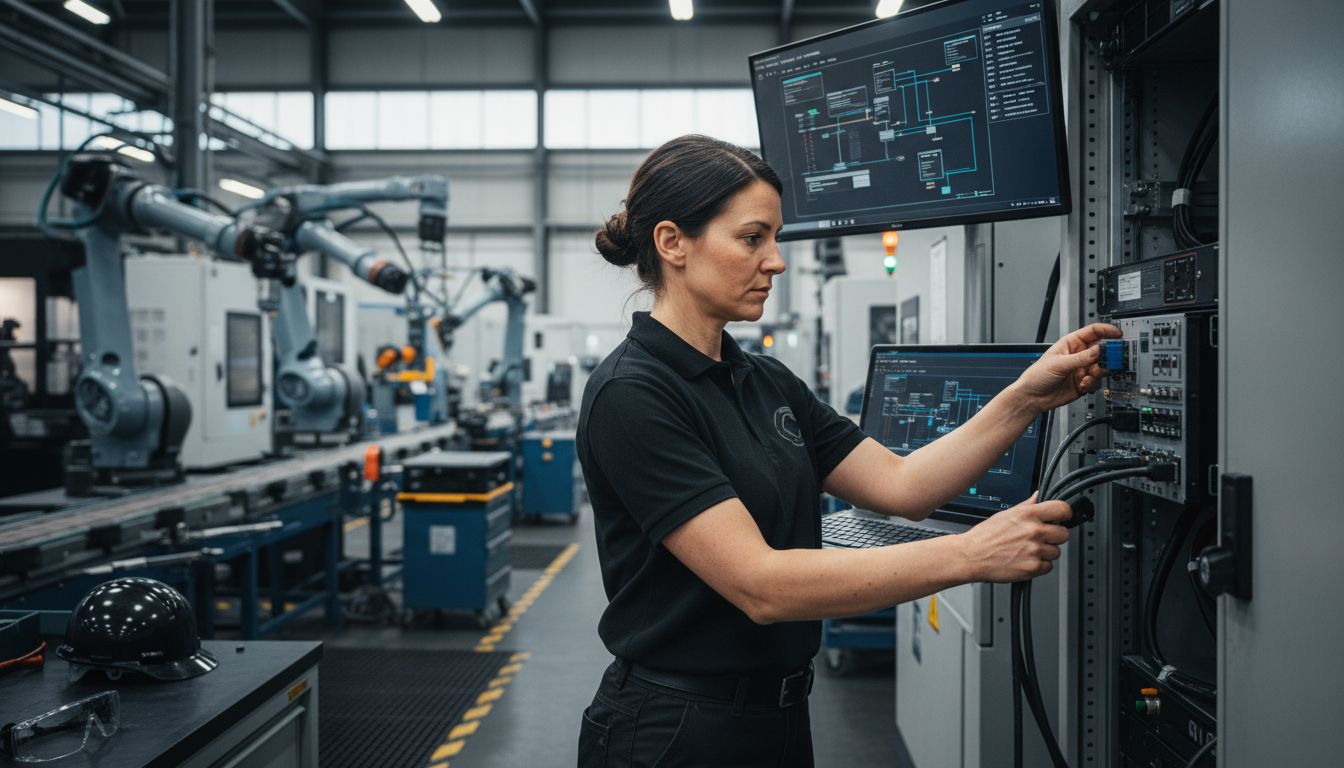 This involves continuous risk assessment, employee training, and staying updated on emerging threats. For practical insights into securing your technological infrastructure, explore our guide on network security that can help you develop a robust cybersecurity strategy tailored to manufacturing environments.
Regulatory Compliance and Industry Standards
Navigating the complex landscape of cybersecurity regulations is a critical challenge for manufacturers, requiring a strategic approach to understanding and implementing industry-specific compliance requirements that protect both technological infrastructure and sensitive business operations.
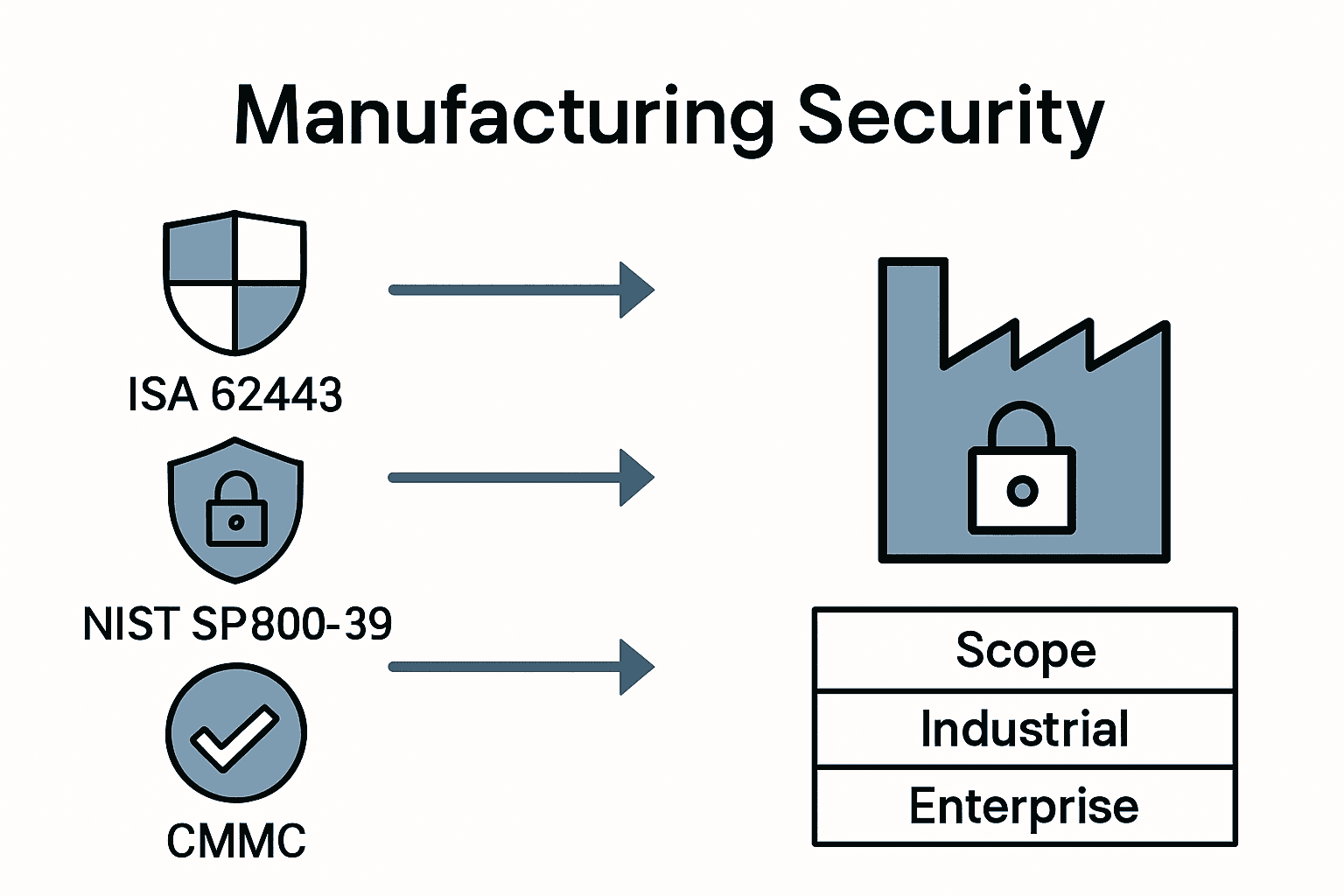
Wikipedia highlights the importance of Cyber Process Hazard Analysis (Cyber PHA), a safety-oriented methodology specifically designed for conducting comprehensive cybersecurity risk assessments in industrial control systems. This approach aligns with key industry standards such as ISA 62443 and NIST SP 800-39, providing manufacturers with a structured framework for identifying and mitigating potential security vulnerabilities.
Critical industry compliance standards for manufacturers include:
- ISA 62443: Comprehensive cybersecurity standard for industrial automation and control systems
- NIST SP 800-39: Guidelines for managing information security risks
- CMMC (Cybersecurity Maturity Model Certification): Mandatory for manufacturers working with defense contracts
- GDPR: Data protection regulations for businesses handling European customer data
- HIPAA: Compliance requirements for manufacturers in healthcare-related industries
According to Wikipedia, control system security extends beyond mere technological implementation, requiring a holistic approach to protecting critical infrastructure. Manufacturers must not only implement technical safeguards but also develop comprehensive policies, conduct regular risk assessments, and maintain ongoing employee training to ensure continuous compliance and security.
To effectively navigate these complex regulatory landscapes, manufacturers need a proactive and strategic approach to compliance. For deeper insights into managing IT compliance requirements, explore our guide on the role of IT in compliance that can help your organization develop a robust and adaptive cybersecurity strategy.
Risk Management Strategies and Best Practices
Cybersecurity risk management in manufacturing is a dynamic and complex process that requires a proactive, comprehensive approach to identifying, assessing, and mitigating potential technological vulnerabilities that could compromise critical operational infrastructure.
Research from arxiv.org emphasizes the critical importance of collaborative cybersecurity approaches in industrial applications. This research highlights that effective risk management is not just a technological challenge, but a strategic organizational effort that demands systematic planning, continuous learning, and cross-functional cooperation.
Key risk management strategies for manufacturers include:
- Comprehensive Risk Assessment: Regular, thorough evaluations of technological vulnerabilities
- Incident Response Planning: Developing detailed protocols for potential cyber incidents
- Employee Security Training: Ongoing education to reduce human-related security risks
- Continuous Monitoring: Real-time tracking of network and system activities
- Vendor Risk Management: Evaluating and managing third-party security risks
Wikipedia underscores the often-overlooked challenge of insider threats, which represent a significant risk to organizational security. Managing these risks requires a nuanced approach that balances technological controls with human-centric strategies, including access management, behavioral monitoring, and creating a culture of security awareness.
To effectively implement these risk management strategies, manufacturers must adopt a holistic and adaptive approach that evolves with emerging technological challenges. For practical guidance on developing a robust risk management framework, explore our role of IT in compliance guide that can help your organization build a comprehensive and resilient cybersecurity strategy.
Strengthen Your Manufacturing Cybersecurity with Local Experts
Manufacturers today face complex cybersecurity challenges—from protecting industrial control systems to mitigating insider threats and supply chain risks. This comprehensive guide highlights the critical need for a defense-in-depth strategy combined with robust risk management and compliance adherence. You need proactive protection that shields your operations, secures sensitive data, and keeps your production running smoothly.
At SRS Networks, we understand these challenges and deliver customized cybersecurity solutions tailored to manufacturing businesses in the Monterey Bay Area. Our expertise includes endpoint protection, network security, employee training, and regulatory compliance support—all designed to build a resilient and adaptive defense system for your operations.
Take control of your manufacturing cybersecurity now with trusted, local IT professionals who partner with you every step of the way.
Ready to protect your critical infrastructure from evolving cyber threats while meeting industry standards? Visit SRS Networks to explore our cybersecurity solutions and learn how our strategic IT services empower manufacturers to stay secure, compliant, and productive. Don’t wait for a breach—secure your future today.
Frequently Asked Questions
What is cybersecurity in manufacturing?
Cybersecurity in manufacturing refers to the comprehensive strategies and measures taken to protect industrial systems, technologies, and operational processes from digital threats that could disrupt production and compromise sensitive data.
What are the primary cyber threats faced by manufacturers?
Manufacturers primarily face cyber threats such as phishing attacks, ransomware, intellectual property theft, equipment sabotage, and compromised webpages. Supply chain attacks are also an emerging concern.
What essential security technologies should manufacturers implement?
Manufacturers should implement essential security technologies including endpoint protection, network segmentation, intrusion detection systems (IDS), multi-factor authentication, and encryption technologies to safeguard their operations.
How can manufacturers ensure compliance with cybersecurity regulations?
Manufacturers can ensure compliance by understanding industry-specific standards like ISA 62443 and NIST SP 800-39, conducting regular risk assessments, and maintaining ongoing employee training and development to meet regulatory requirements.
Recommended
- Understanding IT Support for Manufacturing Efficiency
- Understanding Cybersecurity for Executives: A Comprehensive Guide – SRS Networks
- Effective Cybersecurity Training for Employees: A Step-by-Step Guide – SRS Networks
- Boost Employee Cybersecurity Awareness for SMB Success – SRS Networks
- SEO for Manufacturers That Work: Boost Your Online Presence