Every business relies on digital networks to operate smoothly and keep sensitive data moving. Yet even with advanced technology, cybercriminals exploit gaps that slip through the cracks. Over 60 percent of small and medium-sized businesses experience at least one cyberattack every year, and many are caught off guard by vulnerabilities they never saw coming. Most companies focus on software upgrades, but the real danger often hides in human habits and overlooked configurations.
Quick Navigation: Your Guide to Network Vulnerabilities
- What Are Network Vulnerabilities And Why They Matter
- The Types Of Common Network Vulnerabilities Explained
- How Network Vulnerabilities Are Exploited
- The Impact Of Network Vulnerabilities On Businesses
- Strategies For Understanding And Mitigating Risks
Quick Summary
| Takeaway | Explanation |
|---|---|
| Identify and patch vulnerabilities regularly | Regularly assess your network for software gaps and unpatched systems to minimize exposure to attacks. |
| Implement strong access controls | Use robust authentication methods and segment networks to prevent unauthorized access and limit potential damage. |
| Educate employees about security risks | Conduct training on recognizing phishing attempts and maintaining secure practices to reduce human errors that lead to vulnerabilities. |
| Adopt continuous monitoring solutions | Utilize real-time monitoring systems to detect and respond to potential threats before they escalate into larger issues. |
| Incorporate incident response protocols | Develop and maintain clear response plans for potential breaches to ensure swift action and minimize impacts on operations. |
What Are Network Vulnerabilities and Why They Matter
Network vulnerabilities represent critical weak points within digital infrastructure that can potentially expose organizations to unauthorized access, data breaches, and systemic cyber risks. These weakness points emerge from various technical, procedural, and human factors that create opportunities for malicious actors to compromise network security.
Understanding Network Vulnerability Fundamentals
A network vulnerability is essentially a flaw or gap in a network’s design, implementation, or operational procedures that can be exploited by cybercriminals to gain unauthorized system access. These vulnerabilities can manifest through multiple channels:
- Outdated software with unpatched security holes
- Misconfigured network devices and firewalls
- Weak authentication mechanisms
- Unprotected network ports
- Insufficient access control protocols
The complexity of modern digital ecosystems means that network vulnerabilities are not just technical problems but strategic business risks. According to NIST Special Publication 800-115, vulnerabilities can significantly compromise an organization’s confidentiality, integrity, and availability of critical information systems.
The Potential Impact of Unaddressed Vulnerabilities
When network vulnerabilities remain unidentified or unmitigated, organizations face substantial potential consequences. Cybercriminals can exploit these weaknesses to:
- Steal sensitive corporate or customer data
- Install malware or ransomware
- Conduct unauthorized system modifications
- Create persistent backdoor access
- Disrupt business operations
Small and medium-sized businesses are particularly susceptible, as they often lack comprehensive cybersecurity infrastructure. A single unaddressed vulnerability can result in significant financial losses, reputational damage, and potential legal complications.
Effective network vulnerability management requires continuous monitoring, proactive assessment, and strategic remediation processes. By understanding these digital weak points, organizations can develop robust defense mechanisms that protect their technological assets and maintain operational resilience.
The Types of Common Network Vulnerabilities Explained
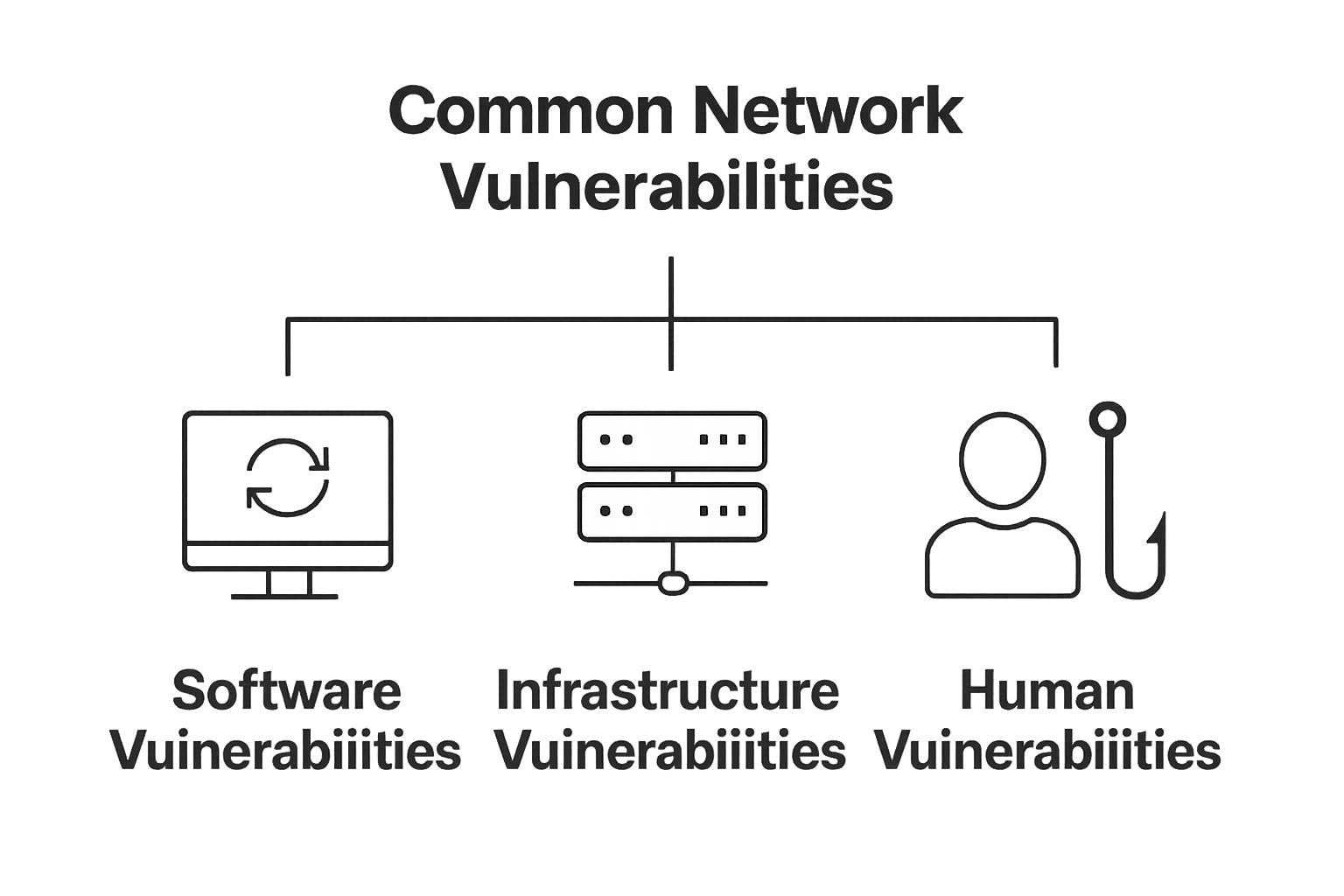
Network vulnerabilities are diverse and complex, representing multiple potential entry points for cybercriminals to exploit digital systems. Understanding these different vulnerability types is crucial for developing comprehensive security strategies that protect organizational digital assets.
Software and System Vulnerabilities
Software vulnerabilities are among the most prevalent network security risks. These weaknesses emerge from programming errors, design flaws, or outdated system configurations that create potential backdoors for unauthorized access. Typical software vulnerabilities include:
- Unpatched software with known security gaps
- Improperly configured system permissions
- Insufficient input validation mechanisms
- Legacy system components with inherent security limitations
- Weak encryption protocols
According to the University of West Alabama, these vulnerabilities can manifest through multiple attack vectors like identity spoofing, password-based attacks, and application-layer compromises.
Infrastructure and Configuration Vulnerabilities
Network infrastructure vulnerabilities extend beyond software into the physical and configuration domains of digital systems. These vulnerabilities often result from misconfigurations, inadequate network segmentation, and poor access control policies. Critical infrastructure vulnerabilities include:
- Exposed network ports
- Misconfigured firewalls
- Weak authentication mechanisms
- Insufficient network segmentation
- Unauthorized device connections
Cybercriminals can exploit these vulnerabilities to gain unauthorized network access, intercept sensitive communications, or conduct broader systemic attacks that compromise entire organizational networks.
Human-Centric Vulnerabilities
Human behavior represents a significant and often overlooked network vulnerability. Social engineering techniques, poor security awareness, and inadequate training can create substantial risk exposure. These vulnerabilities include:
- Weak or reused password practices
- Susceptibility to phishing attacks
- Inadequate security awareness training
- Improper handling of sensitive information
- Unrestricted device and network access
Technical solutions alone cannot mitigate human-centric vulnerabilities. Organizations must develop comprehensive security cultures that prioritize ongoing education, awareness, and proactive risk management strategies.
How Network Vulnerabilities Are Exploited
Network vulnerability exploitation represents a strategic and systematic approach by cybercriminals to identify and leverage weak points within digital infrastructures. These exploitation techniques transform theoretical security weaknesses into actual operational risks that can compromise entire organizational systems.
Reconnaissance and Scanning Techniques
Before executing an attack, malicious actors conduct comprehensive reconnaissance to map out potential network entry points. This initial phase involves sophisticated scanning methods designed to gather critical information about network architecture, open ports, and potential vulnerability points:
- Identifying active network hosts and devices
- Mapping network topology and infrastructure
- Detecting running services and software versions
- Identifying potential security misconfigurations
- Analyzing network response patterns
These scanning techniques allow attackers to build detailed profiles of network vulnerabilities, creating targeted strategies for potential breach attempts.
Exploitation Methodologies
Once vulnerabilities are identified, cybercriminals employ multiple sophisticated exploitation techniques to gain unauthorized access. These methodologies can range from sophisticated technical approaches to simple social engineering tactics:
- Leveraging unpatched software vulnerabilities
- Executing code injection attacks
- Exploiting weak authentication mechanisms
- Conducting man-in-the-middle intercepting
- Deploying malware through compromised entry points
According to NIST Special Publication 800-115, these exploitation methods often target specific system weaknesses, allowing attackers to progressively escalate their network access and control.
Persistent Access and System Compromise
Successful network vulnerability exploitation goes beyond initial access. Advanced persistent threats (APTs) focus on maintaining long-term, undetected system presence. Attackers accomplish this by:
- Creating hidden backdoor access points
- Establishing persistent system credentials
- Implementing sophisticated camouflage techniques
- Gradually expanding network access privileges
- Extracting sensitive data without detection
The ultimate goal of network vulnerability exploitation is not just momentary access but establishing a strategic foothold that enables sustained, covert system manipulation. Organizations must therefore adopt proactive, multilayered security approaches that continuously monitor, detect, and respond to potential exploitation attempts.
The Impact of Network Vulnerabilities on Businesses
Network vulnerabilities represent more than technical challenges they are critical business risks that can fundamentally disrupt organizational operations, financial stability, and long-term reputation. Understanding these potential consequences is essential for strategic risk management and proactive cybersecurity planning.
Financial and Operational Disruptions
Network vulnerabilities can trigger substantial financial damages that extend far beyond immediate breach recovery costs. These financial impacts manifest through multiple channels:
- Direct monetary losses from theft or ransom
- Operational downtime and productivity interruptions
- Emergency remediation and system restoration expenses
- Potential regulatory compliance penalty fees
- Lost customer revenue during system compromises
According to the Cybersecurity and Infrastructure Security Agency, compromised network infrastructure can enable malicious actors to gain complete system control, dramatically amplifying potential financial risks.
Reputational and Trust Erosion
Beyond immediate financial consequences, network vulnerabilities can cause profound, long-lasting damage to organizational reputation and stakeholder trust. Critical reputational risks include:
- Permanent loss of customer confidence
- Negative public perception and brand damage
- Potential legal liability for data protection failures
- Reduced investor and partner trust
- Challenging future business relationship rebuilding
Small and medium-sized businesses are particularly vulnerable, as they often lack comprehensive cybersecurity resources to effectively manage and communicate potential breaches.
Strategic and Competitive Implications
Network vulnerabilities can fundamentally undermine an organization’s competitive positioning and strategic capabilities. These strategic risks encompass:
- Potential intellectual property theft
- Compromised competitive intelligence
- Disrupted business continuity
- Reduced market credibility
- Challenges in maintaining client contracts
Effective vulnerability management requires a holistic approach that integrates technological solutions, employee training, and continuous risk assessment.
 Organizations must view cybersecurity not as an isolated technical function but as a critical business strategy essential for sustainable growth and resilience.
Strategies for Understanding and Mitigating Risks
Mitigating network vulnerabilities requires a comprehensive, strategic approach that combines technological solutions, organizational processes, and human expertise. Successful risk management goes beyond simple defensive tactics, demanding proactive, multifaceted strategies that anticipate and neutralize potential security threats.
Comprehensive Vulnerability Assessment
Effective risk mitigation begins with thorough and systematic vulnerability assessment. This process involves detailed examination of network infrastructure, identifying potential weaknesses before they can be exploited:
- Conducting regular network security scans
- Performing penetration testing
- Mapping network topology and potential entry points
- Analyzing system configurations and access controls
- Identifying outdated or unpatched software components
According to the Cybersecurity and Infrastructure Security Agency, network segmentation is crucial in preventing potential intrusions from spreading across entire organizational systems.
Technological and Procedural Safeguards
Risk mitigation requires implementing robust technological and procedural protections that create multiple defensive layers. These safeguards include:
- Implementing advanced firewall configurations
- Deploying multi-factor authentication
- Establishing regular software patch management
- Creating network segmentation strategies
- Developing comprehensive incident response protocols
Organizations must view these safeguards as interconnected systems rather than isolated security measures. Each technological solution should complement procedural guidelines and human expertise.
Continuous Learning and Adaptive Strategies
Network security is not a static concept but an evolving discipline requiring constant adaptation and learning. Successful risk mitigation strategies emphasize:
- Regular cybersecurity training for employees
- Staying updated on emerging threat landscapes
- Developing flexible incident response mechanisms
- Encouraging a culture of security awareness
- Implementing real-time monitoring systems
The most effective risk mitigation approaches recognize that technological solutions alone are insufficient. Organizations must cultivate a holistic security mindset that integrates technology, human expertise, and proactive strategic planning.
Ready to Eliminate Hidden Network Vulnerabilities?
If reading about software flaws, misconfigured systems, and human errors has you concerned about gaps in your business network security, you are not alone. Network vulnerabilities can put your sensitive data and daily operations at serious risk. These weak points are often overlooked until a breach occurs, but proactive steps can safeguard your business and build lasting confidence in your technology.
Let SRS Networks take network security off your worry list. Our team specializes in identifying and closing these exact vulnerabilities before cybercriminals get a chance. Explore our Managed IT Services for round-the-clock monitoring and protection tailored to small and medium-sized businesses across the Monterey Bay Area. Learn how our Cybersecurity Solutions defend your operation against modern threats. Visit SRS Networks now and see how easy it can be to secure your growth. Start today to prevent costly downtime and protect your reputation before the next threat emerges.
Frequently Asked Questions
What are the most common types of network vulnerabilities?
Common types of network vulnerabilities include software vulnerabilities due to unpatched software, infrastructure vulnerabilities arising from misconfigured devices, and human-centric vulnerabilities like weak password practices and susceptibility to phishing attacks.
How can organizations identify network vulnerabilities?
Organizations can identify network vulnerabilities by conducting regular vulnerability assessments, including network scans, penetration tests, and analyzing system configurations and access controls.
What are some strategies to mitigate network vulnerabilities?
Strategies to mitigate network vulnerabilities include implementing robust firewall configurations, establishing multi-factor authentication, conducting regular software patch management, and developing incident response protocols.
Why is it important to address network vulnerabilities?
Addressing network vulnerabilities is crucial as they can lead to unauthorized access, data breaches, and substantial financial and reputational damage to an organization. Proactive management helps in maintaining operational resilience and protecting sensitive information.